
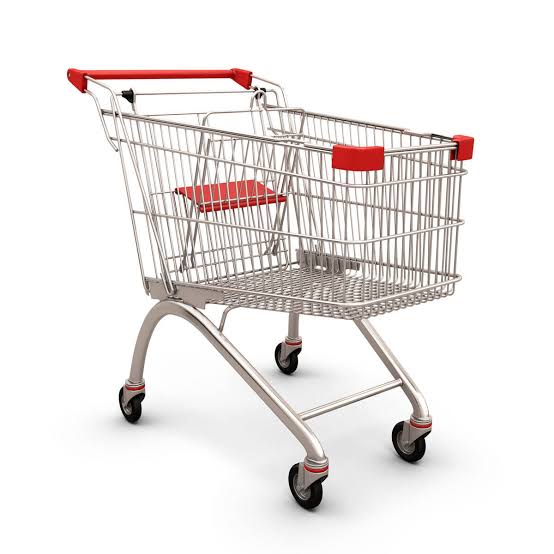
Shopping carts are one of the most frequently used pieces of equipment in grocery stores, supermarkets, retail centers, and warehouse-style businesses. Because they are constantly moving between parking lots, entrances, checkout areas, and storage zones, keeping track of every cart can become difficult over time.
Missing carts, damaged identification tags, worn-out numbering systems, and inconsistent inventory records can all create unnecessary costs for retailers. Shopping cart refurbishment offers a practical way to solve many of these problems while extending the useful life of existing carts.
Instead of replacing an entire fleet, refurbishment allows stores to repair worn components, update tracking features, standardize cart identification, and create a more accurate inventory system.
Why Cart Tracking Matters for Retail Businesses
A large retail location may manage dozens or even hundreds of shopping carts every day. Without a reliable tracking system, carts can easily become misplaced, transferred to the wrong area, left outside store property, or removed from service without being properly recorded.
Even losing a small percentage of a cart fleet can create noticeable operational costs.
For example, a store with 300 carts that cannot account for just 5% of its inventory could be missing 15 carts. If replacement carts cost several hundred dollars each depending on size and configuration, those losses can add up quickly.
Accurate tracking gives managers a clearer understanding of how many carts are available, how many require repairs, and how many may need replacement.
How Shopping Cart Refurbishment Supports Better Inventory Control
One major benefit of shopping cart refurbishment is the opportunity to inspect every cart individually.
During refurbishment, carts can be evaluated for structural damage, wheel performance, handle condition, corrosion, basket damage, and identification issues. Each cart can then be documented before being returned to service.
This creates an ideal opportunity for retailers to establish a more accurate cart inventory.
Instead of relying on outdated spreadsheets or rough estimates, stores can assign each refurbished cart a unique identification number and enter it into an updated tracking system.
A refurbishment project essentially creates a fresh starting point for managing the fleet.
Adding Identification Numbers During Refurbishment
Numbering carts is one of the simplest ways to improve inventory accuracy.
Older carts may have faded stickers, missing labels, or identification markings that are difficult to read. During shopping cart refurbishment, these labels can be replaced with durable numbering systems.
Each cart might receive a unique number such as:
Cart 001
Cart 002
Cart 003
Managers can then associate each number with information such as the cart model, refurbishment date, repair history, location, and condition.
This makes it easier to identify patterns. If Cart 087 repeatedly experiences wheel problems, for example, maintenance teams can review its repair history rather than treating each issue as unrelated.
Integrating RFID and Other Tracking Technology
Modern cart management systems can go beyond simple numbering.
Some retailers use radio-frequency identification, commonly known as RFID, to monitor carts more efficiently. RFID tags can be attached to individual carts and detected by compatible readers positioned around a property.
During shopping cart refurbishment, stores can evaluate whether adding RFID tags or similar tracking devices would improve fleet visibility.
Depending on the system, tracking technology may help retailers determine when carts leave designated areas, how frequently certain carts are used, or how many carts are located in specific sections of a property.
Other stores may use barcode labels, QR codes, GPS-based solutions, or electronic wheel-locking systems.
The most appropriate system depends on the size of the cart fleet, store layout, budget, and security needs.
Refurbishment Helps Standardize Mixed Cart Fleets
Retailers often accumulate different cart models over several years.
Some may have different handle designs, wheel types, basket sizes, colors, or identification methods. This lack of consistency can make maintenance and inventory management more complicated.
A professional shopping cart refurbishment program can help standardize the fleet.
For example, carts may receive matching replacement handles, uniform wheels, updated child-seat components, new identification labels, and consistent protective coatings.
Standardization can also simplify parts inventory. Instead of keeping multiple wheel or caster types available, a retailer may be able to use compatible components across a larger portion of the fleet.
Tracking Maintenance History More Effectively
Cart inventory management should include more than simply knowing how many carts are available.
Tracking maintenance history can help stores identify recurring problems before they become expensive.
After refurbishment, retailers can create a maintenance record for each cart. Inspections might be scheduled every three, six, or twelve months depending on usage conditions.
Maintenance records can include information such as:
- Wheel and caster replacements
- Handle repairs
- Basket welding
- Child-seat repairs
- Rust treatment
- Frame alignment
- Safety inspections
Over time, this information can help managers identify which carts are economical to repair and which ones are approaching the end of their useful service life.
Reducing Unexpected Cart Losses
Cart loss is another challenge that improved tracking can help address.
Carts may be abandoned around shopping centers, taken into nearby neighborhoods, or accidentally moved between neighboring retail locations.
Clear identification makes recovered carts easier to return to the correct store.
Retailers can also use refurbishment as an opportunity to add updated store branding, contact information, property labels, or cart numbers.
When combined with electronic tracking or wheel-locking technology, these measures can significantly improve visibility over the cart fleet.
Better Inventory Data Supports Smarter Purchasing Decisions
Accurate cart inventory also helps retailers decide when new carts are actually necessary.
Without reliable records, a manager may assume the store needs 50 new carts when several existing carts are simply waiting for repair.
After shopping cart refurbishment, management can clearly see how many carts are operational, how many require maintenance, and how many are no longer worth repairing.
This information makes purchasing decisions more data-driven.
Instead of replacing carts prematurely, retailers can focus spending on equipment that genuinely needs replacement.
Shopping Cart Refurbishment Creates a More Manageable Fleet
A well-maintained cart fleet is easier to track, repair, and manage.
By combining physical repairs with updated identification systems, inventory records, and modern tracking technology, shopping cart refurbishment can transform an inconsistent collection of carts into a more organized retail asset.
The process can help stores reduce missing carts, improve maintenance scheduling, standardize equipment, and gain a more accurate picture of their overall cart inventory.
For retailers managing dozens or hundreds of carts, those improvements can lead to fewer unexpected expenses and more efficient long-term fleet management.
Rather than viewing refurbishment only as cosmetic repair, businesses can use it as an opportunity to modernize the entire way their shopping carts are tracked, documented, and maintained.