
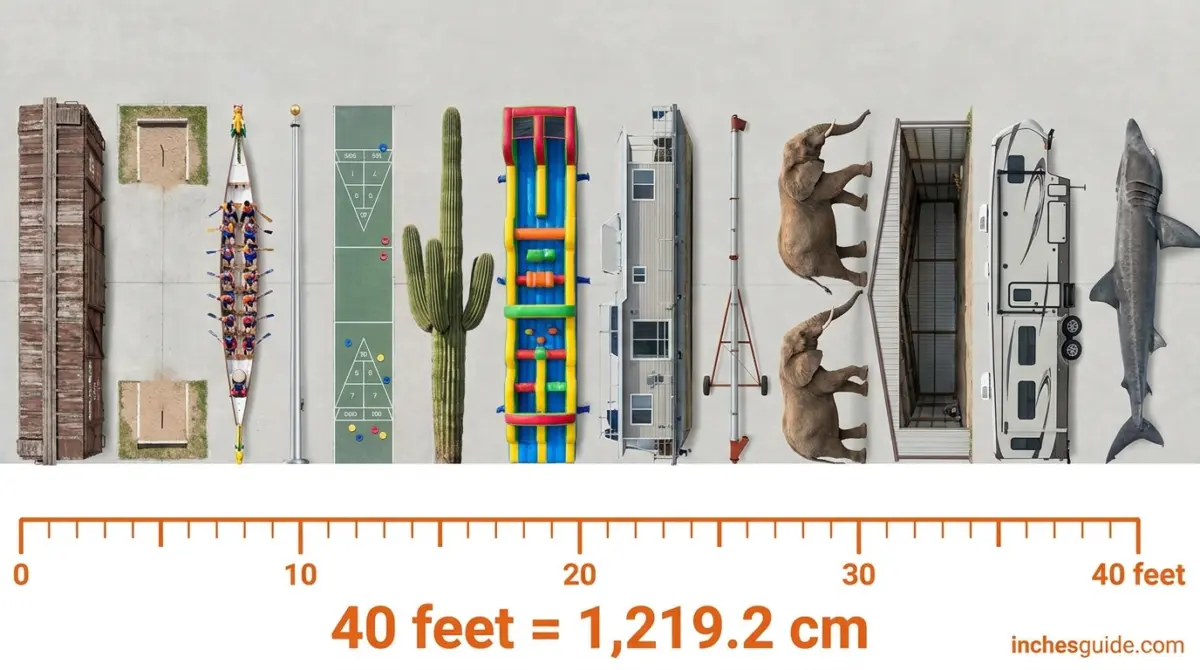
Set two stakes 40 feet apart, and you’ve built a regulation horseshoe pitch. That’s the strange thing about this length. It hides everywhere once you know to look, yet almost nobody can picture it cold.
This page lays out 40 feet in every unit you’d want, then hands you 13 real objects that hit the mark. No vague guesses here, just things that genuinely measure this long.
Some are exact. A few sit a foot off. All of them give your eyes something solid to grab.
Forty feet equals 480 inches, 12.19 meters, or 1,219 centimeters, about the length of a classic railroad boxcar or the gap between two horseshoe stakes.
40 Feet by the Numbers
| Unit | 40 Feet Equals |
|---|---|
| Inches | 480 inches |
| Yards | 13.33 yards |
| Meters | 12.19 meters |
| Centimeters | 1,219.2 cm |
| Millimeters | 12,192 mm |
| Kilometers | 0.0122 km |
| Miles | 0.0076 miles |
Checking 40 feet in cm? It lands at 1,219.2, a clean figure because one foot is exactly 30.48 cm. People also search the 40 feet dimensions for shipping and building work, where width and height matter as much as the length itself.
Where 40 Feet Hides in Plain Sight
Walk at a normal pace and you’ll cover 40 feet in roughly 13 seconds. It’s a quick stroll, but laid out flat it eats up real ground.
Stand it upright and the same number feels taller, close to a four story building. So the figure reads small on the floor and serious in the air.
It’s a useful stepping stone, too. Once you’ve sized up 25 feet or 30 feet, this is the next jump, and it’s worth seeing how much more room you get at 50 feet.
13 Things That Land Right Around 40 Feet
These aren’t loose approximations. Each one earns its spot, and I’ve flagged the few that sit a touch under the mark.
The Classic 40 Foot Boxcar
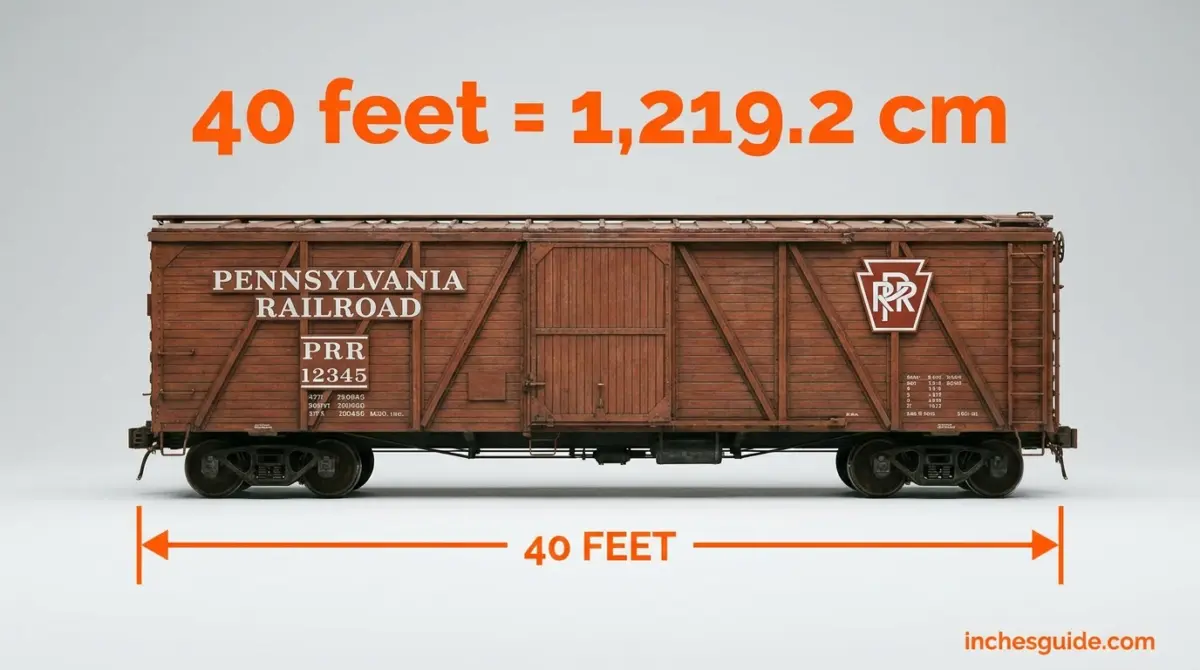
For decades the 40 foot boxcar was the backbone of the railroads. Sidings, loading docks, and yard tracks were all built around that one length, so 40 feet quietly became an industrial default.
The size stuck because it balanced cargo room against the weight a single axle set could carry.
Here’s the odd bit. The famous “forty and eight” boxcars were stenciled for 40 men or 8 horses, and that 40 foot floor is exactly why a whole platoon fit inside.
A Regulation Horseshoe Pitch
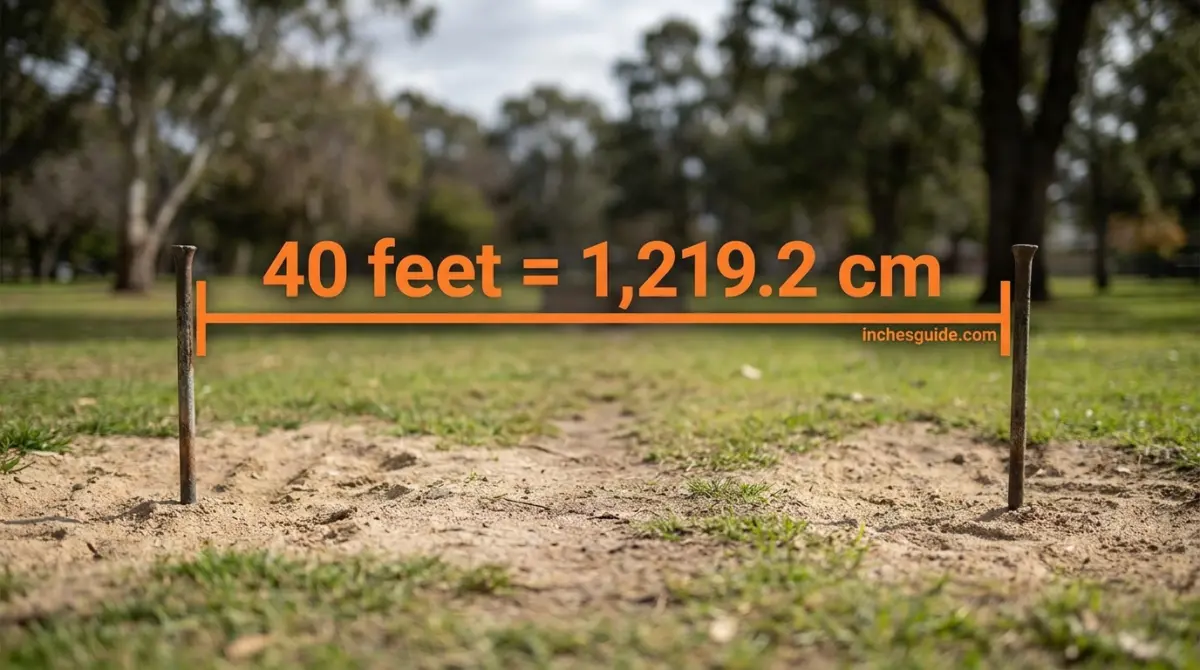
The rulebook plants the two stakes exactly 40 feet apart. That gap wasn’t random. It keeps a confident underhand throw a real skill instead of a casual lob.
Top players still ring the stake more than half the time across that full distance, which says a lot about how much practice the throw takes.
A Racing Dragon Boat
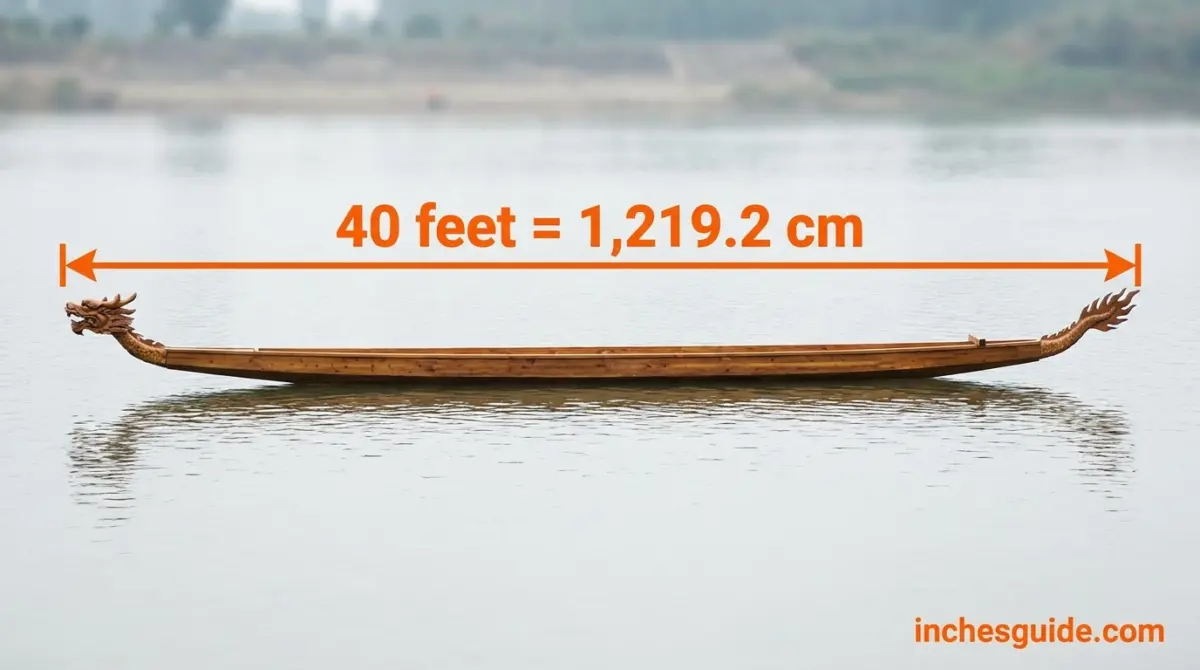
A standard dragon boat runs about 40 feet to seat 20 paddlers in pairs, plus a drummer up front and a steerer at the back. Pack fewer seats and the hull gets shorter.
The drummer isn’t there for show. That steady beat is what keeps 20 blades hitting the water as one, and on a 40 foot boat the timing makes or breaks the race.
A 40 Foot Commercial Flagpole
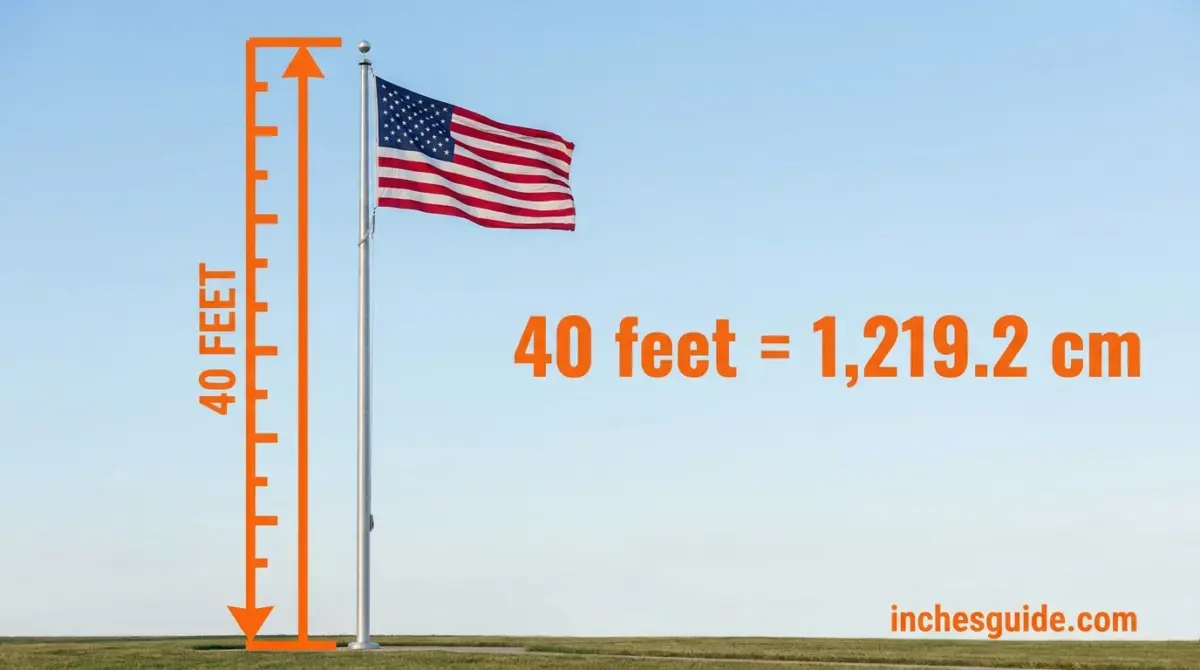
Flagpoles come in fixed jumps, and 40 feet is the workhorse for schools, dealerships, and office parks. It flies a big flag without crossing into the heights that need aircraft warning lights.
The flag itself scales to the pole. A 40 foot pole usually carries a flag around 6 by 10 feet, sized so it reads clearly from the road.
A Shuffleboard Court
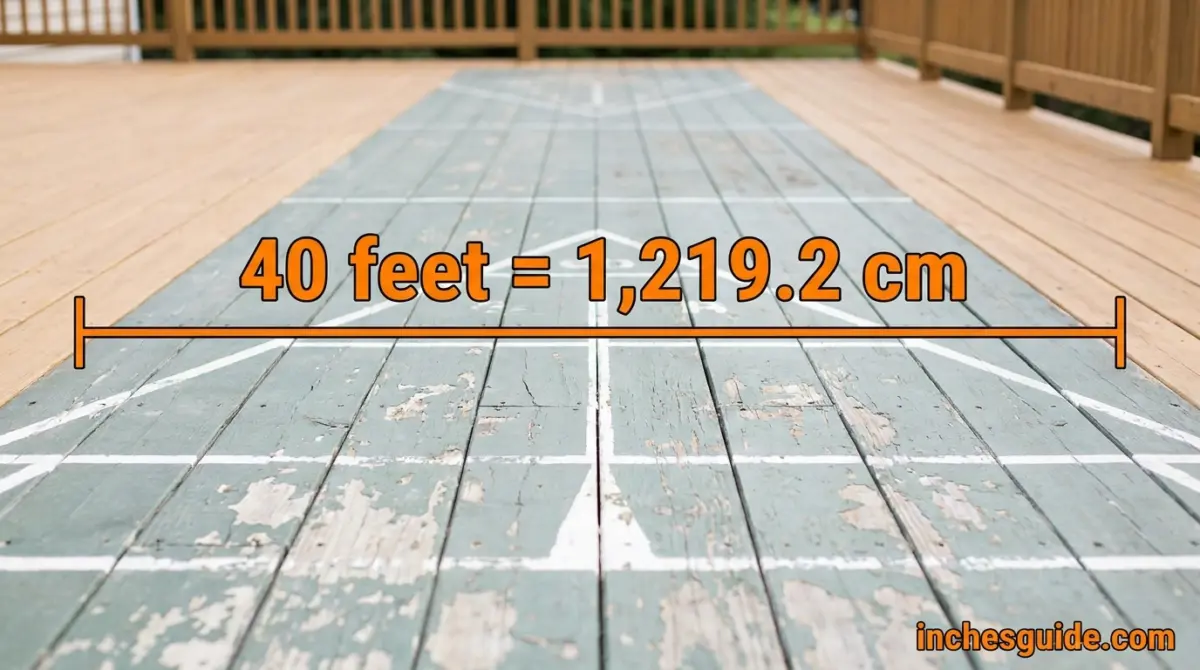
The painted playing area on a deck shuffleboard court is 39 feet long, a whisker under 40. That length gives the disc room to slow down so a soft, judged push beats brute force.
And there’s a reason it feels nautical. The game took off on cruise ships, where a flat 39 foot stretch of deck was easy to spare.
A Towering Saguaro Cactus
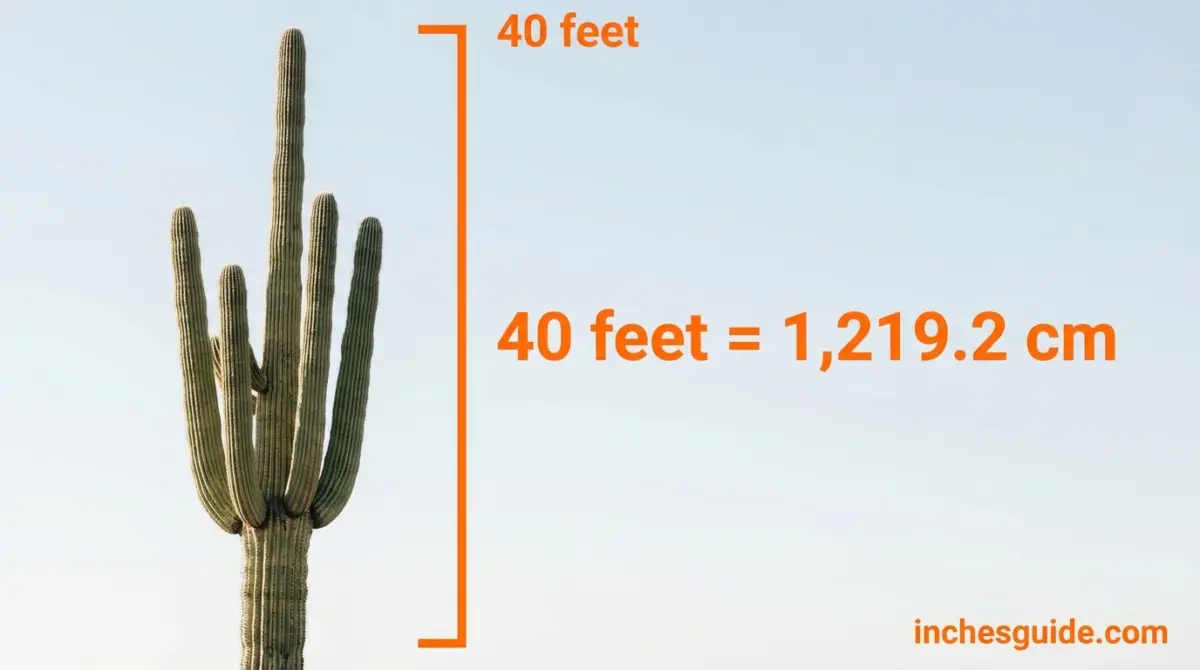
The biggest saguaros push close to 40 feet after more than a century of slow, patient growth. They only spend energy on arms once they’ve banked enough water and age.
That patience is wild to think about. A saguaro often doesn’t grow its very first arm until it’s around 70 years old.
An Inflatable Obstacle Course
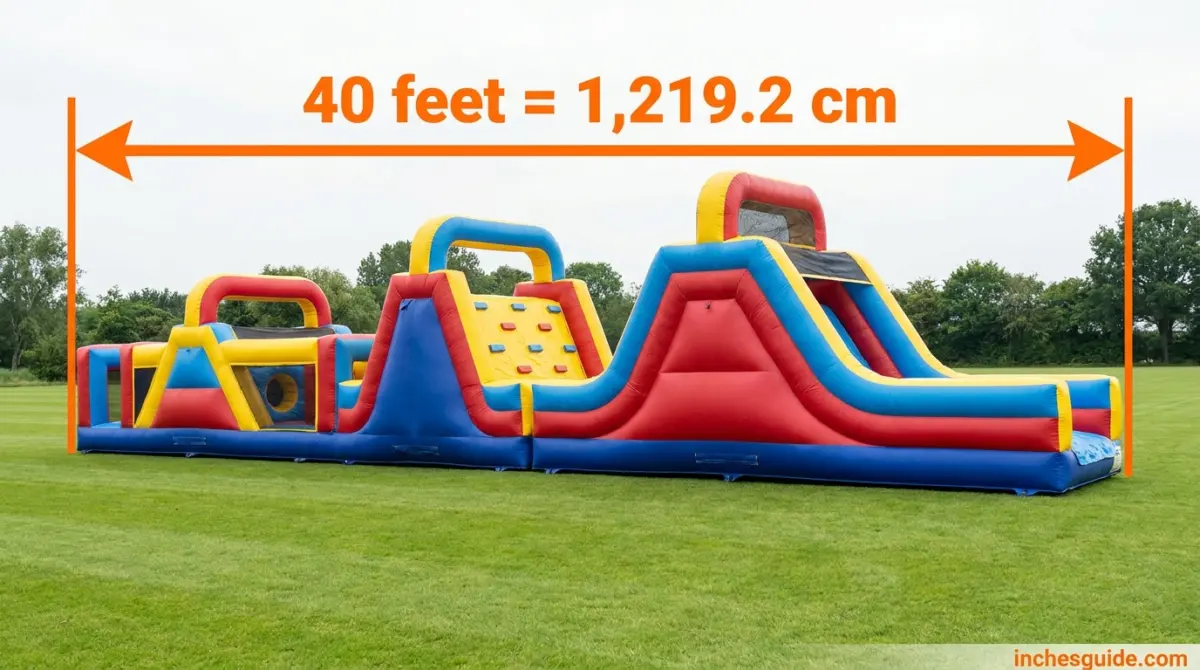
Party rental obstacle courses are often built around 40 feet so two kids can race side by side. That length fits enough tunnels, walls, and a slide to feel like an actual course.
Deflated, a big one can weigh several hundred pounds. That’s why it shows up folded on a hand truck instead of carried in by hand.
A 40 Foot Houseboat
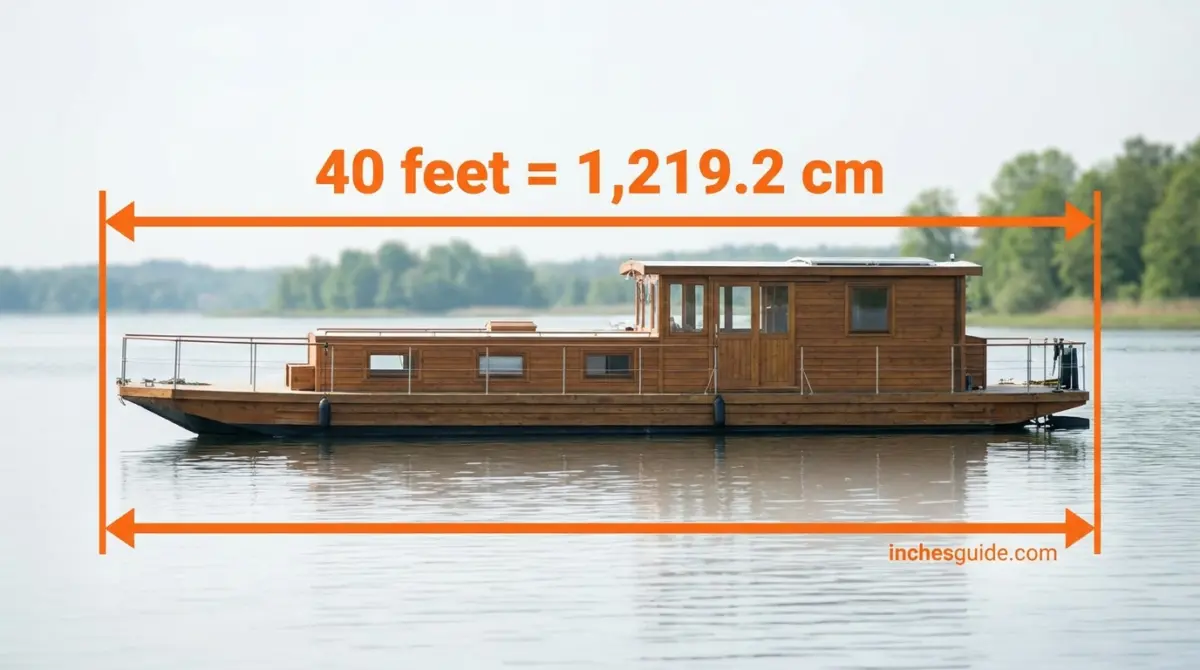
At 40 feet, a houseboat fits a proper kitchen, a bedroom, and a deck while still sliding into standard marina slips. Go much longer, and your docking options shrink in a hurry.
The surprise is how shallow they ride. Plenty of 40-foot houseboats draft under 3 feet, so they float in water you’d think was too thin to hold them.
A Farm Grain Auger
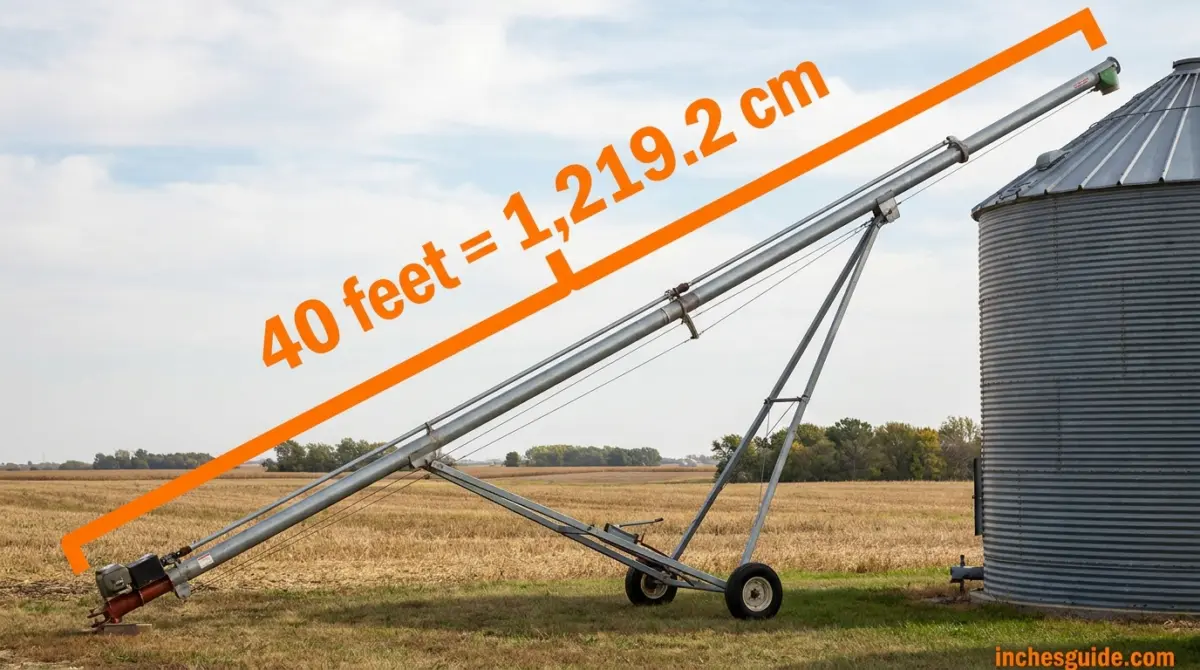
Grain augers are sized to reach from a truck or wagon up into a storage bin, and a 40-foot model hits the sweet spot for mid-size farm setups. Too short and it won’t clear the bin lip.
One thing folks underestimate is the speed. That single spinning tube can move thousands of bushels in an hour when harvest is on.
Two Adult Elephants, Nose to Tail
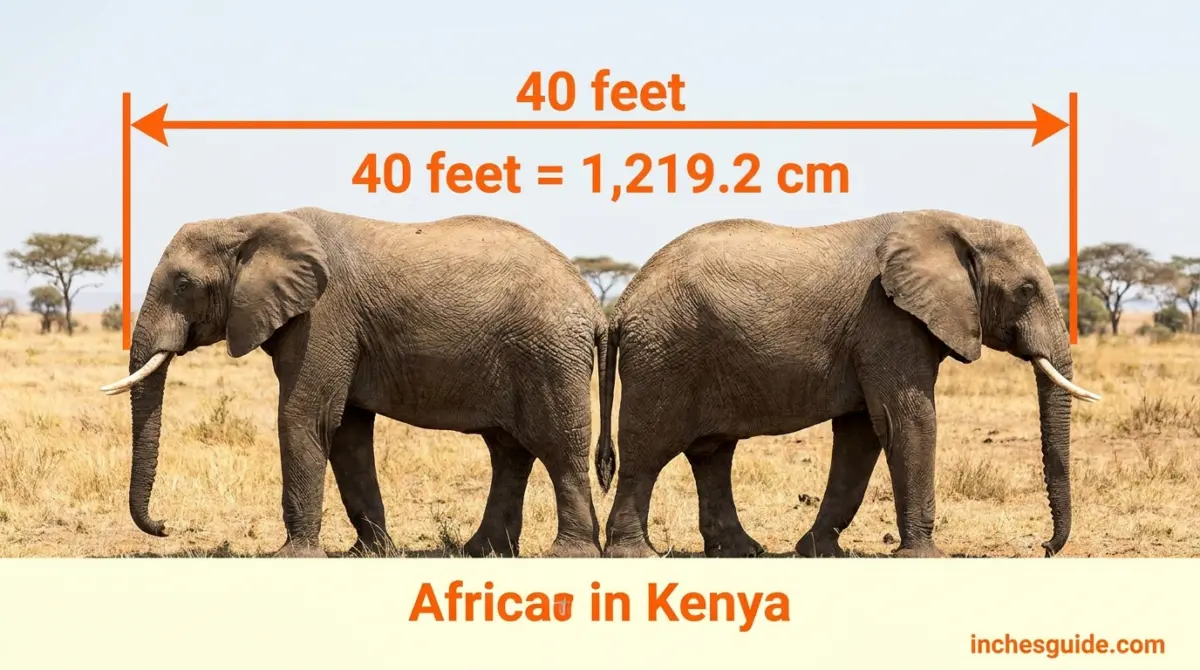
An adult elephant runs roughly 20 feet from trunk to tail, so line up two of them, and you’re right at 40. It’s an odd picture, but odd is exactly why it sticks.
For all that mass, they barely make a sound. Elephants walk almost silently on thick, cushioned feet that soak up their own weight.
The Width of a Pole Barn
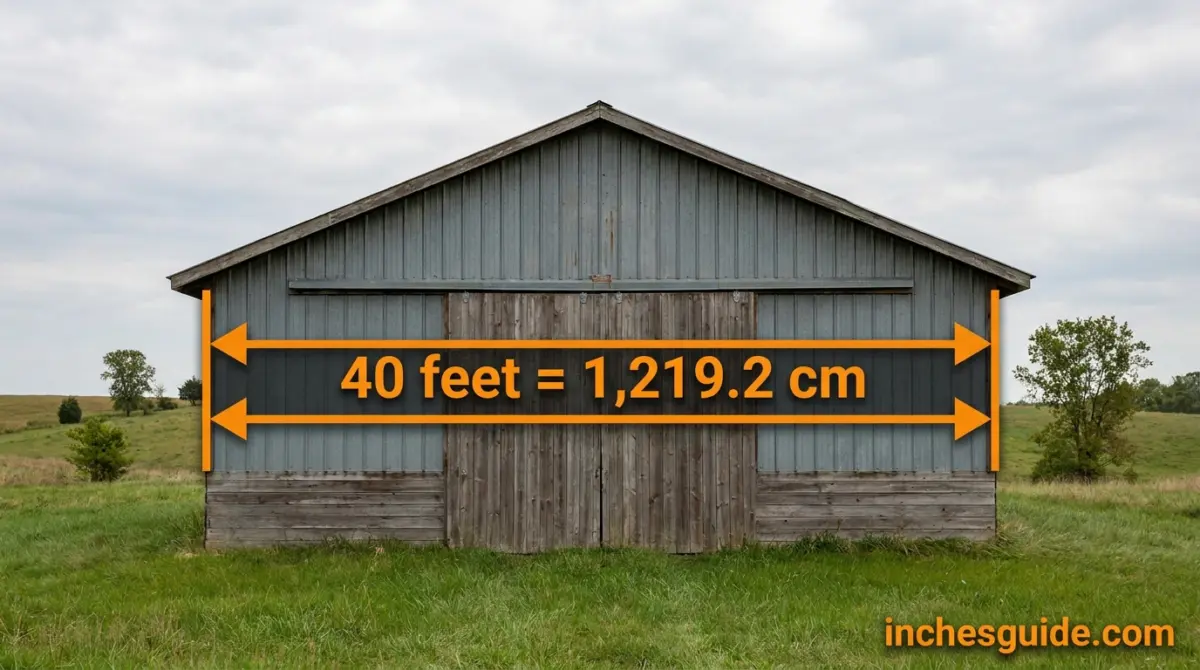
Post-frame barns are commonly built 40 feet wide because that span pairs cleanly with standard trusses. It also leaves room for equipment to swing and turn inside.
The name gives away the trick. The “pole” is a set of buried posts holding the whole structure up, so a pole barn skips the full concrete foundation a regular building needs.
A Big Fifth Wheel Trailer
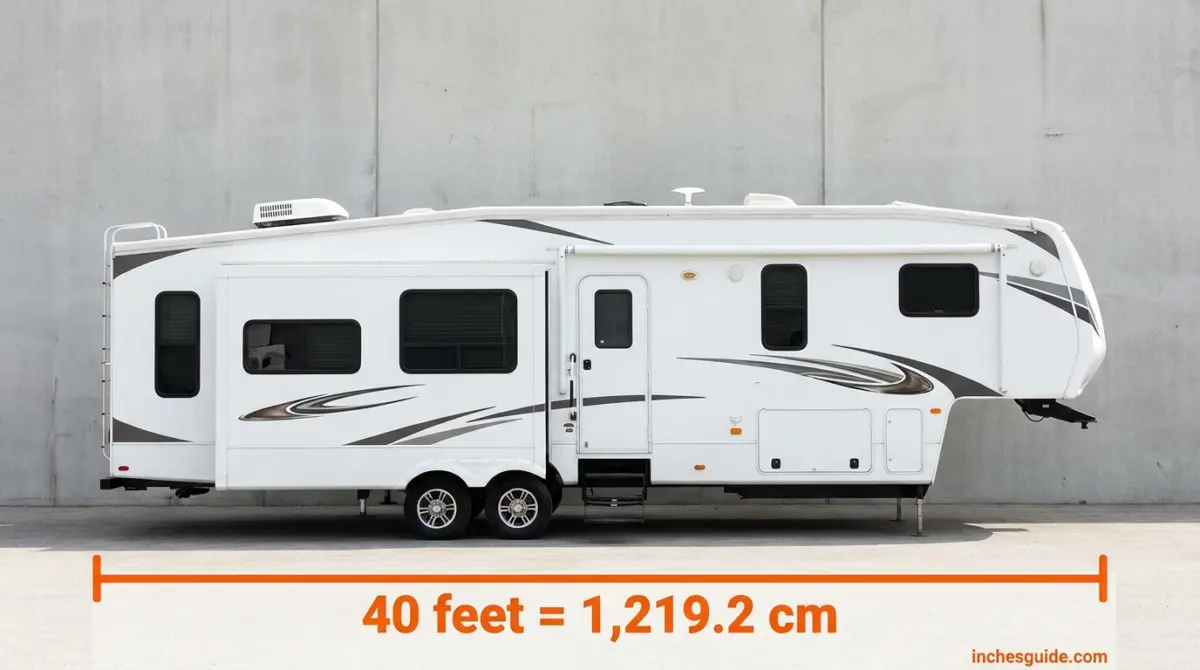
The largest fifth wheel trailers stretch to about 40 feet, with that raised front section hooking over a truck bed. It’s a different build from a motorhome, since it needs a pickup to pull it.
Park one, and it grows. The slide-out rooms crank outward to add hundreds of square feet of floor space that simply weren’t there on the road.
A Basking Shark
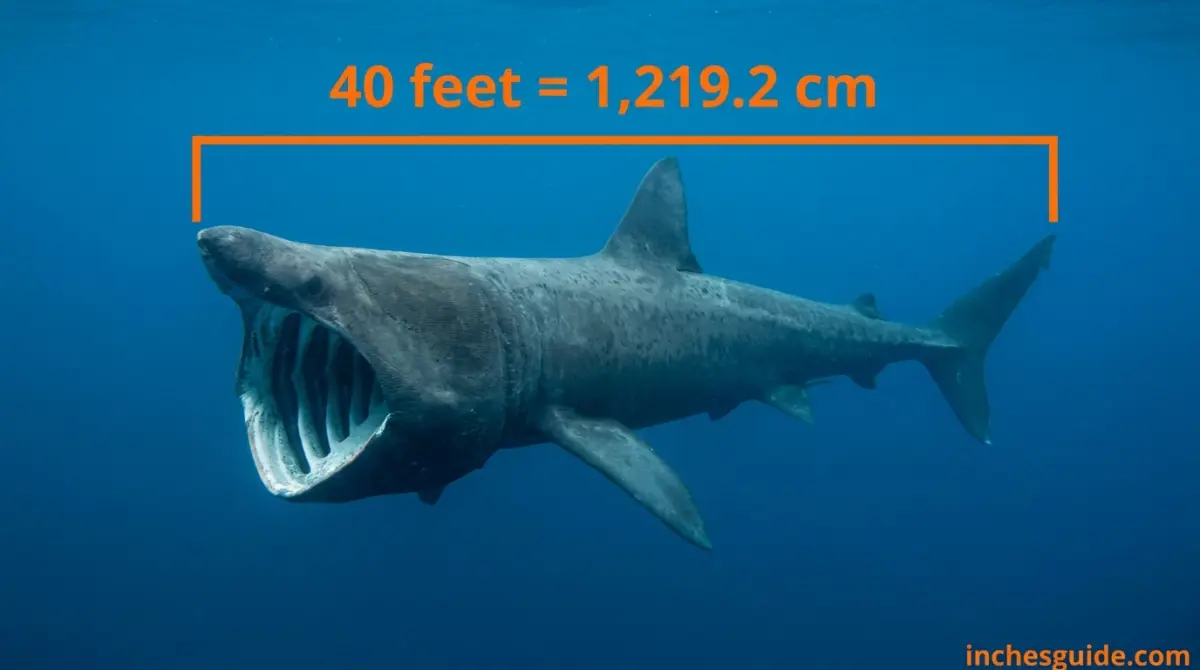
Basking sharks grow to nearly 40 feet, which makes them the second-largest fish in the sea behind the whale shark. They reach that size on a diet of almost nothing but plankton.
Picture it feeding, and the scale gets stranger. A basking shark cruises with its mouth gaping wide, straining thousands of tons of seawater every hour just to eat.
Pacing It Out Without a Tape Measure
You don’t need tools to get close to 40 feet. A few quick tricks land you within a foot or two.
Count steps first. An average adult stride is about 2.5 feet, so 16 steps cover roughly 40 feet.
Or lean on time. Stroll for about 13 seconds at a normal pace, and you’ve walked it. Lining up two parked pickups end to end gets you there as well, since each runs close to 20 feet.
So, Is 40 Feet Actually Big?
It depends which way you turn it. Flat across a yard, 40 feet is a generous run that swallows most backyards and patios whole.
Next to furniture, it’s enormous, since most pieces top out around 6 or 7 feet. Stood up as height, though, it reads as a solid four floors, tall but well short of a skyscraper.
That split is the whole reason a clean 40 feet size comparison helps. The number means little until you pin it to something real, and a quick 40 feet in meters check (12.19) does the same job for anyone working in metric.
FAQs
How many cm is 40 feet?
It comes to 1,219.2 cm, or about 12.19 meters. The math is tidy because each foot equals exactly 30.48 cm.
What is exactly 40 feet apart?
The two stakes on a regulation horseshoe pitch sit precisely 40 feet from each other. It’s one of the few everyday setups built on that exact gap.
Is 40 feet taller than a three-story building?
Yes, slightly. At roughly 10 feet per floor, 40 feet lines up closer to a four-story building, so it clears a typical three-story one with room to spare.
How does 40 feet compare to 50 feet?
Fifty feet is only 10 feet longer, about four extra paces. Noticeable side by side, but not the leap people expect from a bigger-sounding number.
Will 40 feet fit across an average backyard?
Usually, yes. Many suburban lots run wider than 40 feet, so the full length stretches across without crowding the fence lines.
The One Worth Remembering
Of everything here, keep the horseshoe pitch. Next time you spot a set of stakes, you’re looking at a clean 40 feet with no tape measure in sight.