
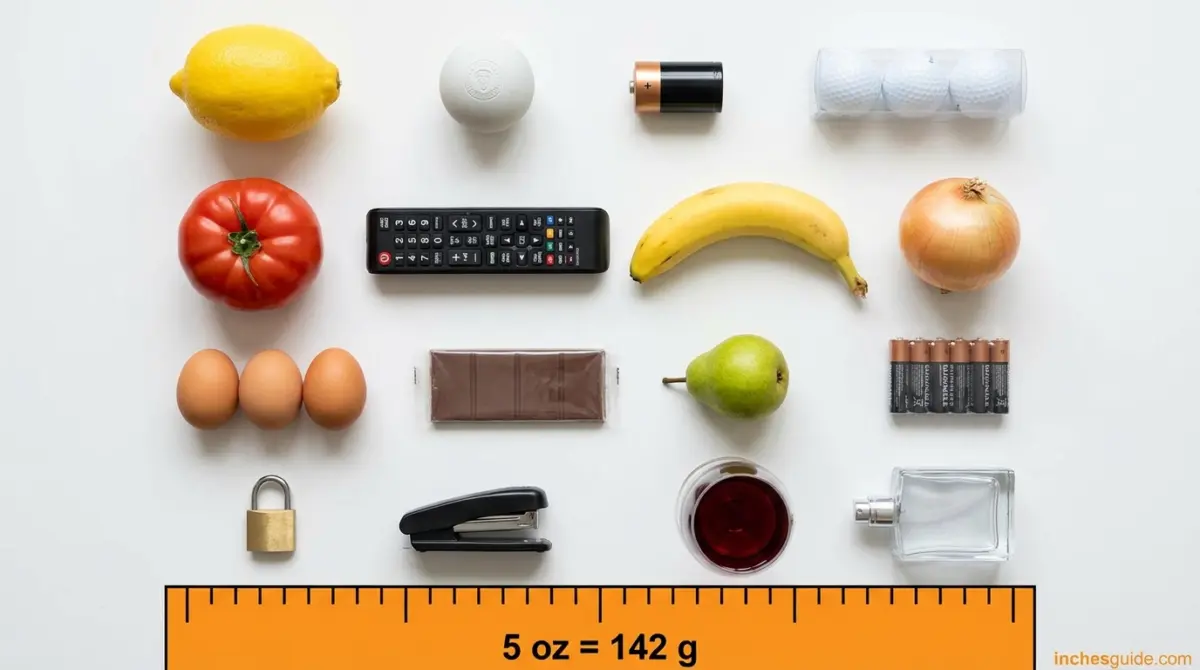
A big lemon weighs about 5 oz. So does a D battery, or a small bar of chocolate. Hold one of those and you’ve basically got the number memorized.
The thing that trips people up is that 5 oz can mean two different things. Sometimes it’s a weight, sometimes it’s a liquid amount, and the two don’t match.
That gap is small, but it changes how you measure, so it’s worth sorting out before anything else.
By weight, 5 oz is about 141.7 grams, a little over an eighth of a pound. As a liquid, 5 fluid ounces is roughly 148 ml, or five-eighths of a cup.
5 oz Converted Every Way You Might Need It
| Unit | 5 oz equals |
|---|---|
| Grams (weight) | 141.7 g |
| Pounds (weight) | 0.3125 lb |
| Kilograms (weight) | 0.142 kg |
| Milliliters (liquid) | 147.9 ml |
| Cups (liquid) | 0.625 cup (⅝) |
| Tablespoons (liquid) | 10 tbsp |
| Teaspoons (liquid) | 30 tsp |
| Deciliters (liquid) | 1.48 dl |
| Liters (liquid) | 0.148 L |
If you came here for 5 oz to grams or 5 oz to ml, those rows have it. Keep in mind the weight and liquid figures aren’t interchangeable, which is the detail most people skip.
How to Measure 5 oz Without a Scale
For liquids, spoons and cups do the job. Ten level tablespoons make 5 fluid ounces, and so does a measuring cup filled to the ⅝ line, which covers how to measure 5 oz of liquid and the common question of how many cups is 5 oz.
For solid food, use your hand. A piece of cooked meat about the size of your flat palm runs 4 to 6 oz, so aim for the middle. A lacrosse ball also weighs almost exactly 5 oz if you keep one around.
Also, Read This: Monster Can Dimensions, And Red Bull Can Dimensions
16 Everyday Things That Are About 5 oz
Every item here weighs at or very near 5 oz, and I kept the list to things you’d actually have on hand.
A Large Lemon
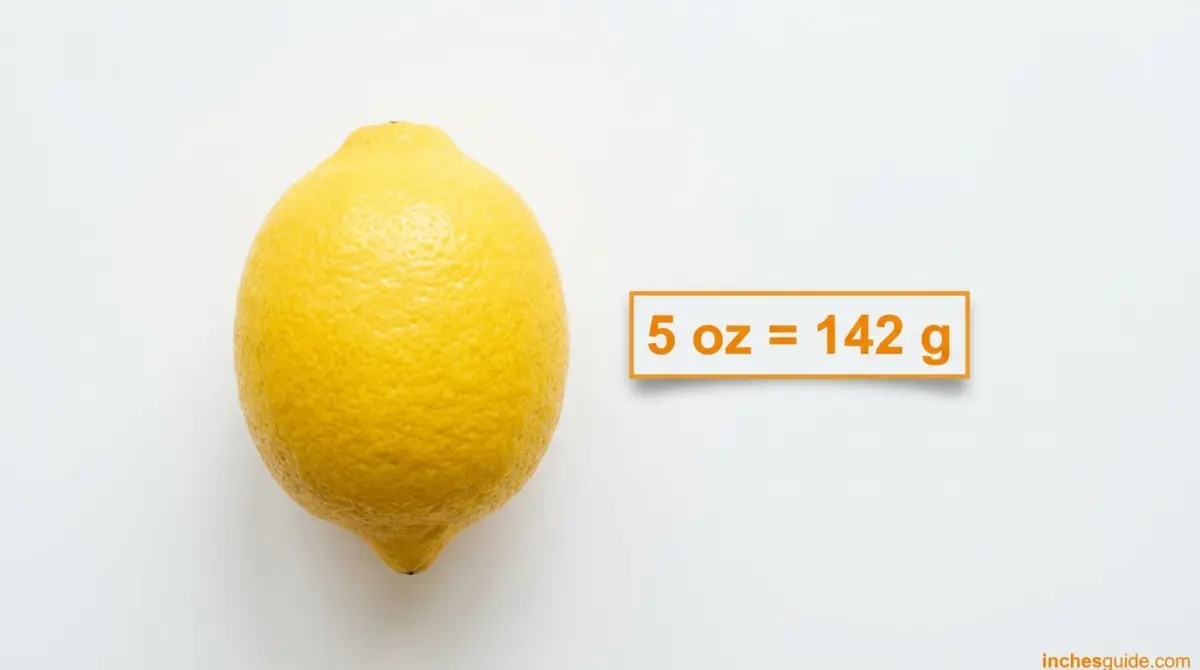
A big, firm lemon often lands right on 5 oz. The thick rind carries more of that weight than the size alone suggests.
Lemon weight swings a lot with variety and ripeness. A heavy Eureka or Lisbon lemon, the kind stacked in most grocery stores, is usually the one that hits this mark, while thin-skinned ones fall short.
Worth knowing before a recipe sends you shopping: most of a lemon is water and pith, not juice. A 5 oz lemon gives you only two or three tablespoons of actual juice.
A Lacrosse Ball
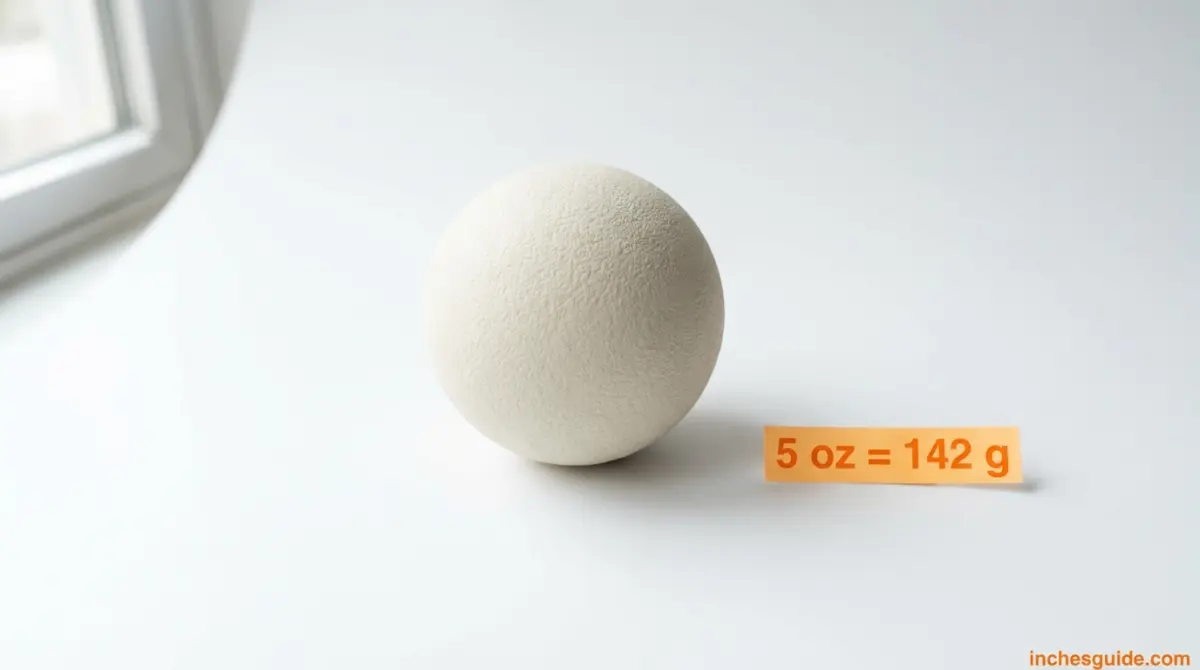
A regulation lacrosse ball weighs between 142 and 149 grams, putting it dead center on 5 oz. Because it’s solid rubber the whole way through, it feels heavier than it looks.
That weight is fixed by the sport’s rulebook, so every ball plays the same off a stick or a wall. Any official ball you pick up is the same 5 oz, which makes it a reliable reference.
It also sits in the same weight class as a baseball, just packed into a smaller, denser shape. If you’ve held one, you already know the feel.
A Single D Battery
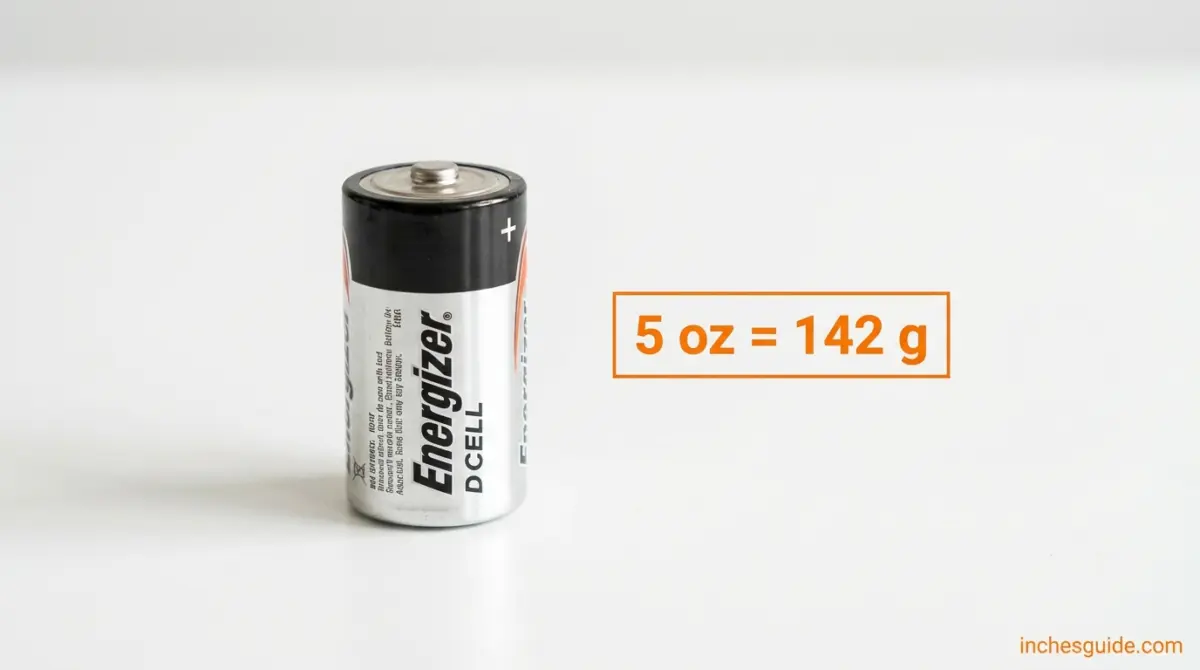
A single alkaline D battery comes in close to 140 grams, which catches most people off guard for something that fits in your palm.
The heft is dense electrode paste, zinc and manganese dioxide, packed into a steel can with almost no air inside. That’s the same reason a multipack of them feels like a brick.
Rechargeable NiMH D cells land at a similar weight, so the comparison holds no matter which kind is in your drawer.
A Sleeve of Three Golf Balls
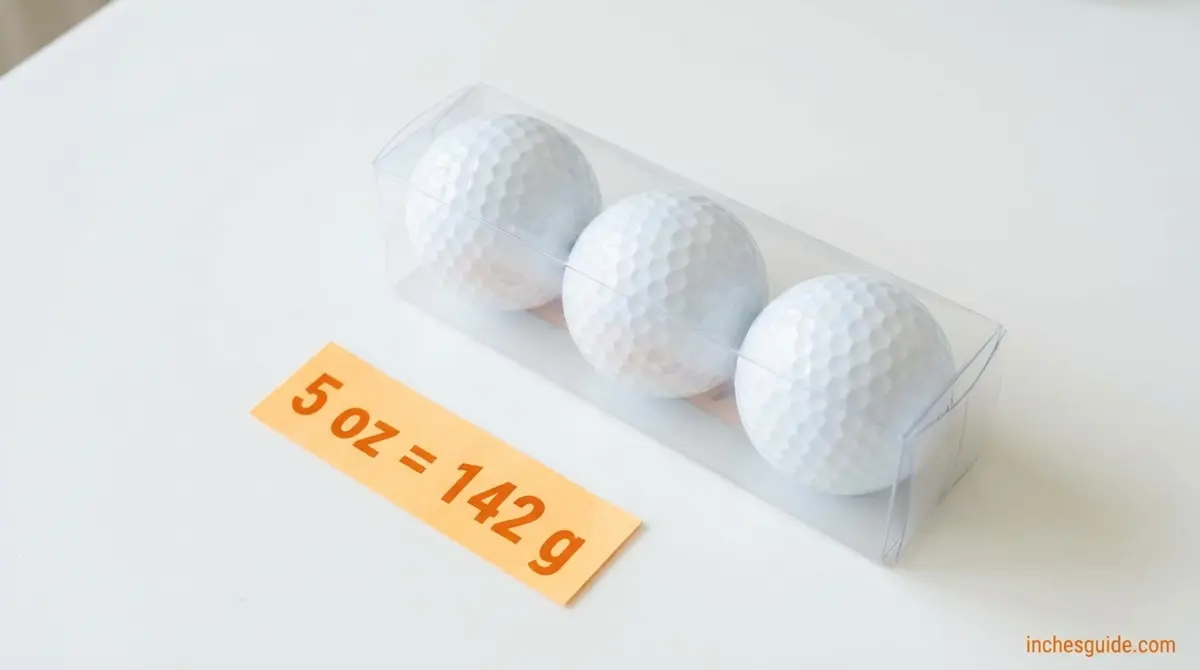
Three golf balls weigh about 138 grams together, reaching 5 oz once you add the plastic sleeve.
The rules cap a single ball at 45.93 grams, and makers build right up to that limit for distance, so the weight barely changes brand to brand. That makes a sleeve one of the most precise references on this list.
Each ball is denser than it looks thanks to the solid or layered core under the dimpled cover. Drop one in water and it sinks straight to the bottom.
A Medium-Large Tomato
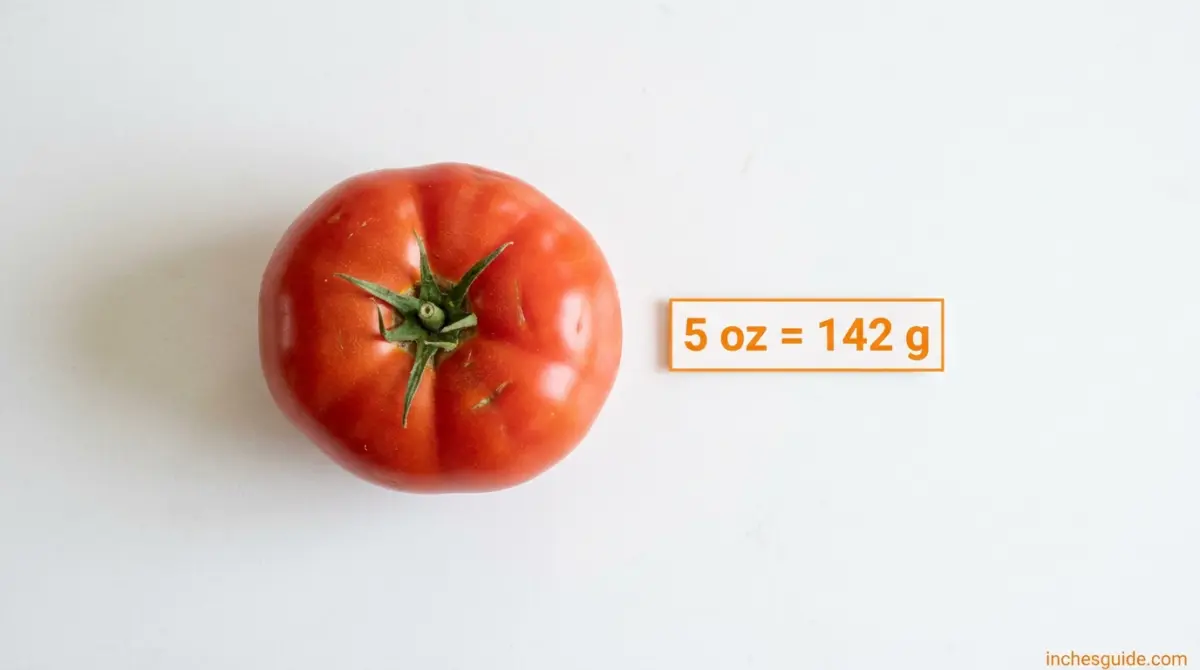
A solid beefsteak tomato clears 5 oz without trying. It’s mostly water, and water is heavy, so it outweighs your guess almost every time.
Smaller types like Roma or vine tomatoes usually come in lighter, around 2 to 3 oz each. It’s the big slicing tomatoes, the ones that cover a whole sandwich, that reach this weight.
Because so much of that weight is water, a 5 oz tomato shrinks a lot once it’s cooked down. That’s why a pot of sauce swallows so many of them.
A TV Remote
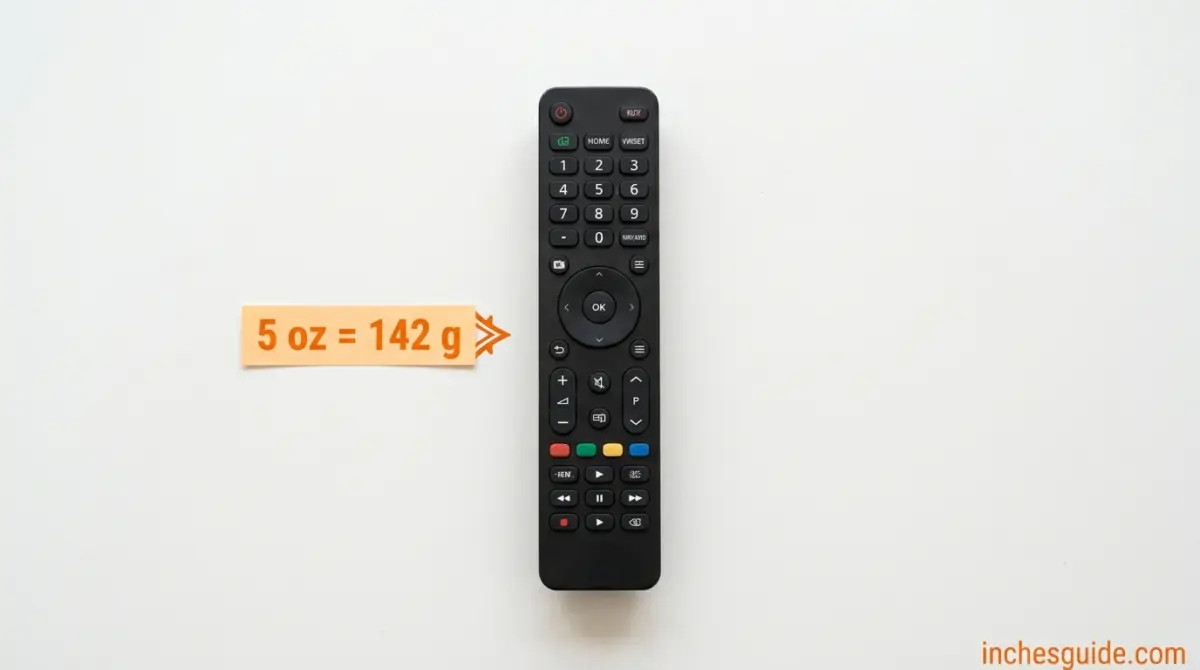
A typical remote with batteries loaded sits near 140 grams. Take the batteries out and it feels like a toy, which shows where the weight really comes from.
The plastic shell barely registers on a scale. Two AA or AAA cells plus the small circuit board do nearly all of the work.
Heavier smart remotes with backlights and built-in rechargeable packs can run a little over 5 oz, but the standard cable-box clicker sits right in the zone.
A Large Banana
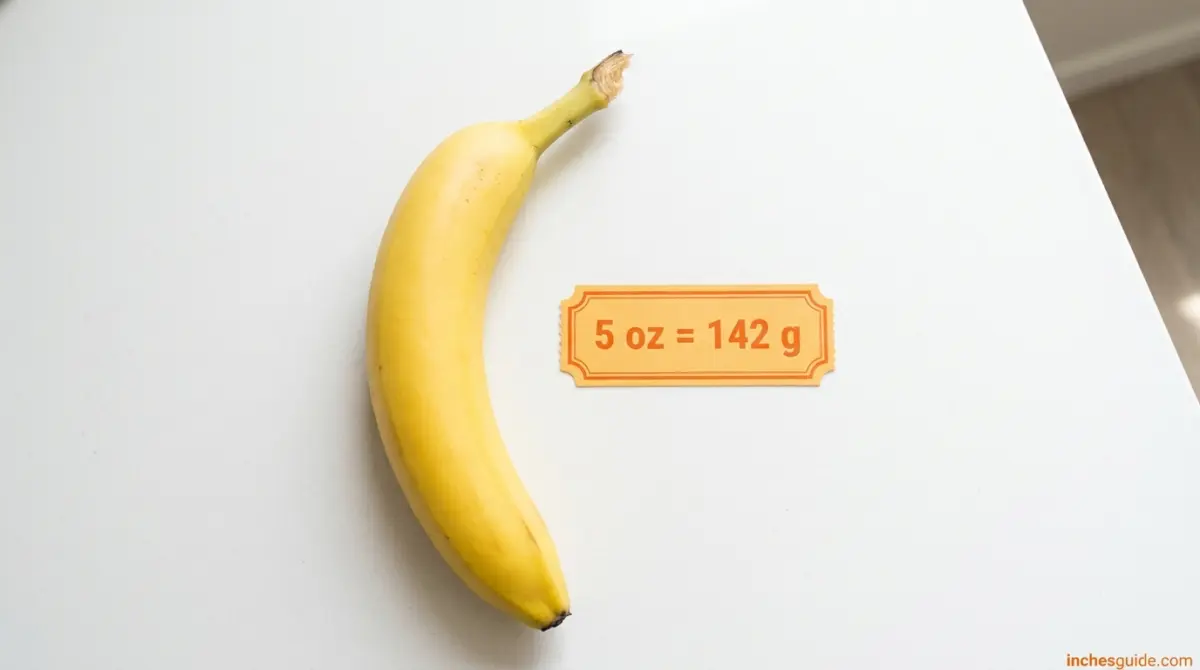
A large banana with the peel still on runs about 140 grams. The peel alone is close to a third of that, so the fruit inside is nearer 4 oz.
Bananas are priced by weight rather than size, which is why a long curved one and a short fat one can ring up the same. The 5 oz mark is a typical large supermarket banana.
That peel weight matters in the kitchen. When a recipe lists a banana by weight, it usually means the peeled fruit, so don’t weigh it whole.
A Medium Onion
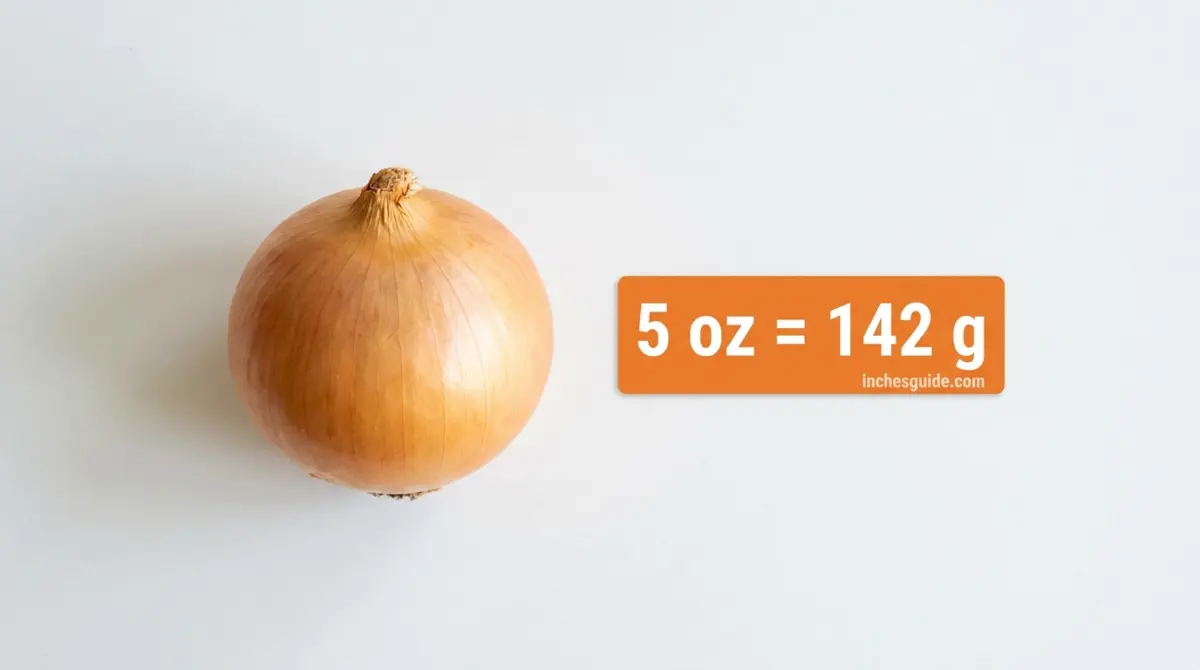
A standard cooking onion lands almost exactly on 5 oz. Those tight inner layers hold more weight than the size lets on.
Onions are dense because each layer is packed with water and there’s no hollow space inside. A medium yellow or brown onion, the everyday cooking kind, is the one that fits.
Recipes lean on this so often that “one medium onion” works as a rough unit of measure on its own. About 5 oz is the weight sitting behind that phrase.
Three Large Eggs
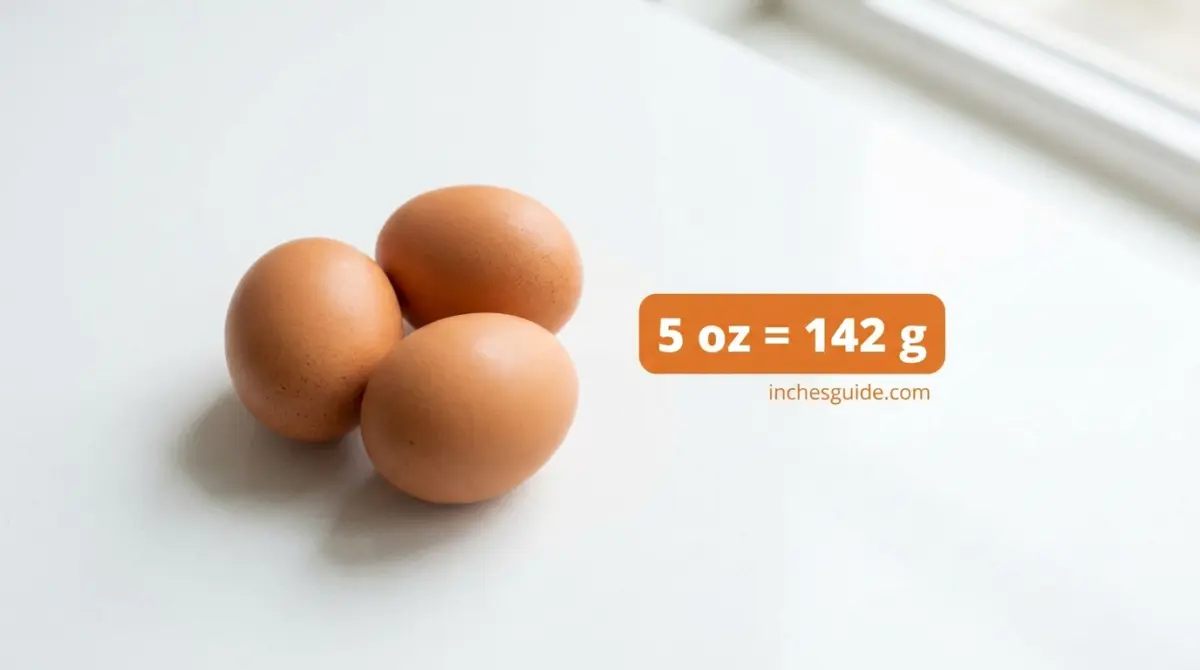
Three large eggs in the shell add up to about 150 grams, just over 5 oz. Each one is graded near 50 grams, which is why bakers can count eggs to hit a weight.
Egg sizes are set by grading rules in most places, so a carton of large eggs is remarkably consistent. That makes eggs one of the steadiest references here.
The shell is only about 10 percent of the weight. Crack three large eggs and you’ve got close to 5 oz of usable egg, minus the bits of shell.
A 5 oz Chocolate Bar
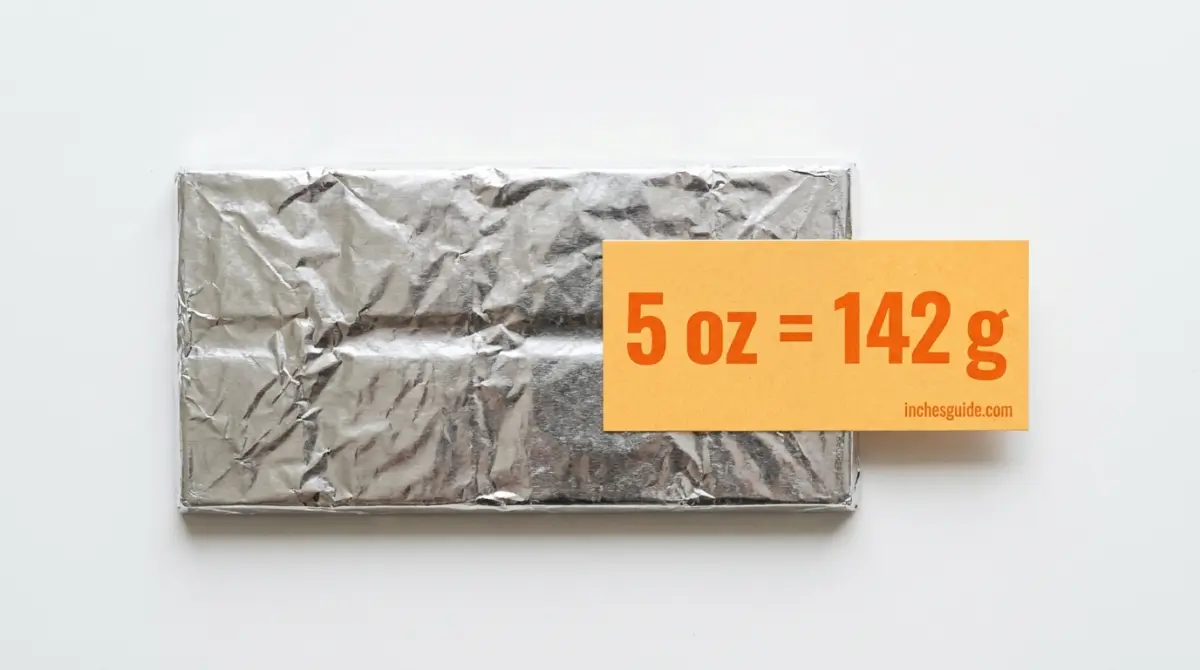
Plenty of premium chocolate bars are sold at this exact size, with 5 oz printed on the wrapper. You get a labeled reference and a snack in the same move.
Checkout candy bars are far smaller, usually 1.5 to 2 oz. The 5 oz size is the thicker share bar or specialty block you find in the baking aisle or a chocolate shop.
It’s the rare comparison you can confirm without a scale. Read the net weight on the label and you’re holding a verified 5 oz.
A Small Pear
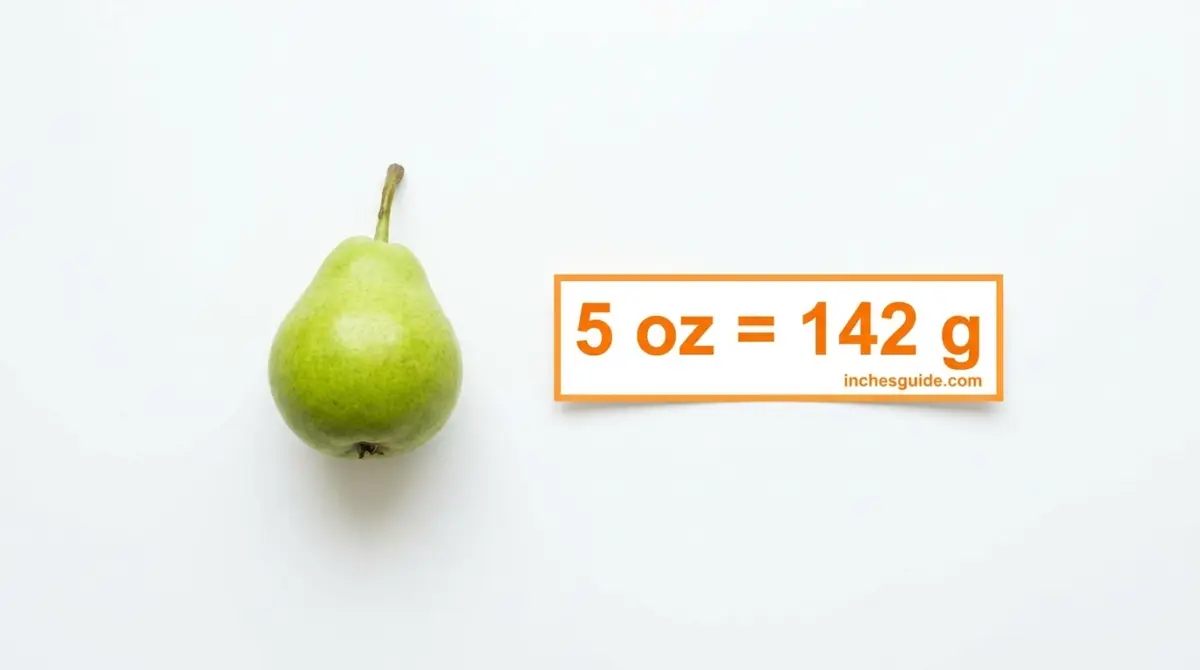
A small, firm pear weighs in around 140 grams. It feels denser than an apple of the same size, so trust the heft over your eyes.
Pears pack their weight tightly because the flesh is fine-grained with little air inside. A small Bartlett or Anjou is the one that lands near 5 oz, while the big ones run well past it.
They also keep gaining a touch of weight as they ripen and soften, so the same pear can creep heavier after a few days on the counter.
Six AA Batteries
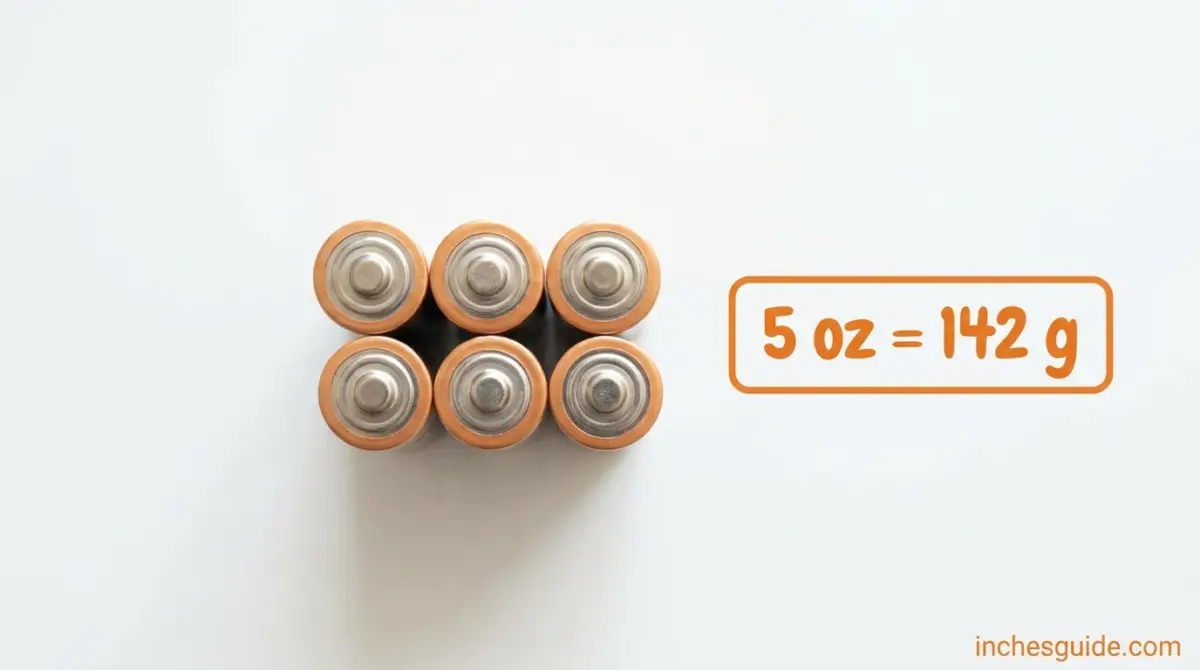
A six-pack of AA batteries weighs about 138 grams, so a full retail pack is an easy stand-in for 5 oz. Each cell is roughly 23 grams if you’d rather do the math with fewer.
Like the D cell, the weight is dense internal chemistry rather than the casing. That’s why a small handful of them feels heavier than it has any right to.
Most packs ship in fours or eights, so a six-count is the cleanest match. Eight AAs land closer to 6.5 oz if that’s what’s in front of you.
A Medium Padlock
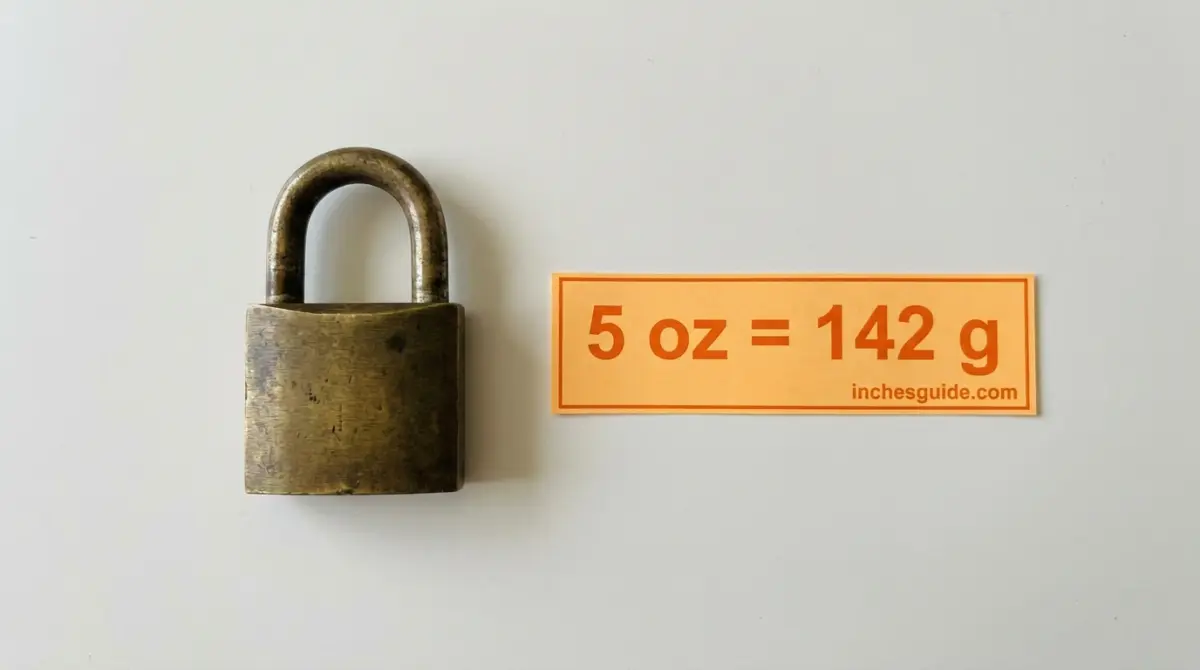
A mid-size brass padlock weighs around 145 grams, almost all of it in the solid body. That density is the same thing that makes one hard to cut.
Brass is a heavy alloy, so even a lock that fits in your palm carries real weight. A 40 mm padlock, the common gym or locker size, is the one in this range.
Lighter aluminum or laminated-steel locks of the same size weigh noticeably less, so the solid-brass kind is the dependable 5 oz match.
A Small Handheld Stapler
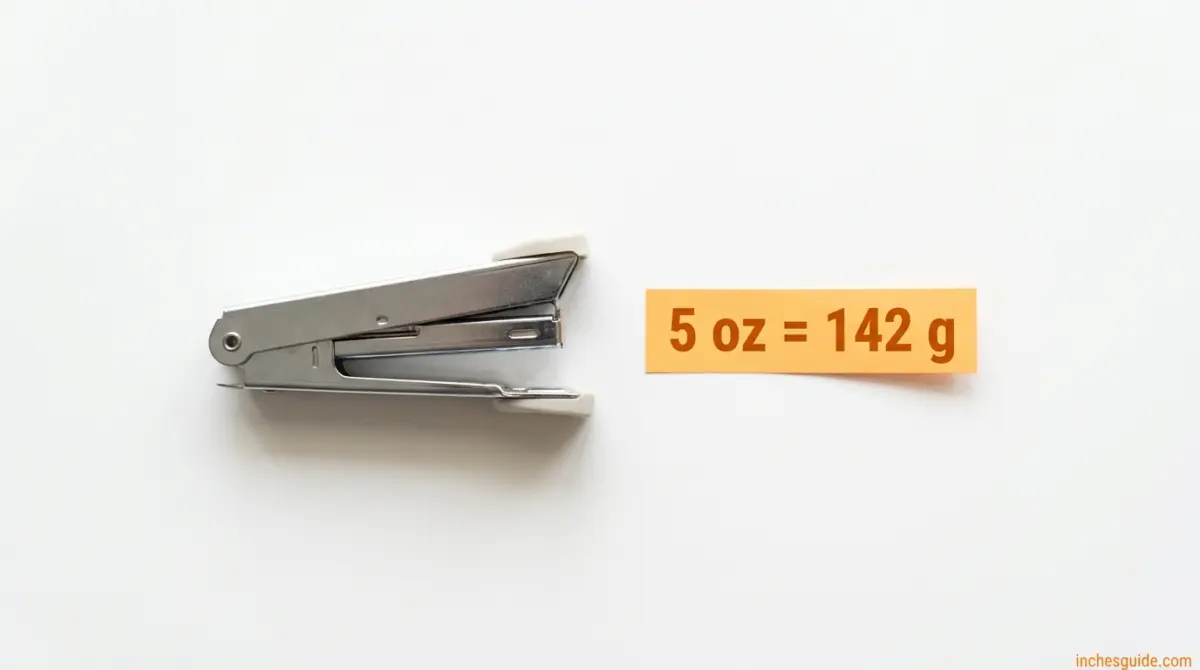
A compact desk stapler comes in around 145 grams. The metal spring and strike plate inside account for most of that, even on the small ones.
The plastic housing is light. It’s the steel mechanism that gives a stapler its surprising heft, and that weight is also what keeps it steady when you press down.
Full-size heavy-duty staplers run far heavier, so it’s the little handheld or travel model that sits right at 5 oz.
A Glass of Wine
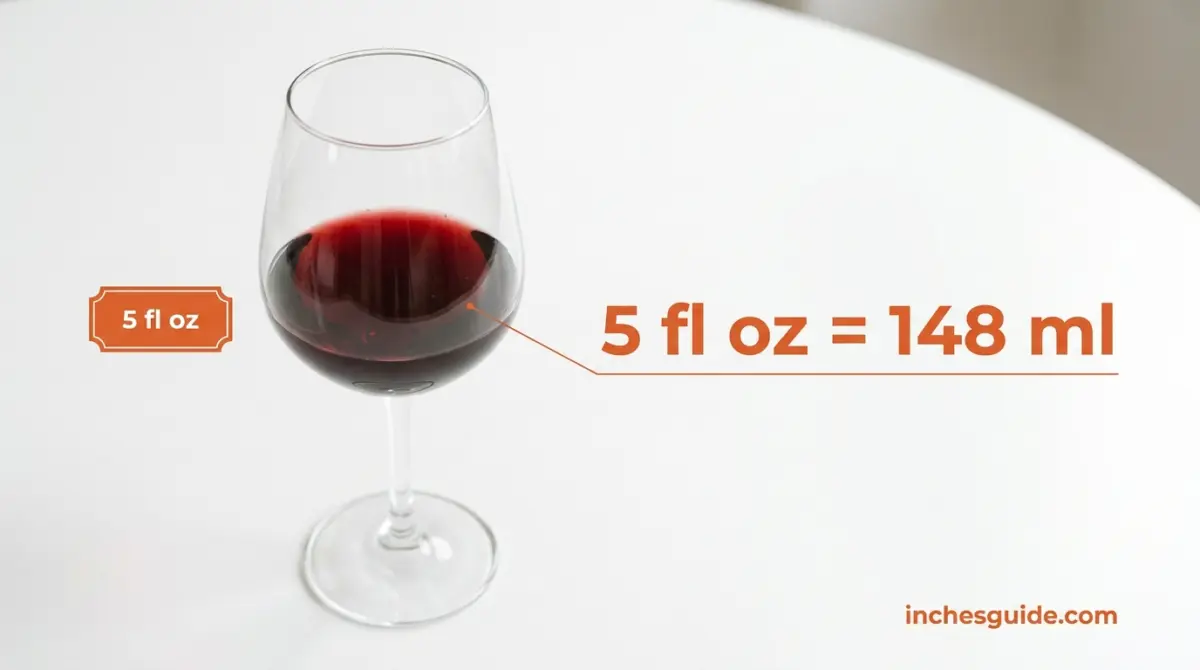
A standard single pour of 5 oz of wine is about 148 ml. This is volume rather than weight, and it’s why a correctly filled glass looks only a third full.
Restaurants and drinking guidelines both treat this 5 oz pour as one serving, which is how the number became standard in the first place. For how to pour 5 oz of wine, that low fill line is the target.
The oversized glass isn’t there to shortchange you. The space lets the wine breathe and gives room to swirl, while the liquid still measures the same 5 oz.
A 5 oz Bottle of Cologne
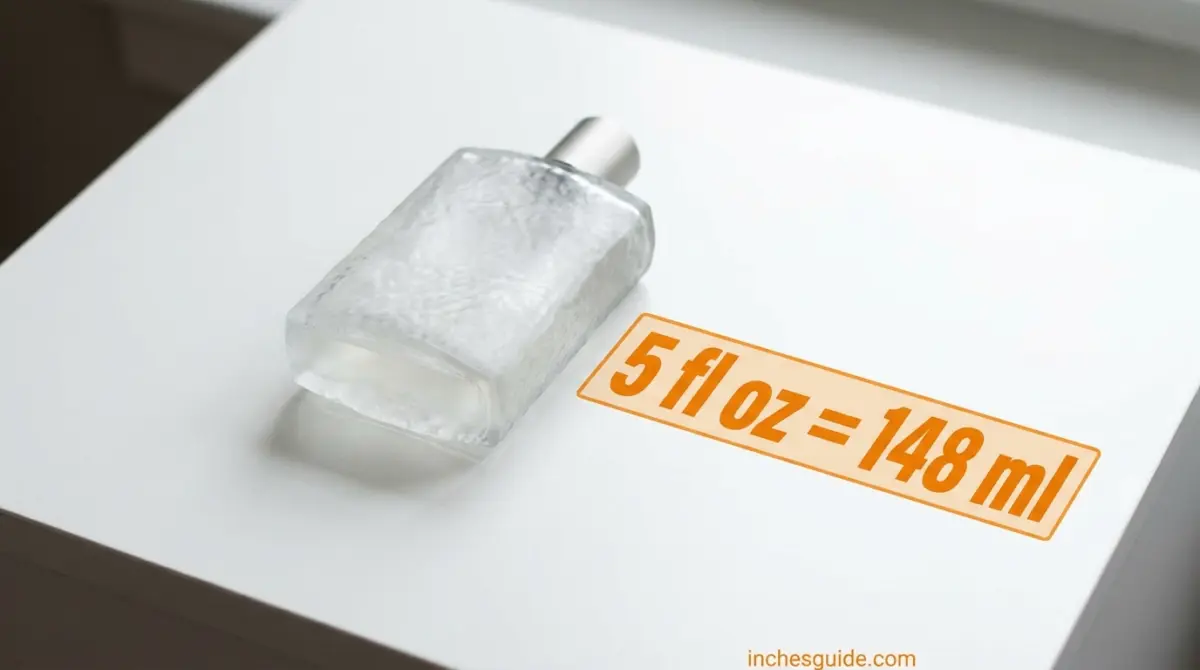
A full 5 fl oz bottle of cologne holds about 148 ml, which converts 5 oz to ml of perfume. It’s the large size, well above the 100 ml most designer bottles come in.
Fragrance is sold by volume, so a 5-oz bottle is roughly a year of daily wear for most people. The thick glass and pump add real weight on top of the liquid itself.
Body sprays and aftershaves turn up in this size more often than fine perfume, which usually comes in smaller sizes because it costs more per ounce.
Weight Ounces vs Fluid Ounces, Quickly
A weight ounce measures how heavy something is, so 5 oz means how many grams come out to 141.7 grams. A fluid ounce measures volume, the space a liquid takes up, so 5 fl oz is about 148 ml.
For water, the two read almost the same, since water weighs close to a gram per ml. For anything thicker or lighter, like honey or flour, they drift apart quickly.
FAQs
How many grams is 5 oz?
By weight, 5 oz is about 141.7 grams. That’s the number to use for food, mail, and most everyday objects.
Is 5 oz the same as 5 fluid ounces?
No. Weight ounces measure heft, fluid ounces measure volume. They only line up closely for water-like liquids.
How many cups is 5 oz?
Five fluid ounces is 0.625 cups, a little more than half a cup. So 5 ounces in a cup is five-eighths full.
How much is the 5 oz silver price?
Silver sells by the troy ounce, so 5 oz weighs 155.5 grams. In the mid-$60s per ounce lately, that runs roughly $325 to $345, and it moves daily.
A Tip Before You Measure
Here’s the one that saves you. If a recipe lists 5 oz with no other clue, it almost always means weight for solid food and fluid ounces for anything you pour. A kitchen scale settles the rest in seconds, no math needed.