
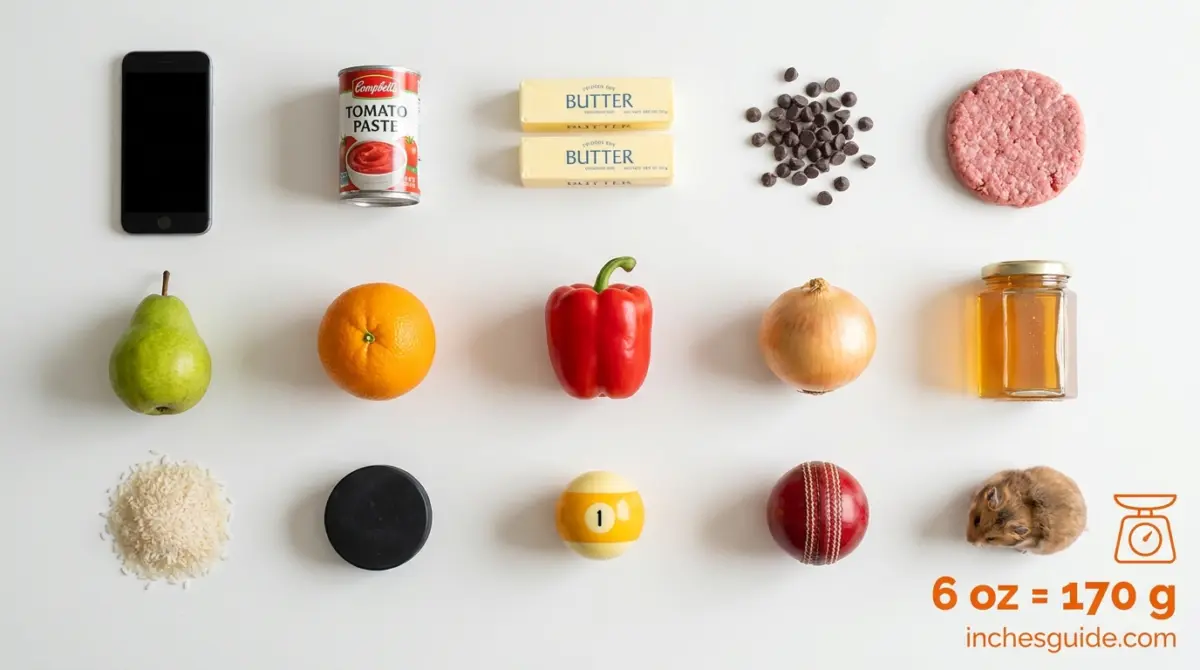
Pick up your phone for a second. That weight sitting in your palm is almost exactly six ounces, give or take a gram.
Most people can rattle off how much a pound is, but go blank on 6 oz. It sits in this awkward middle zone, too small to feel heavy, too big to ignore.
This page sorts it out. You will get every conversion you actually need, then 15 real things that land right around this weight, so you can stop guessing.
Six ounces equals about 170 grams by weight, or 177 ml (three-quarters of a cup) when you are measuring liquid. That is roughly the weight of a smartphone.
6 Oz at a Glance
| Unit | What 6 oz comes to |
|---|---|
| Grams | about 170 g |
| Kilograms | 0.17 kg |
| Pounds | 0.375 lb (just past a third of a pound) |
| Fluid ounces (liquid) | 6 fl oz |
| Milliliters (liquid) | about 177 ml |
| Liters | 0.177 L |
| Cups (liquid) | three-quarters of a cup |
| Tablespoons | 12 tbsp |
| Teaspoons | 36 tsp |
| Butter | one and a half sticks |
If you just worked through our 5 oz breakdown, the layout here will feel familiar. One ounce up, a whole new set of objects.
Weight or Liquid? The One Thing That Trips People Up
Here is the catch nobody mentions. Ounces measure two different things, and they are not the same.
When you weigh something solid, 6 ounces is 170 grams. When you measure a liquid, 6 fluid ounces is a volume, about 177 ml or three-quarters of a cup.
Water is the reason the two get confused. 6 oz of water in ml comes to roughly 177 ml, and that water happens to weigh close to six ounces too, because water is about one gram per milliliter. So for water, the weight and the volume nearly line up.
Pour something thicker, like honey or oil, and the trick falls apart. The volume stays the same, but the weight changes completely. Keep that in your back pocket for the kitchen.
15 Everyday Things That Land Right Around 6 Oz
These are not random. Each one sits close to that 170-gram mark, and I have skipped the usual suspects so you get fresh comparisons instead of the same apple and chicken breast everyone else lists.
A Smartphone
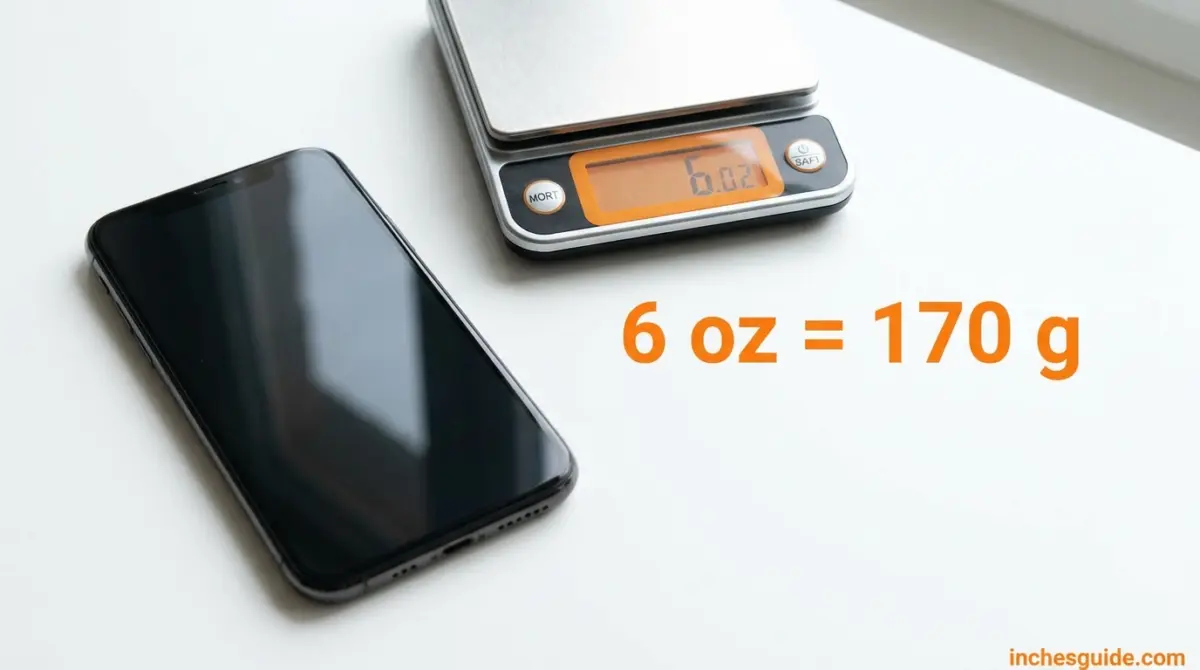
Start with the thing already in your hand. A standard iPhone 15 weighs 171 grams, which works out to 6.02 ounces. You could not get much closer if you tried.
That weight is no accident. It is glass on the front, glass on the back, an aluminium frame, and a battery that makes up a big chunk of the total. Engineers fight over every gram, and this is where it settled.
Next time someone asks what six ounces feels like, just hand them your phone.
A Can of Tomato Paste
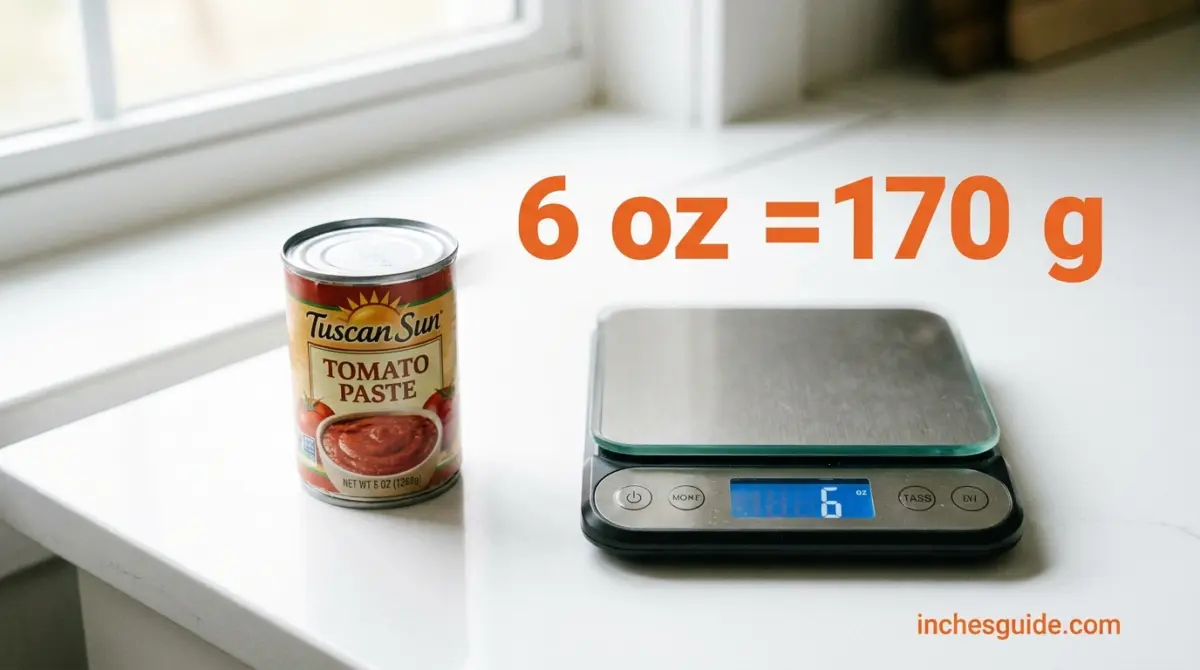
Open most pantries, and you will find one of these. The little can of tomato paste is sold at 6 ounces almost everywhere, which makes it one of the few objects that is exactly this weight by design.
Why so small? Paste is concentrated. It takes well over two pounds of fresh tomatoes to cook down into one of these tiny tins, so a little goes a long way.
That is also why recipes call for a tablespoon at a time. A whole can is a lot of flavour packed into not much space.
A Stick and a Half of Butter
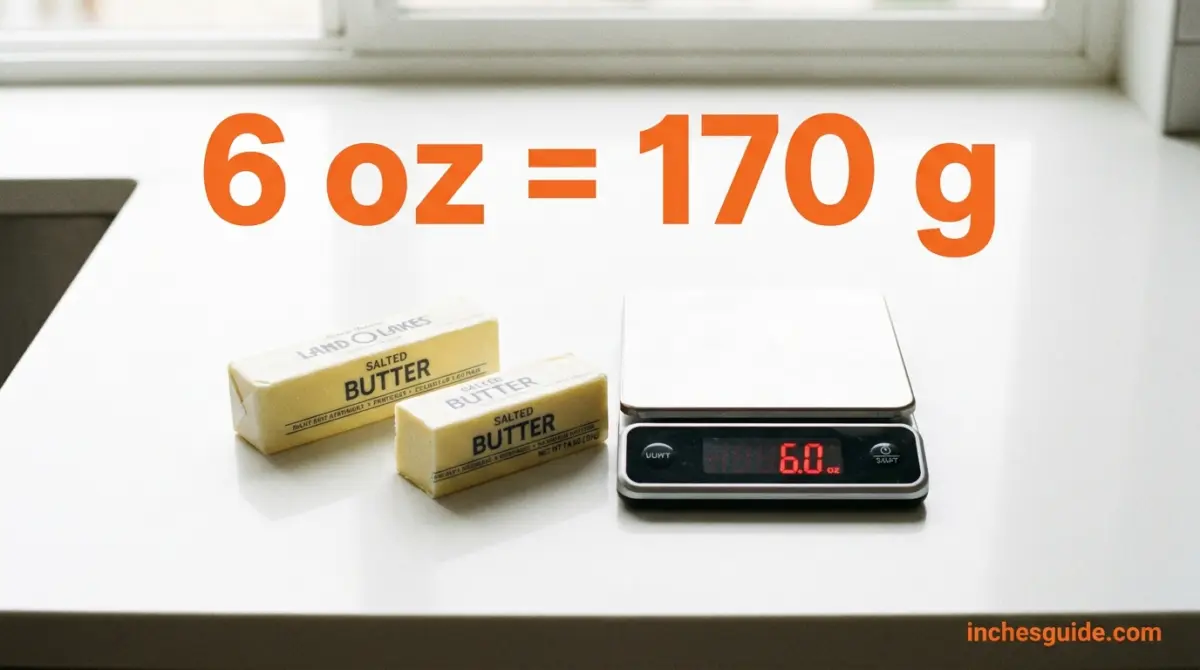
Bakers will like this one. A single stick of butter is 4 ounces, so a stick plus half of another gets you to 6 oz of butter in grams, which is 170. That is also 12 tablespoons if you would rather measure that way.
The four-ounce stick is mostly an American habit. It traces back to old dairy moulds, and the rest of the world tends to sell butter in 250-gram blocks instead.
So if a recipe from the US asks for six ounces of butter, you are looking at a stick and a half, no scale required.
A Cup of Chocolate Chips
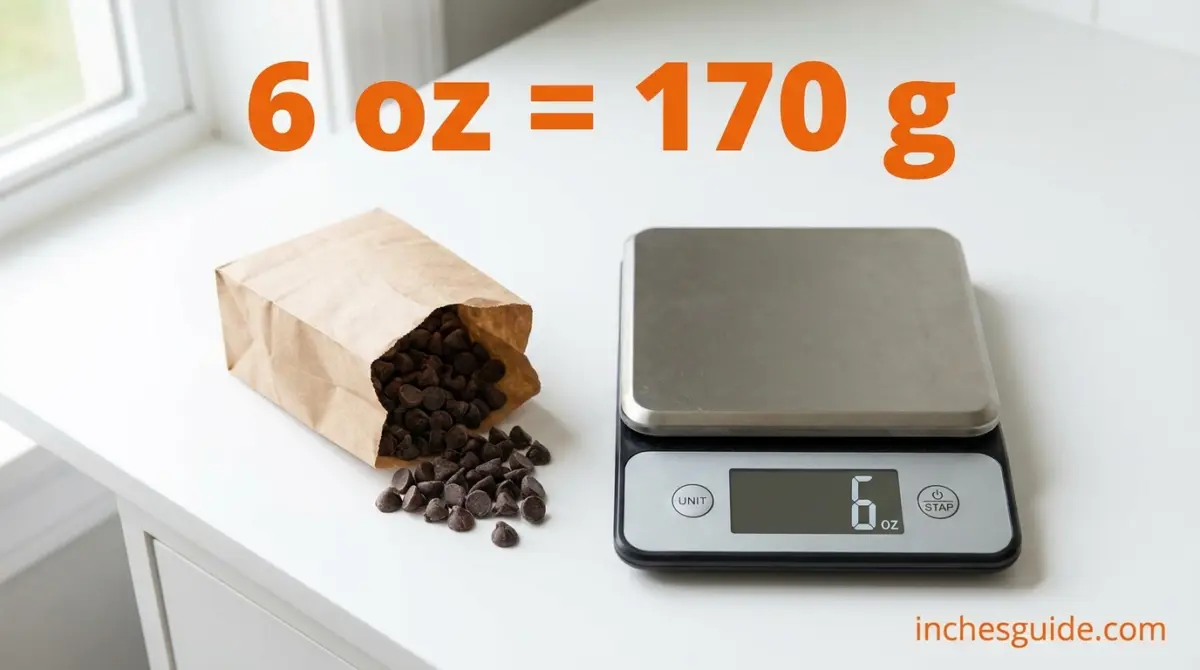
Here is a happy coincidence for anyone who bakes. How much is 6 oz of chocolate chips? It comes out to almost exactly one cup, which is the amount most cookie recipes ask for anyway.
That is part of why smaller bags get packaged at six ounces. It is one batch of cookies, no leftovers rattling around the cupboard.
And yes, this is one of those cases where weight and volume happen to match up nicely. One cup, six ounces, 170 grams. Easy to remember.
A 6 Oz Burger Patty
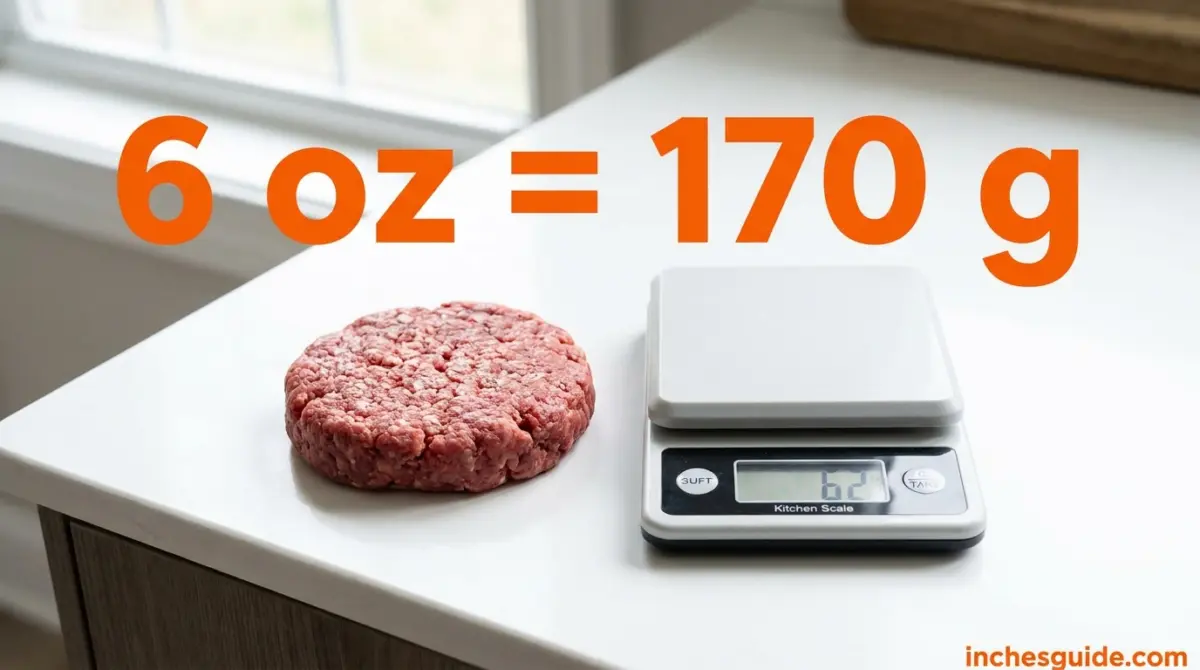
A quarter-pound patty is 4 ounces. Bump it up to six, and you have the kind of burger most places call a “big” or “premium” size.
Meat shrinks as it cooks, though, and that surprises people. A raw 6-ounce patty loses around a quarter of its weight on the grill, ending up closer to four and a half ounces on the bun.
So the patty you bite into was a fair bit heavier before it hit the heat.
A Medium Pear
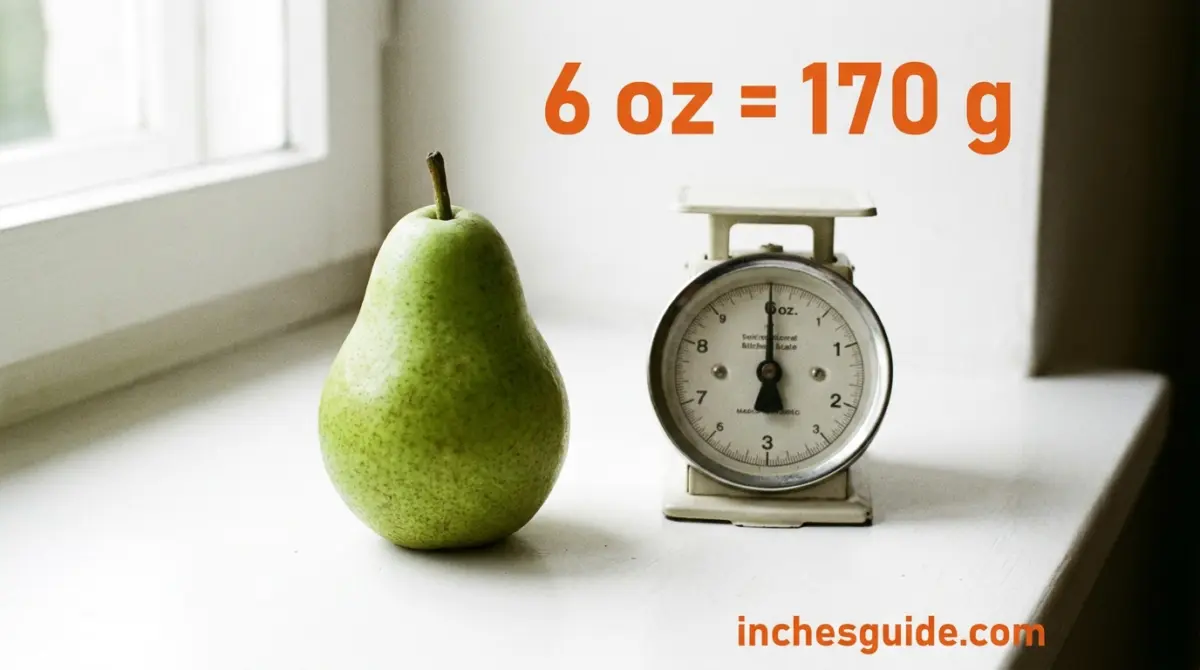
A medium pear runs about 178 grams, which lands a touch over six ounces. The exact figure swings with how ripe it is, since fruit loses a little water as it sits.
Pears do something odd, too. They ripen from the inside out, so the centre softens before the outside ever gives way. Press near the stem to check.
That inside-out ripening is why a pear can feel firm yet be perfect within.
A Large Navel Orange
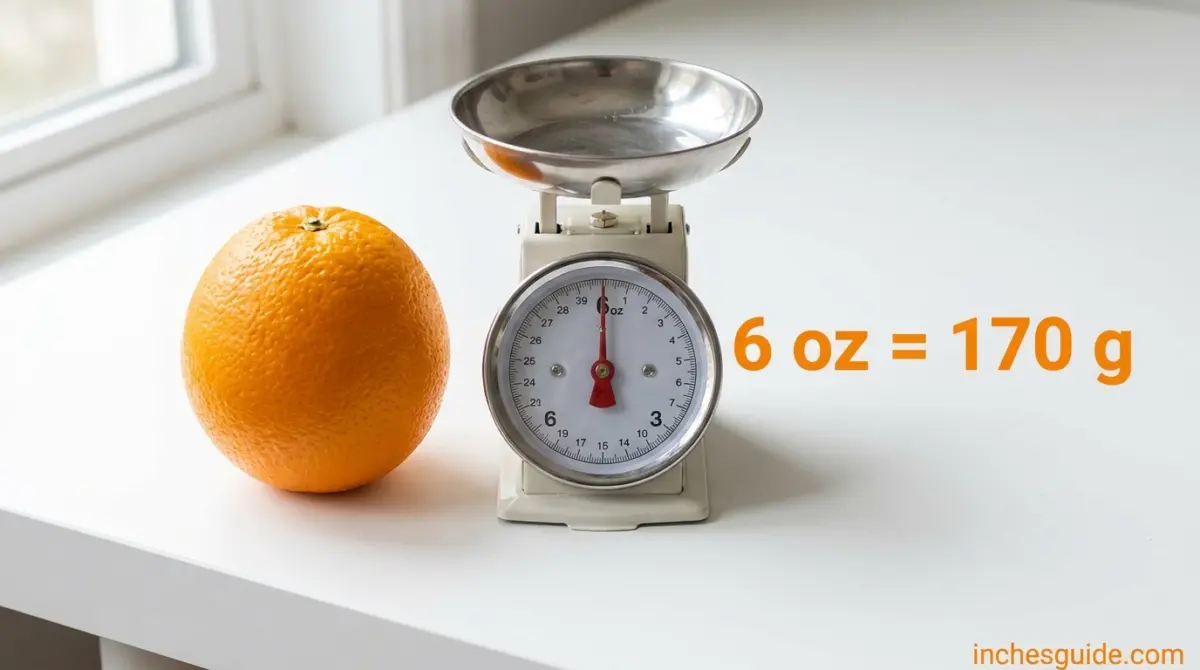
Grab a big navel orange, and you are holding roughly six ounces of citrus. The thick peel and all that juice add up fast.
The navel itself is the fun part. That little dimple at the bottom is actually a tiny, undeveloped second fruit growing inside the main one. Peel one open, and you can spot it.
These oranges are also seedless, which is why they ended up as the go-to snacking orange.
A Large Bell Pepper
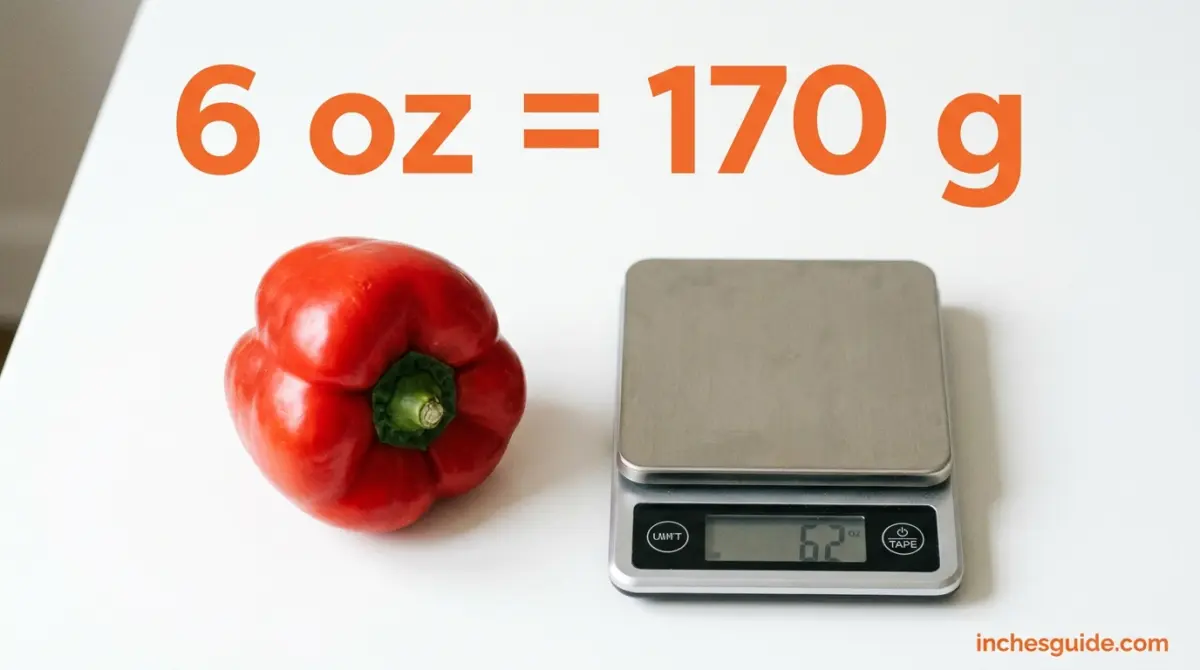
A big bell pepper sits right around 170 grams, and almost all of that is water. These things are about 92 percent water, which is why they feel light for their size yet still tip the scale to six ounces.
A red one will usually weigh a bit more than a green one. That is because red peppers are just green peppers left to ripen longer, so they get sweeter and a little heavier.
Same plant, more time on the vine, different colour and weight.
A Medium Onion
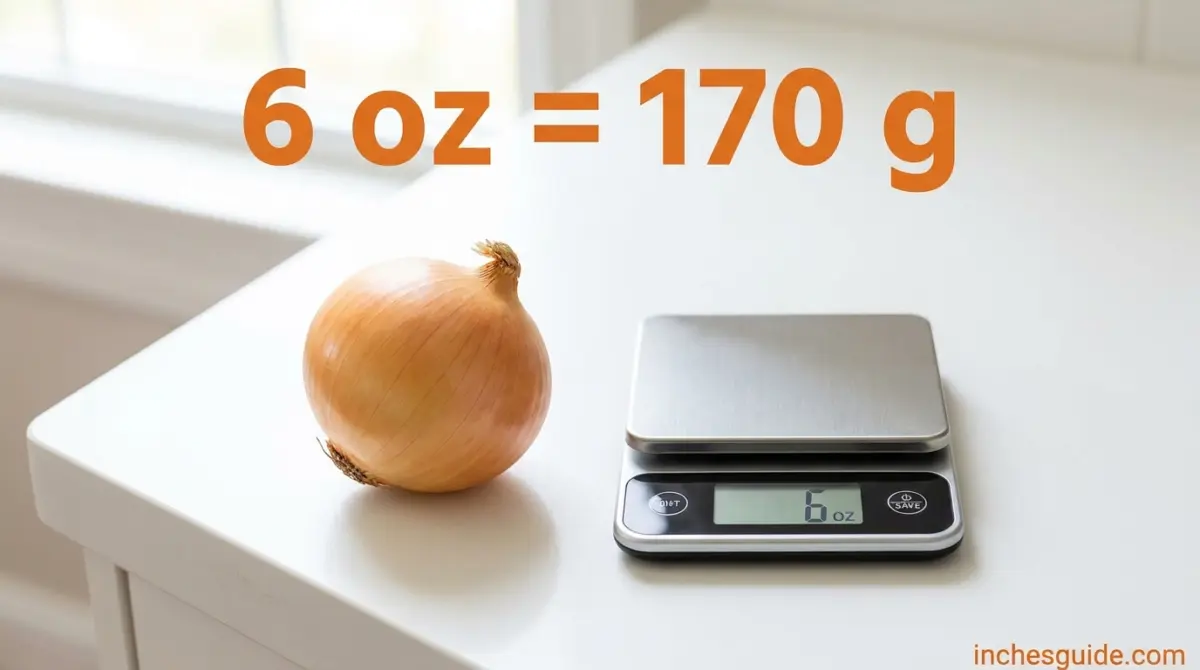
When a recipe says “one medium onion,” it is roughly picturing six ounces. A good handful of a yellow onion gets you there.
Onions are nearly 90 percent water, which is the whole reason chopping one makes you cry. Cutting ruptures the cells and releases a compound that drifts up into your eyes.
Chill the onion first, and it weeps less. The cold slows that reaction down.
Half a Cup of Honey
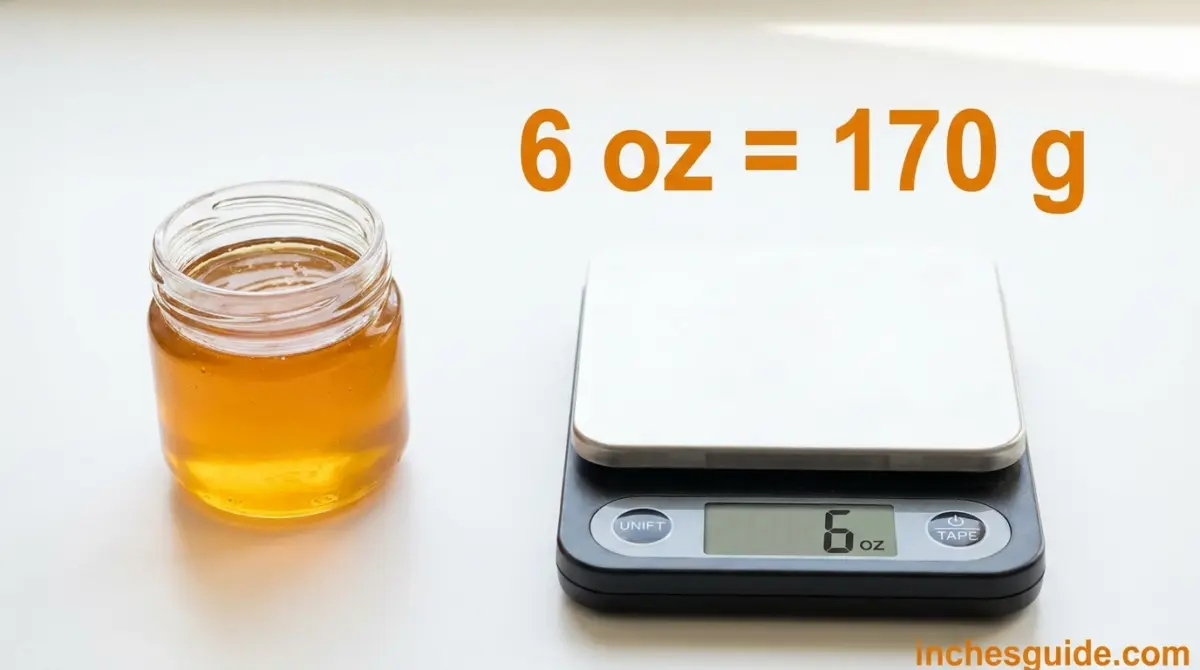
This is where the weight versus volume thing earns its keep. Only half a cup of honey weighs about six ounces, while half a cup of water weighs nowhere near that.
Honey is dense. It is loaded with sugar and barely any water, so it packs far more weight into the same space than most liquids.
And it basically never goes bad. Sealed jars of honey have been found in ancient tombs still perfectly edible, thanks to the low moisture.
A Cup of Dry Rice
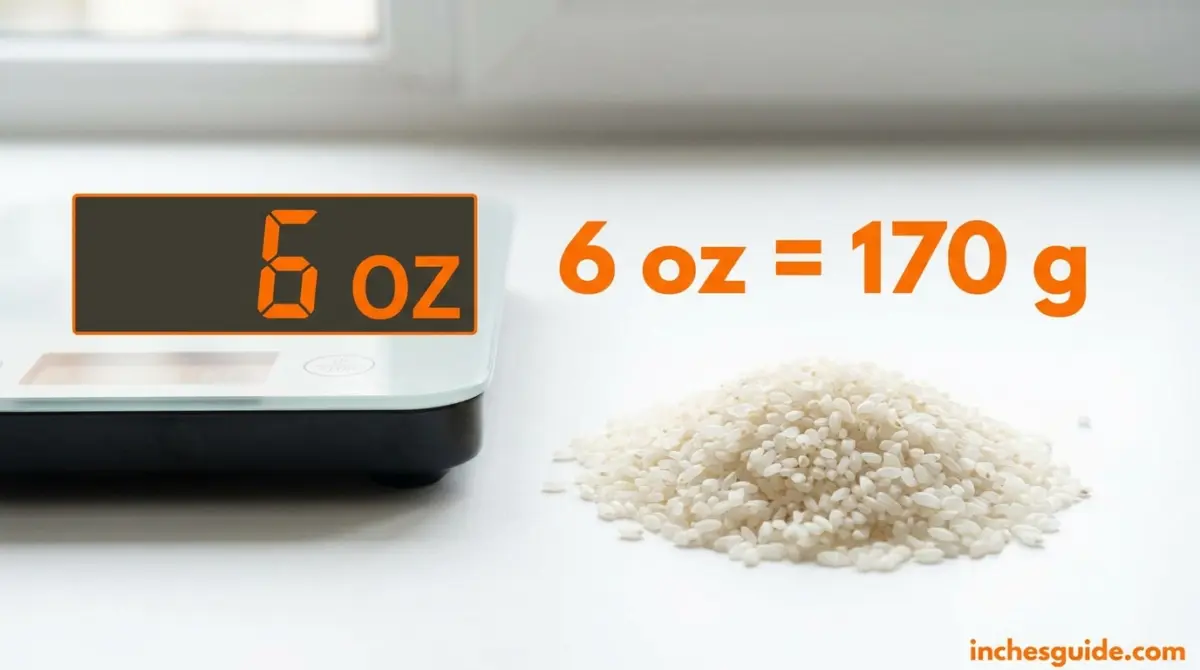
A level cup of uncooked white rice weighs a little past six ounces, closer to 185 grams. Scoop out a slightly less than full cup and you’ve got it dialled in.
Rice roughly triples once it cooks, soaking up water as it goes. So that modest cup turns into a generous serving for two or three people.
Worth knowing when you are eyeballing portions, and the bag has no scoop.
A Hockey Puck
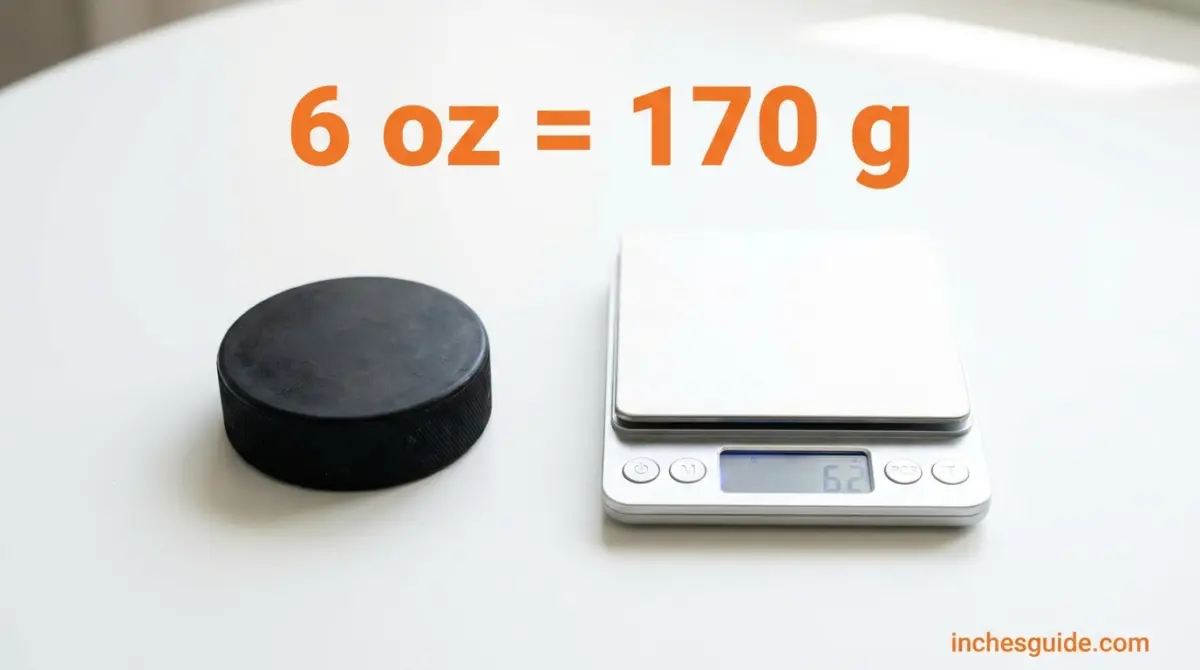
A regulation ice hockey puck is the cleanest match on this list. The standard black puck weighs exactly 6 ounces, or 170 grams, by NHL rule.
That weight is locked in for a reason. Too light and the puck flutters off course, too heavy and it slows the game down and raises the injury risk. Six ounces is the sweet spot.
One more thing. Teams freeze the pucks before each game so they slide more cleanly and bounce less on the ice.
A Pool Ball
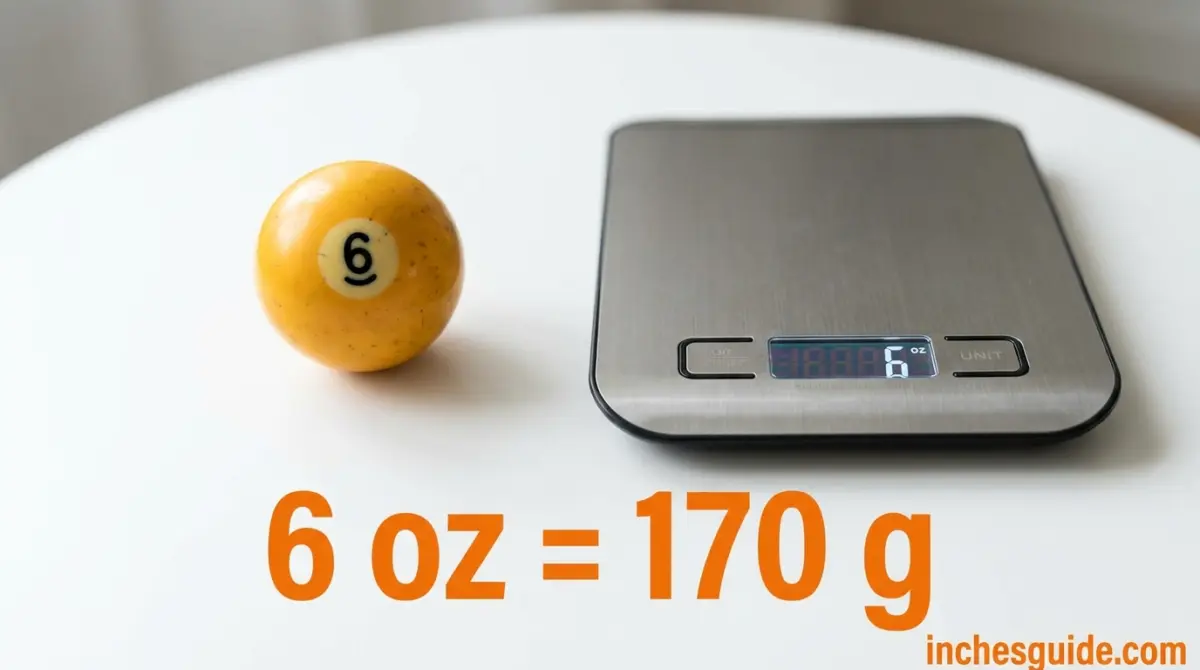
A regulation pool ball weighs between 5.5 and 6 ounces, with most landing near the top of that range, around 165 grams. So a single ball is a tidy stand-in for six ounces.
The catch is that every ball in a set has to weigh the same. A heavy ball or a light one would wreck how the rack breaks and how shots roll.
These used to be carved from ivory. Today they are phenolic resin, which is tougher and keeps that uniform weight far better.
A Cricket Ball
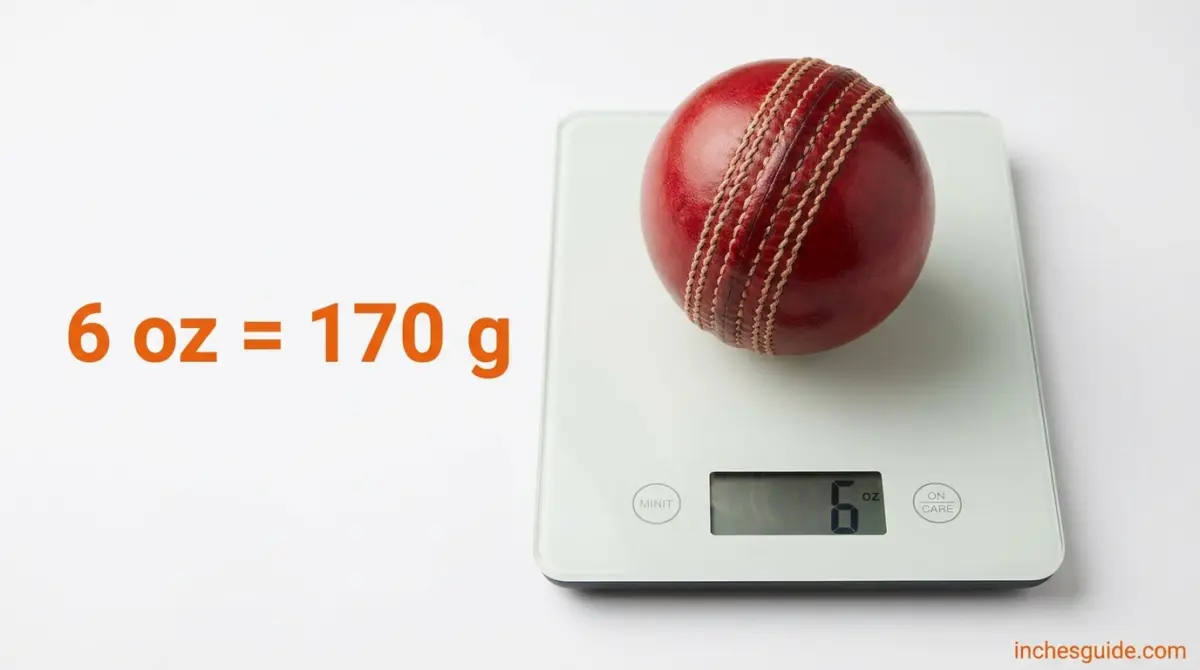
A men’s cricket ball weighs 155.9 to 163 grams, which is 5.5 to 5.75 ounces. It sits just a hair under six, close enough to feel the same in your hand.
That heft comes from a cork core wound tightly with string, then wrapped in stitched leather. The hard, dense build is what lets it swing and bounce the way bowlers want.
Pick one up against a baseball and you will notice the cricket ball is the heavier of the two.
An Adult Syrian Hamster
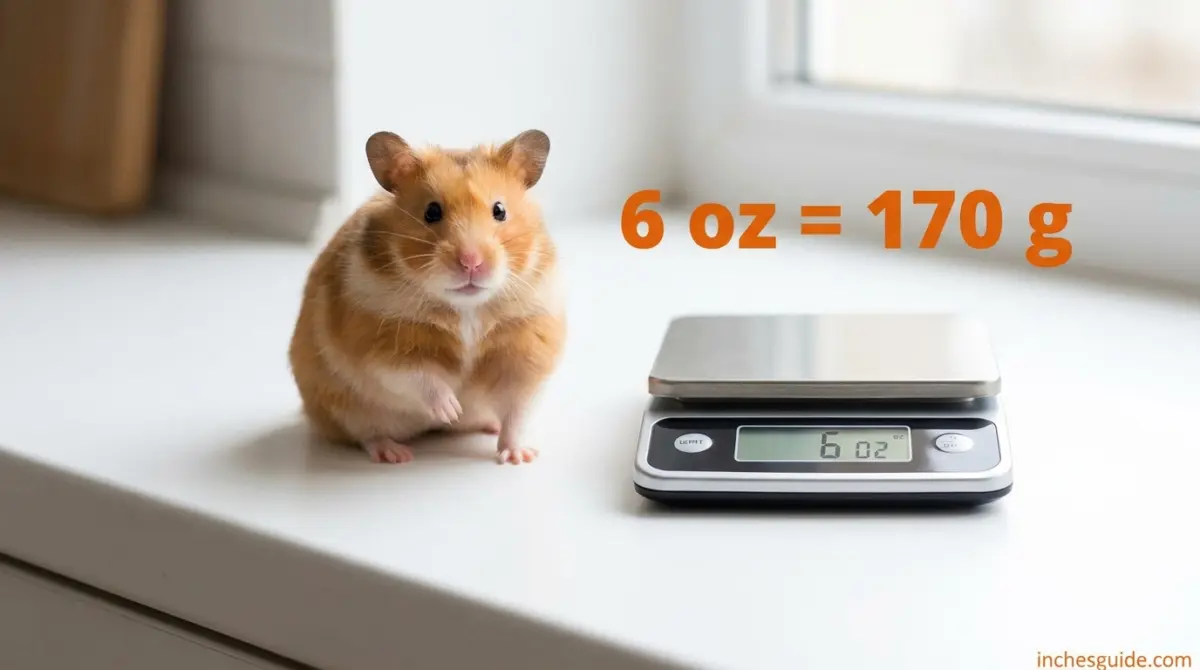
To end on something with a heartbeat, a well-fed adult Syrian hamster weighs about six ounces. The bigger males can sit right at that 170-gram mark.
A chunk of that weight can be cargo. Hamsters stuff food into their cheek pouches, and a full set of pouches can hold a startling amount relative to their size.
So part of what you are weighing might be tomorrow’s snacks tucked away in their cheeks.
No Scale? Here Is How to Eyeball 6 Oz
You do not need a kitchen scale for most of this. A few quick tricks cover it.
For liquids, reach for 6 oz in measuring cups: three-quarters of a cup does it. If you only have spoons, 12 tablespoons get you the same amount.
A measuring glass marked in fluid ounces is even simpler. Fill it to the sixth line, and you are done.
Dry ingredients are trickier, since “what is 6 oz in measuring cups dry” depends entirely on the ingredient. A cup of flour and a cup of sugar weigh different amounts, so lean on the object comparisons above or a proper conversion instead.
For meat, use your hand. A palm-sized piece of chicken or fish is usually right around six ounces.
6 Oz of Chicken, Steak, and Salmon: The Protein Numbers
A lot of people search this number because of meal planning, so here are the figures that matter.
A cooked 6 oz chicken breast weighs about 170 grams and delivers roughly 52 grams of protein. That is a solid single serving for most plans.
Six ounces of steak gives you somewhere near 46 grams of protein, depending on the cut. Salmon comes in lower, around 34 grams, since it carries more healthy fat in place of some protein.
Keep one thing in mind. These weights are for cooked portions. Raw meat weighs more and shrinks on the heat, so a 6-ounce cooked serving started life a bit heavier.
Why 6 Oz of Gold Is Not the Same 6 Oz as Your Dinner
This one catches everyone off guard. Precious metals do not use the ordinary ounce.
Gold, silver, and the rest are weighed in troy ounces. A Troy ounce is about 31.1 grams, while the everyday kitchen ounce is 28.35 grams. So six troy ounces of metal is heavier than six ounces of chicken.
That means how much 6 oz of silver is worth or 6 oz of gold worth is really asking about six troy ounces, priced off the daily spot rate. As of mid 2026, with gold hovering around 4,150 dollars a troy ounce, six ounces run close to 25,000 dollars. Silver, near 65 dollars an ounce, puts six ounces around 390 dollars.
Those numbers move every single day, sometimes sharply, so always check a live price before you trust a figure. The metal does not change weight, but its value never sits still.
Quick Answers
How many grams is 6 oz?
Six ounces by weight is about 170 grams. For most kitchen purposes, you can round to that figure.
How much is 6 oz in cups?
For liquids, six fluid ounces is three-quarters of a cup. Solids vary, so weight is more reliable there.
How many tablespoons are in 6 oz?
Twelve tablespoons make up six fluid ounces, since one fluid ounce is two tablespoons.
Is 6 oz half a cup?
No. Half a cup is 4 fluid ounces. Six ounces is three-quarters of a cup, the next step up.
How much is 6 oz of water?
Six fluid ounces of water is about 177 ml, and it weighs close to six ounces too, which is why people mix up the two.
The Short Version Worth Keeping
Six ounces is 170 grams on a scale, or three-quarters of a cup in a measuring jug. Your phone is the easiest reminder of all. Hold it, and you are holding six ounces.