
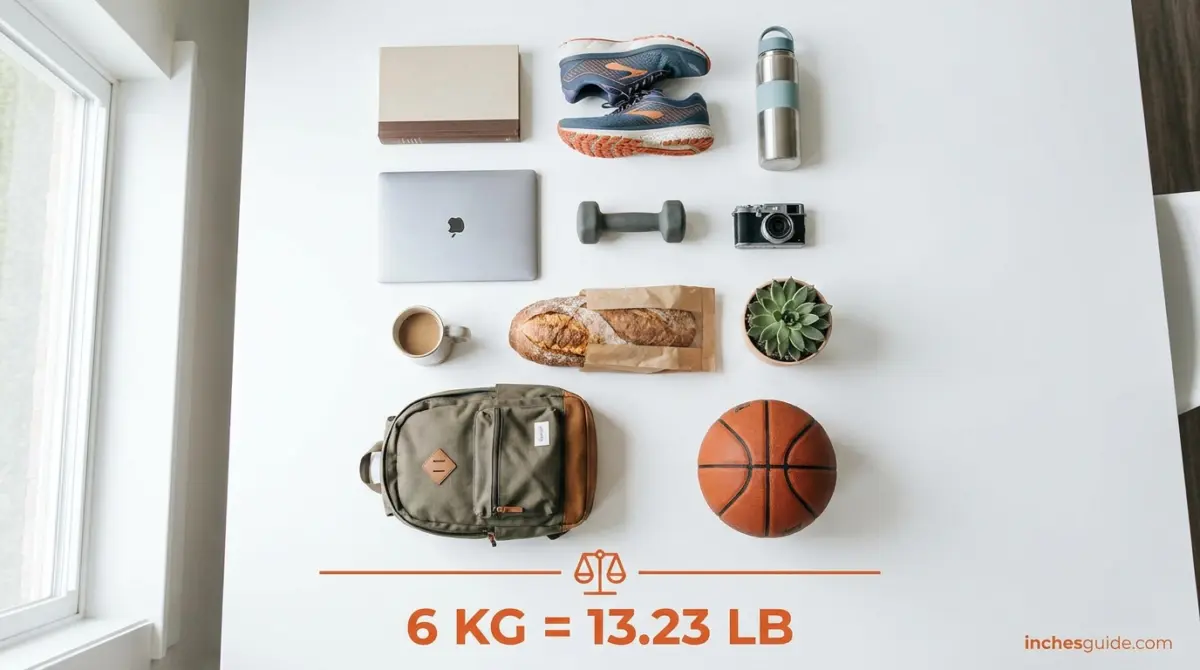
6 Kg is one of those weights that sounds light until you carry it across a car park. On a label, it reads small. In your hand, it starts pulling at your fingers within a minute.
This is the weight of a big house cat, a heavy bowling ball, or six full litres of water. That last one is the shortcut that makes the number easy to picture.
Below you get every conversion for 6 kg, then 11 real objects that land on this weight almost to the gram. No rounding tricks, no filler.
Six kilograms equals 13.23 pounds, 211.64 ounces, or a flat 6,000 grams, which puts it just under one stone.
6 KG Written Out in Every Unit
| Unit | 6 KG Equals |
|---|---|
| Pounds (lb) | 13.23 lb |
| Ounces (oz) | 211.64 oz |
| Grams (g) | 6,000 g |
| Milligrams (mg) | 6,000,000 mg |
| Stone (st) | 0.94 stone |
| Stones and pounds | 0 st 13.23 lb |
| Metric tonnes | 0.006 t |
| US short tons | 0.0066 ton |
| Litres of water | 6 L |
Keep this handy if you ever need 6 kg in pounds for a recipe, a parcel, or a suitcase at the airport check-in desk.
Where 13.23 Pounds Actually Comes From
The whole conversion rides on one number. One kilogram equals 2.20462 pounds, so six of them give you 13.2277 lb.
Round it, and you get the figure everyone uses, 13.23 lb. Push it a step further, and that is 13 pounds and about 4 ounces.
People also ask for 6 kg in stone, which is common in the UK for body weight. It works out to 0.94 stone, or written the old way, 0 stone 13.2 lb.
Why “6 KG in Litres” Depends on What You’re Weighing
This one trips people up. 6 kg to litres only gives a clean 6 L when you are weighing water.
Water weighs roughly 1 kilogram per litre, so weight and volume line up. Pour in something denser, like oil or honey, and 6 kg takes up less room than 6 litres.
So the answer shifts with the liquid. For water, it is tidy. For everything else, you need its density first. If you want the next size up, our breakdown of how much 10 kg weighs runs through a different set of objects.
11 Things That Land Right on 6 KG
Numbers are easy to forget. Objects stick. Here are 11 everyday things that weigh 6 kg or more, and the reason each one landed there.
Six One-Litre Bottles of Water
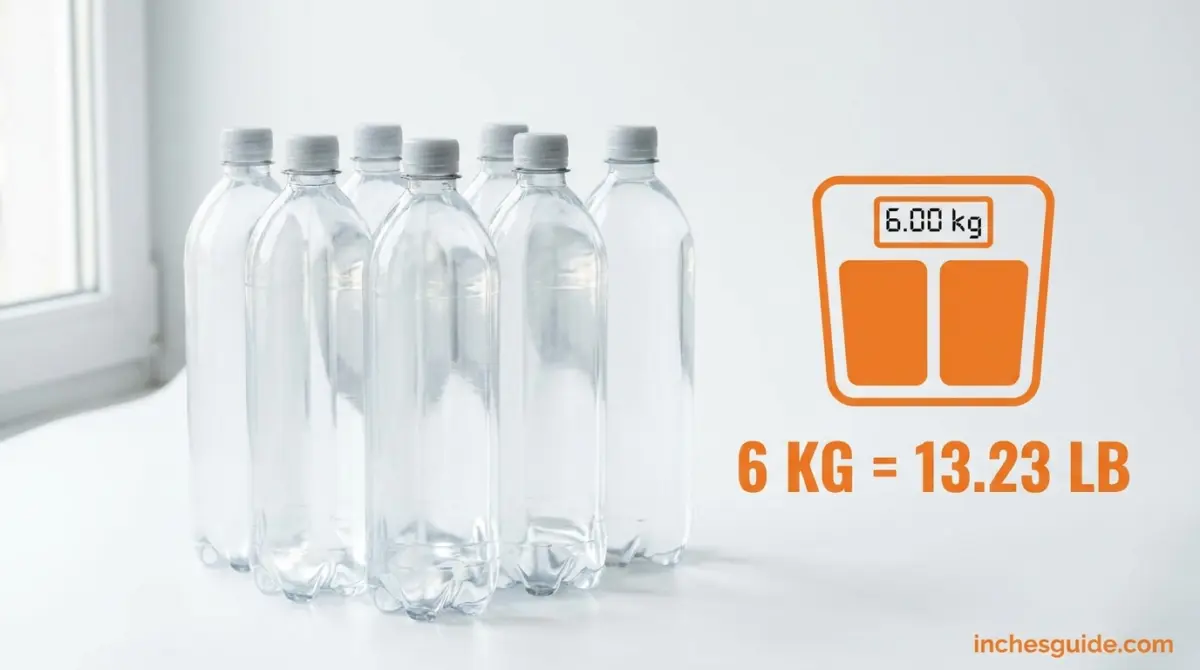
Line up six one-litre bottles, and you are holding an exact 6 kg. This is the cleanest example on the whole list.
Water is defined as close to one kilogram per litre, which is why the maths is so neat. The kilogram itself was once tied to a litre of water.
Every other object here is really just this weight wearing a different shape.
A Medium Watermelon
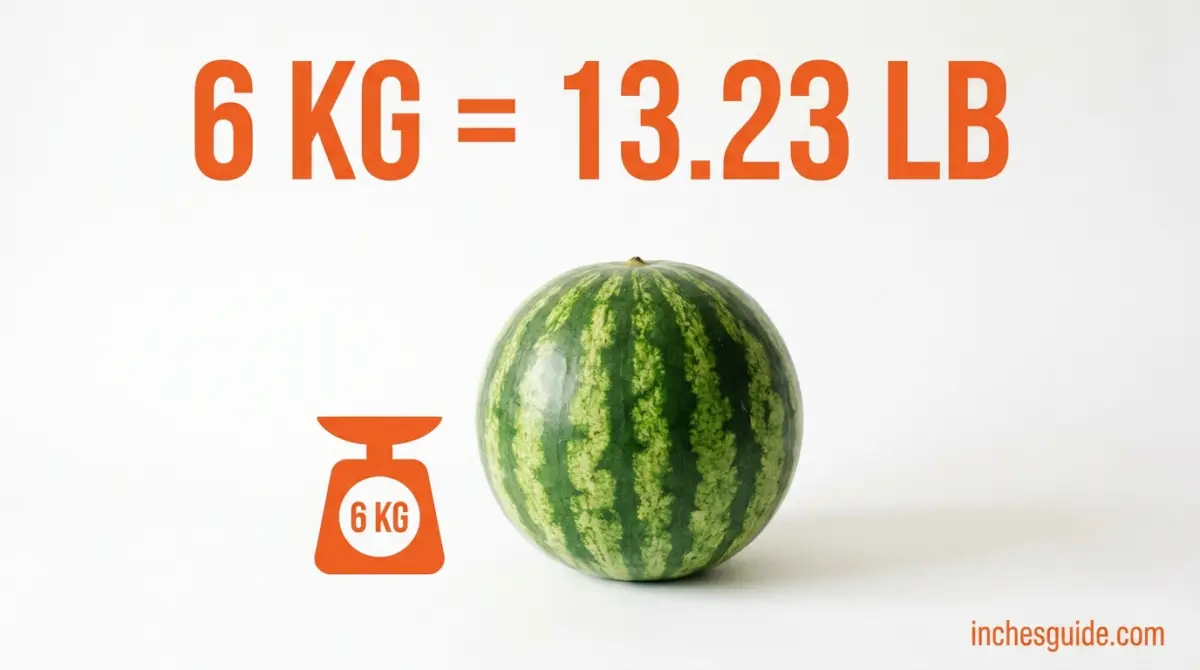
A round supermarket watermelon usually falls between 5 and 7 kg, so a medium one sits right on target. Pick one up, and it feels like a bowling ball with a rind.
The reason is simple. A watermelon is about 92 percent water, so a 6 kg melon is carrying roughly five and a half litres inside its shell.
In other words, it is the water bottles again, just greener and harder to open.
A 6 KG Dumbbell
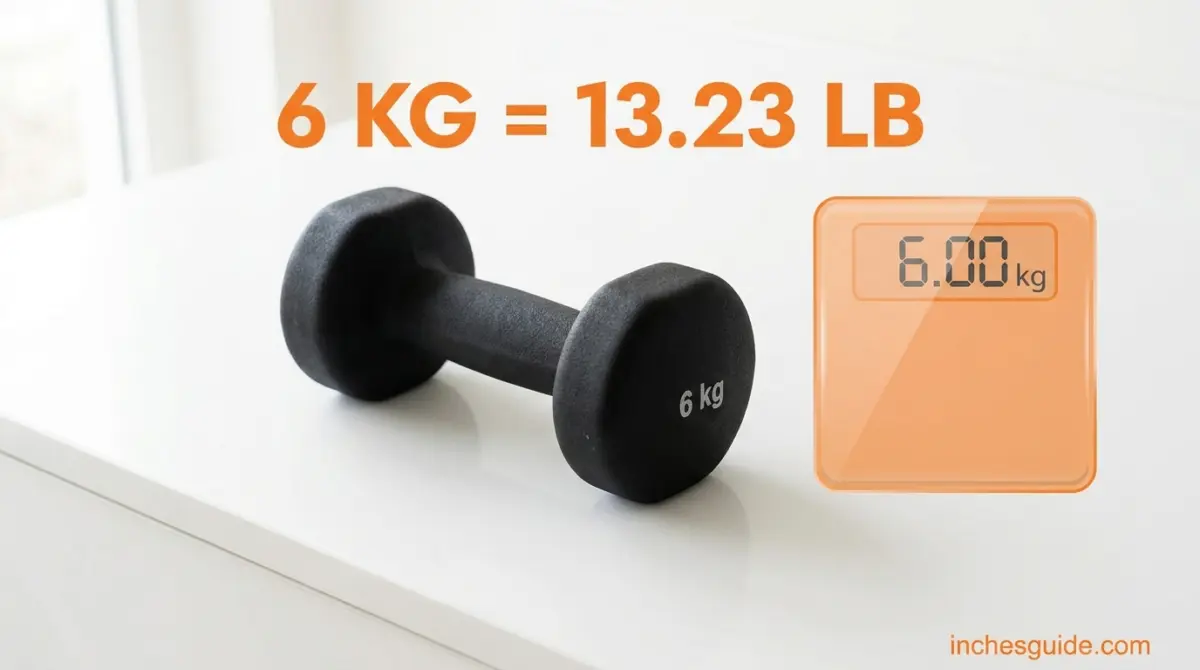
Walk into any gym, and the 6 kg dumbbells are the ones that vanish first. They suit shoulder raises, curls, and controlled presses without wrecking your form.
Dumbbells are cast in fixed steps for a reason. Most lifters cannot feel a jump smaller than about 2 kg mid-set, so racks climb 6, then 8, then 10.
That makes 6 kg the honest starting point for a lot of upper-body work.
A Large House Cat
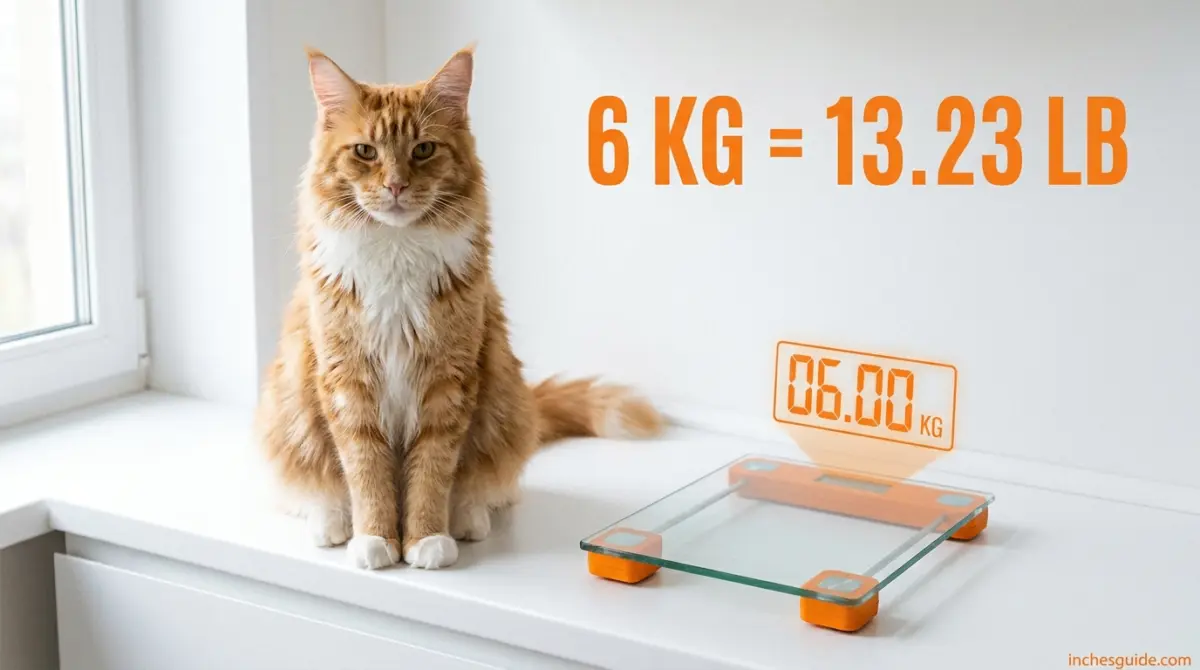
Your average adult cat weighs 4 to 5 kg. A big, well-fed one, or a Maine Coon of almost any age, hits 6 kg without much effort.
Breed does most of the talking here. A Maine Coon can weigh past 8 kg, so a 6 kg cat is chunky but nowhere near a record.
Anyone who has lifted a sleeping cat off their lap already knows this weight by heart.
A Full 5-Litre Tin of Paint
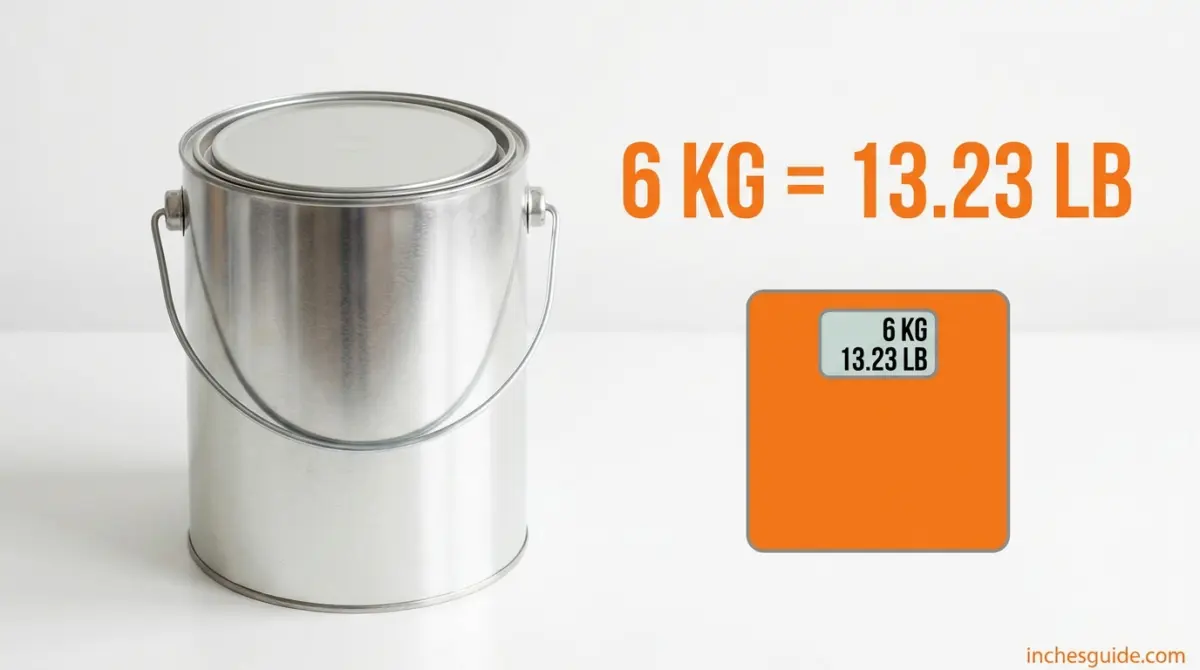
Grab a full 5-litre tin of wall paint, and you are close to 6 kg once the tin is counted. It always feels heavier than the number suggests.
That is because paint is denser than water, around 1.2 to 1.3 kg per litre. It is loaded with pigment and binder, not just liquid.
So a “small” tin can quietly outweigh a bottle twice its size.
A 13-Pound Bowling Ball
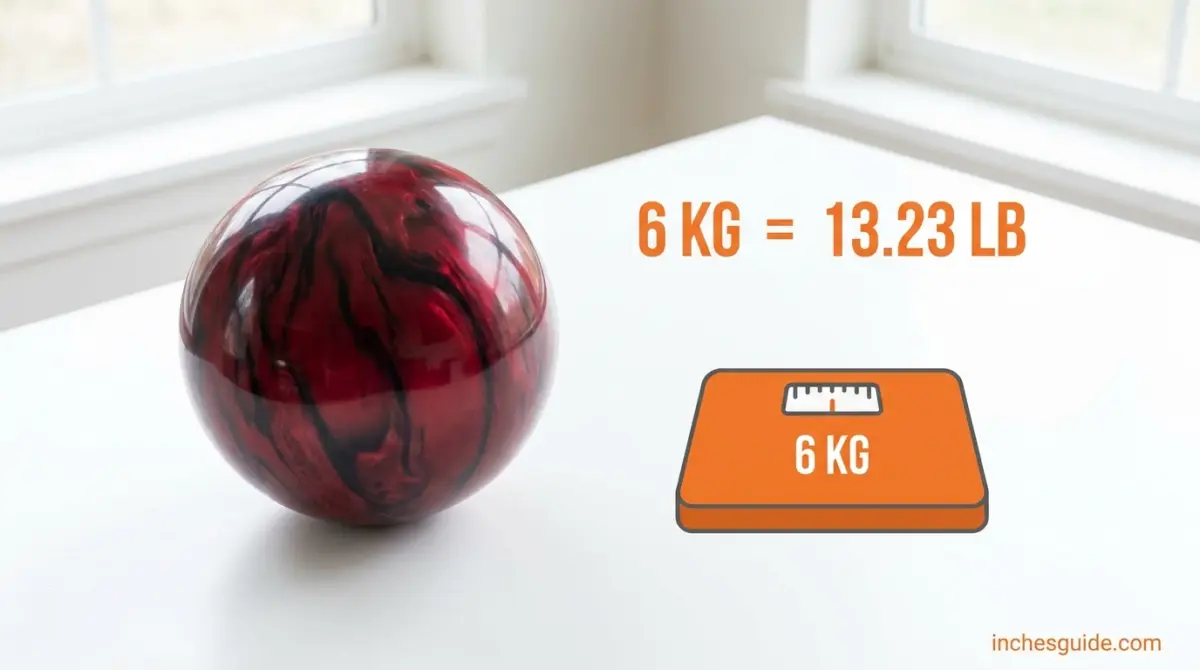
Bowling balls come in one-pound steps up to a legal ceiling of 16 pounds. The 13-pound ball weighs 5.9 kg, a whisker under our target.
That mid-range weight is popular for a reason. It is heavy enough to carry the pins but light enough for most adults to control down the lane.
Next time you grab a house ball, that heft in your palm is basically 6 kg.
A Three-Month-Old Baby
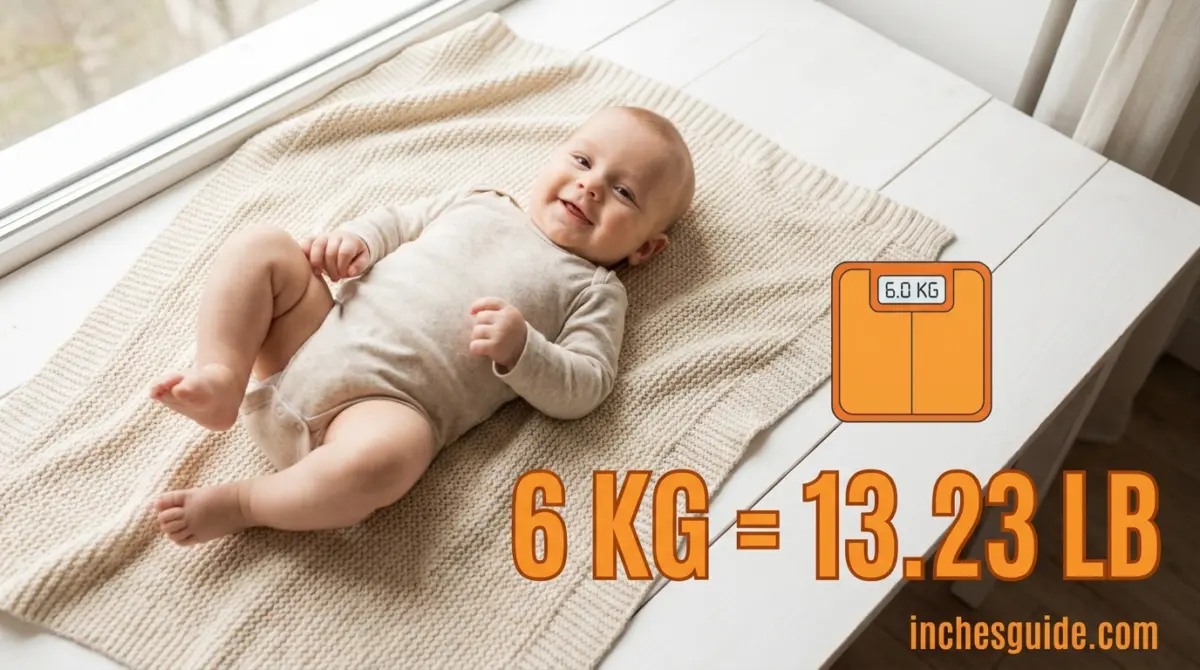
Growth charts put a typical baby near 6 kg at around three months old. By then, most infants have roughly doubled their birth weight.
This is usually the point where parents start noticing their arms. A newborn feels weightless. A three-month-old does not.
It is a soft, wriggling version of the same six kilograms, and far harder to set down.
A 6 KG Kettlebell
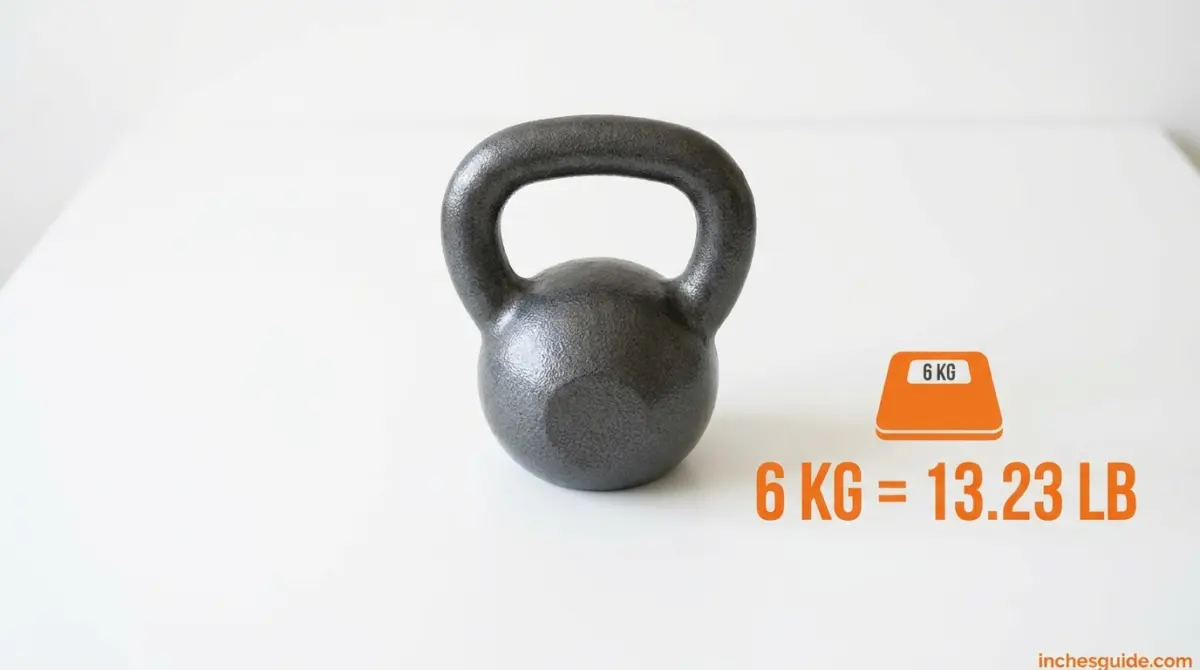
A 6 kg kettlebell shares the weight of the dumbbell, but it does not feel the same in your hand. The load hangs below the handle instead of sitting level with it.
That offset changes everything. Swings and cleans with a 6 kg bar train your grip and hips far harder than a flat bar of the same weight.
Same number on the scale, very different job for your body.
A Canister Vacuum Cleaner
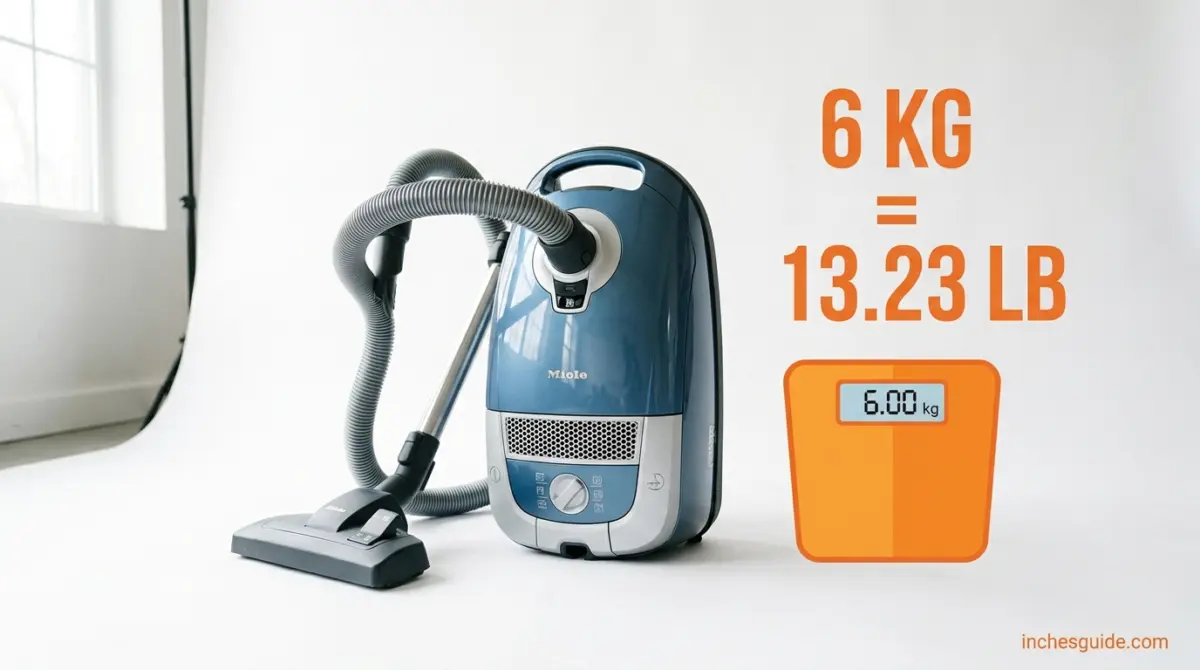
Most canister vacuums weigh in around 5 to 7 kg, which drops a mid-range model to 6 kg. The motor, fan housing, and dust bin add up fast.
Makers fight this weight constantly. A cordless stick vacuum trims it to about 2.5 kg by moving the motor up top and losing the bag.
Drag one across a rug for ten minutes, and you feel every gram.
A 6 KG Sledgehammer
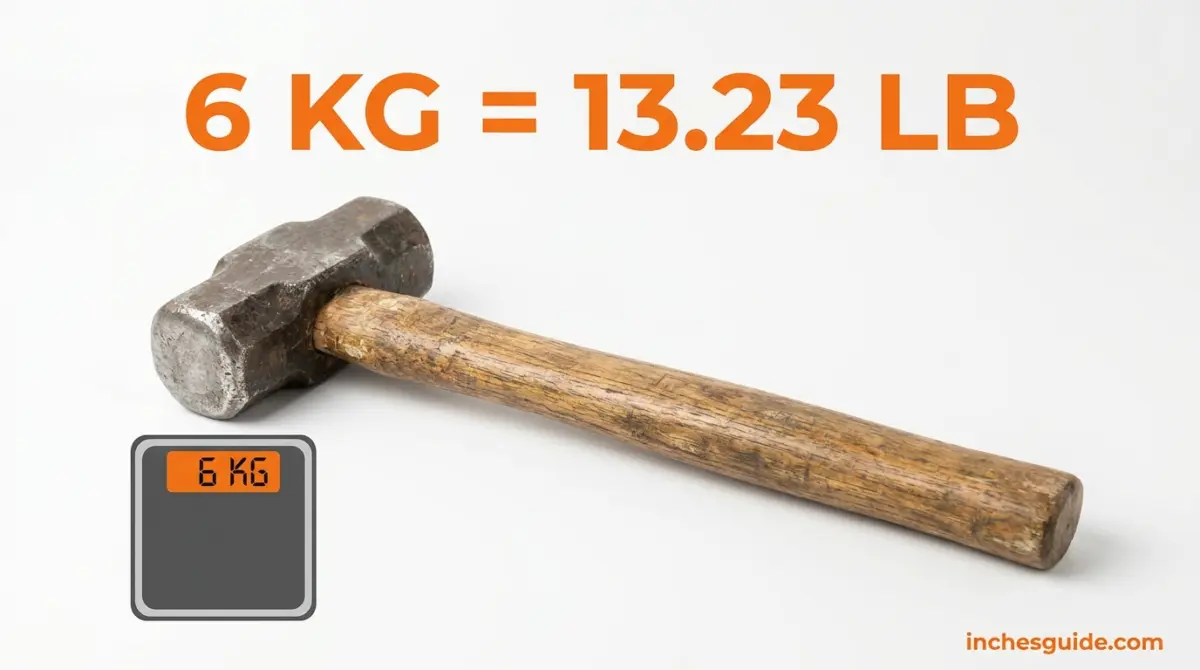
Sledgehammer heads are forged to set weights, and 6 kg, about 13 lb, is a proper demolition size. It is not a tool you swing casually.
The weight is the whole point. A heavy head does its damage through momentum, so a slow, controlled swing beats a fast, wild one.
And all 6 kg sit at the far end of the handle, which is why it feels heavier than a dumbbell of the same mass.
A Whole Turkey
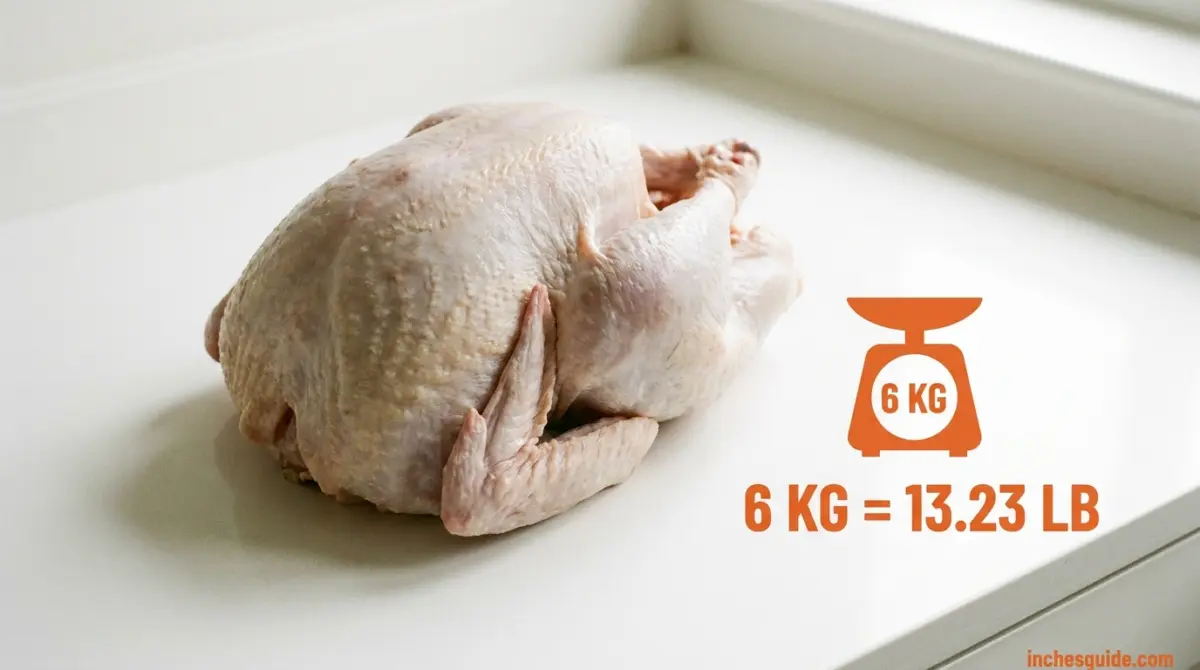
A mid-size turkey runs 5 to 7 kg, so a 6 kg bird is a solid centrepiece for a full table. Lift one out of the fridge, and the number suddenly feels real.
The rough rule is about half a kilo of bird per guest. That puts a 6 kg turkey at roughly a dozen plates, stuffing and seconds included.
Hold it for a minute, and you will never forget what 6 kg feels like.
The Two Other Times People Search “6 KG”
Not every 6 kg question is about objects on a scale. Two big ones show up again and again.
The first is cooking gas. A huge share of searches, especially around Lagos, Ibadan, and the rest of Nigeria, come from people pricing a 6 kg gas cylinder. There, the 6 kg is the gas inside, not the tank, and the cost swings by city and month, so a local vendor beats any figure printed here.
The second is gold. Six kilograms of gold is about 192.9 troy ounces, worth somewhere near 800,000 dollars at today’s rate. Nobody is carrying that in a pocket, but it shows how the same weight can mean wildly different things.
FAQs
How much is 6 kg in pounds?
6 kg is 13.23 lb, or about 13 lb 4 oz. In grams, that is a flat 6,000 g.
How much is 6 kg in stone?
It comes to 0.94 stone, just short of a full stone. Written as stones and pounds, that is 0 st 13.2 lb.
Is 6 kg the same as 6 litres?
Only for water. Water weighs close to 1 kg per litre, so 6 kg fills 6 litres. Denser liquids take up less space for the same weight.
How much is 6 kg of gold worth?
About 192.9 troy ounces. At recent spot prices near 134,600 dollars per kilo, that is roughly 800,000 dollars, though the figure moves daily.
What does a 6 kg gas cylinder weigh when full?
The 6 kg is the gas, not the whole unit. Add the steel cylinder and a full one usually sits around 12 to 14 kg.
Before You Set It Down
Fill six water bottles, lift them once, and 6 kg stops being a number you have to guess. It turns into a weight you can feel in your grip.
That is the whole trick, and it beats any chart. For the lighter end of the scale, our look at how heavy 6 oz is uses a completely different set of objects.