
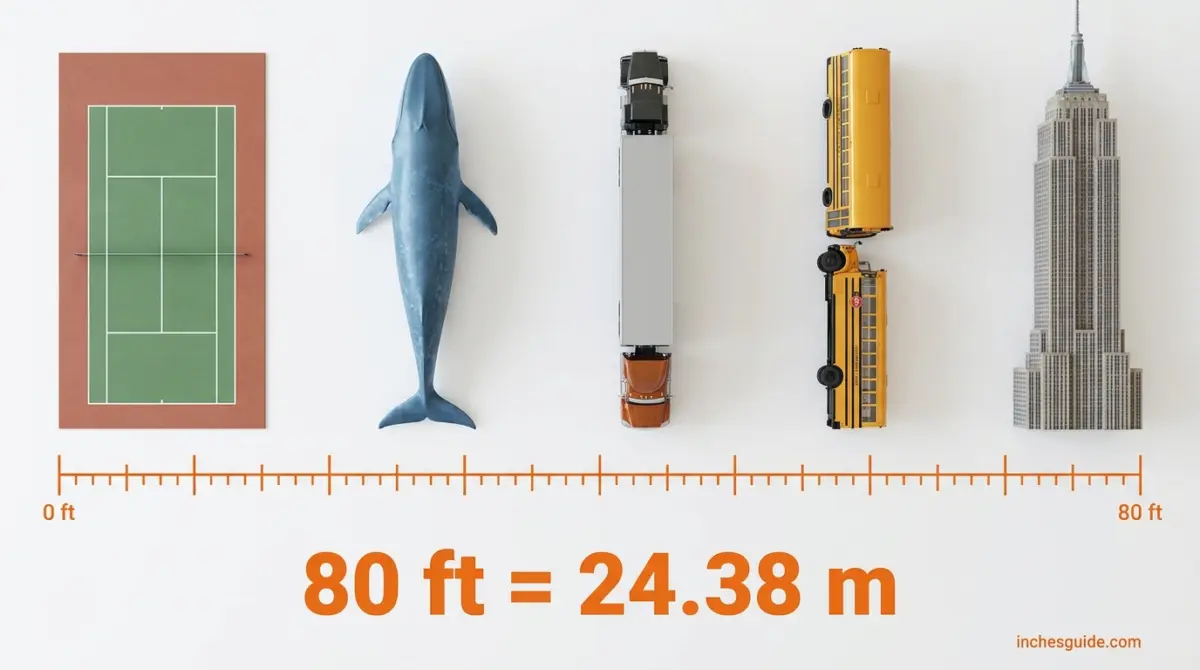
Eighty feet is a tricky length to picture. It is too big for anything on your desk and too small to feel like a landmark, so most people just guess.
That guess is usually wrong. 80 feet is longer than a tennis court and taller than most trees on your street.
This page fixes that. You get every conversion first, then 14 real things that are almost exactly this size, so the number finally clicks.
Eighty feet equals 960 inches, 24.38 meters, or 26.7 yards, about the length of a tennis court or the height of an eight-story building.
80 Feet, Converted Every Way You Might Need It
| Unit | 80 feet equals |
|---|---|
| Inches | 960 in |
| Centimeters | 2,438.4 cm |
| Meters | 24.38 m |
| Millimeters | 24,384 mm |
| Yards | 26.67 yd |
| Kilometers | 0.0244 km |
| Miles | 0.0152 mi |
| Building stories | about 7 to 8 |
| Adults stacked (average height) | roughly 13 to 14 |
So 80 feet in meters is a touch over 24, and 80 feet in inches is a flat 960. Those are the two people search for most, and both are worth memorizing if you deal with sizes often.
The rest of this page is about seeing it, not just reading it. Here is what 80 feet looks like in the real world.
Also, Read This: How Big Is 10 Feet? 15 Things Exactly This Long
14 Everyday Comparisons to Picture 80 Feet
A Tennis Court, End to End
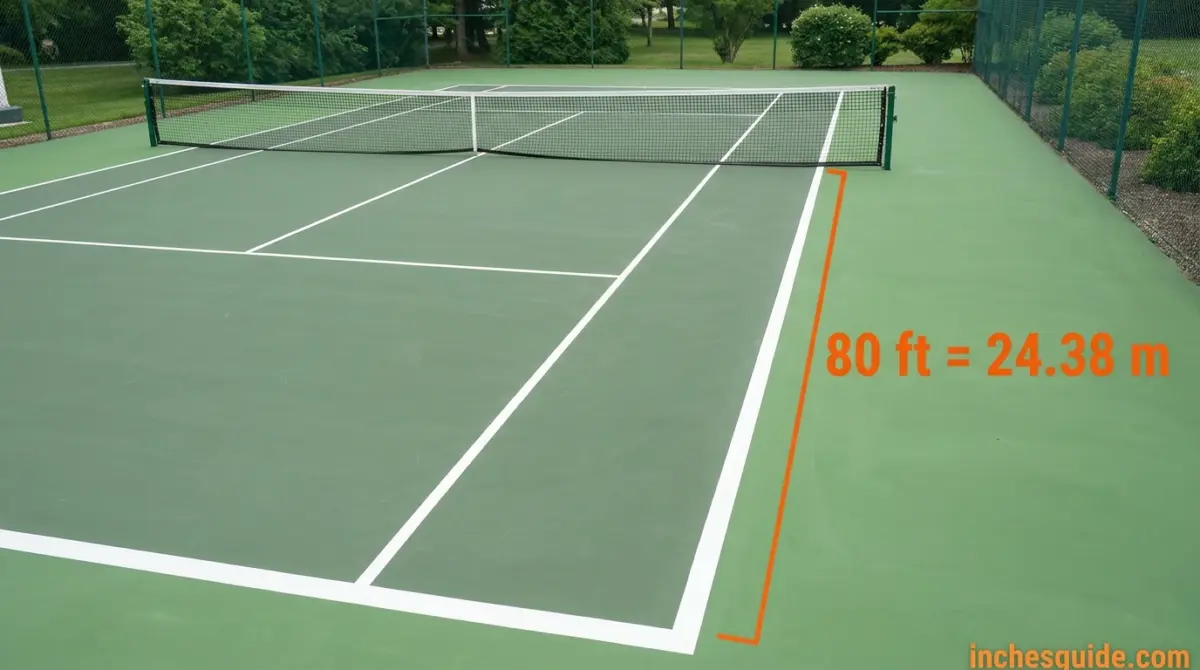
A regulation tennis court measures 78 feet from baseline to baseline. That makes it the cleanest way to picture our number, since 80 feet is basically the court plus two steps past the back line.
The length is fixed by the sport’s governing body so a serve behaves the same in Melbourne as it does in New York. Nothing about it is arbitrary.
Here is a small oddity most players never notice. The net sags lower in the middle than at the posts, on purpose, to reward shots hit down the center.
A Blue Whale
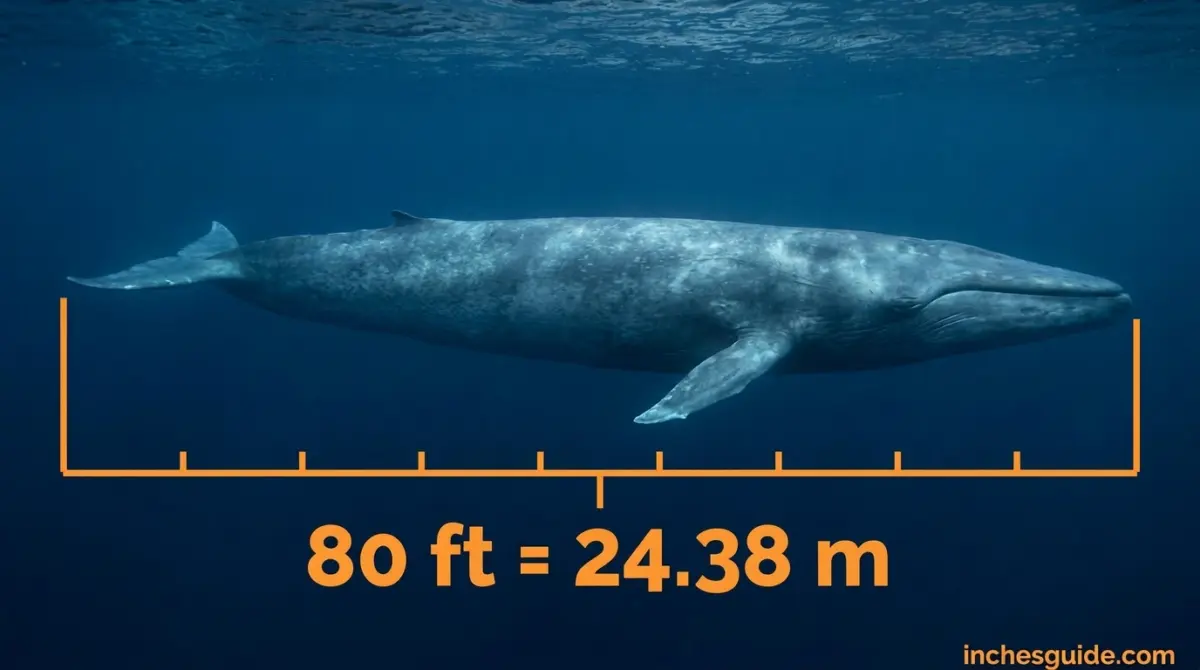
The biggest animal that has ever lived lands right in our range. An average adult blue whale runs about 80 to 90 feet, so an 80-footer is a normal, if slightly younger, adult.
Water does the heavy lifting here. Their bodies would collapse under their own weight on land, but the ocean holds them up, which let evolution keep going bigger.
The scale is hard to hold in your head. A blue whale’s heart is roughly the size of a small car, and its tongue alone can weigh as much as an elephant.
They got this big on some of the smallest food in the sea. A single whale can eat several tons of tiny krill in one day of feeding.
A Diplodocus
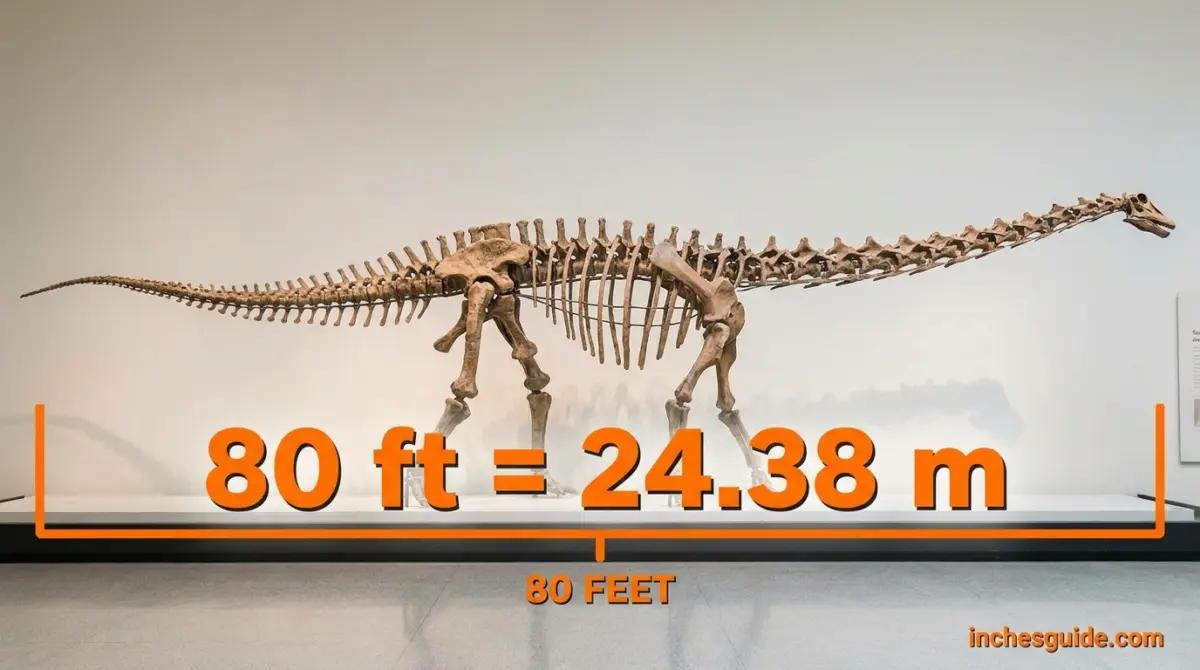
Most of this dinosaur was neck and tail. Diplodocus stretched around 80 to 85 feet, yet weighed far less than you would expect for its length.
The trick was hollow bones. Its vertebrae were full of air pockets, so it stayed light enough to move without sinking into the Jurassic mud.
And here is the part kids love. Some scientists think it could snap the tip of its whip-like tail fast enough to crack past the speed of sound, like a bullwhip. The famous “Dippy” skeleton in Pittsburgh is longer than a tennis court, which ties this one neatly back to where we started.
Two Full-Size School Buses, Nose to Tail
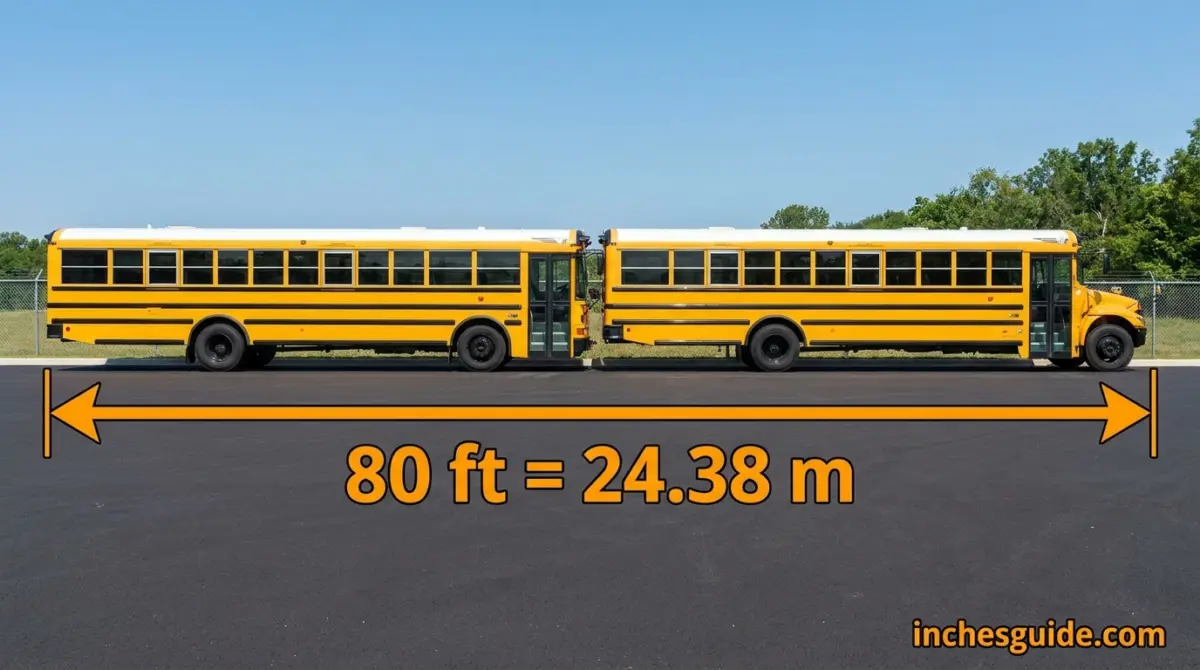
Line up two of the classic yellow buses and you have it. A full-size school bus runs about 35 to 40 feet, so two of them bumper to bumper come out right around 80 feet.
That shade of yellow is not a style choice. It is a legally specified color chosen back in 1939 because it stays visible in the low light of early mornings.
An 18-Wheeler with a Full Trailer
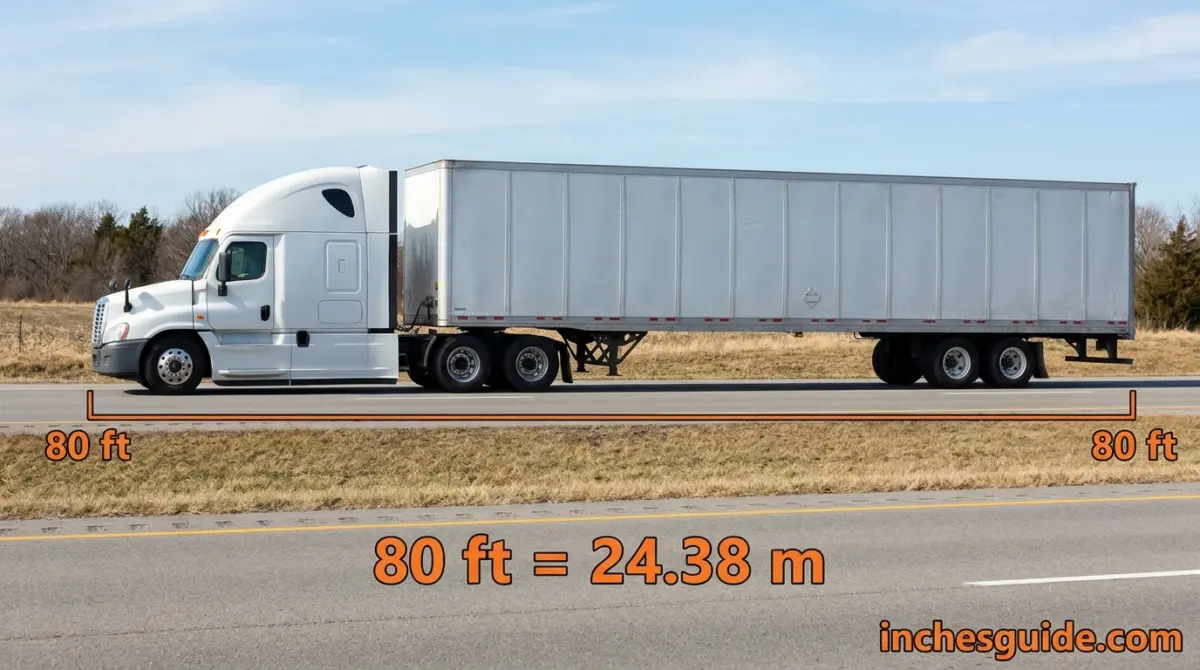
The big rigs you pass on the highway sit close to this. A cab pulling a standard 53-foot trailer runs roughly 70 to 80 feet overall, with the longest setups nudging the top of that.
Length matters more than most drivers realize. A loaded truck at highway speed needs about the length of a football field to come to a full stop, which is why cutting one off is a bad idea.
Five Mid-Size Cars, Bumper to Bumper
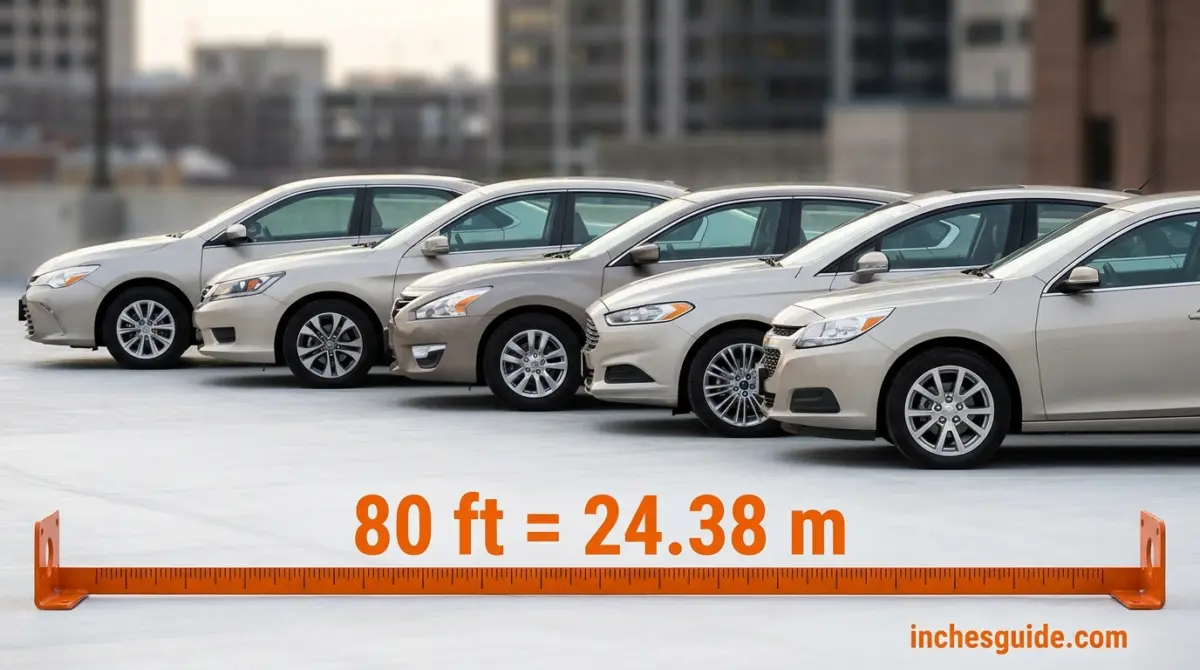
Park five average cars nose to tail and you are basically there. A typical sedan is about 15 to 16 feet long, so five in a row land right near 80 feet.
This one is handy because you can spot it in any parking lot. Five spaces deep, and you are looking at 80 feet without a tape measure in sight.
An Eight-Story Building
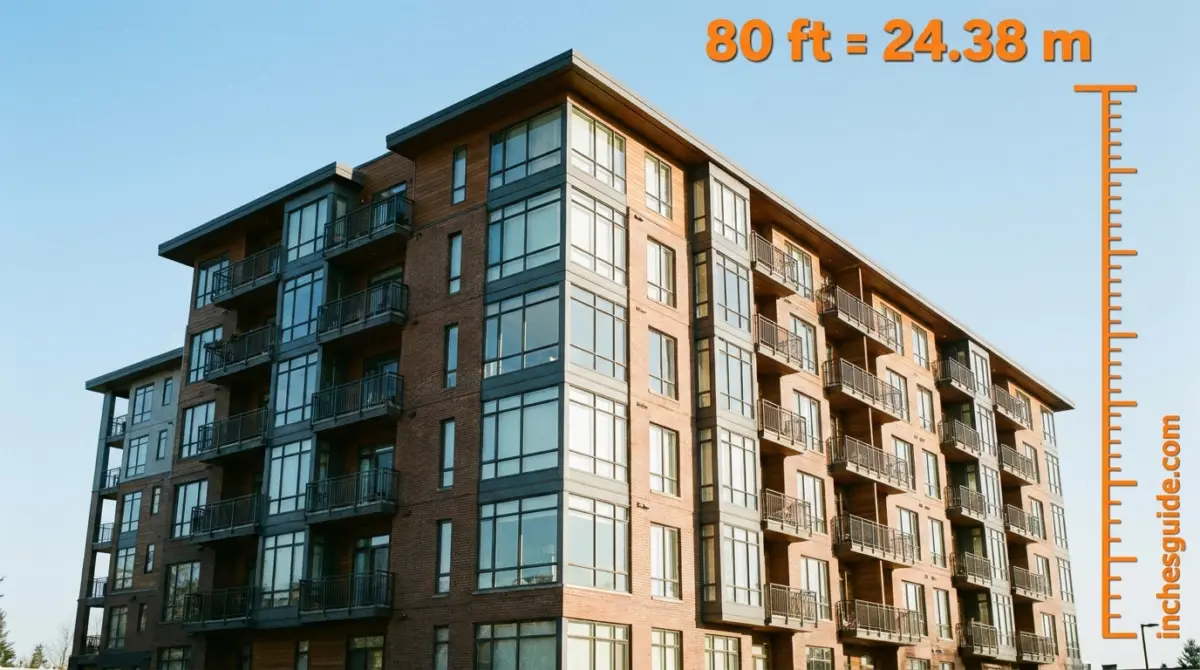
Here is the answer to the “what building is 80 feet tall” question. As a rough rule, each floor of a home or apartment eats about 10 feet, so eight of them stacks up to roughly 80 feet.
Offices break the pattern, though. Their ceilings run taller, often 13 to 14 feet a floor, so an 80-foot office tower might be only six stories.
That is why floor counts can fool you. Two buildings the same height can advertise very different numbers of stories.
A Mature Oak Tree
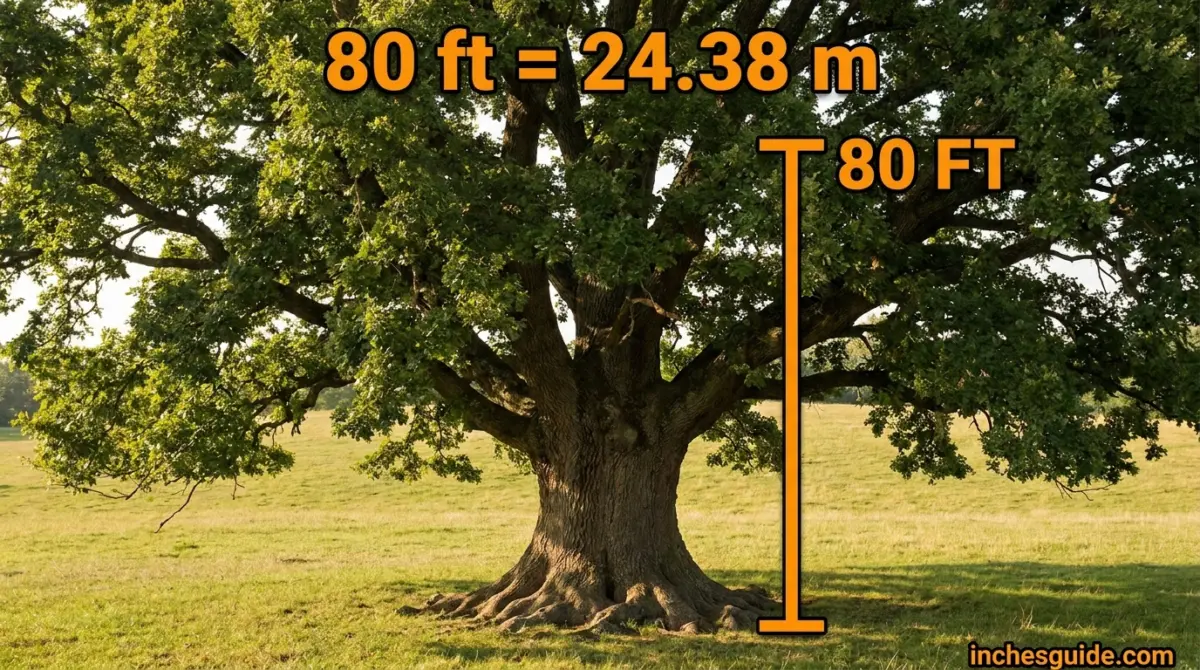
A backyard oak that has been around a while gets here on its own. Plenty of mature oaks top out around 80 to 100 feet once they have had decades to grow.
Getting that tall takes real time and real water. A tree that size can be a century old and pull hundreds of gallons up through its trunk on a hot day.
A Tall Transmission Pole
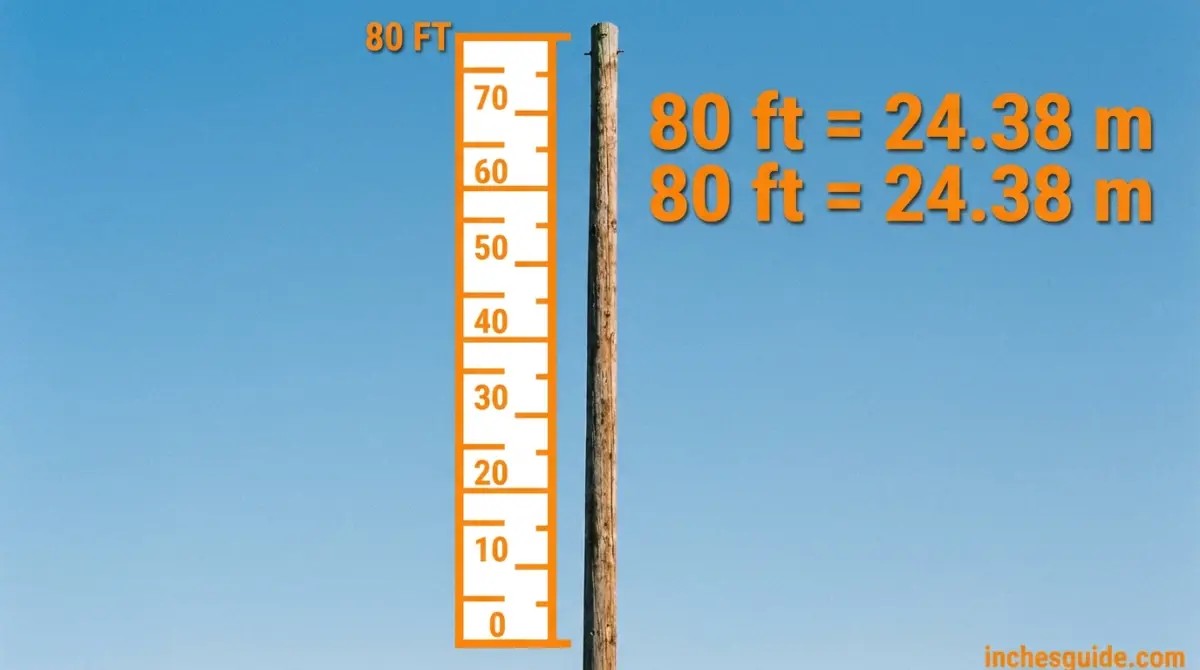
The pole outside your house is shorter than you think, but the big ones are not. A standard utility pole runs about 40 feet, while the tall transmission poles carrying high-voltage lines often reach 80.
There is more pole than you can see, too. Roughly a tenth of it is buried underground to keep the whole thing standing through storms.
Two Shipping Containers, End to End
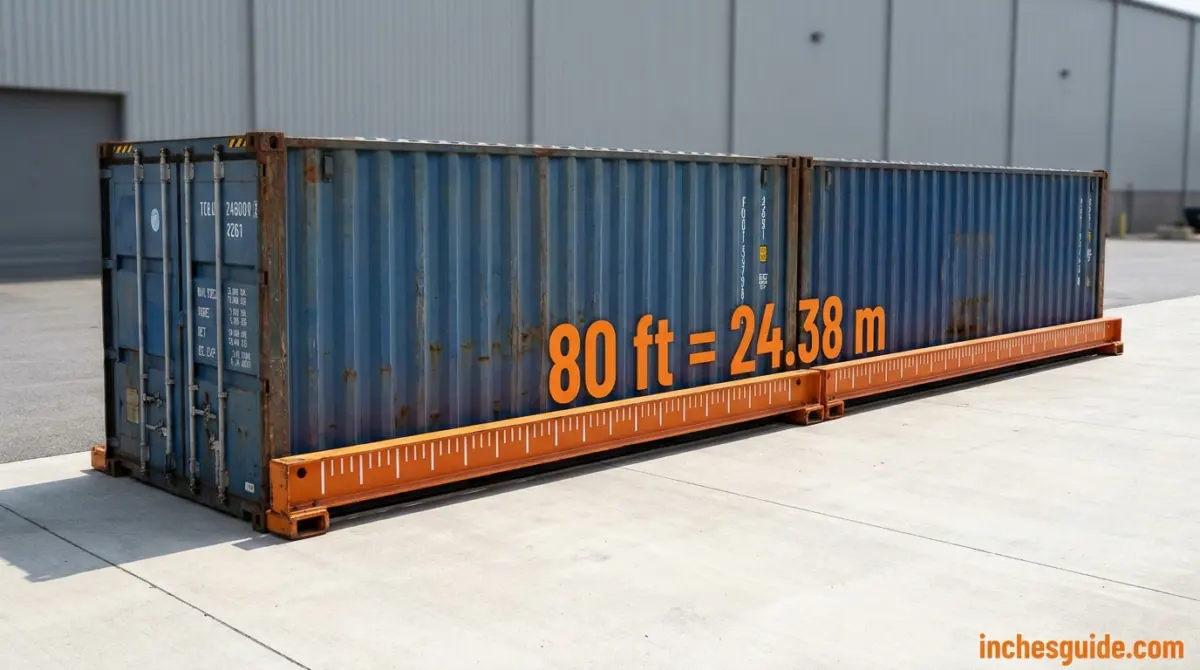
Stack two of the standard boxes in a line and the math is easy. The workhorse shipping container is 40 feet long, so two of them end to end make a clean 80 feet.
That 40-foot size runs global trade for a reason. It is built to stack on ships, slot onto rail cars, and ride behind a truck, all without changing anything.
Odds are it is closer to home than you think. A lot of what sits in your house crossed an ocean inside one of these.
PT-109, an 80-Foot Navy Boat
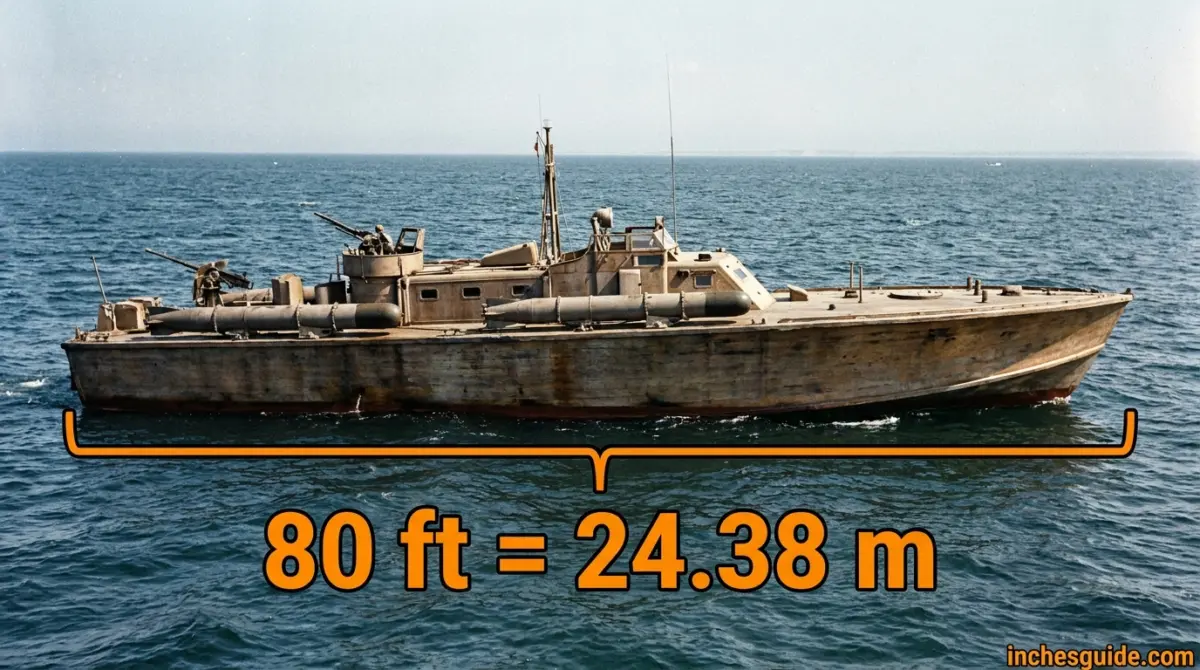
This is the one that is dead-on 80 feet. Before he was president, a young John F. Kennedy commanded PT-109, an 80-foot wooden torpedo boat, in the Pacific.
The Navy chose that length for a plain reason. They wanted a hull long enough to carry the heavier 21-inch torpedoes, and the 80-foot Elco design became the standard.
The boat’s story is the wild part. After a Japanese destroyer sliced it in half at night, Kennedy towed an injured crewman to safety by gripping the man’s life-jacket strap in his teeth.
The Width of a Hockey Rink
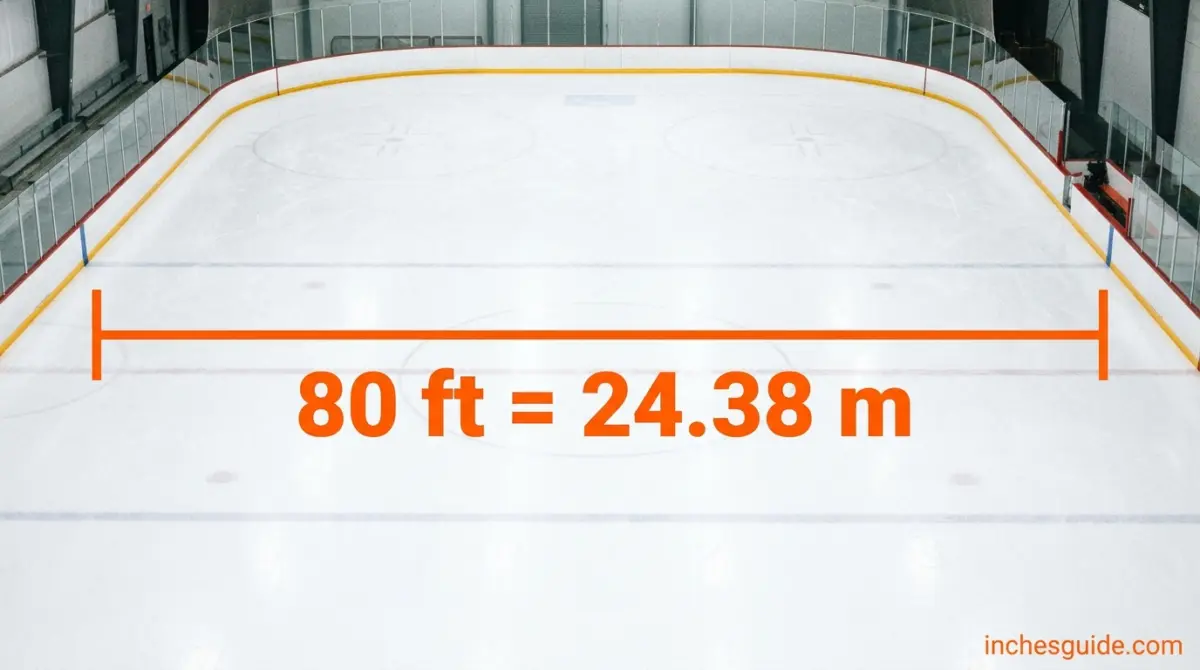
Here the width matters, not the length. An NHL rink measures 85 feet side to side, so 80 feet is just shy of skating straight across the ice.
The size shapes the game. International rinks are wider still, which opens up more room to pass and is why the style of play changes at the Olympics.
A Full Bowling Lane, Start to Finish
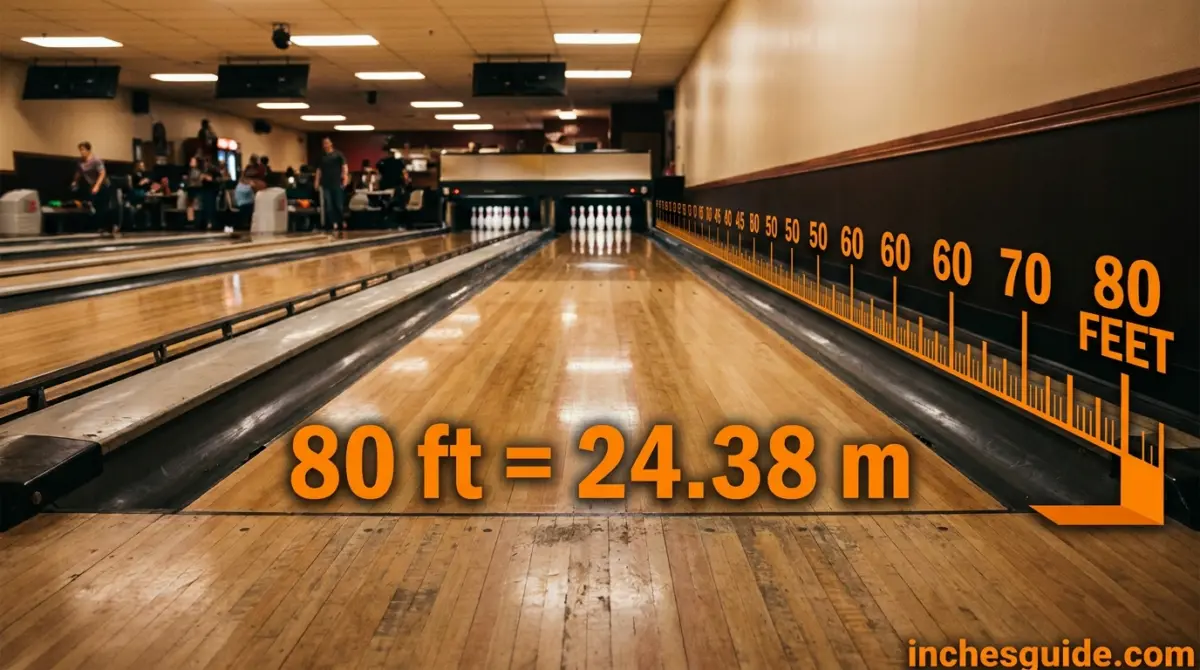
You probably think a bowling lane is 60 feet, and the famous part is. That 60 is the distance from the foul line to the head pin, but it is not the whole thing.
Add the approach where you take your steps, plus the pin deck at the back, and the full run comes to about 78 feet. Close enough to 80 to count.
One detail is almost unbelievable. That 60-foot playing distance is identical in every certified alley on earth, down to half an inch.
An 80-Foot Yacht
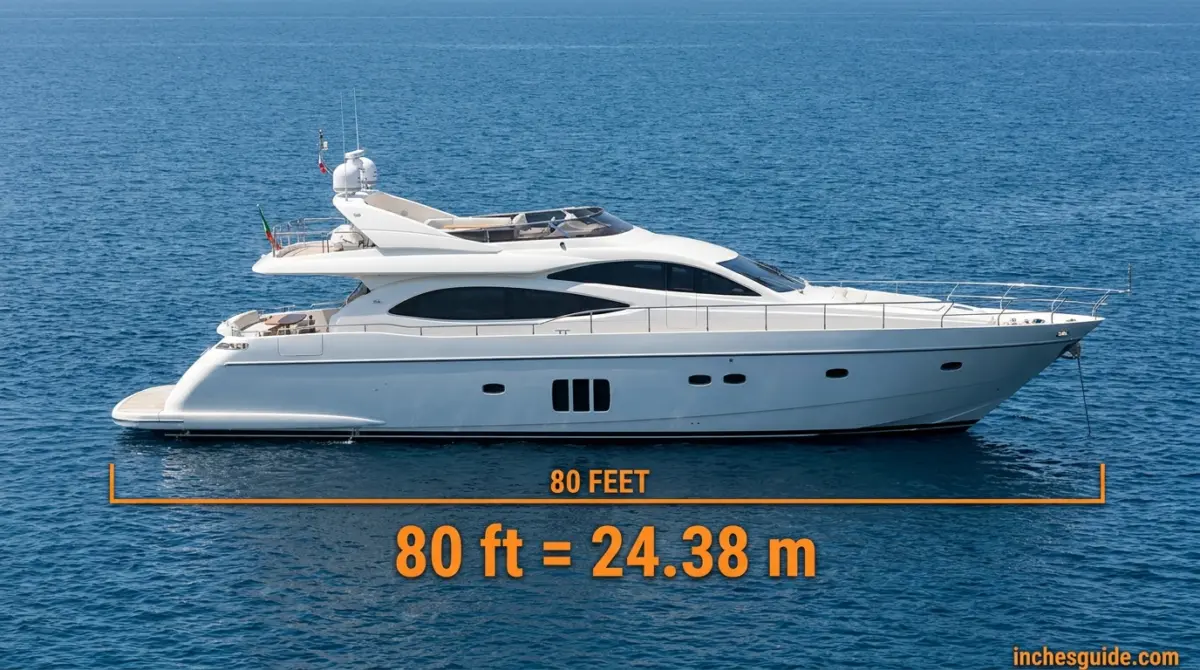
In the boating world, 80 feet has a name. People just call a boat this size “an 80-footer,” and it is the point where a yacht stops being casual.
There is a real line hiding in that number. Around 24 meters, which is basically 80 feet, a yacht crosses into “large yacht” territory under commercial rules and usually needs a professional crew.
No Tape Measure? Here Is How to Step It Out
You can pace 80 feet surprisingly well. A normal adult step covers about two and a half feet, so 30 to 32 steps get you almost exactly there.
Prefer something you can see? Five mid-size cars parked in a row are the same distance. It sounds far when you say it as a height and short when you walk it.
That gap is the whole reason people struggle with how big 80 feet is. Flat on the ground, it feels close, but stand it up as a building, and it suddenly feels huge.
FAQs
How tall is 80 feet in stories?
About seven to eight floors in a normal apartment building, since each story runs close to 10 feet. Offices with taller ceilings might reach only six.
What building is 80 feet tall?
Plenty of mid-size ones, like a small hotel, an older apartment block, or a five- to eight-story office. It is roughly where a building starts needing a real elevator.
How does 80 feet compare to a human?
Stack people who are about 5 feet 10 inches, and you would need 13 to 14 of them standing on each other’s shoulders to reach the top.
How far is 80 feet to walk?
Only about 30 normal steps, or five mid-size cars parked bumper to bumper. Short as a stroll, tall as a wall.
Is 80 feet the same as 80 inches?
No, and people mix these up a lot. Eighty inches is just 6 feet 8 inches, while 80 feet is twelve times longer at a full 960 inches.
Lock In One Picture
You do not need all 14. Grab the one that fits your world, a tennis court, a semi, or eight floors up, and 80 feet stops being an abstract number. Next time someone says it, you will already see it.