
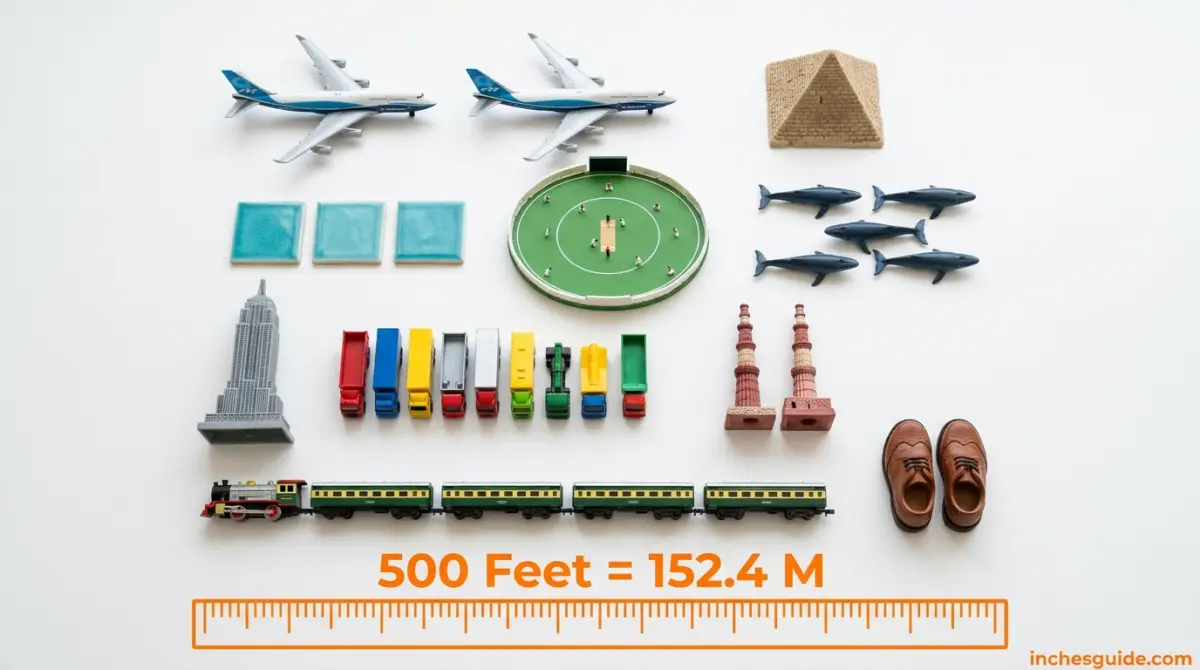
Most people can walk 500 feet in under two minutes, yet almost nobody can point at something and say that’s exactly it.
That gap matters more than you’d think. Pilots, drone owners, real estate listings, and half the local laws out there throw this number around like everyone was born knowing it.
So here’s the fix. Full conversions for 500 feet, ten real things that match it, and a couple of tricks for estimating it with nothing but your own legs.
500 feet equals 152.4 meters, 0.1524 kilometers, 166.7 yards, or about 0.095 miles, which is roughly the height of a 45 story building.
500 Feet in Meters, Miles, Yards, and Every Other Unit
| Unit | 500 Feet Equals |
|---|---|
| Meters | 152.4 m |
| Kilometers | 0.1524 km |
| Centimeters | 15,240 cm |
| Millimeters | 152,400 mm |
| Inches | 6,000 in |
| Yards | 166.67 yd |
| Miles | 0.0947 mi (just under a tenth of a mile) |
The math behind 500 feet to meters is one step. Multiply by 0.3048 and you get 152.4, no rounding needed because the conversion is exact by definition.
For 500 feet in km, slide the decimal three places to 0.1524. And if you ever need 500 feet in cm for some reason, it’s 15,240, though I’ve never met anyone who measured a parking lot in centimeters.
On Foot: The Two-Minute Test
The fastest way to answer how far is 500 feet is to just walk it. At a casual 3 mph pace, you’ll cover it in a little under two minutes.
Count your steps instead if you want precision. The average adult step runs about 2.5 feet, so 200 steps puts you right at the mark.
People searching for how long is 500 feet to walk are usually checking a delivery note or a parking rule. Short answer: less time than it takes to reheat your coffee.
Turned Vertical: 500 Feet as a Height
Stand the distance up, and it becomes a proper skyscraper. The answer to how many stories is 500 feet lands between 40 and 50 floors, depending on ceiling heights. Offices average around 12 feet per floor, apartments closer to 10.
Now, how tall is 500 feet compared to a human? You’d need roughly 90 average adults balanced head to toe, to reach it. Ninety. That one always sounds fake until you divide.
From the ground, a structure this tall forces you to crane your neck at nearly 80 degrees if you’re standing a car length away.
10 Real Things That Add Up to 500 Feet
Numbers slide out of your head. Objects don’t. If you’ve been searching for how long 500 feet is visually, this section is the answer.
Two Boeing 747-8s Parked Nose to Tail
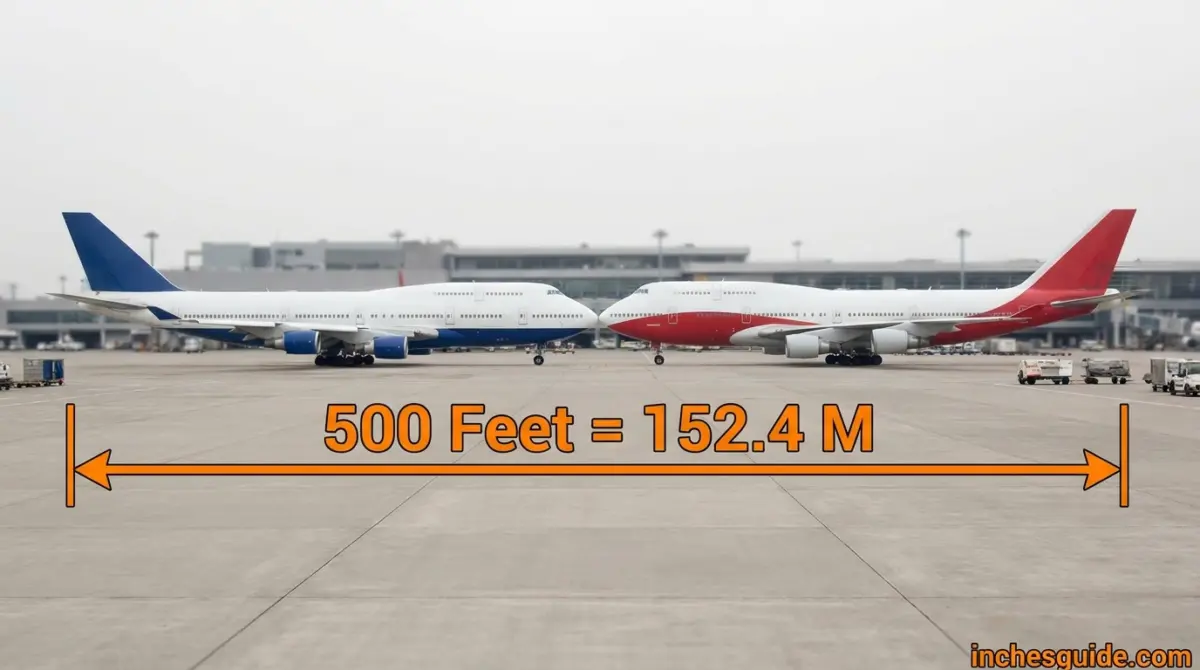
The 747-8 measures 250 feet and 2 inches from nose to tail, the longest passenger aircraft Boeing ever built. Park two of them bumper to bumper and you hit 500 feet almost to the inch.
That length wasn’t an accident. Boeing stretched the fuselage about 18 feet past the older 747-400 to add seats without redesigning the whole wing.
Here’s the surprising part. The wingspan is 224 feet, so two of these parked side by side get you most of the way there too.
The Great Pyramid of Giza
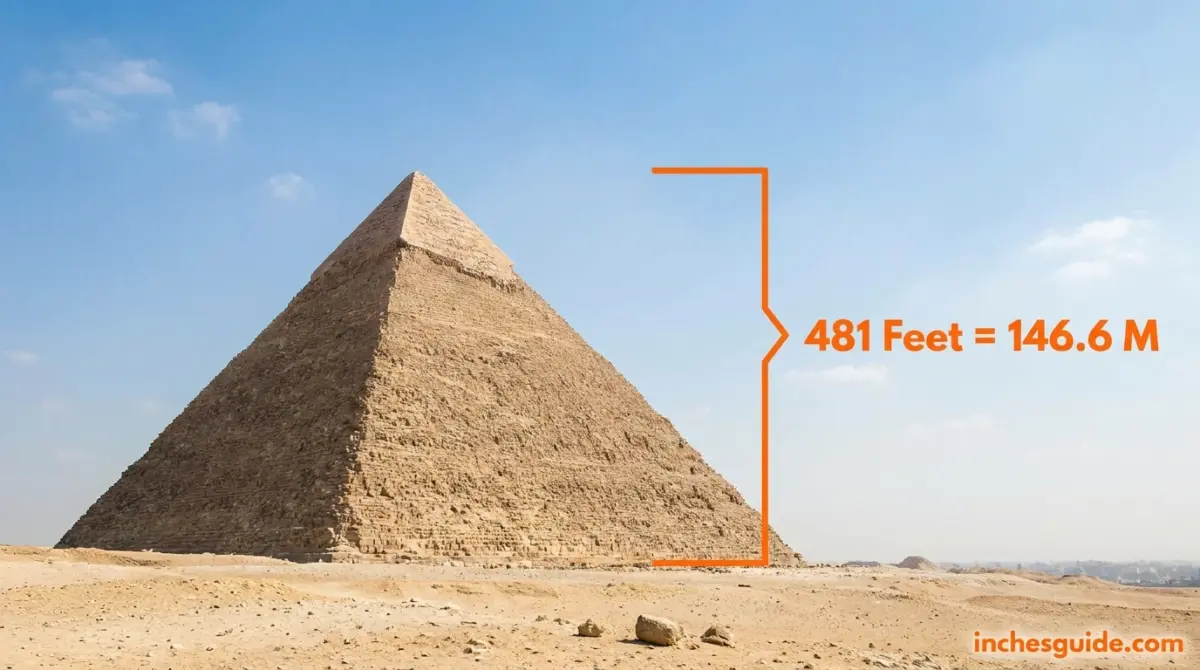
Egypt’s most famous monument originally stood 481 feet tall, only 19 feet short of our number. Erosion and a missing capstone have trimmed it to about 455 feet today.
The height wasn’t picked out of thin air. With a 756 foot base and a slope of roughly 51.8 degrees, the geometry simply tops out there.
It stayed the tallest man made structure on Earth for over 3,800 years. Honestly, that record still gets me. Copper tools, no cranes, and it outlasted every empire that looked at it.
Three Olympic Swimming Pools
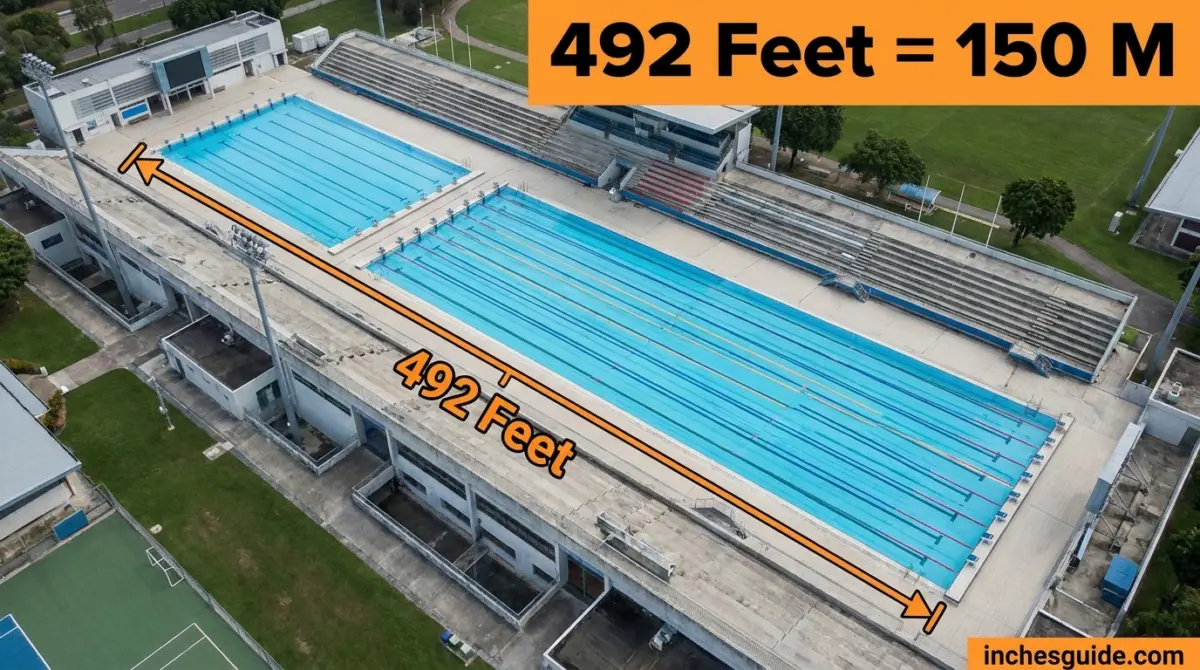
An Olympic pool is exactly 50 meters long, which works out to 164 feet. Line up three of them end to end and you get 492 feet, just 8 feet shy of the target.
The 50 meter rule is non negotiable. World records only count in pools certified to that length, measured with the touchpads installed.
So picture a swimmer doing three full lengths without a turn. That’s your distance, plus one diving board.
A Cricket Ground From One Boundary to the Other
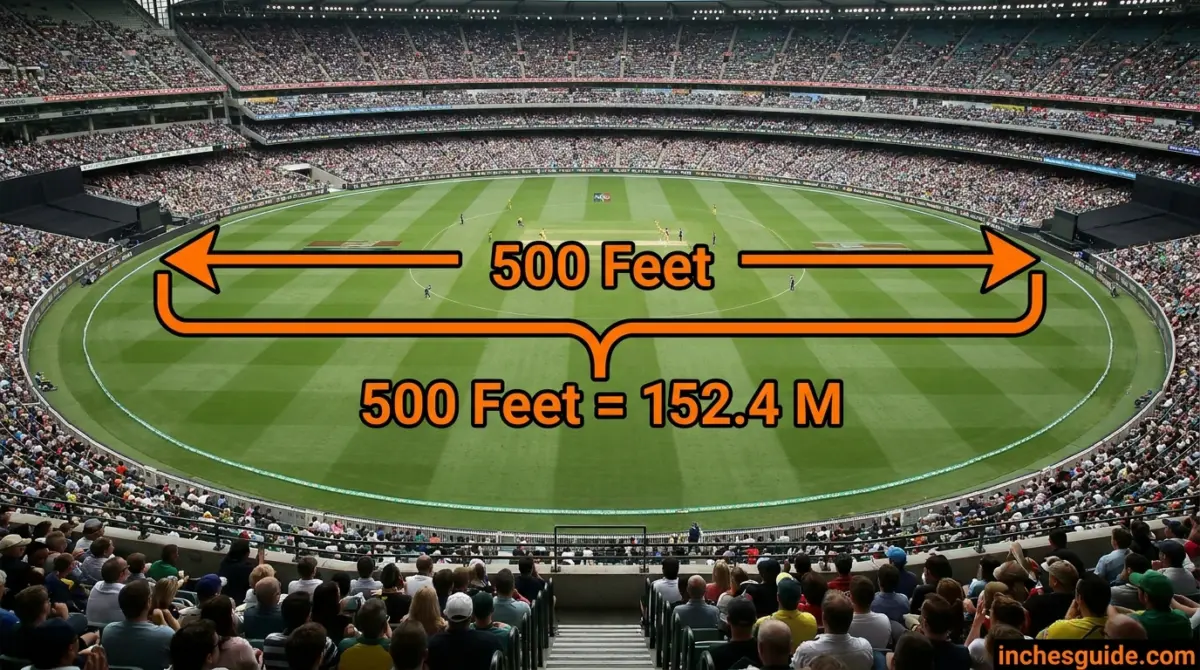
Walk from one boundary rope straight across to the other at a big international venue and you’ll cover somewhere between 400 and 540 feet, depending on the ground.
ICC rules cap the boundary at 90 yards from the pitch center and set a minimum of 65, so no two grounds are identical. The larger ovals sit right around our number edge to edge.
Next time a batter clears the rope at a packed stadium, remember the ball just traveled a decent chunk of 500 feet in a few seconds. Your two minute walk, done airborne.
Five Blue Whales
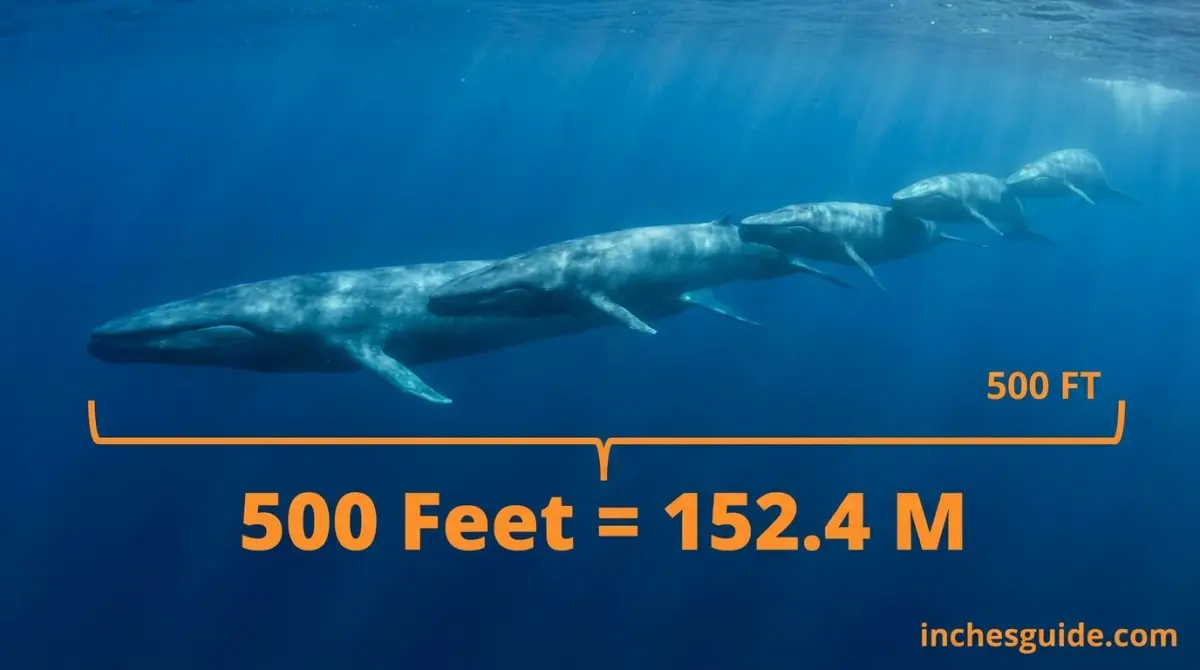
A full grown blue whale reaches about 100 feet, the largest animal that has ever existed. Five of them nose to tail equals the full distance.
Nothing on land has ever come close to this size, and the ocean is the reason. Water supports the body weight that legs never could.
One fact for the road: a blue whale’s heart alone weighs around 400 pounds. You’d need five of those hearts swimming in a row to picture this measurement.
A 45 Story Tower

At a typical 11 feet per floor, a 45 story building stands about 495 feet. This is the cleanest mental image for how tall is 500 feet as a vertical distance.
Developers actually chase this range on purpose. In many cities, crossing certain height thresholds triggers extra fire codes, elevator requirements, and aviation lighting, so plenty of towers stop just under.
Stand at the base of one and look straight up. That slight dizzy feeling is 500 feet talking.
Seven Semi Trucks in a Row
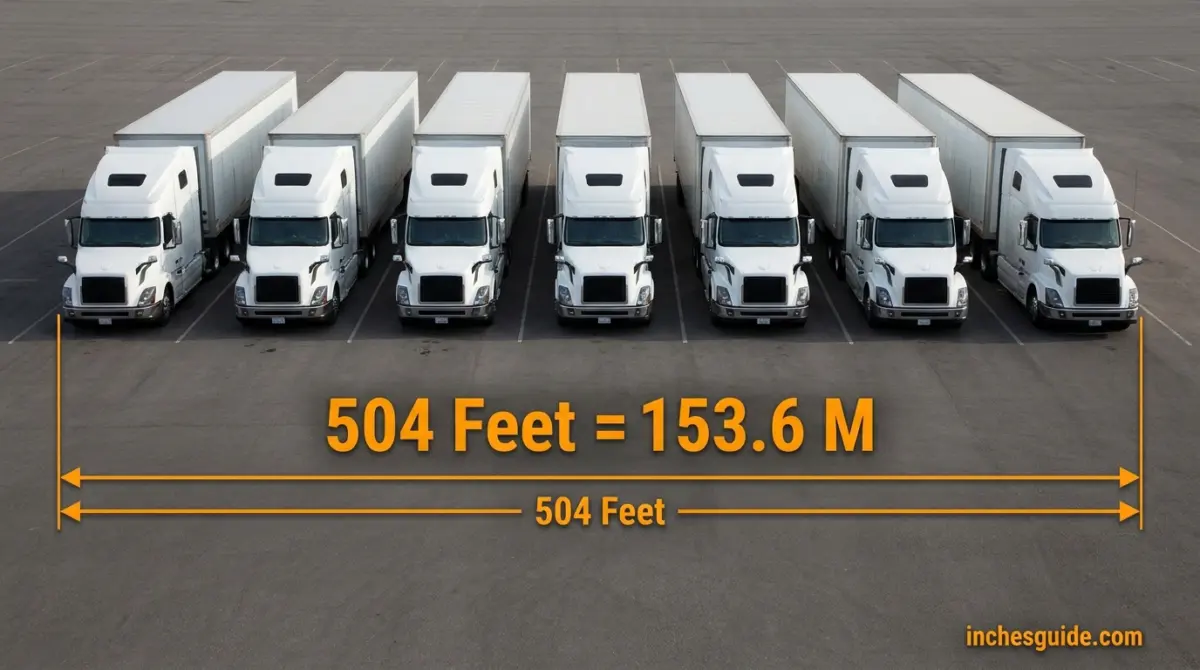
A tractor trailer combo runs about 72 feet from front bumper to rear doors. Seven of them lined up gives you 504 feet, close enough to shake hands with.
The trailer itself is standardized at 53 feet in the US, a number chosen to max out highway rules while fitting standard pallets in neat rows.
You’ve probably seen this exact picture at a truck stop without realizing you were looking at 500 feet of steel.
Two Qutub Minars Stacked
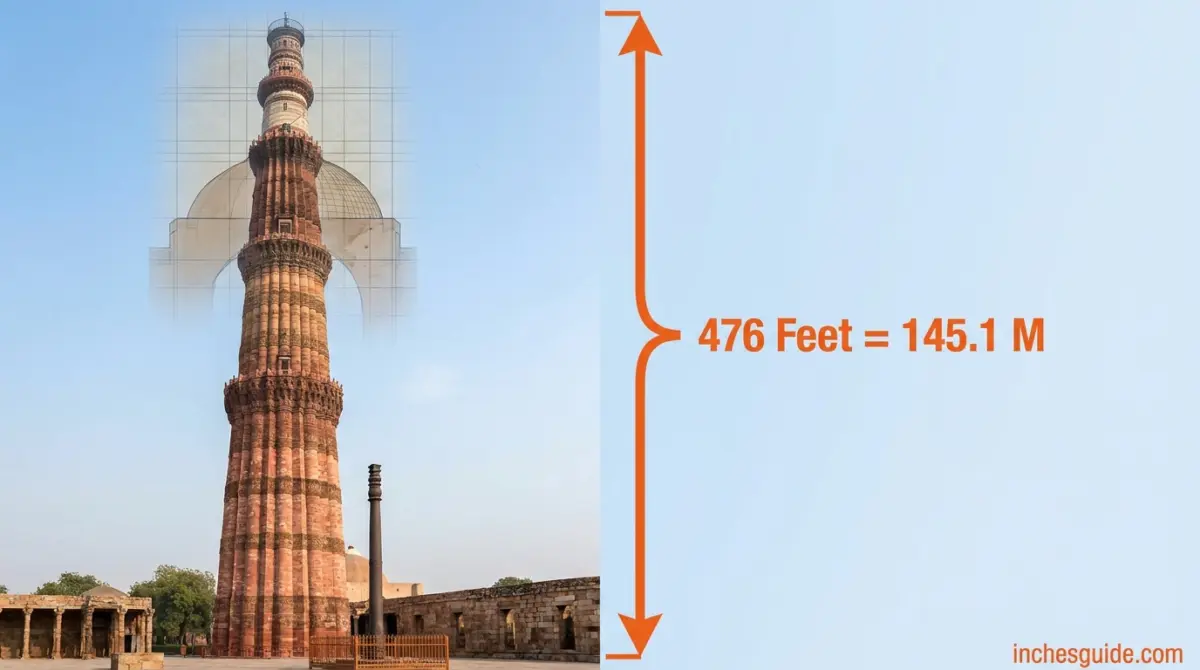
Delhi’s Qutub Minar rises 238 feet, the tallest brick minaret in the world. Stack a second one on top and you’re at 476 feet, only 24 short of the mark.
Construction started in 1199 and took three rulers to finish, which explains why the five levels don’t quite match in style.
For anyone in India, this is probably the easiest landmark to anchor the number to. Two Qutubs, then add a small house on top. Done.
A Six Coach Passenger Train
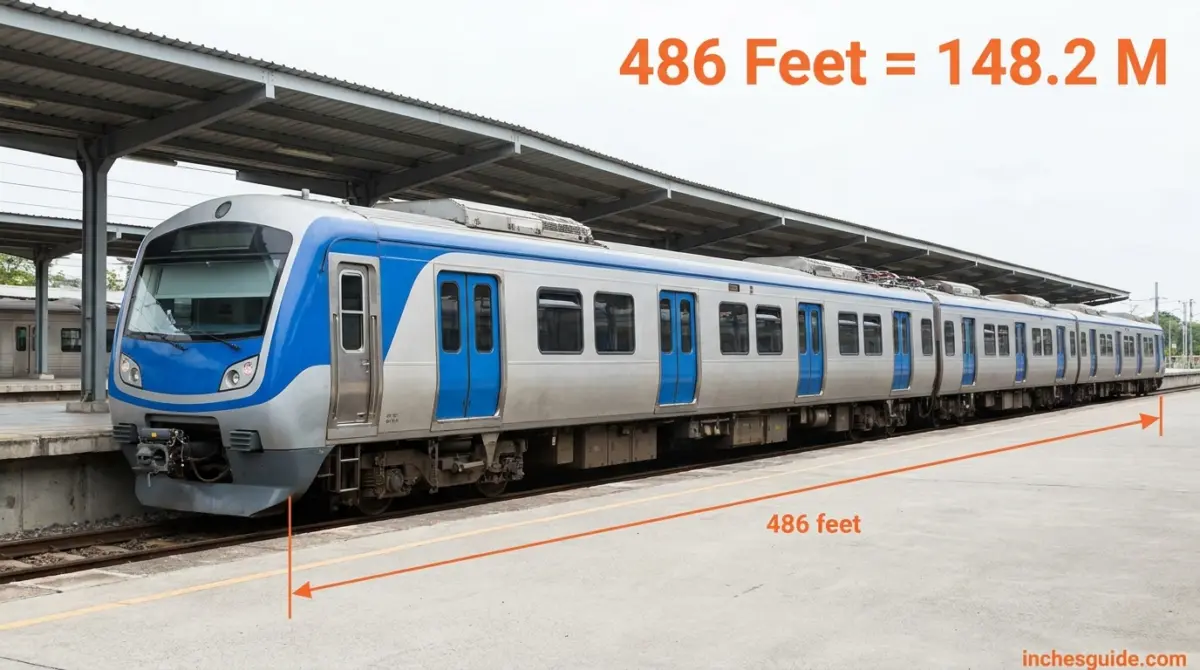
A modern LHB rail coach measures about 81 feet over the buffers. Couple six of them together and the train stretches roughly 486 feet.
Coach length is dictated by curves. Any longer and the cars couldn’t swing through tight bends or fit standard platforms.
So if you’ve ever walked a platform hunting for coach S6 while your train pulled in, congratulations. You’ve already paced this distance, probably while jogging.
200 of Your Own Steps
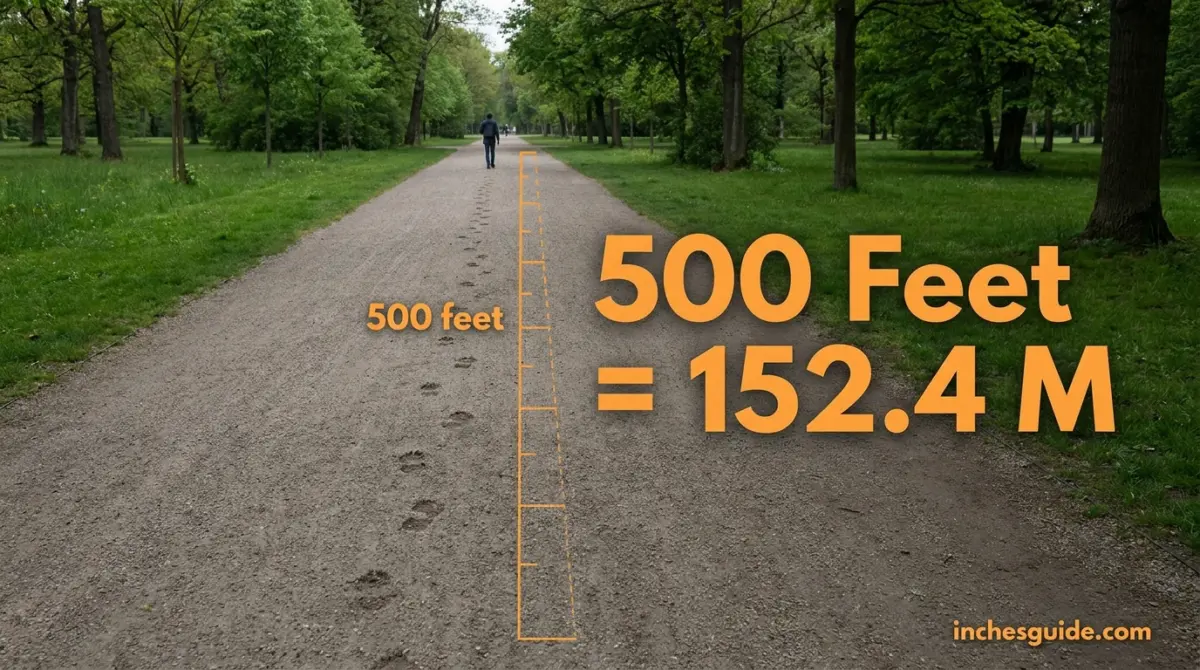
The most useful comparison isn’t an object at all. It’s you. At an average step length of 2.5 feet, 200 steps equals 500 feet on the nose.
Step length is surprisingly consistent for each person, which is why surveyors and soldiers used pace counting for centuries before GPS existed.
Measure your own step once against a tape, remember the number, and you’ll never need this article again. But do come back anyway.
The Rulebook Runs on This Number
Regulators love 500 feet. In the US, aircraft flying over open areas can’t legally drop below 500 feet, which is exactly why hobby drones are capped at 400. The gap keeps the two from ever meeting.
City ordinances lean on it constantly too. Fireworks setbacks, liquor store distances from schools, and buffer zones around funerals in several states all use this same figure.
I guess that 500 simply sounds official. Round enough to remember, specific enough to enforce, and long enough that nobody argues.
No Tape Measure? No Problem
Count 200 normal steps. That’s the whole trick, and it works within a few percent for most adults.
Prefer landmarks? Picture one and a half typical city blocks, or one and a half laps of a standard football field, including the end zones.
For heights, count floors on a tower instead. Hit 45 and you’re there. If you find these mental shortcuts useful, the same walking trick scales down neatly for shorter distances too [link this to your related distance article, e.g., how far is 100 feet].
FAQs
How many miles is 500 feet?
It’s 0.0947 miles, just under a tenth of a mile. A mile holds 5,280 feet, so you’d need to walk this distance about 10.5 times to finish one.
How many yards is 500 feet?
Exactly 166.67 yards. Divide any foot value by 3 and you have yards, since the two units come from the same system.
Is 500 feet longer than a football field?
Yes, comfortably. A field with both end zones runs 360 feet, so 500 feet covers about 1.4 fields.
How long does it take to walk 500 feet?
Around two minutes at a relaxed pace, or 90 seconds if you’re in a hurry. That’s roughly 200 steps for the average adult.
Why do drones and planes care about 500 feet?
Manned aircraft must generally stay at or above 500 feet over open areas, while drones stay at or below 400. The 100-foot cushion is the whole safety plan.
Park It in Your Head
Pick the one image that stuck. Two jumbo jets, five whales, or 200 of your own steps. ext time someone says 500 feet, you won’t nod along blankly. You’ll see it.