
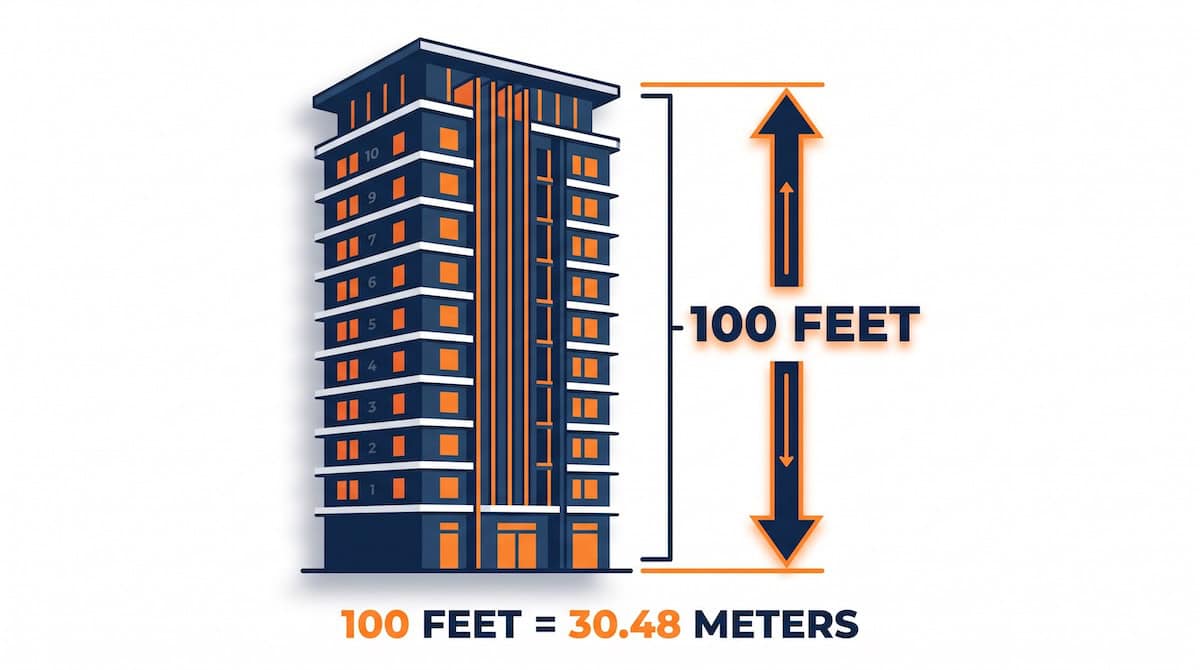
Most people can eyeball 10 feet pretty easily. A standard ceiling, a parking space, a tall door. But 100 feet? That’s where the brain checks out.
The problem isn’t the number. It’s that nothing obvious snaps into place. This page fixes that with 17 real objects and structures that are right around 100 feet, plus every conversion you’ll need.
100 feet equals 30.48 meters, 33.33 yards, 1,200 inches, and 0.0189 miles.
The Numbers at a Glance
| Unit | 100 Feet Equals |
|---|---|
| Inches | 1,200 inches |
| Centimeters | 3,048 cm |
| Millimeters | 30,480 mm |
| Meters | 30.48 meters |
| Yards | 33.33 yards |
| Miles | 0.01894 miles |
| Kilometers | 0.03048 km |
17 Real Things That Are About 100 Feet Long or Tall
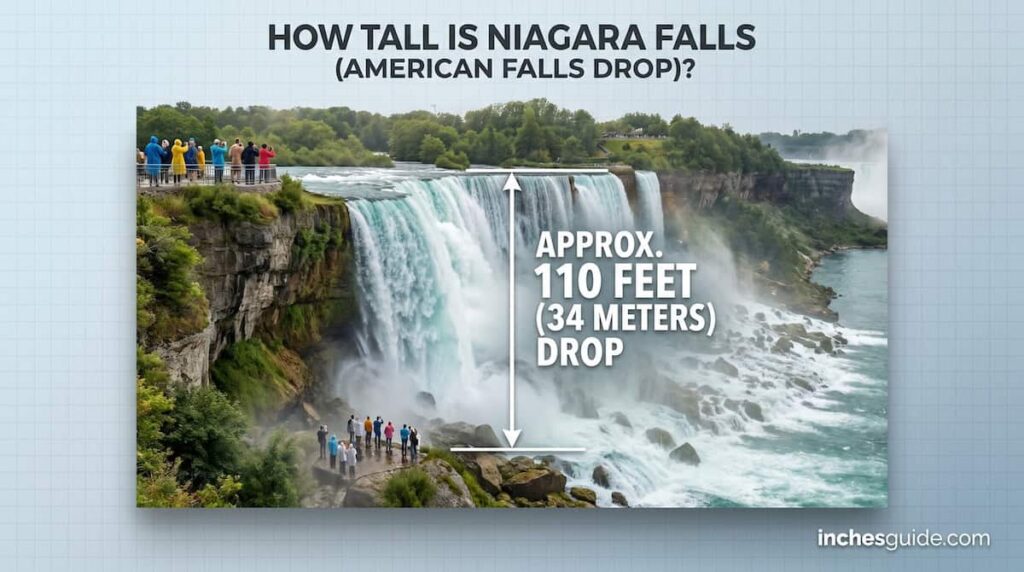
1. Niagara Falls (Horseshoe Falls Drop)
The Horseshoe Falls on the Canadian side drops roughly 188 feet, but the American Falls section drops closer to 70 to 110 feet, depending on the ledge point measured. The average drop across the American side sits almost exactly at 100 feet.
Standing at the base looking up, that vertical distance feels enormous. It’s one of the few natural landmarks where you can actually feel 100 feet rather than just reading it on a sign.
What makes this a great reference is that millions of people visit Niagara every year. The spray alone rises nearly that high on windy days.
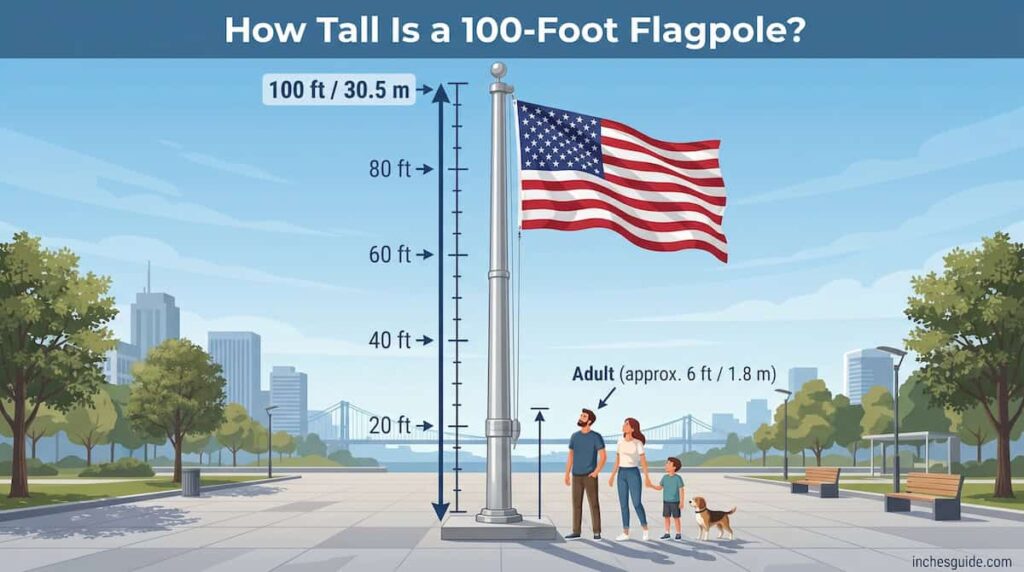
2. A 9-Hole Regulation Flagpole
Flagpoles at golf courses, government buildings, and corporate headquarters are commonly ordered in 80-foot, 100-foot, and 120-foot sizes. The 100-foot aluminum pole is the most popular commercial option in North America.
That’s not a coincidence. 100 feet is tall enough to be visible from a distance but doesn’t require the special permits that taller structures trigger in most municipalities.
To better understand scale, it can also help to compare large measurements with smaller everyday dimensions like 10 inches or 5 inches. These familiar references make it easier to visualize just how long or tall 100 feet really is in real life.
Next time you spot a flagpole at a car dealership or a stadium entrance, there’s a decent chance it’s exactly 100 feet.
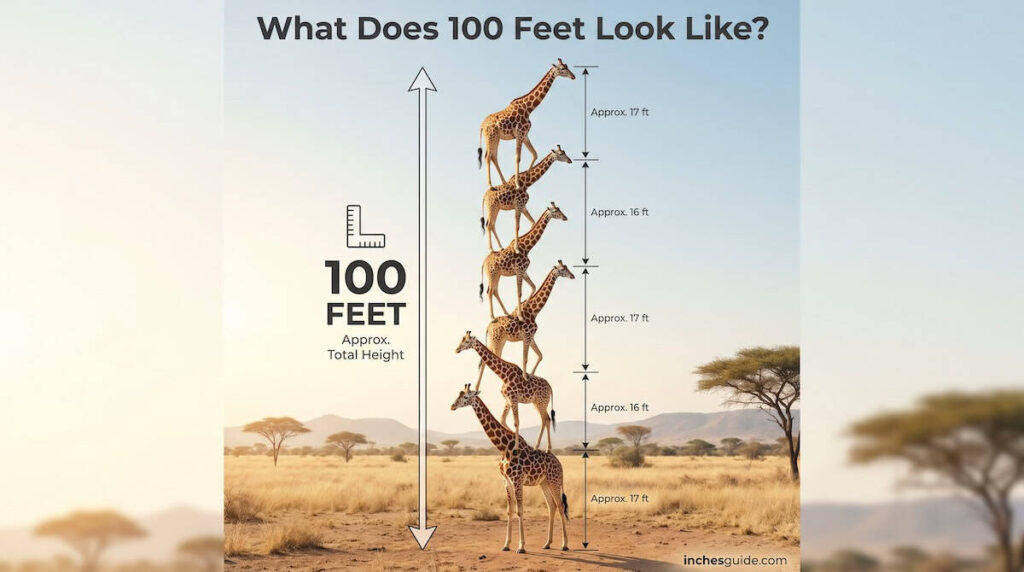
3. Two Adult Giraffes Stacked
An adult male giraffe stands between 16 and 18 feet tall. Stack six of them neck to hoof, and you land squarely at 100 feet, but honestly, just two and a half is a better mental picture.
The giraffe comparison works because most people have seen one in person and remember how genuinely shocking the height is up close. That’s roughly 18 feet for one. Multiply by five and a half, and you have 100 feet.
It sounds absurd. That’s exactly why it sticks in your head.
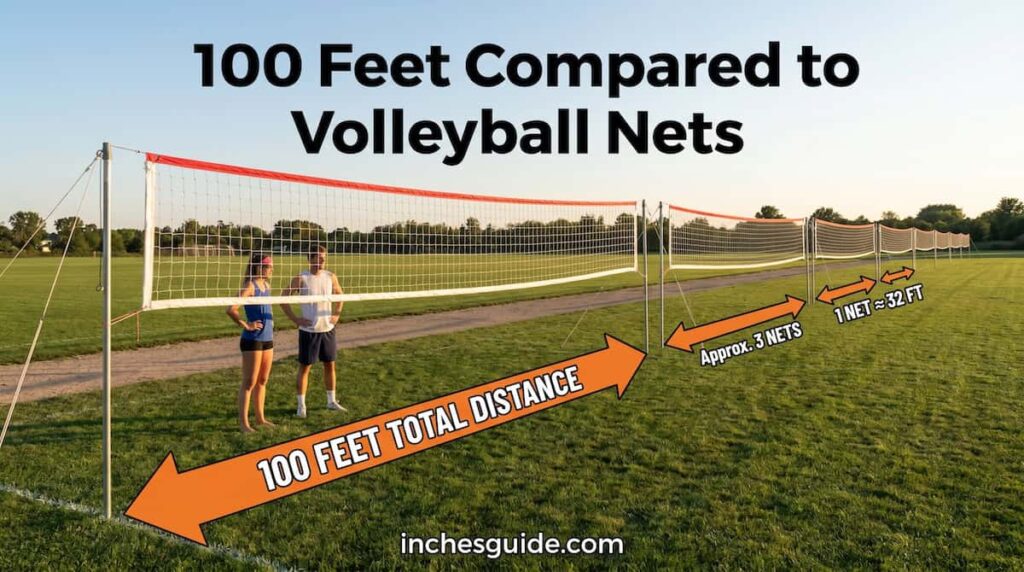
4. A Regulation Volleyball Net (Laid End to End, 11 Times)
A standard beach or indoor volleyball net spans 29.5 feet across. Lay eleven of them end to end, and you get 324 feet, but three of them laid in a line give you 88.5 feet. Three and a half hits 103 feet.
So three nets plus about 12 feet gets you to 100 feet. It’s a strange comparison, but athletes who’ve set up nets outdoors know that 30-foot span by feel. It’s a useful unit to multiply by.
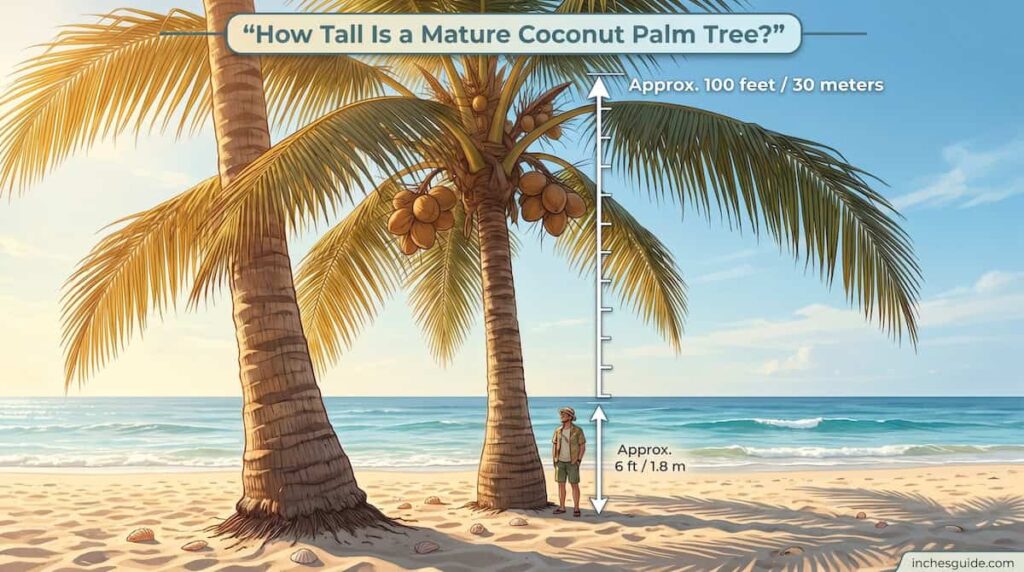
5. The Height of a Mature Coconut Palm
Wild coconut palms in tropical climates often reach between 80 and 100 feet when fully grown. Cultivated varieties are usually kept shorter for easier harvesting, but in places like Kerala, Sri Lanka, and coastal Mexico, 100-foot coconut trees are common.
The trunk alone on a tree like that is a serious thing to stand next to. How long is 100 feet? It becomes pretty obvious when you tilt your head back next to one of these.
There’s also something satisfying about using a living thing as a measurement reference. The tree didn’t care about our unit system and still hit the number.
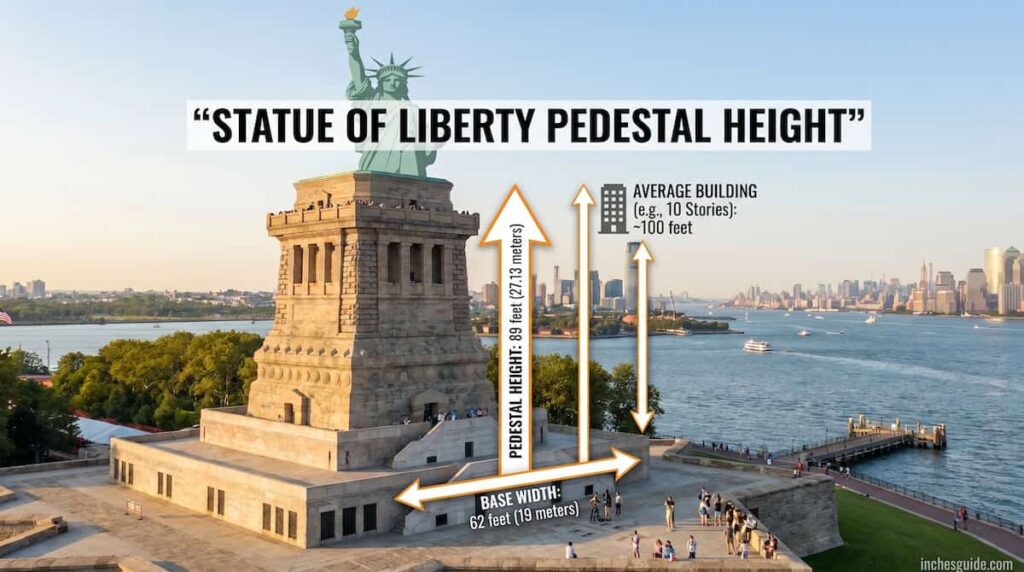
6. Statue of Liberty’s Pedestal
The Statue of Liberty herself, from heel to torch, stands 151 feet. But the pedestal she stands on rises 89 feet from its base to the statue’s feet. Add the foundation below grade, and you’re near 100 feet.
Most visitors don’t realize how much of the total height is just the base. 100 feet in meters is 30.48, and the pedestal is nearly that by itself before Lady Liberty even enters the picture.
The whole structure is a landmark version of that measurement hiding in plain sight.
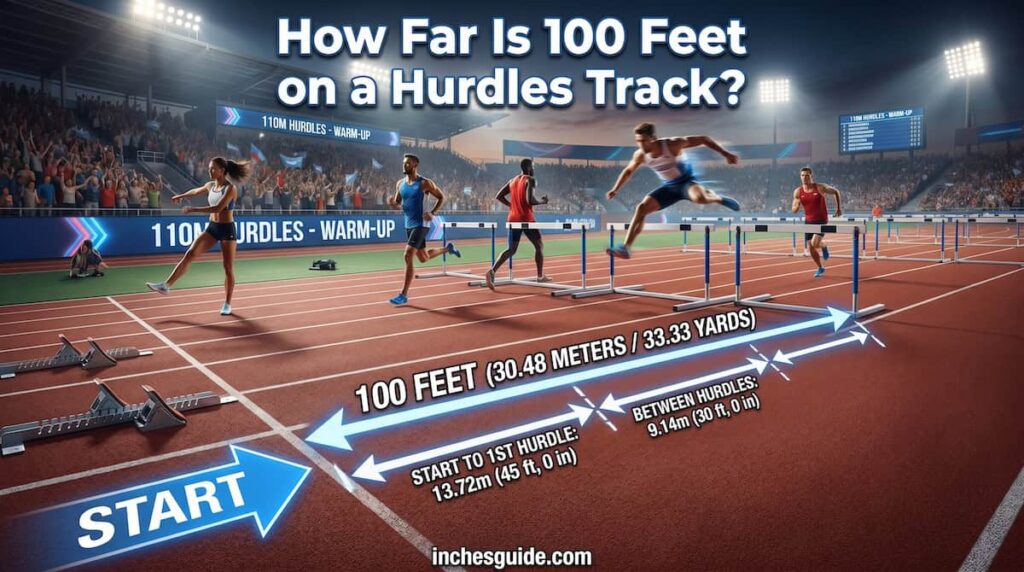
7. A Regulation Hurdles Race (One Repeat)
The 110-meter hurdles event in track and field runs roughly 360 feet, but a 100-foot sprint covers almost exactly the distance from start to the third hurdle in that race.
Track athletes and coaches who know the 110-meter hurdles course well can picture the first chunk of that race. 100 feet on a football field equivalent is just over 33 yards, which maps cleanly to that early section of a hurdle course.
It’s one of those measurements athletes already have wired in their heads without realizing it.
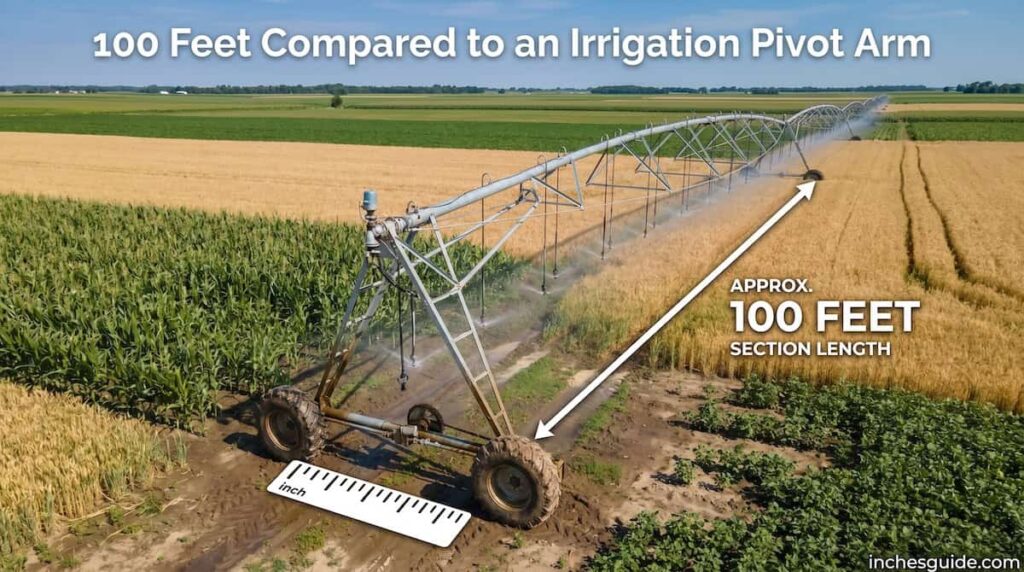
8. A Standard Irrigation Pivot Arm (One Section)
Center pivot irrigation systems used in agriculture extend hundreds of feet from a central water source. Each span section of these machines is typically 100 to 120 feet long.
If you’ve ever driven through the American Midwest or seen aerial photos of those perfect green circles in the desert, each of those arms is made of sections close to 100 feet apiece.
It’s an underrated reference because these machines are genuinely enormous and cover massive ground. One section is a real, tangible 100-foot object you can walk alongside.
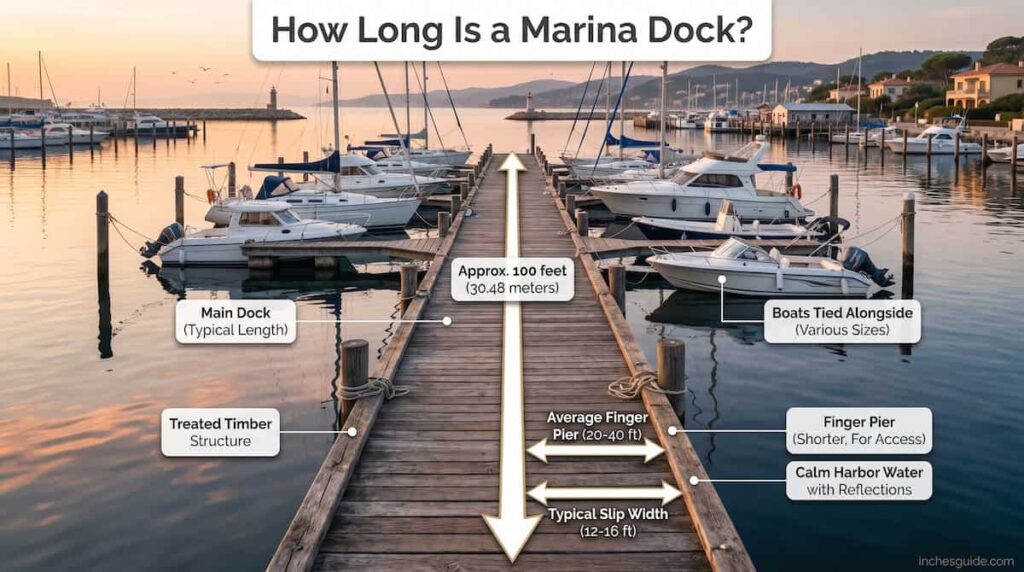
9. The Length of a Standard Dock at a Marina
Floating dock systems at marinas are typically built in modular sections. A full dock finger or pier meant to accommodate mid-size boats runs close to 100 feet when extended.
100 feet in a room is harder to visualize, but next to a marina, it’s concrete. Walk from the shore end of a dock to the far end where the boats tie up. That distance is right around what you’re measuring.
Sailors and boaters have this distance dialed in. They moor and unmoor at it constantly.

10. Four Full-Grown Christmas Trees (The Rockefeller Kind)
The Rockefeller Center Christmas tree in New York City is typically 70 to 100 feet tall. In years when they source a particularly large Norway spruce, it tops out right at that upper limit.
So one exceptional Christmas tree equals 100 feet. If you’ve watched the lighting ceremony on TV and thought “that’s enormous,” you were looking at something close to this measurement.
Most people underestimate how tall those trees are on screen. In person, at 100 feet, a single tree is genuinely jaw-dropping.
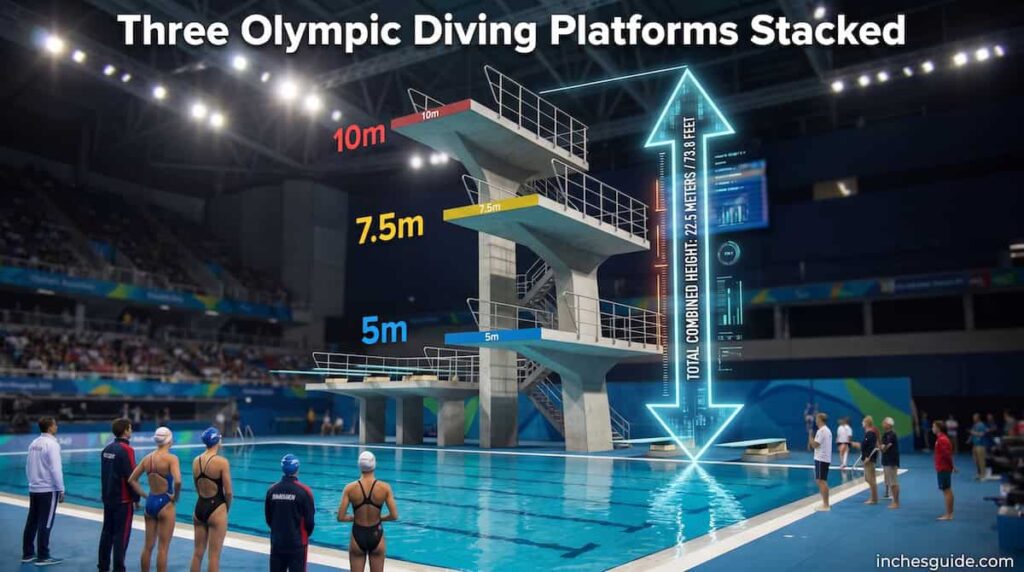
11. A Diving Platform Tower at the Olympics
Olympic diving facilities have platforms at 5 meters, 7.5 meters, and 10 meters. The highest platform, 10 meters, equals 32.8 feet. Stack three of those on top of each other, and you land at 98.4 feet.
Three Olympic high-dive platforms stacked almost exactly equal 100 feet. Divers jump from 10 meters and hit the water in roughly 1.6 seconds. From 100 feet, that fall time stretches to about 2.5 seconds.
That context makes the number feel visceral in a way that unit conversions never do.

12. The Length of a Standard Covered Bridge
Historic covered wooden bridges in New England and the rural Midwest were commonly built between 80 and 120 feet long. The 100-foot span was a common design length because it covered most single-lane river crossings without requiring mid-span supports.
If you’ve ever driven through one of these bridges, that brief dark tunnel you pass through is typically right around 100 feet from entrance to exit.
There are hundreds of these still standing across the US. They’re essentially preserved 100-foot rulers scattered through the countryside.
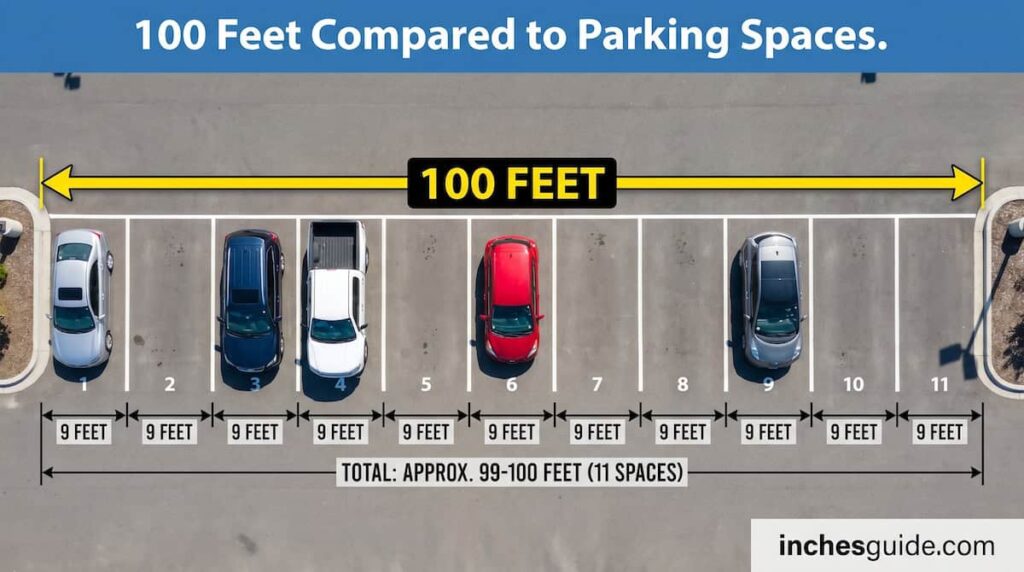
13. A Row of 20 Standard Parking Spaces (Width-Wise)
A standard parking stall in the US is 8.5 to 9 feet wide. Line up 11 of them side by side, and you get about 99 feet. Twelve pushes you to 108 feet.
So 100 feet compared to a football field is one thing, but 100 feet in a parking lot is about 11 cars parked door to door. Next time you’re in a shopping center lot, count the spaces across a row. Eleven stalls are basically 100 feet of pavement.
It reframes the measurement in a setting most people navigate every single day.
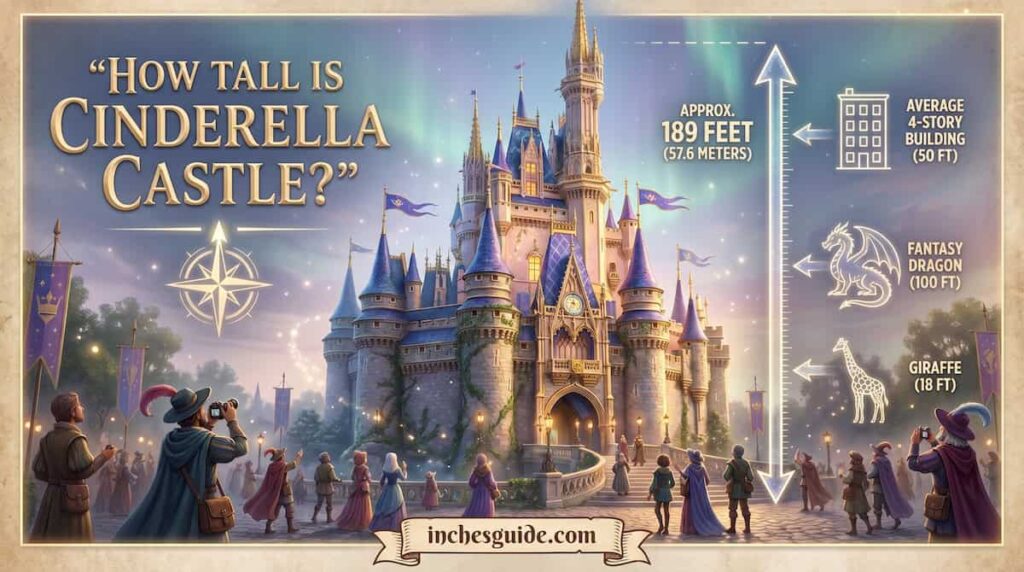
14. The Height of Cinderella Castle at Walt Disney World
Cinderella Castle in Magic Kingdom, Orlando, stands 189 feet. But here’s the thing: the main castle structure below the tallest spires reaches about 100 feet. The iconic blue and white turrets you see in photos reach up from that base.
Disney actually keeps the exact heights somewhat ambiguous for FAA reasons, but architectural estimates consistently put the main body of the castle at roughly 100 feet before the decorative spires take over.
It’s a good mental anchor because practically everyone has seen that castle in photos or in person.
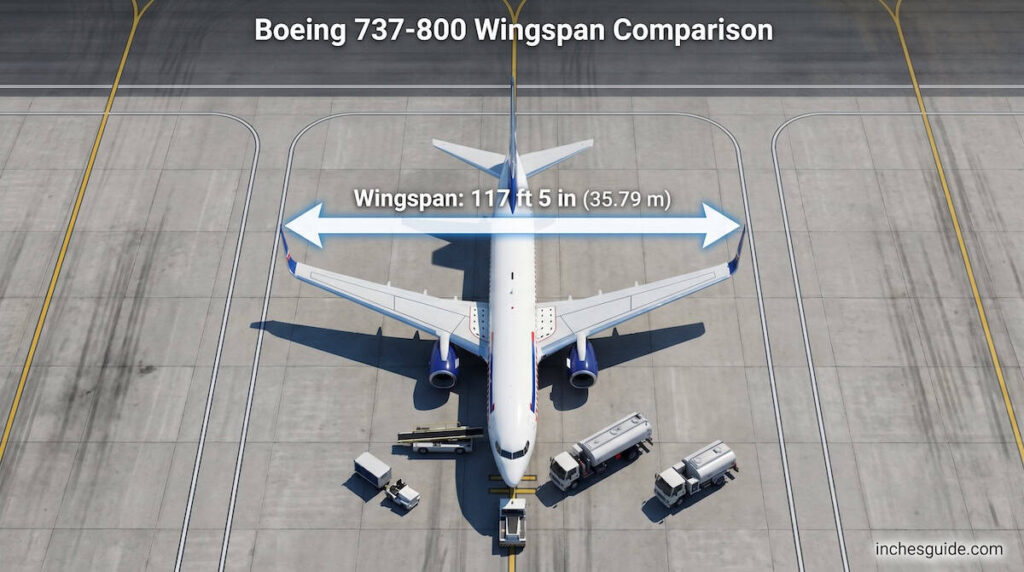
15. The Wingspan of a Boeing 737-800
The Boeing 737-800, one of the most common commercial planes in the world, has a wingspan of 112 feet 7 inches. That’s just a bit over 100 feet tip to tip.
How long is 100 feet visually from an airplane window is a direct answer: look at the wing and you’re seeing most of it. The wing tip to wing root on a 737 is close to 56 feet, so nearly two full wing halves get you there.
Frequent flyers walk past this measurement dozens of times a year at the gate without thinking about it.
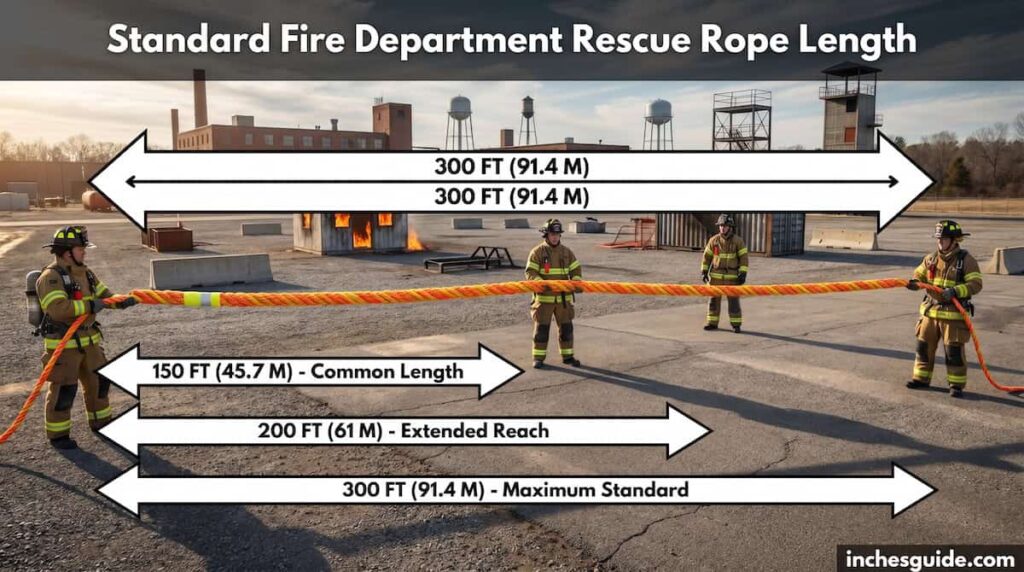
16. A Standard Rope Rescue Line
Professional rescue and rappelling ropes used by fire departments and mountain rescue teams are standardized at 100, 150, or 200 feet. The 100-foot rope is the most common single-person rescue length.
Every rope in a fire station that’s rolled and stored for vertical rescue is likely 100 feet long. It’s not a coincidence. That length was chosen because it reliably covers most building heights, cliff ledges, and water rescues that first responders encounter.
100 feet on the road in rescue terms is a straight drop from a 9-story structure, handled by one standard rope.
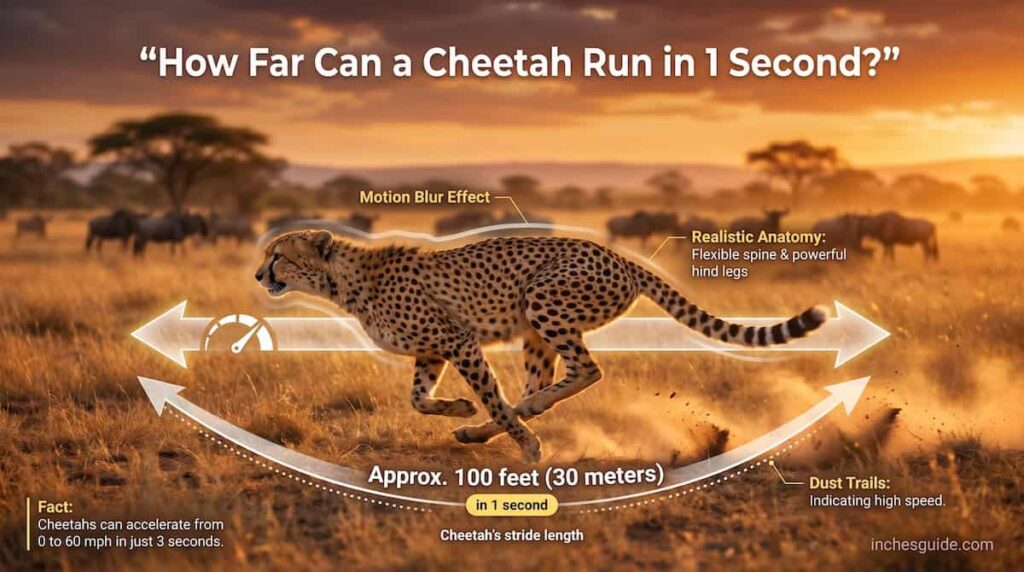
17. The Distance a Cheetah Covers in Three Seconds
A cheetah at full sprint reaches 70 to 75 mph. At that speed, it covers roughly 110 feet per second. In just under one second, a sprinting cheetah crosses 100 feet.
So 100 feet is less than a cheetah’s first breath at top speed. That’s one of those facts that reframes the measurement instantly.
For comparison, a human sprinter at 100 meters covers that same distance in 9.5 seconds. 100 feet in meters is 30.48, so a world-class sprinter takes a bit under 3 seconds to cover it. The cheetah does it in under one.
How to Estimate 100 Feet Without a Tape Measure
You don’t always have tools handy. Here are three quick methods that work anywhere.
Count your steps. An average adult stride is 2.5 feet. Forty normal steps gets you right to 100 feet. Take deliberate, consistent steps and count to 40.
Use a car. A standard sedan is about 15 feet long. Park seven of them bumper to bumper in your mind. That row equals 105 feet, close enough for any practical estimate.
Look at the road. Solid lane dividers on US highways are 10 feet long with 30-foot gaps between them. The gap plus one line equals 40 feet. Two and a half of those gaps is 100 feet. Easy to count from a moving vehicle.
100 Feet in Everyday Situations
Safety setbacks. Fire codes in most US cities require buildings to sit 100 feet from certain hazardous facilities. That’s a full city block in dense neighborhoods.
LED light strips. A common search is how long 100 feet of LED lights is when buying strip lighting. At 100 feet, you’re covering a serious amount of perimeter. That’s a large deck, a full commercial display, or an event tent outline.
Real estate. Lot depths of 100 feet are common in suburban housing. When a listing says “100-foot depth,” that backyard runs from the back of the house to the rear property line for that full distance.
Drone rules. FAA recreational drone rules require pilots to stay within visual line of sight. In practice, 100 feet is a comfortable close-range hover where the drone is still clearly visible and controllable.
FAQs
How long is 100 feet in meters?
100 feet equals exactly 30.48 meters. To convert feet to meters, multiply by 0.3048. So 100 times 0.3048 gives you 30.48 every time.
How far is 100 feet visually?
It’s roughly the height of a 9 to 10-story building or the distance across about 11 parking spaces side by side. On flat ground, most people can walk it in 30 to 35 steps at a relaxed pace.
How long is 100 feet on a football field?
An American football field is 300 feet from goal line to goal line. So 100 feet is exactly one-third of the playing field, from one goal line to roughly the 33-yard line.
How do you measure 100 feet without tools?
Count 40 normal walking steps. Each average adult stride covers about 2.5 feet, so 40 steps lands right at 100 feet. A standard sedan is also about 15 feet, so seven cars end to end gets you close.
Is 100 feet in a room even possible?
Yes, in large commercial spaces. Warehouses, airplane hangars, big box retail stores, and sports training facilities often have interior lengths and widths exceeding 100 feet. In residential settings, it’s rare unless you’re in a very large open-plan home.
One Last Thought
100 feet shows up more often than people realize. It’s tucked into fire codes, dock measurements, rescue ropes, irrigation arms, and the flagpoles you drive past every day.
You don’t need a tape measure to have a feel for it. Pick two or three of these references that actually connect with your daily life and let them do the work.
The number isn’t abstract anymore. It’s the cheetah’s first second, the rescue rope in the station, the dock finger at the marina.