

If you have ever ordered something online and then felt completely confused when it arrived either way smaller or bigger than you expected you already know the problem. Measurements written on a screen just don’t translate well in your head. Five inches is one of those sizes that sounds perfectly clear until someone asks you to actually point to it in real life, and suddenly you’re not so sure anymore.
Most of us don’t walk around thinking in inches. We think in objects. We think in “about the size of my phone” or “roughly half the length of my forearm.” That’s actually a smarter way to understand measurements, and once you connect 5 inches to the things already sitting on your desk, in your kitchen, or in your bag, the number becomes real and easy to remember.
This article is going to do exactly that—break down what 5 inches actually looks like using everyday objects you already know, so next time you see that measurement, you won’t have to guess. Maybe you’d also like to read about 8 inches.
How Long Is 5 Inches, Exactly?
Before we get into examples, let’s make sure the number itself is clear. Five inches is not a huge measurement, but it’s also not tiny. It sits right in that comfortable middle zone big enough to hold in one hand, small enough to fit in a pocket.
Here’s what 5 inches looks like when you convert it into other units:
| Unit | Value |
|---|---|
| Inches | 5 inches |
| Centimeters | 12.7 cm |
| Millimeters | 127 mm |
| Feet | 0.42 ft |
| Meters | 0.127 m |
To put it in plain terms: 5 inches is about 12.7 centimeters, which is slightly less than half a foot. If you picture a standard 12-inch ruler and imagine cutting it just past the halfway point, you’re looking at roughly 5 inches. It’s close to half a ruler but not quite there that little gap between the 5 and the 6 on the ruler is actually the difference between half a foot and 5 inches.
What Does 5 Inches Look Like on Your Hand?
Here’s a quick trick that costs nothing and requires no tools. Hold up your hand, palm facing you. For most adults, the width of the palm from the base of the pinky finger to the base of the thumb falls somewhere between 4 and 5 inches. It’s not a perfect measurement, but it gets you very close, and it means you always have a rough 5-inch reference right on your own hand.
Another way to think about it: if you pick up any object and it fits comfortably in one hand without feeling too short or too long, there’s a good chance it’s somewhere near 5 inches. Designers and manufacturers actually use this logic when creating everyday products they want things to feel natural in the hand, and 5 inches tends to be right in that sweet spot.
Quick Reference Table
Here’s a clean summary of all 13 examples so you can scan through them quickly:
| Item | Approximate Length | How Close to 5 Inches |
|---|---|---|
| Index Card (long side) | 5 inches | Exact |
| Computer Mouse | ~5 inches | Very close |
| Compact Smartphone | 5–5.5 inches | Very close |
| Soda Can (height) | ~4.8 inches | Nearly exact |
| Nail File | ~5 inches | Very close |
| Pocket/Travel Comb | ~4.5–5 inches | Close |
| Teaspoon | ~5 inches | Close |
| 5 Paper Clips (lined up) | Exactly 5 inches | Exact |
| Travel Toothbrush (closed) | ~5 inches | Very close |
| Small Grooming Comb | ~5 inches | Close |
| Larger USB Flash Drive | ~4.5–5 inches | Approximate |
| Pocket Notepad | ~5 inches | Very close |
| Coffee Mug (height) | 4–5 inches | Close |
13 Everyday Objects That Are About 5 Inches Long
Let’s get into the real examples. These are all things most people use regularly or have seen plenty of times. Each one gives you a slightly different angle on what this measurement looks and feels like in practice.
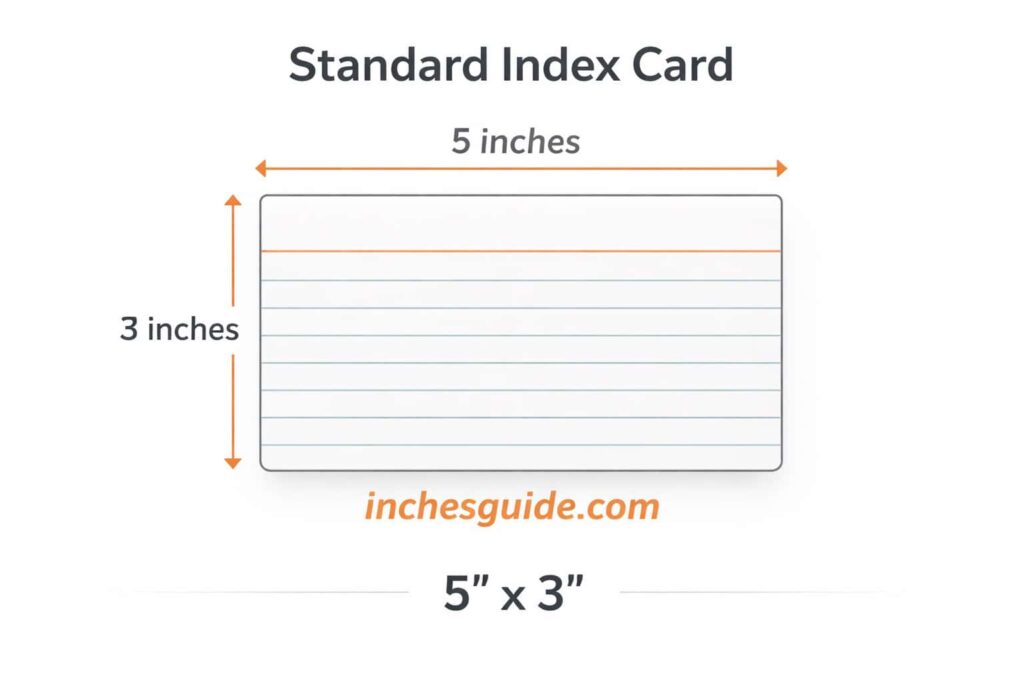
1. Standard Index Card
If you have ever used flashcards in school or kept notes on little cards at work, you have already held 5 inches in your hand without knowing it. A standard index card the most common 3×5 size is exactly 5 inches along its long side. This measurement wasn’t chosen randomly. It has been the standard for decades because it’s wide enough to write on comfortably but small enough to shuffle through quickly. The next time you pick up an index card, take a second look at it, because that long edge is your perfect 5-inch reference.
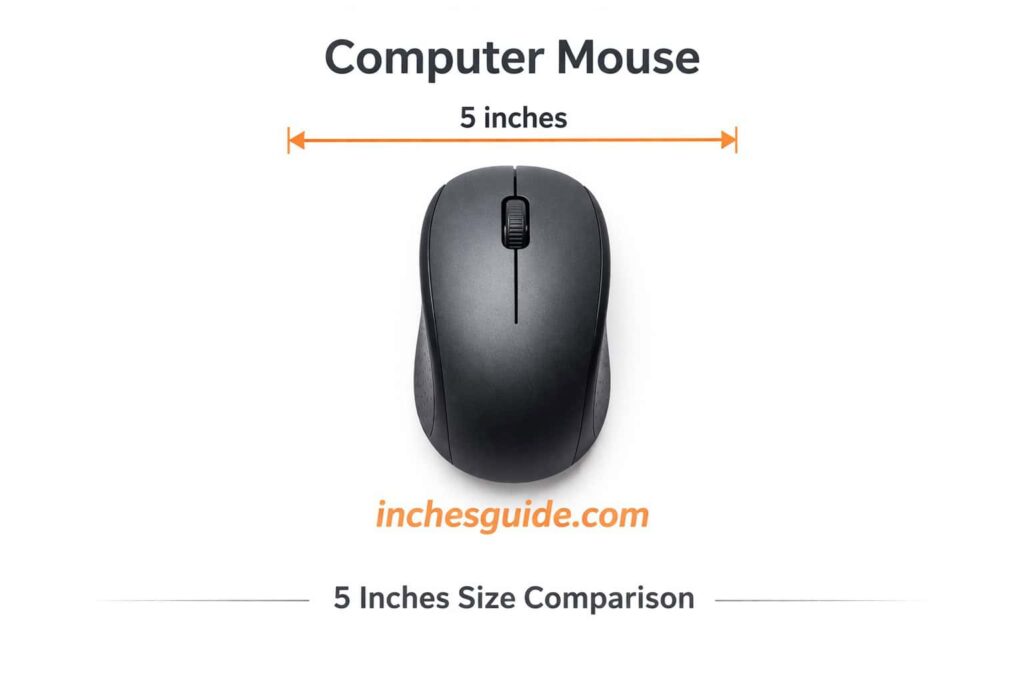
2. Computer Mouse
Take a look at the mouse sitting next to your computer. Most standard computer mice are designed to be right around 5 inches from the front tip to the back edge. This isn’t a coincidence it’s the result of years of ergonomic research into what size fits the average human hand best. When you wrap your hand around a mouse and everything feels just right, that comfort is partly because the length matches the natural resting size of your palm. So the next time someone asks you what 5 inches looks like, you can just point at your mouse.
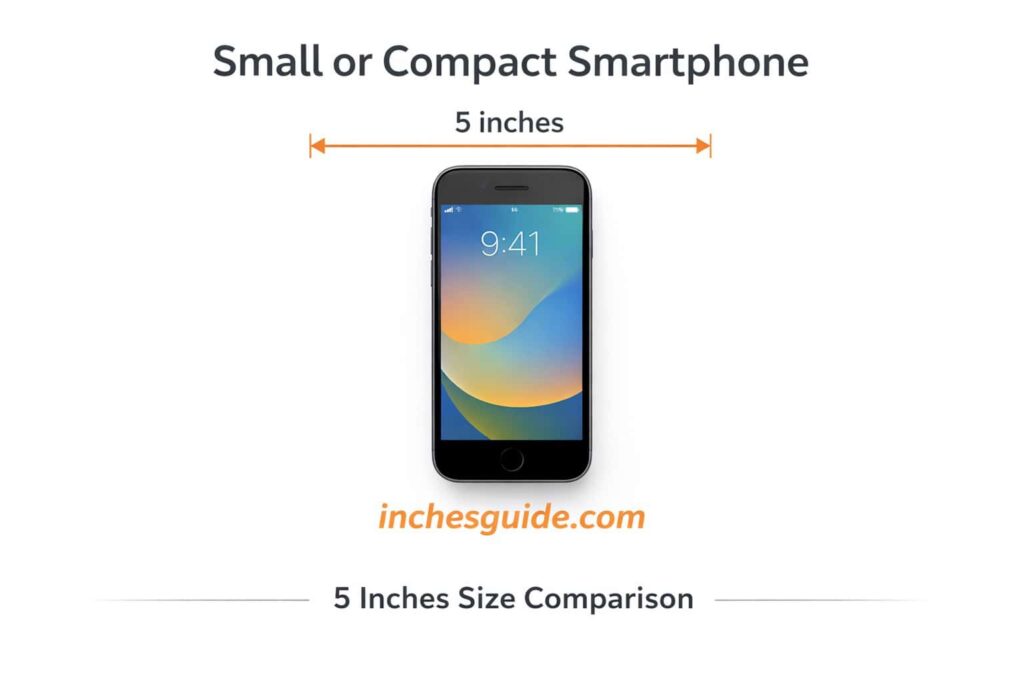
3. Small or Compact Smartphone
Smartphones have gotten bigger over the years, but if you have an older phone or a compact model, there’s a good chance it’s right around 5 to 5.5 inches tall. Many budget and mid-range phones from the last few years fall in this range, and even some newer compact models are designed to stay close to this size because a lot of people prefer a phone that fits easily in one hand. It won’t be an exact match every time, but it’s close enough to give you a strong visual reference for what 5 inches looks like in something you probably touch dozens of times a day.
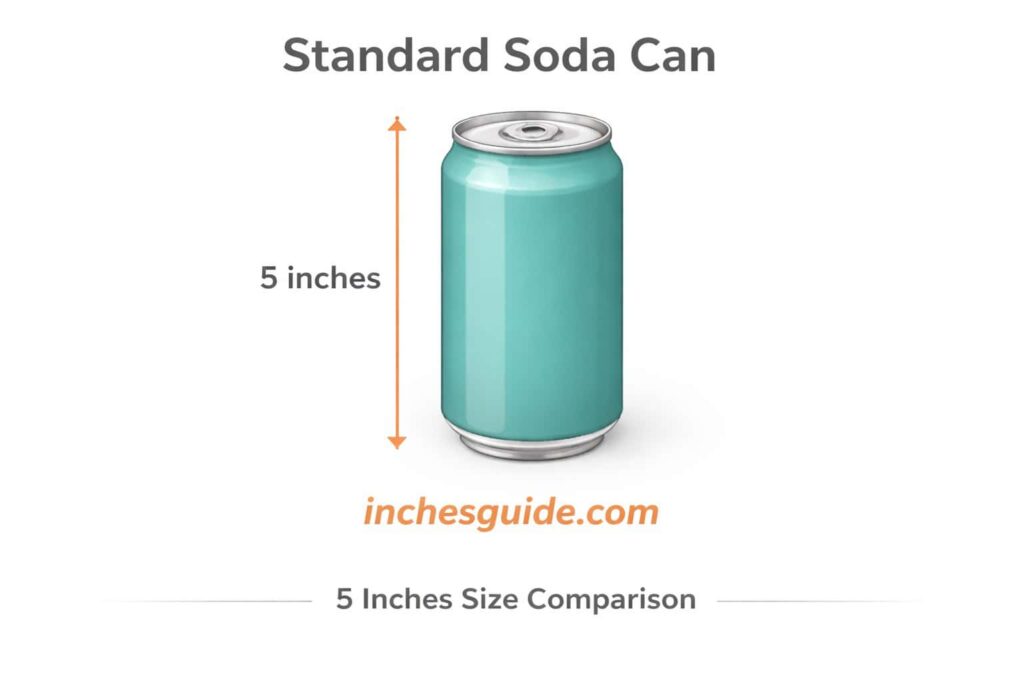
4. Standard Soda Can
Here’s one almost everyone can picture immediately. A standard aluminum soda can the kind you get at a grocery store or vending machine stands about 4.8 inches tall. That’s just a tiny sliver under 5 inches, which makes it one of the most reliable everyday comparisons you can find. The next time you crack open a soda, set the can on a flat surface and look at it from the side. That height is almost exactly 5 inches, and once you see it, it sticks in your memory.
5. Nail File
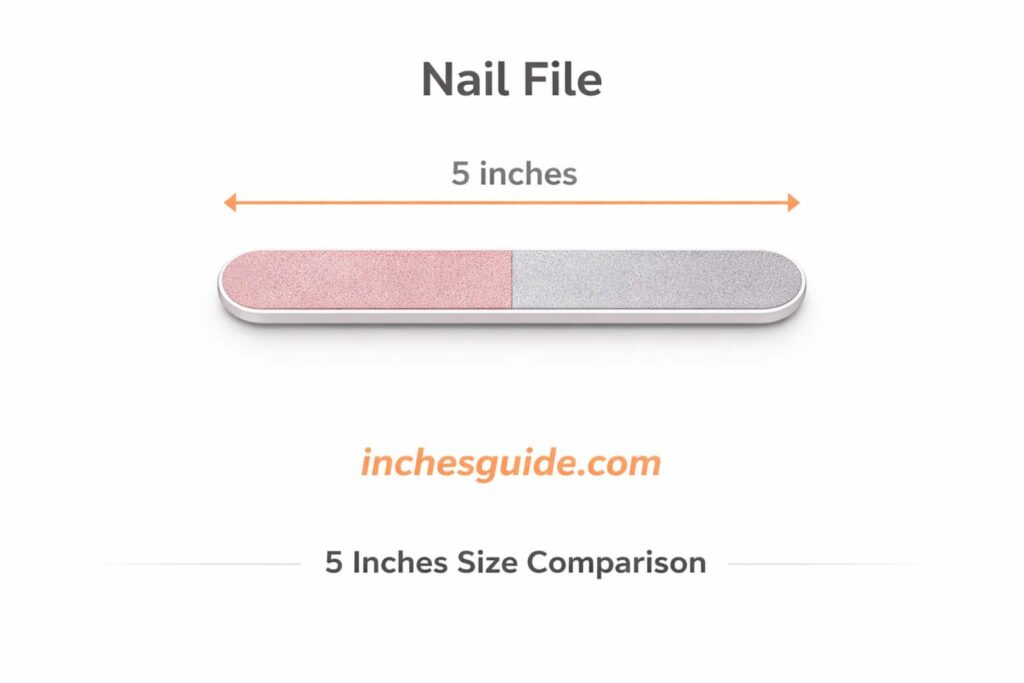
A standard nail file is typically around 5 inches long, and this size is no accident. It needs to be long enough to give you good control while filing, but short enough to fit comfortably in a purse, makeup bag, or travel kit. Most people who do their own nails at home have one of these sitting around, and it’s a surprisingly accurate reference for 5 inches. It’s also light and narrow, which shows that 5 inches isn’t always about something thick or bulky it’s just a length.
6. Pocket or Travel Comb
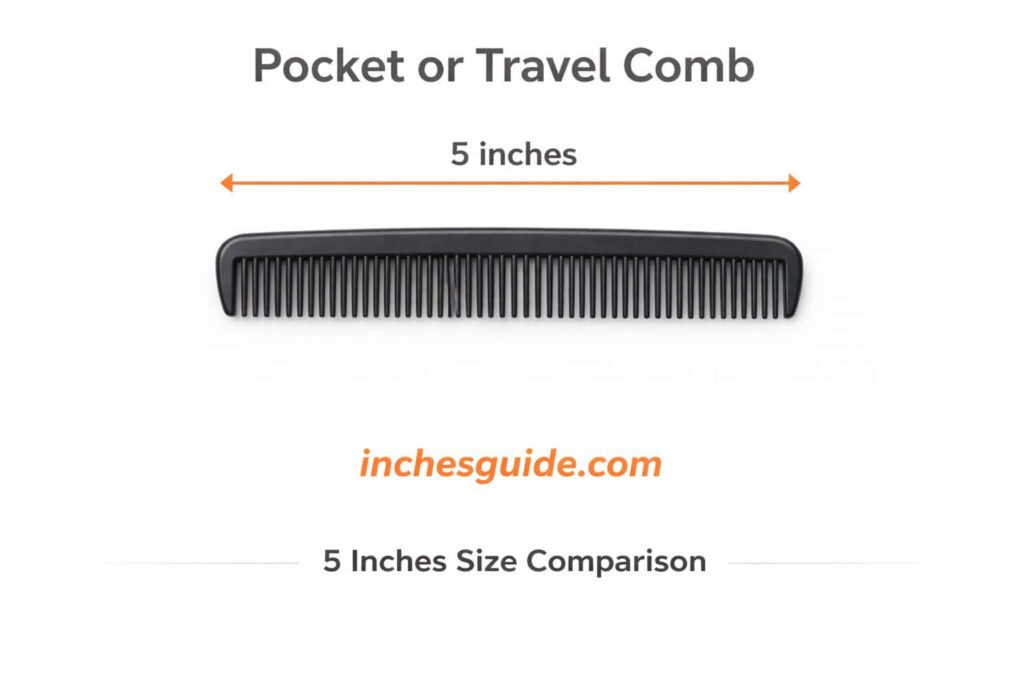
Those small flat combs that people toss in a bag or keep in a shirt pocket are almost always close to 5 inches. This size was landed on because it covers enough of the hair to be useful while still being slim enough to slide into a pocket without any bulk. If you have a travel-sized comb at home, hold it next to a ruler and you’ll likely find it’s right in the 4.5 to 5.5 inch range. It’s one of those objects where 5 inches just makes practical sense.
7. Teaspoon
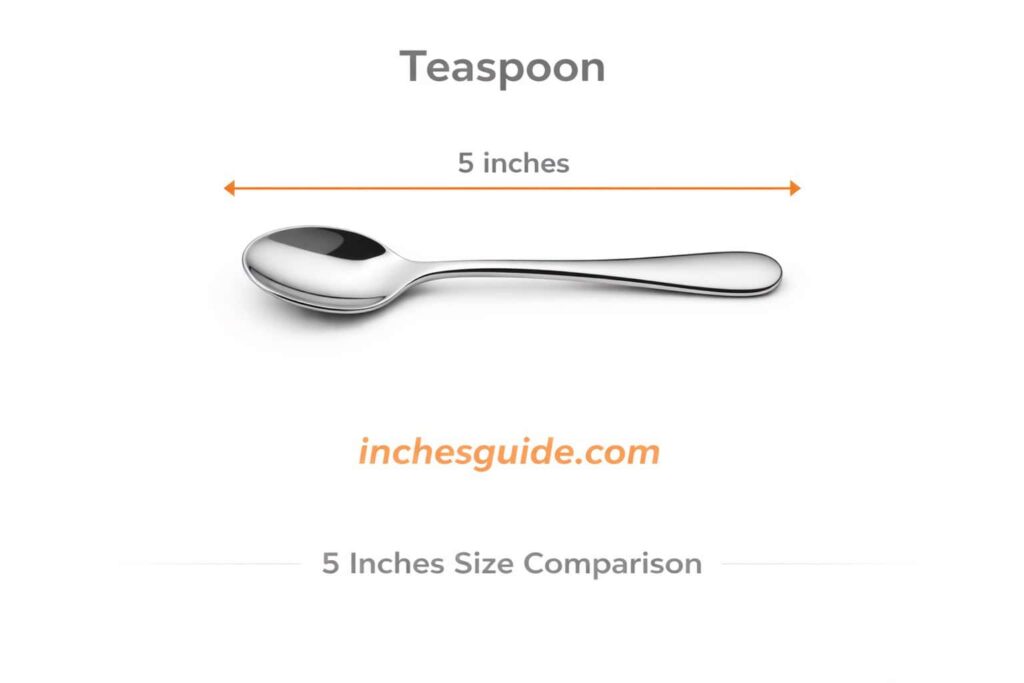
This one surprises a lot of people. A regular teaspoon the kind in your kitchen drawer is around 5 inches from the tip of the handle to the end of the spoon bowl. The handle itself accounts for most of that length. Because teaspoons are so common and most kitchens have a whole drawer full of them, this is one of the easiest references to grab when you need to estimate 5 inches. Lay one flat on a table and you have an instant measuring stick you’ve probably never thought to use before.
8. Five Paper Clips Lined Up
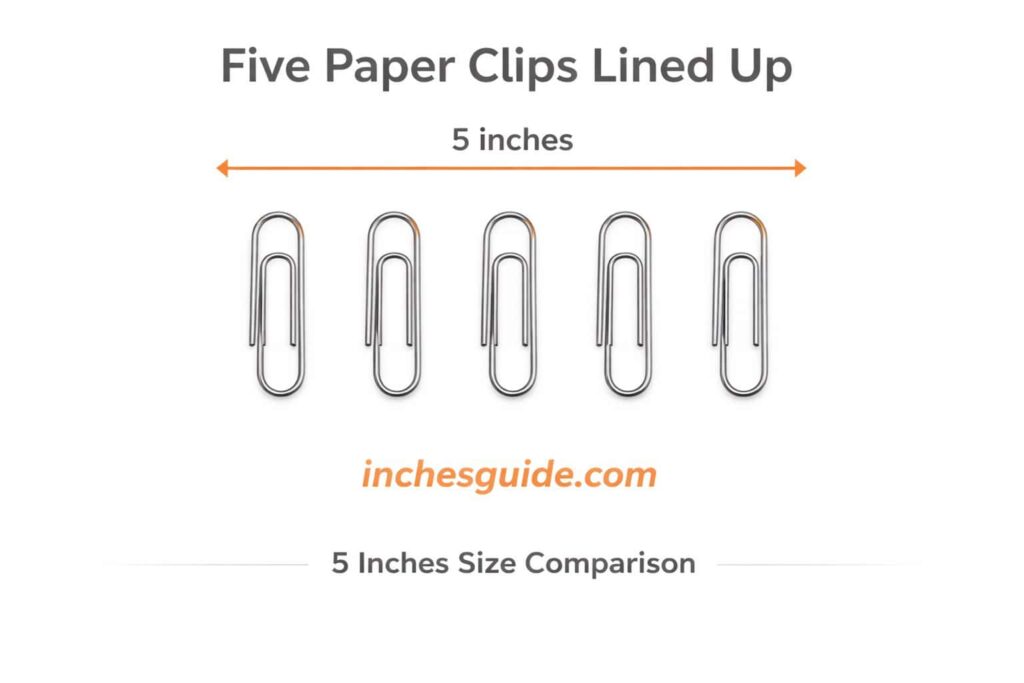
This one is a bit different because it’s more of a measurement trick than a single object, but it’s incredibly useful. A standard paper clip is just about 1 inch long. Put five of them end to end in a straight line and you have almost exactly 5 inches. If you work in an office or study at home, there’s a decent chance you have paper clips sitting nearby right now. It’s a simple, reliable way to measure something without picking up a ruler especially handy for quick checks during crafts, packaging, or DIY projects.
9. Travel or Foldable Toothbrush
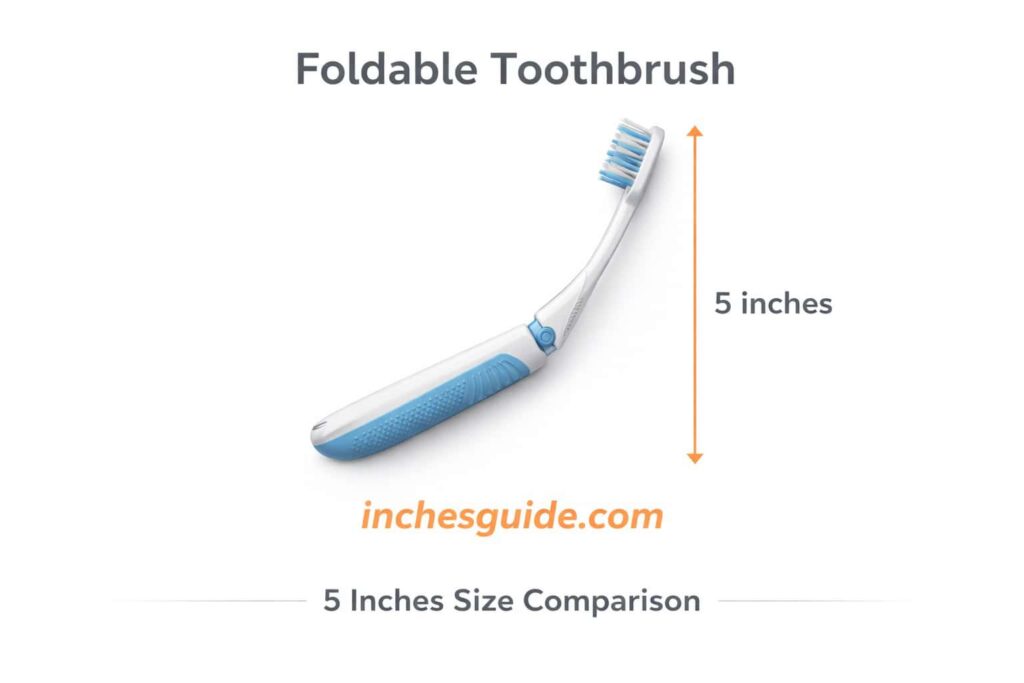
Compact toothbrushes designed for travel the kind that fold in half or come in a small case are usually around 5 inches when they’re closed. The whole point of this design is portability, and 5 inches is the sweet spot where the brush is short enough to fit in a toiletry bag without taking up too much room but still long enough to be a real, functional toothbrush. If you travel regularly and have one of these in your bag, you’re carrying a 5-inch reference with you every trip.
10. Small Grooming Comb (Wide-Tooth Style)
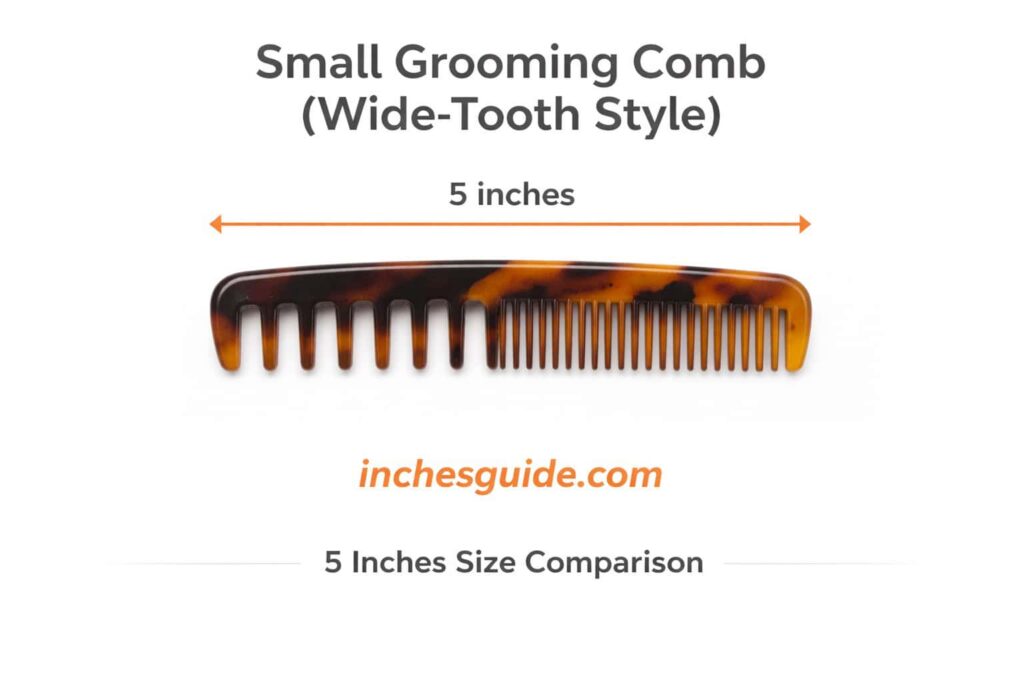
Aside from pocket combs, many grooming combs designed for styling or detangling are made close to 5 inches. These are the combs you often find in barbershop kits or personal grooming sets. The length gives just enough surface area to work through hair efficiently while staying compact and easy to maneuver. If you’ve picked up a comb from a drugstore grooming aisle recently, it was probably close to this size.
11. USB Flash Drive (Larger Designs)
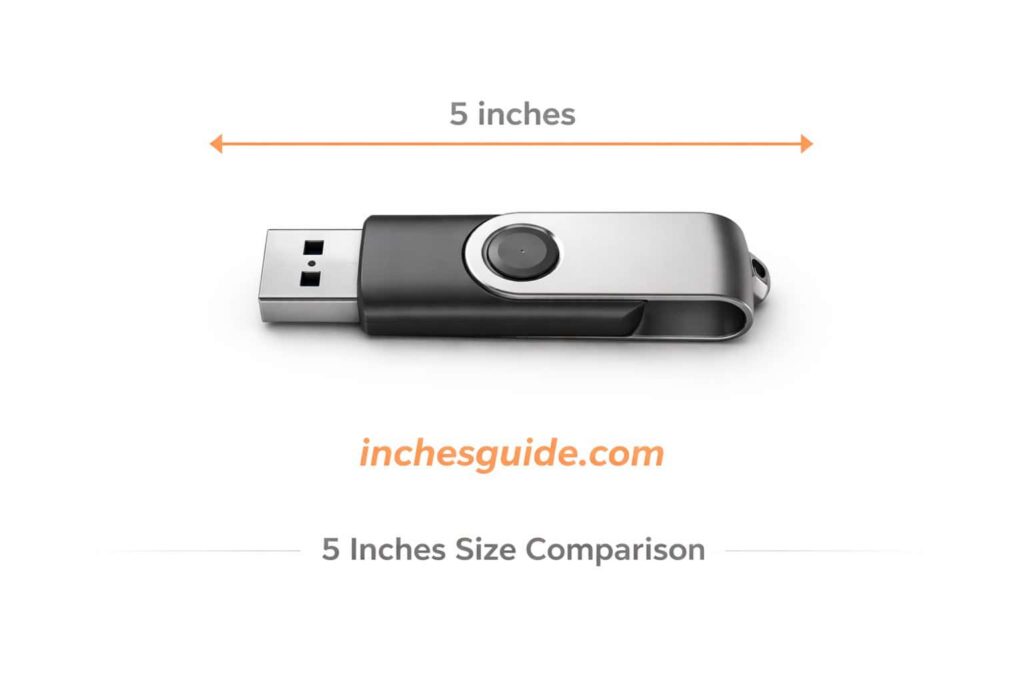
Most standard USB drives are shorter, but some extended or older designs especially those with a cap or a longer casing can come close to 5 inches. This is more of a “close enough” comparison than an exact one, but if you have a bulkier flash drive or a USB hub with a short cable, the overall length can land right in this range. It’s less useful as a reference than some of the other items on this list, but it’s a good reminder that 5 inches shows up even in small tech accessories.
12. Small Pocket Notepad
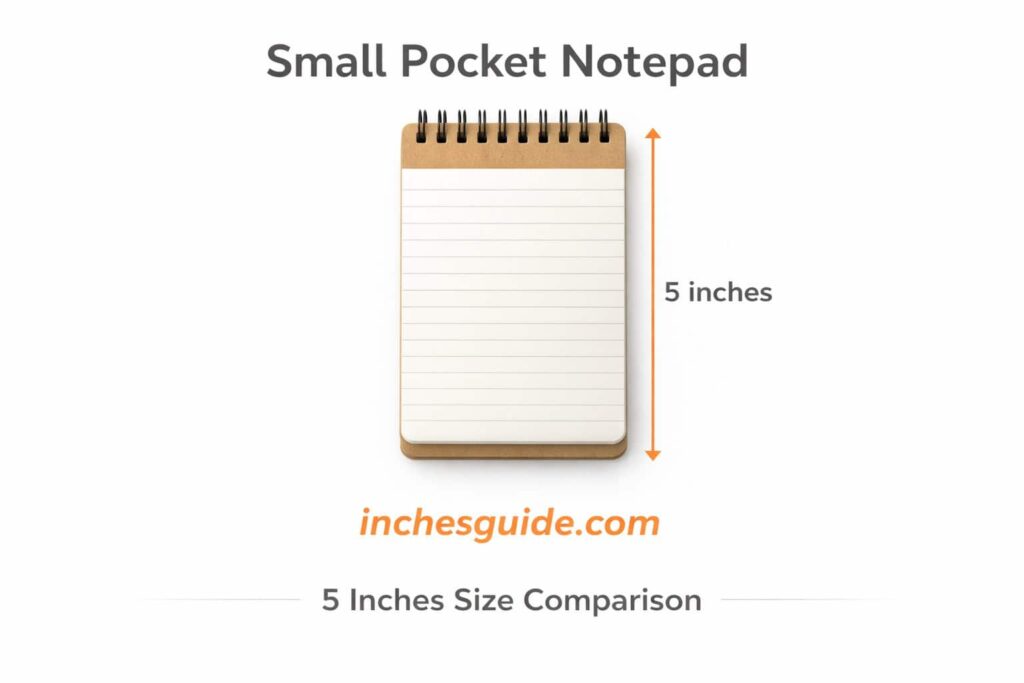
Those tiny notebooks people keep in their jacket pocket or toss in a bag for quick notes are usually around 5 inches on their longer side. The size is practical wide enough to write a full sentence without cramping everything together, but small enough that you barely notice it in a pocket. Brands that make these deliberately target this size because it hits that balance between usefulness and portability. If you have a Moleskine pocket notebook or a similar brand, measure it and you’ll likely find it’s right around 5 inches.
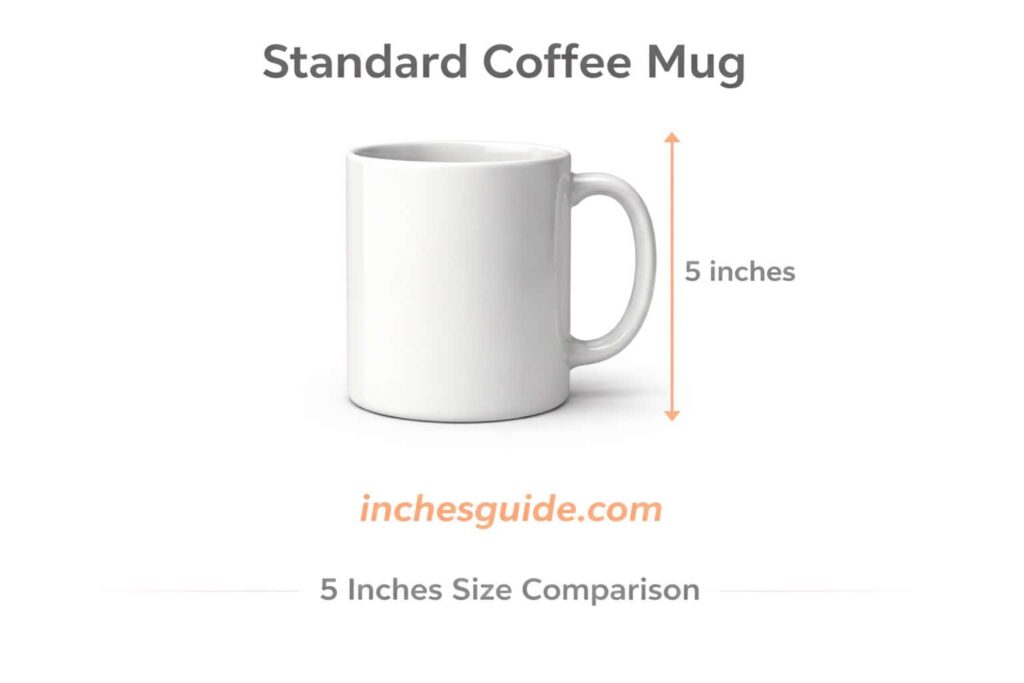
13. Standard Coffee Mug
This last one is everywhere. Look at the coffee mug on your desk or kitchen counter. Most standard mugs stand between 4 and 5 inches tall, depending on the design. Shorter mugs lean toward 4 inches, and taller ones can reach just past 5, but the average hits right around this mark. Since mugs are designed to fit comfortably under most drip coffee machines and look proportional on a normal counter, 5 inches ends up being a natural height. It’s one of the most common objects you interact with every morning, and it’s almost exactly 5 inches.
Why Knowing This Measurement Actually Matters
Understanding what 5 inches looks like in real life isn’t just a fun fact it genuinely helps in a bunch of everyday situations.
Online shopping is the big one. When you’re buying something like a phone case, a wallet, a picture frame, or a storage container, the dimensions listed on the product page can feel meaningless. But if you know that 5 inches is roughly the length of your computer mouse or a soda can’s height, you can instantly judge whether a product will be too big, too small, or just right for what you need without having to pull out a ruler.
DIY and home projects benefit too. When you’re measuring a shelf, figuring out where to hang something, or trying to see if a gap in your drawer is wide enough for an item, being able to estimate in 5-inch chunks saves a lot of trips back and forth to get your tape measure.
Packing and storage is another area where this helps. When you’re deciding if something fits in a bag, a box, or a drawer, knowing that 5 inches is roughly the length of a travel toothbrush or a small notepad gives you an instant mental model to work with.
How to Measure 5 Inches Without a Ruler
Sometimes you need a quick estimate and there’s no measuring tape in sight. Here are a few practical ways to get close:
Your palm width is your most portable tool. For most adults, the palm from pinky side to thumb side is somewhere around 4.5 to 5 inches. It won’t be perfect, but it’s fast and always available.
A standard smartphone especially an older or compact model sits right around 5 inches tall, so you can hold it up next to something to get a rough comparison.
Five paper clips end to end gives you very close to exactly 5 inches. If you have any nearby, this is one of the most reliable no-tool methods.
A soda can standing upright is about 4.8 inches tall, which is close enough for most estimates. Set one next to whatever you’re trying to measure and see how it compares.
An index card held sideways gives you exactly 5 inches if you have one nearby. Flashcard sets usually have dozens, so there’s a good chance one is within reach.
Final Thoughts
Five inches is one of those measurements that feels vague until you connect it to something real. The moment you realize your computer mouse, your coffee mug, your nail file, and your kitchen teaspoon are all sitting right around this length, the number stops being abstract and starts being something you can picture instantly. That mental connection is what makes it stick. From now on, whenever you see “5 inches” written somewhere, you won’t have to guess you’ll already know exactly what that looks like.