
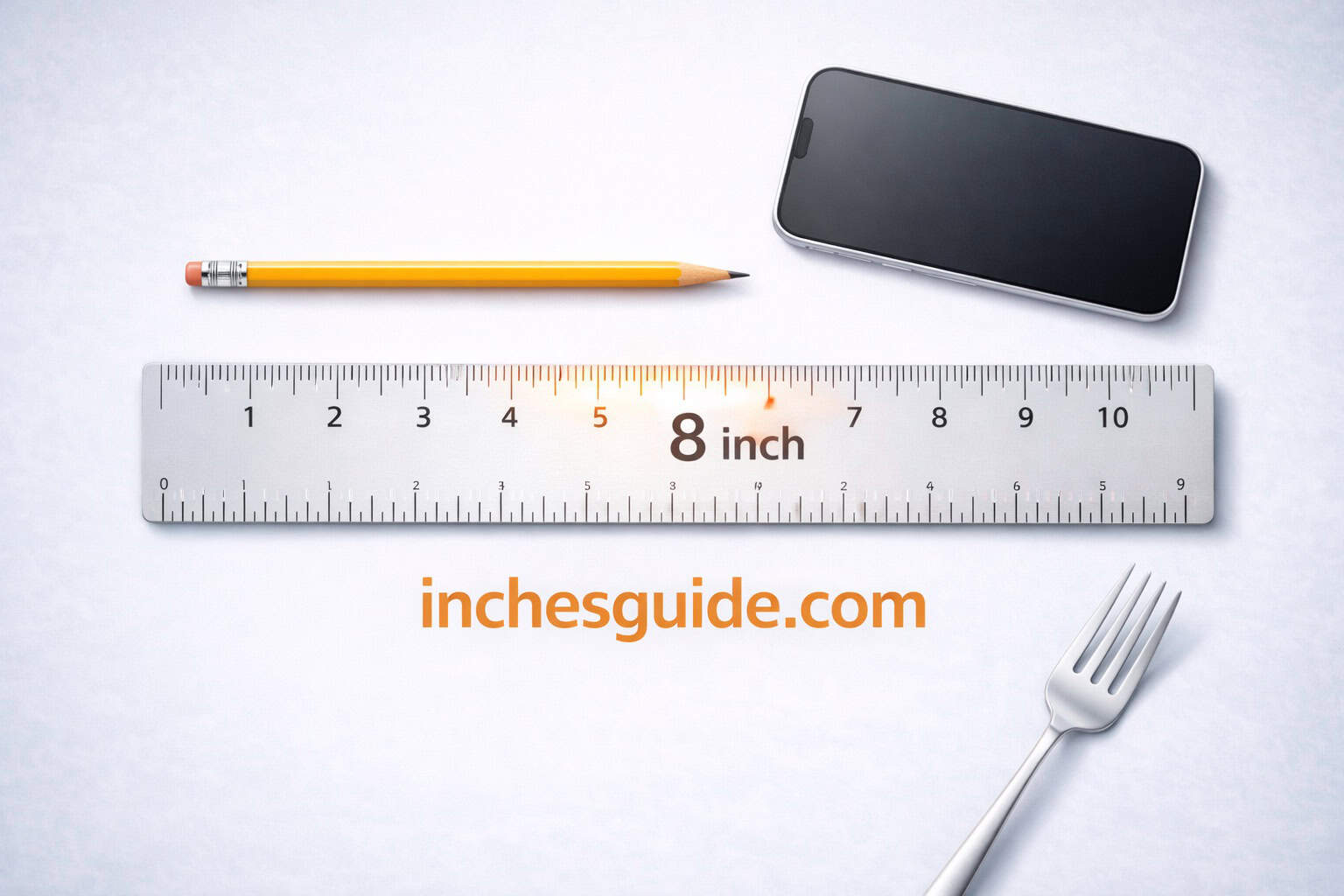
Have you ever looked at a product online and seen “8 inches,” but still had no idea what that actually looks like in real life? It’s actually very common. Numbers like 20.32 cm or 203.2 mm may be accurate, but they don’t really help your brain understand the size clearly.
That’s because we don’t think in numbers — we think in real objects.
When someone asks about this size visually, the easiest way to understand it is by comparing it with things you already use every day. Once you connect it with real items, the confusion disappears completely.
8 inches is not too small and not too big. It sits in that perfect middle range where things feel comfortable to hold, easy to carry, and practical for daily use. That’s exactly why this measurement shows up in so many places — from kitchen tools to gadgets and even personal accessories.
What Does 8 Inches Actually Feel Like?
Before jumping into examples, try something simple with your own hand. Stretch your hand from the tip of your thumb to the tip of your pinky finger. For many adults, this distance is close to 7 to 9 inches.
That means this length is almost equal to your natural hand span.
Now think about it. When something is 8 inches long, it’s roughly the size your hand can comfortably stretch across. This is why many tools and everyday objects are designed around this length. It matches how humans naturally hold and use things, which makes it feel balanced and easy.
This is also why people often compare this length with everyday objects, because real-life comparison makes it much easier to understand.
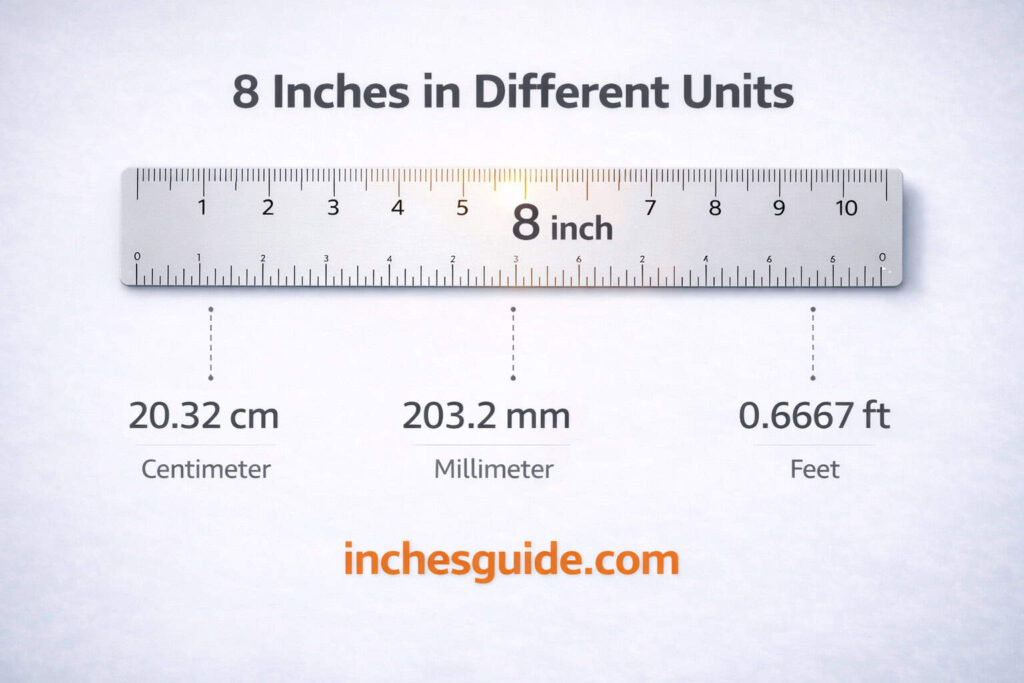
8 Inches in Different Units (Conversion Table)
Sometimes you may need to understand this measurement in different units, especially when dealing with international products or specifications.
| Unit | Value |
|---|---|
| Inches | 8 inches |
| Centimeters (cm) | 20.32 cm |
| Millimeters (mm) | 203.2 mm |
| Meters (m) | 0.2032 m |
| Feet (ft) | 0.67 feet |
| Yards (yd) | 0.22 yards |
So if you’re wondering how long 8 inches is in cm, the answer is 20.32 cm. In meters, it’s just above 0.2 meters, which helps give a better idea when comparing larger objects.
Check Out: Monster Can Dimensions
Why 8 Inches Is So Common in Real Life
This measurement is not random at all. Designers and manufacturers often choose sizes based on human comfort and usability. If something is too small, it becomes hard to use. If it’s too big, it becomes uncomfortable to carry or handle.
8 inches sits right in that “perfect zone.” It is long enough to be useful but still compact enough to stay practical.
That’s why you’ll find this measurement in kitchen tools, electronics, stationery, and even some furniture designs. It works well with human hands, storage spaces, and daily usage patterns.
17 Things That Are 8 Inches Long (Real-Life Examples)
Understanding this size becomes much easier when you compare it with real-life objects. Instead of thinking in numbers like 20.32 cm, it’s more practical to visualize this length using everyday items you already know. Below are some common objects that are around this length, helping you clearly imagine it without needing a ruler.
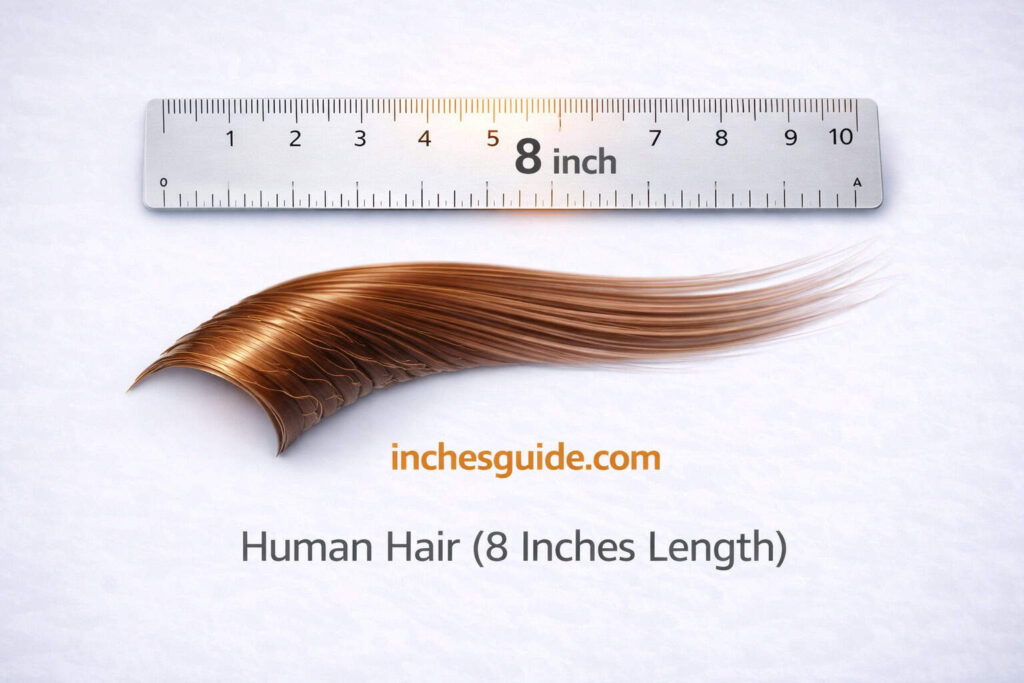
Human Hair (8 Inches Length)
If you are trying to understand this size visually on a person, hair length is actually one of the most relatable examples. Hair that grows to around 8 inches usually falls somewhere between your ear and shoulder, depending on your height and face shape. This makes it easier to imagine compared to numbers.
This is why many people try to understand this size in real life using visual examples, because they make more sense than measurements. Instead of thinking about centimeters or inches, you can just picture someone’s hair length and instantly understand it.

Hand Length / Hand Span
Your own body can be the best measuring tool. For many adults, the distance from the tip of the thumb to the tip of the pinky finger when stretched is close to this size. This is why hand span is often used as a quick way to estimate measurements.
Once you know your own hand size, you don’t need a ruler every time. You can quickly compare objects and get a rough idea. It’s not perfectly accurate, but it’s very practical in daily life.
This method is especially useful when you are shopping or measuring something quickly and comparing it with objects around you.
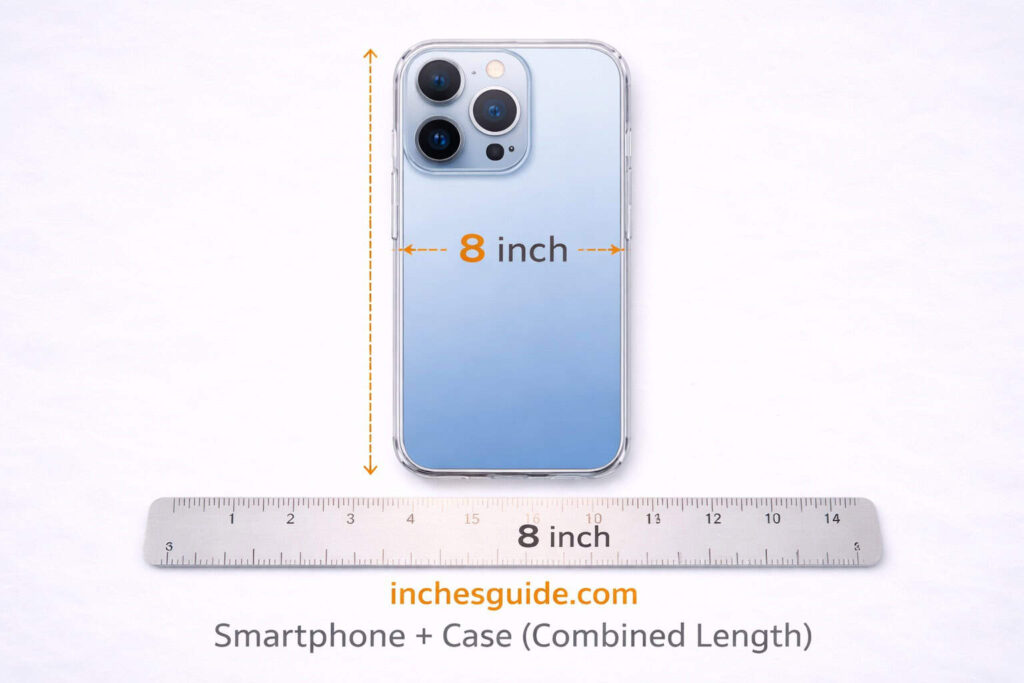
Smartphone + Case (Combined Length)
A single smartphone is usually smaller than this size, but when you include a case or compare it diagonally, the size can come close. This makes it a modern and relatable way to understand the measurement.
People often try to visualize sizes using gadgets because we interact with them daily. Comparing it with something like a phone in hand gives a rough idea.
It may not be exact, but it helps bridge the gap between numbers and real-world understanding.
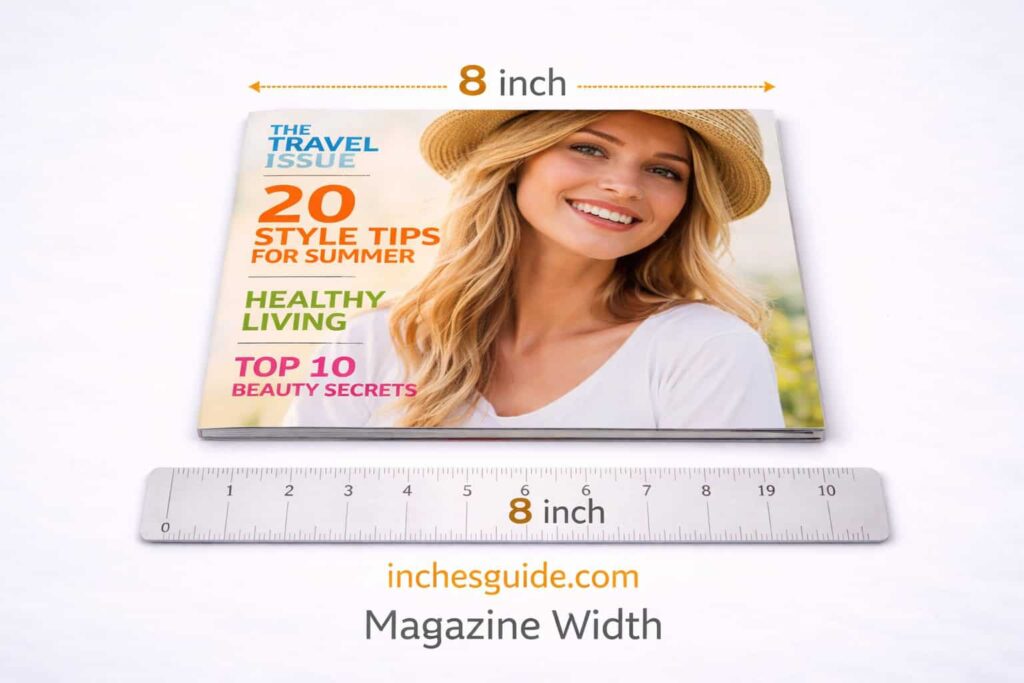
Magazine Width
The width of many magazines is close to this measurement, which makes them a very good visual reference. When you hold a magazine, you can clearly see what this size looks in front of you.
This size is chosen because it is comfortable to hold and read. If it were smaller, reading would be difficult. If larger, it would become harder to handle.
So next time you pick up a magazine, notice its width — that’s very close to this size in real life.
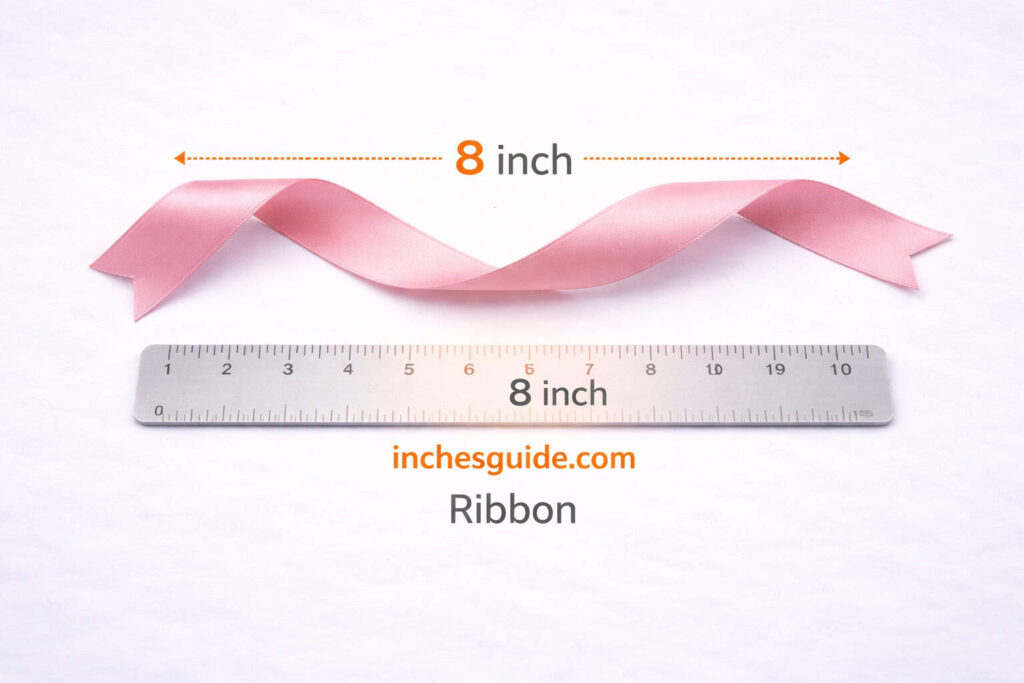
Ribbon (Gift Wrapping Piece)
When you cut a ribbon for wrapping gifts, a typical segment is often around this length. This length is enough to tie a bow properly without wasting too much material.
It’s a small but practical example that shows how this measurement appears even in simple tasks. You don’t measure it every time, but your hands naturally estimate it.
This is another case where understanding this size without a ruler becomes useful in daily life.
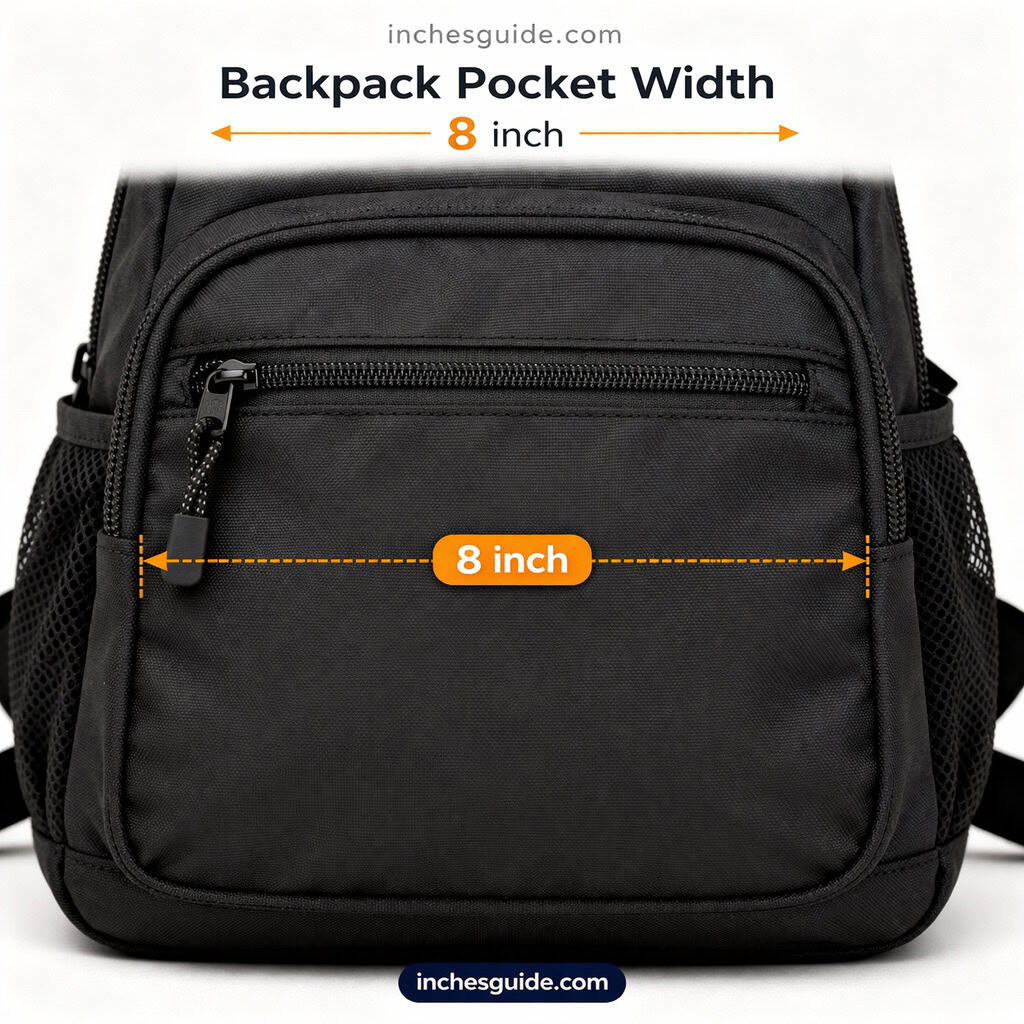
Backpack Pocket Width
The front pocket of many backpacks is often close to this width. This size allows it to fit notebooks, small tablets, and other essentials.
This measurement is used because it matches common item sizes. Designers create pockets based on what people carry, and this size becomes a practical standard.
If you want to imagine this length compared to an object, just look at your backpack pocket — it’s a very real example.
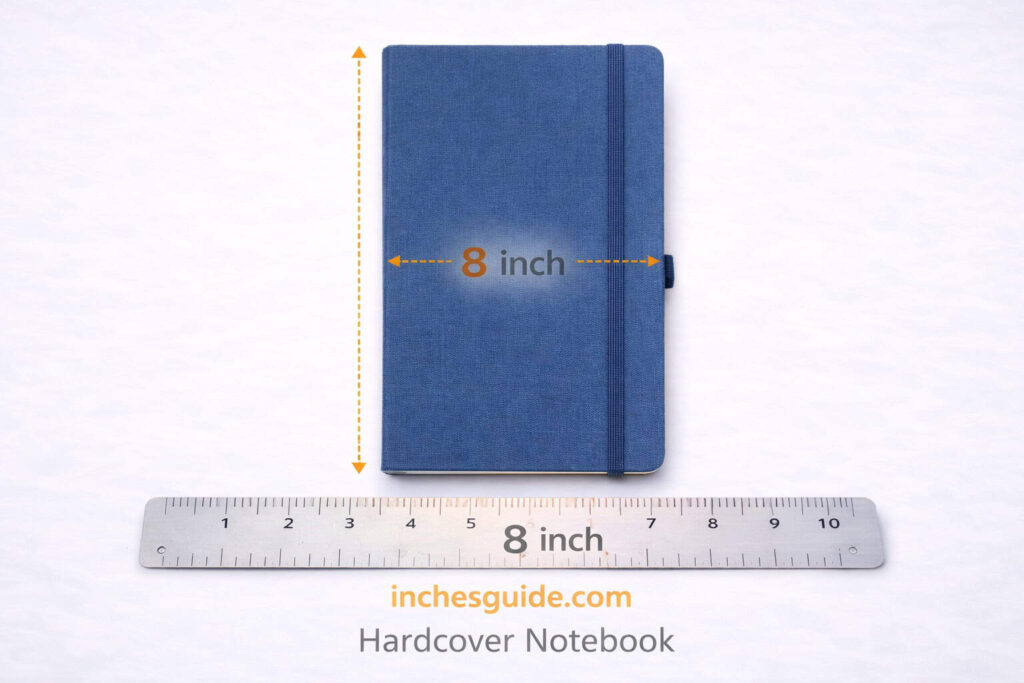
Hardcover Notebook
A standard notebook, especially the smaller versions, often measures around this size in height. This size is perfect for writing and carrying around.
It’s large enough to be useful but small enough to fit in bags easily. That’s why this dimension appears so often in stationery.
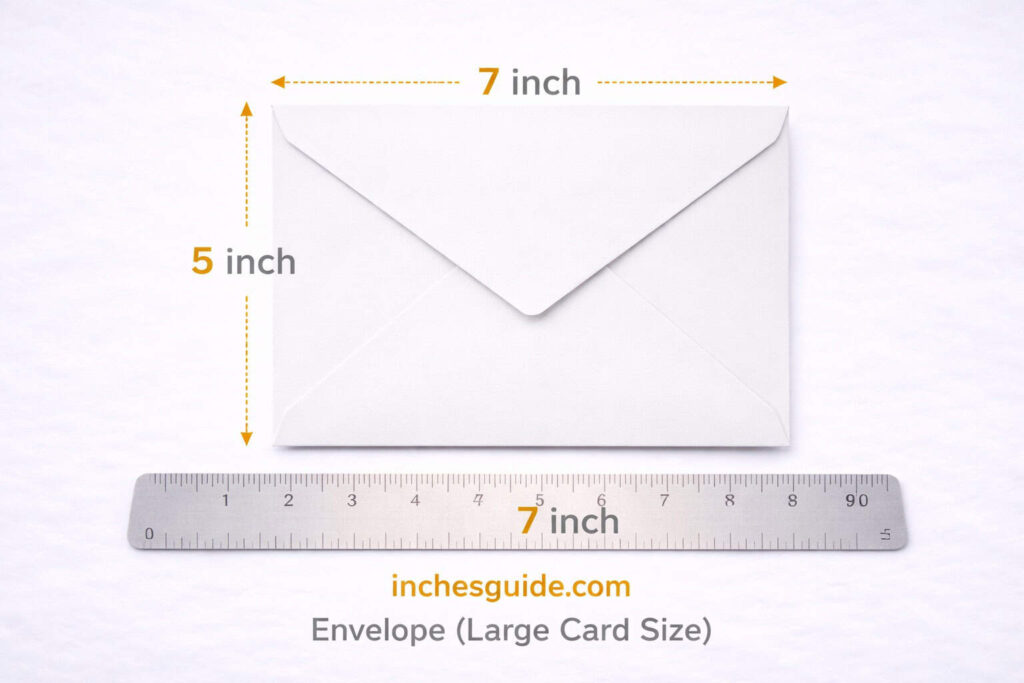
Envelope (Large Card Size)
Some envelopes used for greeting cards or documents are close to this length. This makes them suitable for holding folded papers without bending them too much.
Even though you may not notice it, this measurement is carefully chosen to match paper sizes and usability.
Ruler (Short Version)
A short ruler, especially the smaller student version, is often around this length. While the standard ruler is longer, compact ones are designed for portability and fit easily inside pencil cases.
This makes it a perfect direct reference when someone tries to compare this size on a ruler. In fact, if you’ve ever used a smaller ruler in school, you’ve already seen this measurement clearly.
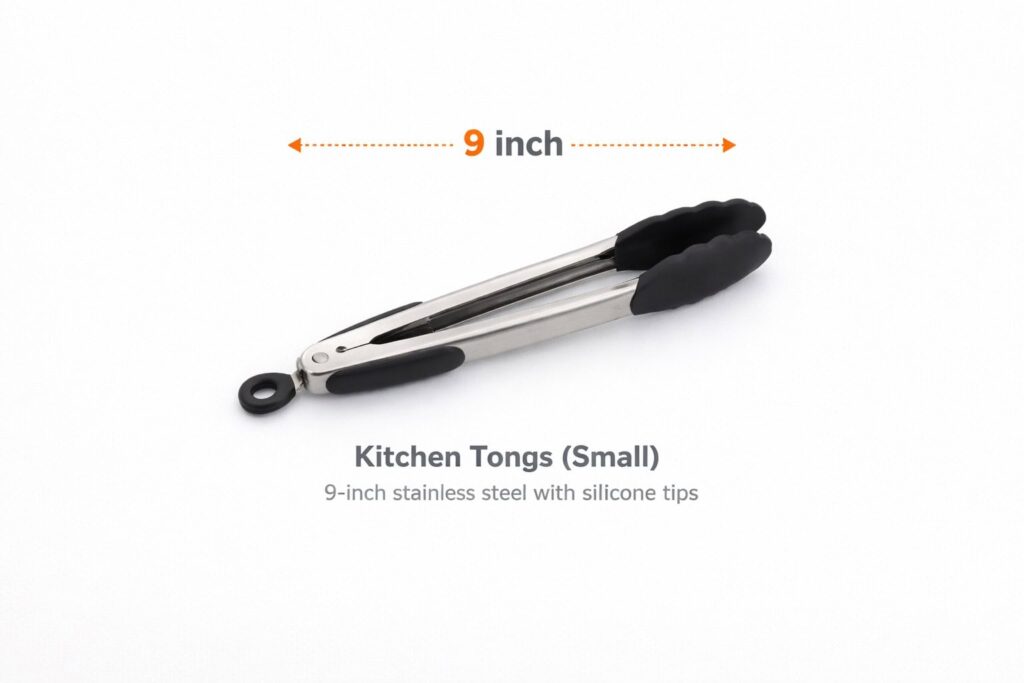
Kitchen Tongs (Small)
Some compact kitchen tongs measure close to this length. These are usually used for light cooking tasks like flipping small items or serving snacks.
The shorter size gives better control compared to longer tongs. It also makes them easier to store in drawers. This is another example of how this size is chosen for convenience and comfort.
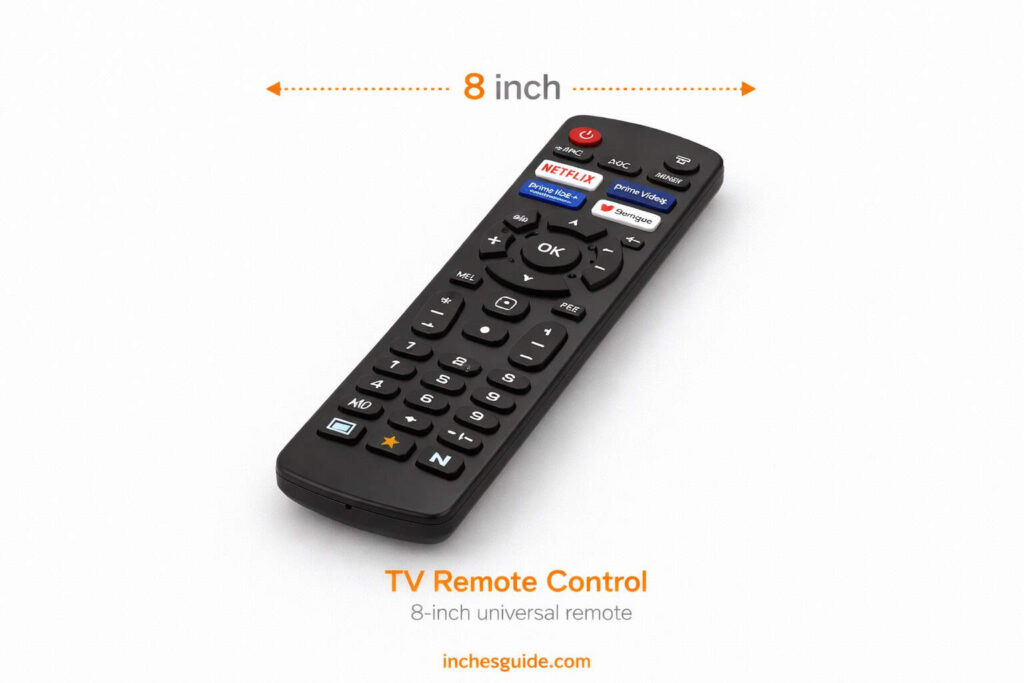
TV Remote Control
Many TV remotes are around 6 to 8 inches long, depending on the design. Larger remotes often come very close to this length.
When you hold a remote in your hand, it gives a very natural idea of how this size feels. Since this is something you use daily, it becomes an easy mental reference.
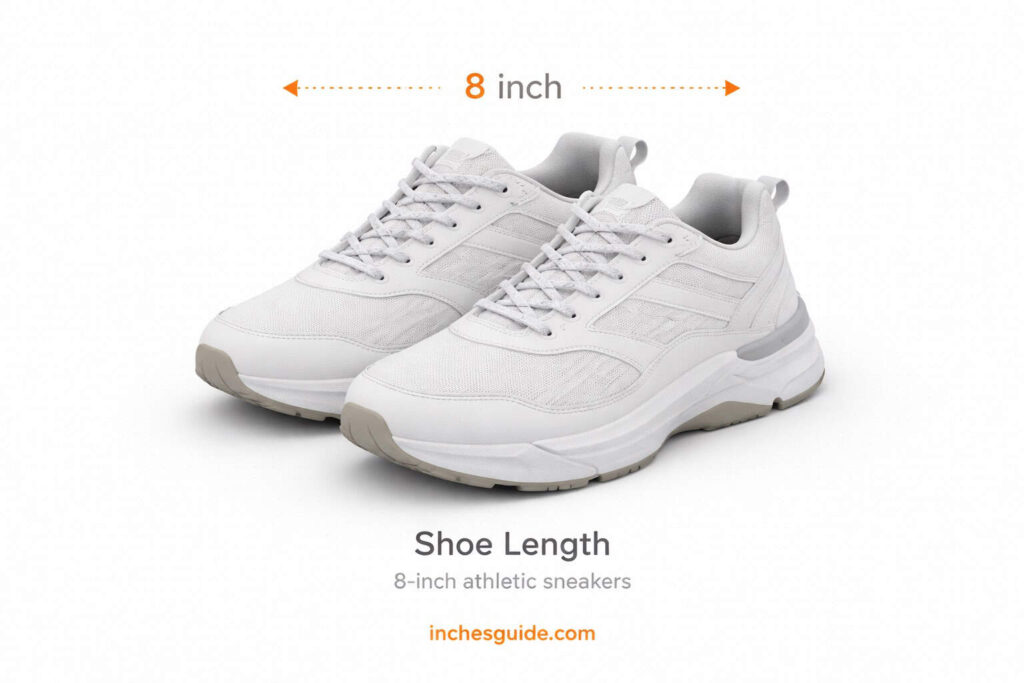
Shoe Length (Small Size)
Some smaller shoe sizes, especially for kids or compact footwear, can be close to this length.
This is a useful comparison because it connects the measurement to something physical and easy to imagine.
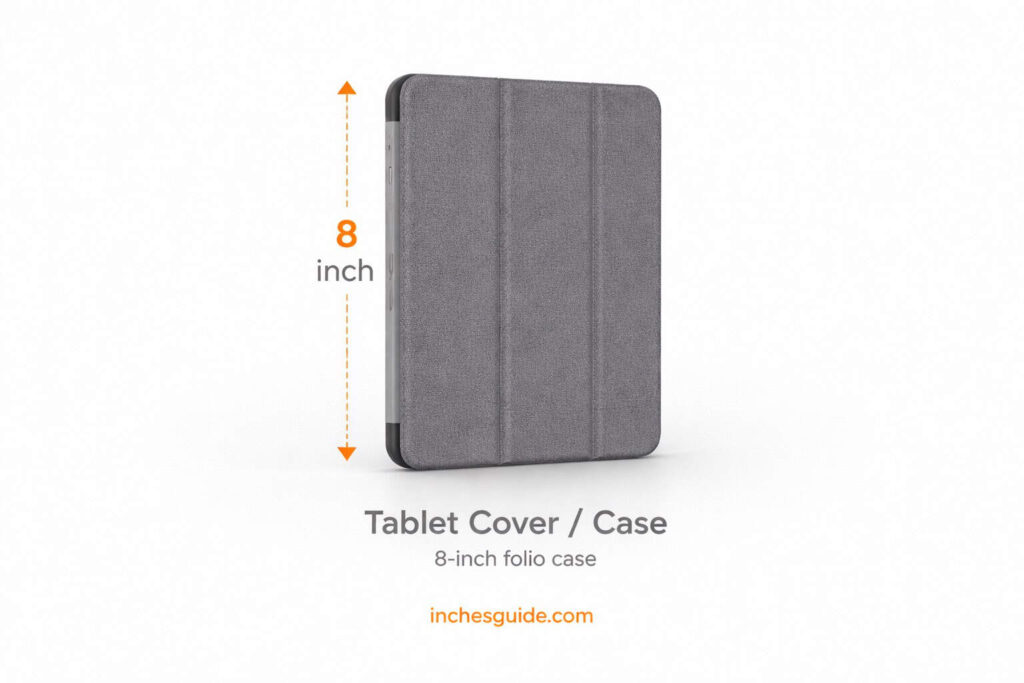
Tablet Cover / Case
Tablet covers designed for small devices are often around this size. These accessories are made to match the device dimensions closely.
This makes them a practical reference point, especially when you are trying to imagine gadget sizes without actually seeing them.
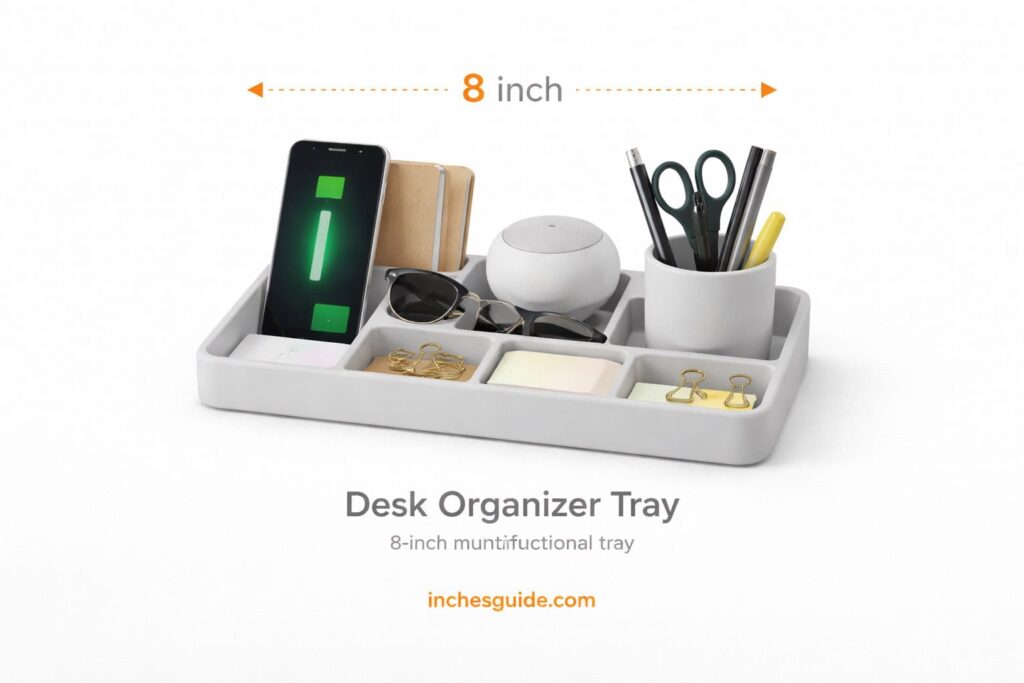
Desk Organizer Tray
Small desk organizer trays are often designed around this length. This size allows them to hold pens, notes, and small accessories without taking too much space.
It’s a simple but effective example of how this measurement fits into everyday work environments.
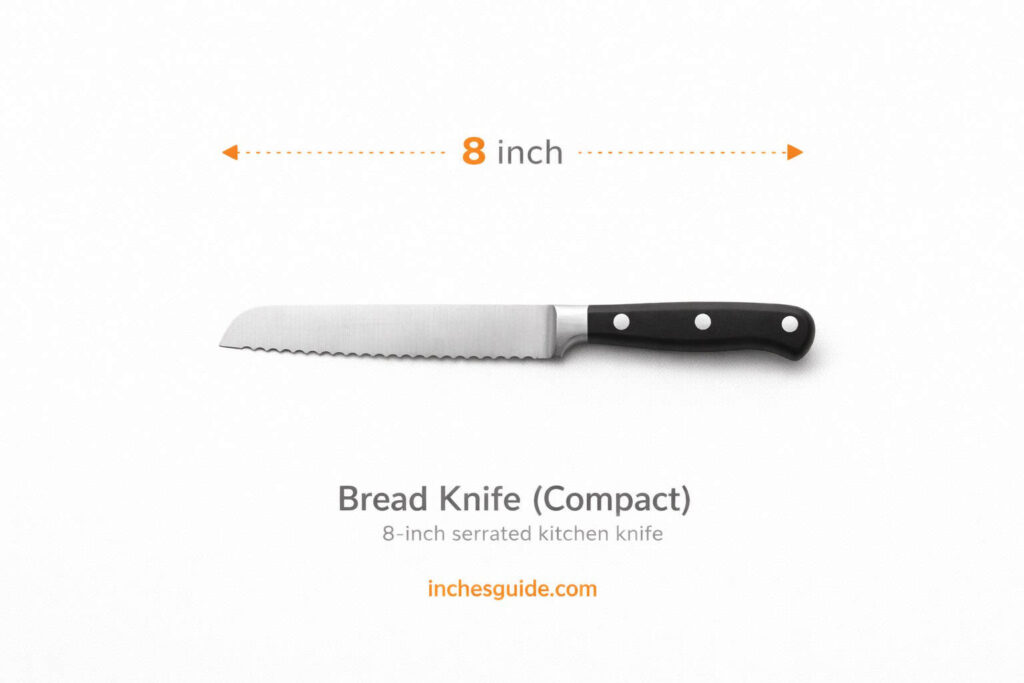
Bread Knife (Compact)
Some smaller bread knives or utility knives come with blades around this length. These are slightly different from chef’s knives but still fall in the same measurement range.
This again shows how this size is preferred in tools that require both control and efficiency.
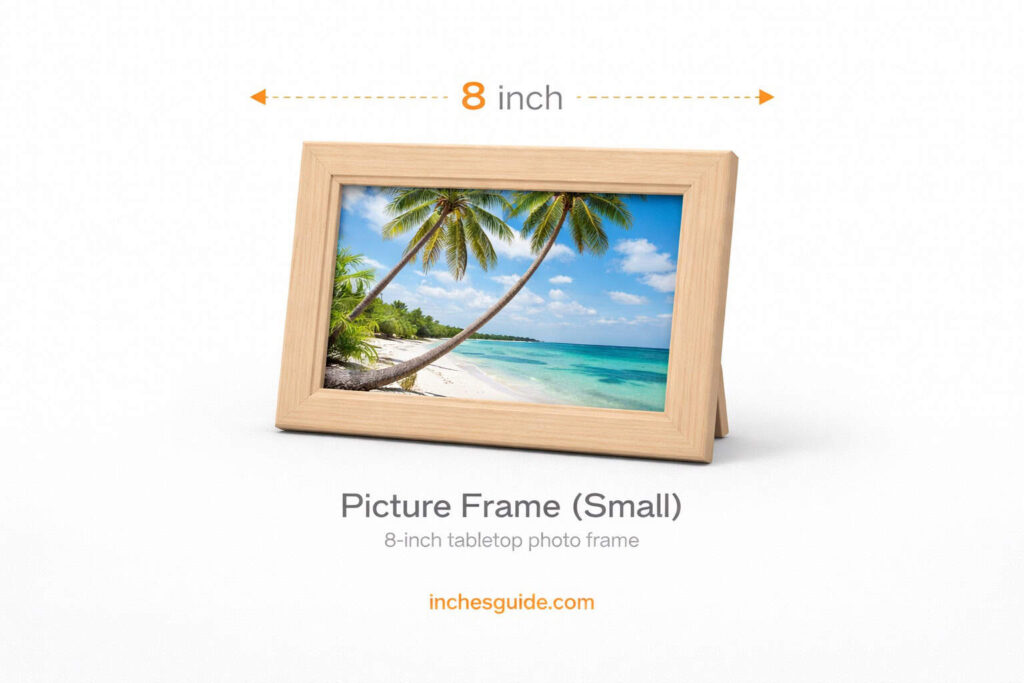
Picture Frame (Small)
Small photo frames, especially for desk use, often measure around this size on one side. This makes them easy to place on tables or shelves.
When you look at a frame, it gives a very clear visual idea of the measurement in a real setting.
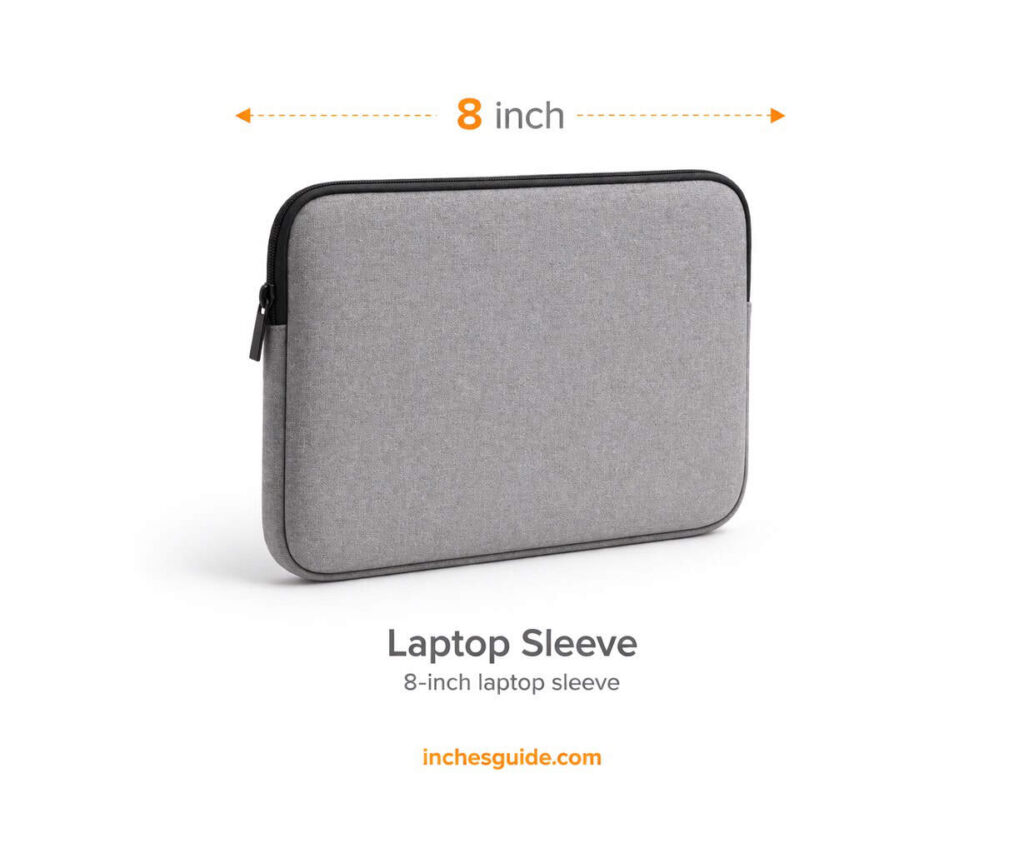
Laptop Sleeve (Compact Width)
Some compact laptop sleeves or tablet sleeves have a width close to this size, especially those designed for smaller devices.
This size allows them to stay slim and portable while still protecting the device inside.
How to Measure 8 Inches Without a Ruler
There will be plenty of situations where you need to estimate a length but have no measuring tool nearby. Once you understand this size visually, you can rely on the objects listed above as natural references.
Use Your Hand Span
Stretch your thumb and pinky as wide as possible. For most adults, this distance is approximately this length. It is not perfectly accurate, but it is reliable enough for everyday estimates and works every time.
Use a Familiar Object
Pick any item from the list above — a TV remote, a compact notebook, or a desk organizer tray — and use it as a physical reference. Hold it next to whatever you are trying to measure and compare.
Combine Smaller References
If you only have a small object like a credit card (3.37 inches), two cards placed end to end get you close to 7 inches. Add a thumb-width gap, and you are right at 8 inches. Over time, your brain builds up a library of these references automatically.
PRO TIP: Measure your own hand span once with a ruler. Then you will always have a personalized, accurate reference on you — literally at your fingertips.
FAQs
How long is 8 inches visually?
Eight inches is roughly the length of a small TV remote, a compact notebook, or a stretched hand span. It sits comfortably in the mid-size range — not too small to be noticeable, not too large to be unwieldy.
How many centimeters is 8 inches?
Eight inches equals exactly 20.32 centimeters. This is the standard metric conversion used worldwide.
Is 8 inches close to a foot?
Yes. Eight inches is two-thirds of a foot, since one foot equals 12 inches. So 8 inches is a noticeably long measurement, but still well under a full foot.
How can I measure 8 inches without a ruler?
The easiest method is your hand span — stretch your thumb to your pinky. You can also use any of the everyday objects listed above, such as a TV remote or a compact notebook, as a physical reference.
How long is 8 inches of hair?
At 8 inches, hair typically falls between the ear and the shoulder. It is long enough to style in a ponytail but still well above the collarbone length for most people.
Final Thoughts
At first, 8 inches might seem like just another number, but once you connect it with real-life objects, it becomes much easier to understand. Instead of thinking in centimeters or inches, you start thinking in things you can actually see and hold.
The more you notice it, the more familiar it becomes. A pencil, a fork, a small tablet — all these simple objects help you build a clear picture in your mind. And once you have that, you don’t really need a ruler every time.