
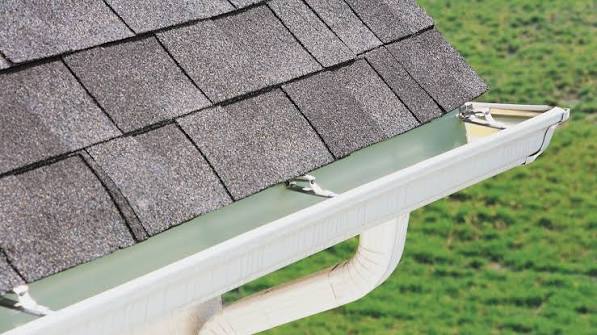
Gutters are one of those parts of a house that most people rarely think about until something goes wrong. They sit quietly along the edge of the roof, collecting rainwater and directing it towards downpipes, while the rest of the household gets on with everyday life.
Yet there are quite a few measurements hidden in that simple-looking system. The length of a roofline, the width and depth of a gutter, the position of downpipes and even the height of the building can all affect how well a guttering system performs.
You do not need to become a roofing expert to understand the basics. Knowing a few useful measurements can make it easier to spot potential problems, plan maintenance and understand why two apparently similar houses may need very different guttering solutions.
Why Gutter Measurements Matter
A gutter is not simply a long channel attached to the roof. It is part of a system designed to collect and move rainwater efficiently.
If the gutter is too small for the amount of water reaching it, heavy rain can cause overflow. If the roofline is particularly long and there are too few downpipes, water may have to travel a considerable distance before it can leave the gutter. If a downpipe becomes blocked, even a correctly sized gutter can struggle.
This is why dimensions matter.
The size of the roof, the pitch of the roof, local rainfall, gutter profile and position of the outlets all influence how effectively water is moved away from a property.
For homeowners, understanding these relationships is more useful than memorising one “correct” gutter size.
Start With the Length of the Roofline
One of the simplest measurements to understand is the length of the gutter itself.
Imagine a straight roof edge measuring 30 feet. That does not necessarily mean you need one continuous 30-foot piece of guttering. Traditional gutter systems are commonly assembled from shorter sections, with connectors joining the lengths together.
InchesGuide has previously looked at the familiar 10-foot length in relation to aluminium gutter sections, which is a useful example of how everyday building materials are often sold in standard dimensions.
The important point for homeowners is that the total roofline measurement helps determine how much guttering is required, but it is only the starting point.
Corners, outlets, joints and downpipes all need to be accounted for when planning the system.
Don’t Forget the Downpipes
A gutter can be perfectly clear and still struggle if the water has nowhere to go.
Downpipes provide the route from the horizontal gutter to the ground-level drainage system. Their position therefore matters just as much as the length of the gutter.
For example, a long run of guttering with a single outlet at one end may force water to travel a considerable distance. A different arrangement with outlets positioned more effectively can allow water to leave the system sooner.
When looking at a house, count the downpipes and consider where they are positioned in relation to the longest sections of roofline.
This is particularly useful after an extension or roof alteration. A house may have originally been designed around a particular drainage arrangement, but an extension can add considerably more roof area without the guttering system being reconsidered.
Measure the Roof, Not Just the Gutter
The gutter itself is only part of the equation.
A larger roof surface can collect significantly more rainwater than a small roof, even if both properties have similar-looking guttering. This means that measuring only the visible gutter does not tell you everything about how much water the system has to handle.
The roof’s footprint, pitch and the sections draining towards a particular gutter all matter.
This becomes particularly obvious during heavy rainfall. A gutter that appears perfectly adequate during a light shower may struggle when a large volume of water reaches it within a short period.
That is one reason why occasional overflowing should not automatically be dismissed as a minor inconvenience.
Gutter Width and Depth Are Different Measurements
When people talk about gutter size, they may be referring to several different dimensions.
Width describes how broad the gutter is, while depth refers to how far the channel extends vertically. The shape and profile also affect how much water the gutter can hold and move.
Two gutters may look similar from the ground while having different capacities.
There are also different gutter profiles available, which means homeowners replacing an old system should not assume that any gutter with a similar appearance will perform identically.
If you are measuring an existing gutter for replacement, record the dimensions carefully and take note of its shape and fittings rather than relying on a single width measurement.
How Tall Is Your House?
Height becomes particularly important when maintenance is involved.
A single-storey bungalow presents a very different access challenge from a three- or four-storey property. The gutter itself may be exactly the same height or width, but reaching it safely is another matter entirely.
This is where measurement stops being about the gutter and starts being about the property.
Knowing whether a building is one, two, three or four storeys high can help determine what equipment is appropriate for inspection and cleaning. Sam’s Gutter Cleaning, for example, provides high-level gutter cleaning for properties up to four storeys using a SkyVac system rather than relying on conventional ladder access.
For homeowners, the practical lesson is simple: never assume that because a gutter is technically reachable, it is automatically safe to clean yourself.
What Happens When Gutters Are Too Full?
A gutter has a limited amount of space available for water and debris.
When leaves, moss and other material accumulate inside it, the usable space becomes smaller. Water can then rise more quickly during rainfall and eventually spill over the edge.
This is particularly problematic when the overflow occurs close to walls, windows, doors or other vulnerable areas of the property.
Blocked gutters can also prevent downpipes from receiving water properly. Sam’s Gutter Cleaning notes that blocked gutters and downpipes can prevent rainwater from draining correctly and contribute to water damage.
This is why the effective capacity of a gutter is not simply the empty space between its sides. A gutter filled with debris is effectively a much smaller drainage channel.
Measure Before You Blame the Rain
When water starts overflowing from a gutter, heavy rainfall is an obvious suspect. Sometimes, however, the rain is simply exposing an existing problem.
A useful homeowner checklist is to consider:
- How long is the affected gutter run?
- How many downpipes serve that section?
- Is the gutter full of leaves or moss?
- Is the downpipe flowing freely?
- Has the roof recently been extended?
- Does the overflow happen during every rainfall or only very heavy storms?
- Is the gutter sagging in one particular section?
- Does water collect around a joint?
These questions can help establish whether the issue is related to capacity, blockage, positioning or damage.
Why Gutter Length Alone Isn’t Enough
It can be tempting to think of guttering as a simple calculation: measure the roof edge and buy the same amount of gutter.
Real properties are more complicated.
A roof may have several slopes draining towards different sections. There may be internal or external corners, valleys, extensions and multiple downpipes. Even the position of the outlet can affect how water moves through a section.
That is why a professional assessment can be useful when replacing or modifying a guttering system, particularly on larger or unusual properties.
Measurements provide the foundation, but the way those measurements interact is what really matters.
How Often Should You Check Your Gutters?
There is no single maintenance schedule that suits every property.
A home surrounded by mature trees may collect leaves much faster than a property with little vegetation nearby. Homes exposed to strong winds can also accumulate debris more quickly.
Sam’s Gutter Cleaning recommends annual cleaning for most homes, with twice-yearly cleaning potentially being more appropriate where there are lots of trees nearby.
Checking the gutters after periods of heavy weather is also sensible. You do not necessarily need to climb up and inspect them yourself; looking from ground level for overflowing water, visible vegetation or sagging sections can provide useful warning signs.
When Gutter Measurements Become a Maintenance Issue
Measurements are particularly useful when something changes.
Perhaps a new extension has increased the roof area. Maybe an additional section of gutter has been installed. Perhaps the property has changed from a simple single-storey roofline to a more complicated arrangement.
These changes can alter how rainwater reaches the existing drainage system.
If the guttering worked perfectly for years but starts overflowing after building work, it is worth considering whether the drainage arrangement still suits the altered roof.
Likewise, if one section repeatedly overflows while the rest of the gutter remains clear, the issue may be local rather than a general problem with the entire system.
Don’t Ignore Small Changes
Home maintenance often becomes expensive when small warning signs are ignored for too long.
A little moss may not look significant. A small amount of water spilling over the gutter may seem harmless. A slightly sagging section might appear to be purely cosmetic.
But these changes can indicate that something is preventing the system from working as intended.
Regular checks give homeowners an opportunity to spot those issues before they develop into more serious problems involving walls, roof areas, foundations or internal damp.
For properties in the region, arranging gutter cleaning Aberdeenshire can be a practical way to keep gutters and downpipes clear while also giving a professional an opportunity to identify obvious issues that may need attention. Sam’s Gutter Cleaning serves Aberdeenshire and offers gutter cleaning, downpipe unblocking, gutter guards and minor repairs.
The Numbers Behind a Healthy Roofline
You do not need a spreadsheet full of measurements to look after your gutters.
Understanding the basic dimensions is enough to appreciate why gutter length, roof area, downpipe placement and building height all matter. These measurements explain why two homes with similar-looking gutters can behave very differently when the weather turns wet.
The most useful number is therefore not always the width of the gutter or the length of the roofline. It is the relationship between all the measurements that make up the drainage system.
Once you start looking at your gutters that way, they stop being an easily forgotten strip of plastic or metal around the edge of the roof. They become what they really are: an important part of the home’s system for moving water safely away from the building.