
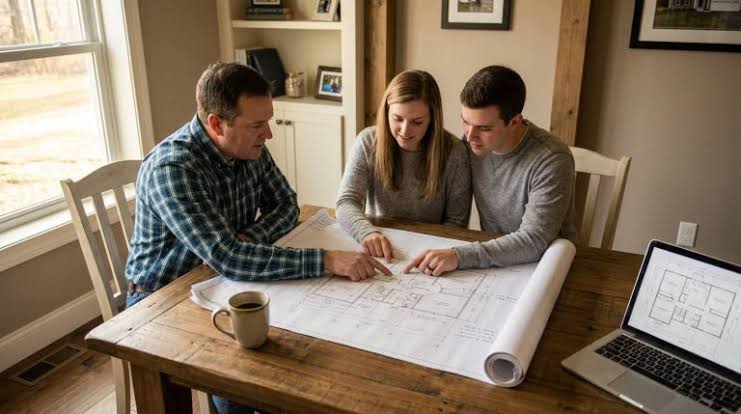
The prettiest house you will ever walk into is a model home, and it was never for sale. It is a sales office wearing a kitchen. I learned that the expensive way years back when a friend put a deposit down on a build she had toured twice, then discovered the staircase she loved, the one that made the whole entry feel open, was a structural upgrade that added five figures to the contract.
So here is the promise: by the end of this piece you will know how to pull apart any new construction listing, separate what is included from what is staged, and ask the six questions that actually change your final number. Builders are not villains. They are running a business with thin margins and long timelines, and buyers who understand the game get treated better. Communities like Biltmore Homes in Venus, TX publish square footage, bed counts, and garage bays on every plan, which is a decent starting point, but a spec sheet is a menu, not a meal.
Start with what the listing legally has to say and what it conveniently leaves out. Square footage, lot size, and price are the three numbers everybody reads. The three nobody reads are the ones that cost you.
What a new construction listing actually tells you
A builder listing is a marketing document with a floor plan attached. That is not cynicism, it is just the format. The number that matters most is base price, because every other number on the page flows from it.
Base price is the cost of the plan with builder-grade finishes: standard carpet, standard tile, the paint color that appears in exactly one brochure. Every photo on the site was taken after the design center got through with it. Those are upgrades, and upgrades are where a $350,000 contract quietly becomes a $400,000 contract.
The listing also tells you something quieter. Look at what it brags about. If the copy leans hard on highway access, the community is probably car dependent, so plan your commute at 7:40 a.m. on a Tuesday before you fall in love with the lot. If it leads with schools, verify that zoning at the district office, not the sales office, because attendance boundaries move when new neighborhoods open.
The line items nobody circles
Here is my test for any builder listing: I read it the way I read a restaurant menu, hunting for what is missing rather than what is featured.
Those missing items usually show up in one of five places:
- Lot premium. Corner lots, greenbelt lots, and cul-de-sac lots cost more than the base price shown. Sometimes a lot more.
- Structural options. Extra bedroom, extended patio, third garage bay, that staircase. These are priced before you pick a single tile.
- Design center allowances. The contract often includes a credit for finishes. Whether that credit covers what you actually want is a different question.
- HOA dues and community fees. Rarely in the headline price, always in the closing documents.
- Timeline risk. Material delays and permit backlogs push closings. Ask what happens to your rate lock if the build slips.
Run the true cost, not the advertised one. Add lot premium, the structural options you cannot live without, a realistic design center budget, and two years of HOA dues. If that total still works, you are shopping honestly.
Why the location paragraph matters more than the floor plan
Floor plans are easy to compare and locations are hard to verify, so buyers spend their energy in the wrong place. You can change paint. You cannot change the fact that the only road out of the neighborhood feeds into a two-lane farm road.
Populations across the country shift in ways that catch buyers off guard, and knowing whether you are moving into a growth corridor or an area at its ceiling is worth an hour of research. According to the U.S. Census Bureau, population and housing data are published down to the local level, which means you can check how fast the surrounding area has actually been growing instead of trusting a billboard. Then drive it. Not the model home route, the back way, at rush hour, on a school morning.
One more thing about location that almost no listing mentions: what is planned for the empty field across the street. A city planning office will tell you in about ten minutes what a sales agent may not know yet. I would take that phone call over any upgraded kitchen, every single time.
The six questions to ask before you sign
Bring these to your next appointment and write the answers down. If an agent hesitates on any of them, that hesitation is information.
- What is the base price of this plan, and what is included at that price?
- Which items in the model home are upgrades, and what do they cost?
- What is the lot premium for this specific homesite?
- What are the total monthly HOA dues, and what do they cover?
- What is the current estimated completion date, and what happens if it slips?
- What warranty comes with the home, and who services it after closing?
On that last one, the warranty details are where a lot of buyers get surprised, and they are worth understanding before you need them. The U.S. Department of Housing and Urban Development publishes consumer guidance on buying a home, including what to expect during the process. The National Association of Home Builders is also worth a look if you want to understand how builders typically structure their warranty coverage and what industry standards shape it.
Six questions. Half an hour. It is the cheapest diligence you will ever do on the largest purchase of your life.
A quick note on which homesites to avoid
My honest ranking, after watching friends buy in four different new build communities: skip the lot that backs to the future retention pond, skip the one directly facing the community mailboxes or the amenity center parking, and skip anything at the entrance if a second phase is planned, because that quiet street becomes a thoroughfare. Pay the premium for a greenbelt lot if it exists. That is the one upgrade that holds its value, because you cannot manufacture open space next door.
The part that actually decides it
A new construction listing is a starting bid, not a final offer. Read the base price, circle what is missing, verify the location yourself, and ask the six questions before you get attached to a staircase. Do that and you will walk into the design center knowing your budget instead of guessing at it.
So here is your move this week: pick the one community you are most serious about and request the written inclusions list along with the current lot premium sheet. If they send both without a fuss, you are probably dealing with a straight operation. If they want to talk about it in person, ask yourself why a price needs a room to be explained.