
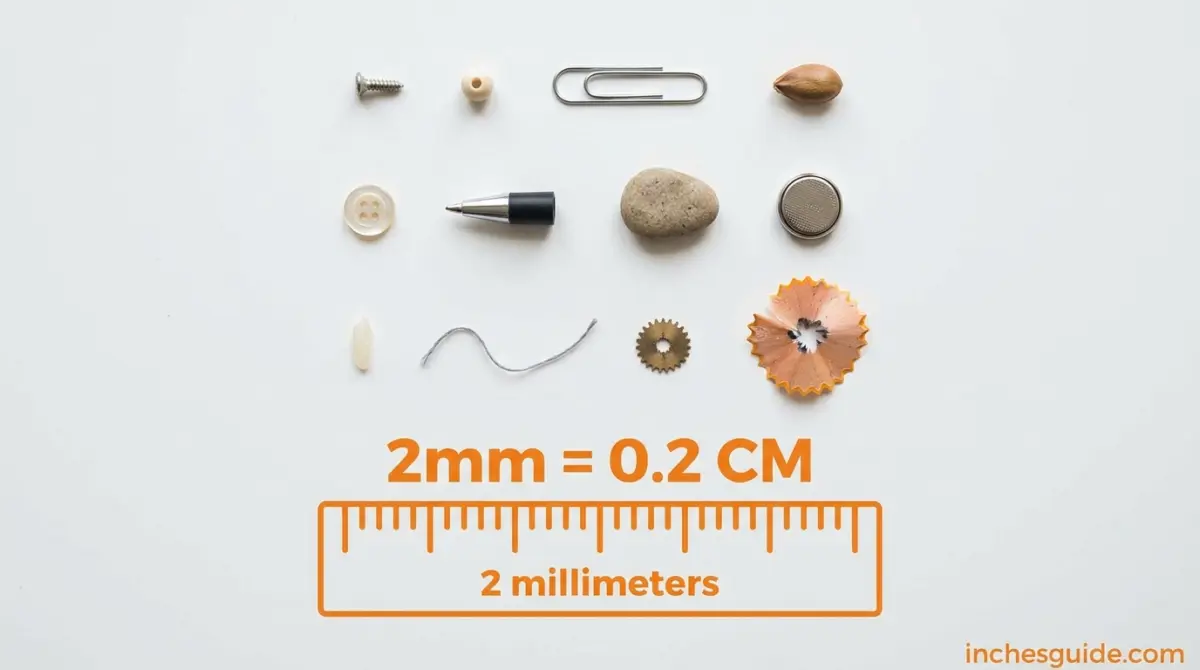
Bike shops keep a bin of bent spokes near the workbench. Every one of them is 2mm thick, and that single number is what stops a wheel from folding under a rider.
2mm sits in an awkward gap. It’s too small for inches to describe cleanly, and too big to call microscopic.
So here’s what this page covers: every conversion, twelve real objects that hit the mark, and a way to read it off a ruler without squinting.
2mm equals 0.0787 inches, 0.2 cm, or roughly 5/64 of an inch, about the same as the thickness of a standard SD memory card.
Every 2mm Conversion in One Table
| Unit | 2mm equals |
|---|---|
| Inches | 0.0787 in |
| Inches (fraction) | about 5/64 in |
| Centimeters | 0.2 cm |
| Meters | 0.002 m |
| Feet | 0.00656 ft |
| Yards | 0.00219 yd |
| Micrometers | 2,000 µm |
| Pixels at 72 DPI | 5.7 px |
| Pixels at 96 DPI | 7.6 px |
| Pixels at 300 DPI | 23.6 px |
That fraction is the useful one. 2mm in inches lands at 0.0787, and the closest mark on an American ruler is 5/64, which sits at 0.078125. You’re off by half a hair.
For anything bigger, our cm to inches converter handles the math. And if you want the next step up the scale, 2 cm is exactly ten times this.
Why Your Eyes Get 2mm Wrong
Human depth judgement falls apart below about half a centimeter. Below that, everything just reads as “small”.
That’s why people guess wildly when asked what 2mm looks like. Some picture a grain of sand, others picture a pea. The real answer sits between them and closer to the sand.
Give your brain one physical anchor and the guessing stops. Pick any object below, hold it once, and the number sticks.
12 Things Sitting Around You That Measure 2mm
1. A Bicycle Spoke
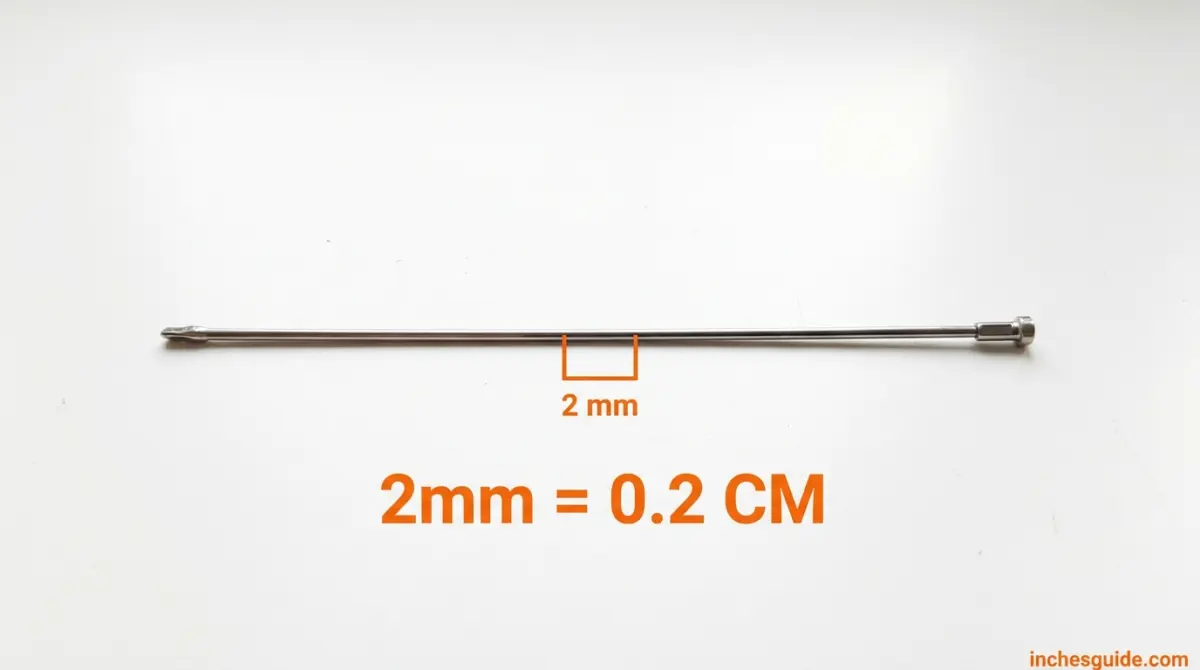
A straight-gauge bicycle spoke is 14 gauge, which converts to exactly 2.0mm. It’s the default on almost every factory wheel built in the last fifty years.
The thickness isn’t decorative. Each spoke sits under roughly 100 kg of tension, and thinner steel would stretch and go slack over a season of riding.
Here’s the part cyclists love telling people. Your bike wheel doesn’t sit on the bottom spokes. It hangs from the top ones, held up by 2mm wires under tension.
2. An SD Memory Card
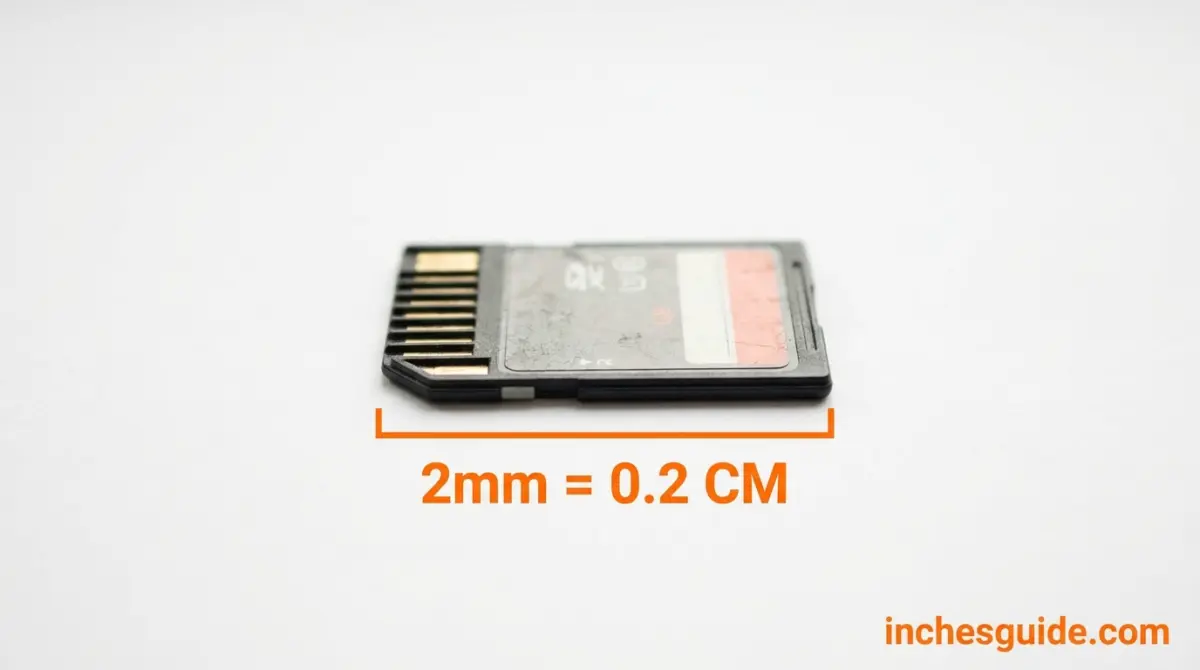
The full-size SD card spec locks the card at 32mm by 24mm by 2.1mm. Not approximately. That 2.1mm is written into the standard so every card fits every slot on earth.
Pull one out of a camera and look at it edge on. That’s your reference, and it’s the most exact one on this list.
Compare it to a microSD card, which is 0.7mm. Three microSD cards stacked still don’t reach the thickness of one full-size card.
3. A Round Toothpick
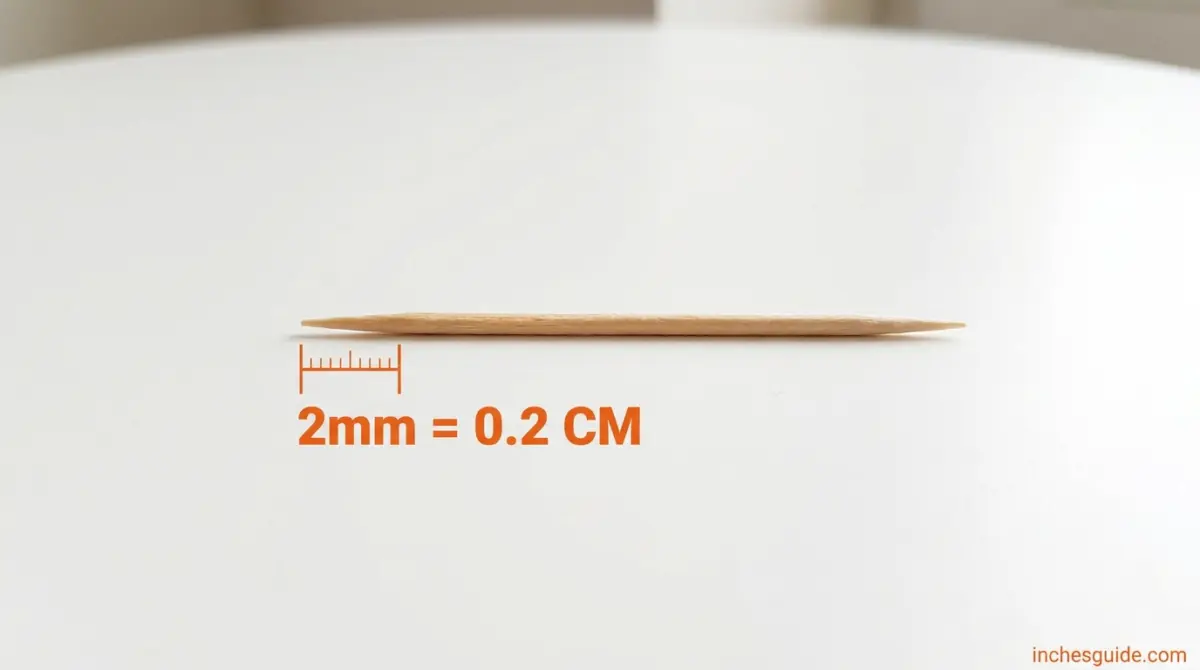
Standard round toothpicks run about 2mm across at the middle before tapering to the points. Birch is the usual wood because it splits cleanly and doesn’t splinter into your gum.
Go thinner and the pick snaps mid use. Go thicker and it stops fitting between teeth. The dimension is a compromise nobody thinks about.
Toothpicks aren’t cut from blocks. Logs are peeled into a long ribbon of veneer, then chopped, which is why the grain always runs lengthwise.
4. A 2mm Drill Bit
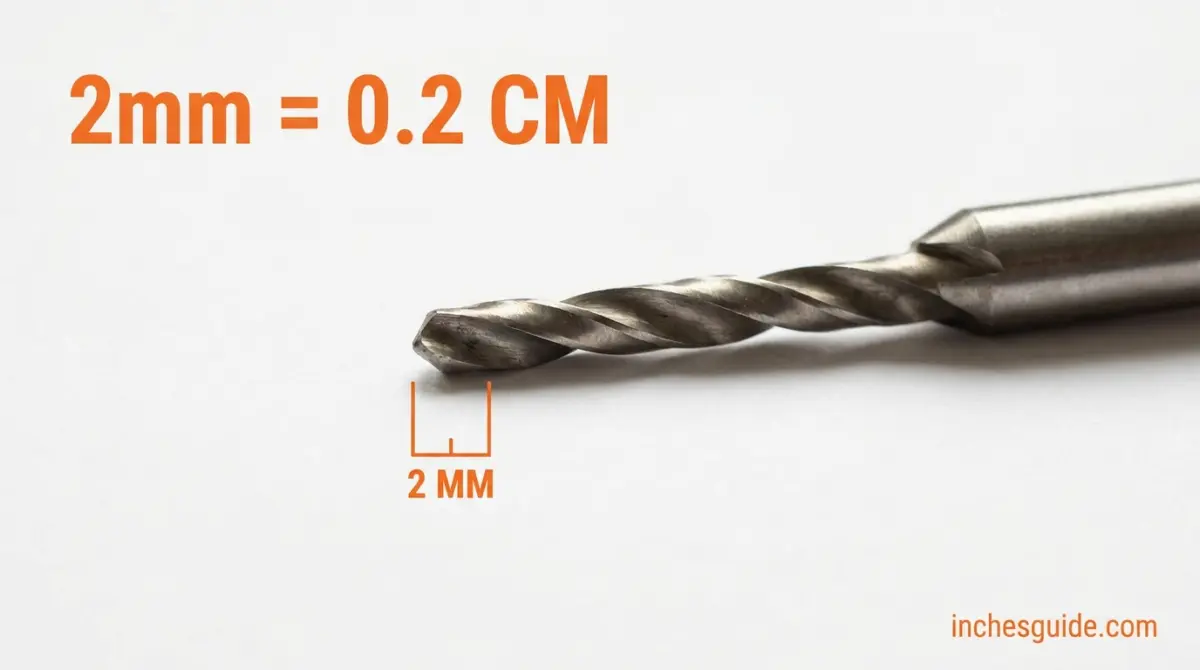
A 2mm drill bit is the pilot hole workhorse of any metric set. It’s what you reach for before driving a small wood screw so the timber doesn’t split.
The cutting diameter is the measurement, not the shank. Hold the fluted tip against a ruler and you’re looking at true 2mm.
Fair warning from anyone who has used one. At this diameter the bit flexes and snaps if you lean on it, so let the drill do the work.
5. A Grain of Long-Grain Rice
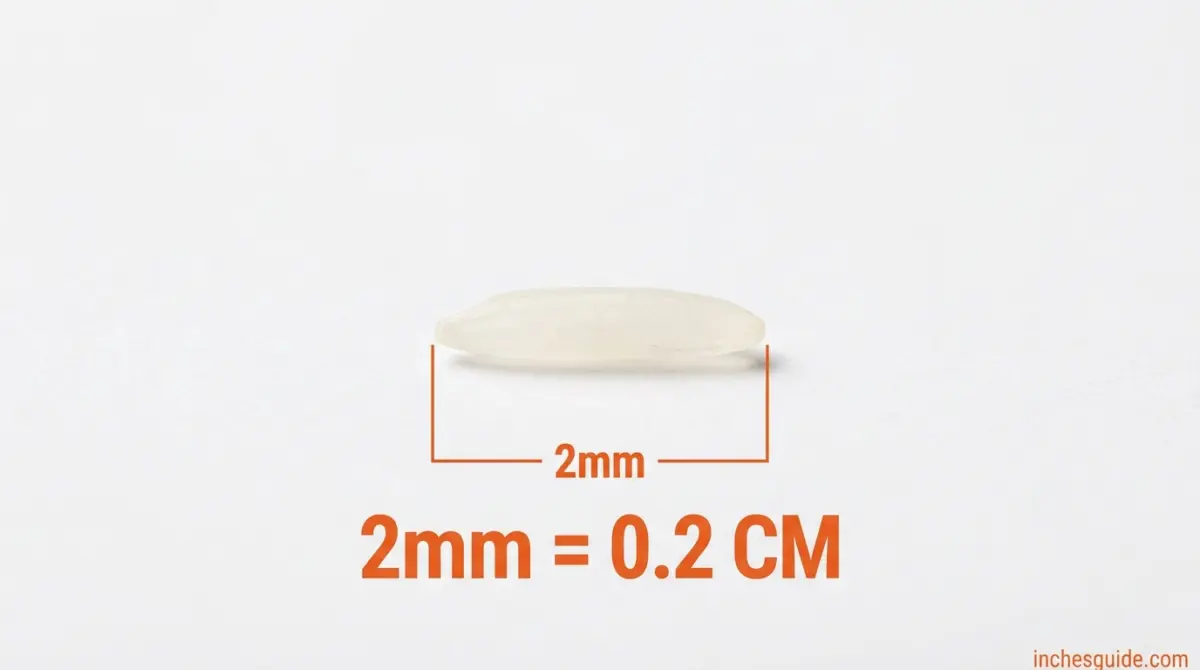
Turn a grain of basmati or jasmine rice sideways. It’s roughly 7mm long and right around 2mm wide.
That width matters commercially. Rice is graded by the ratio of length to width, and long grain has to run at least three times longer than it is wide.
It also explains cooking behaviour. A 2mm cross section hydrates fast, which is why long grain finishes well before a fat short grain does.
6. A US Size 0 Knitting Needle
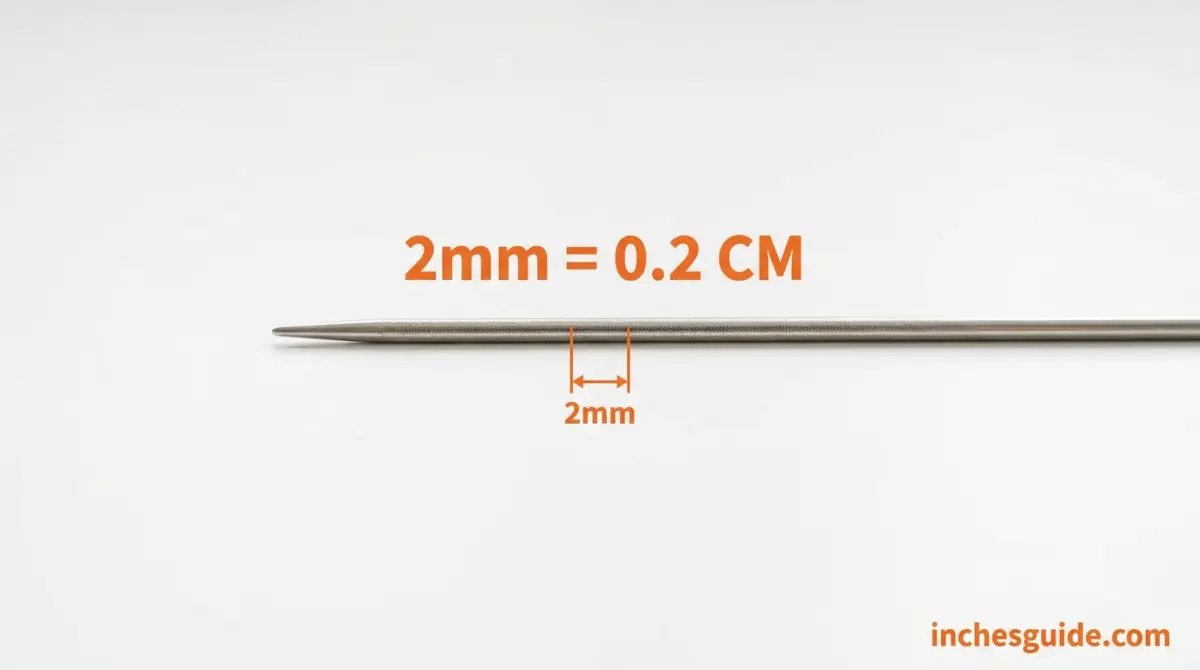
US size 0 is 2.0mm across, and it’s the standard needle for sock yarn and fine lace.
Knitters live by this number because needle diameter controls stitch size. Move up half a millimetre and a finished sock changes shoe size.
There’s a reason patterns print the metric figure alongside the US number. American, British and Japanese sizing all disagree, and 2.0mm is the only label everyone reads the same way.
7. An Extra Heavy Guitar Pick
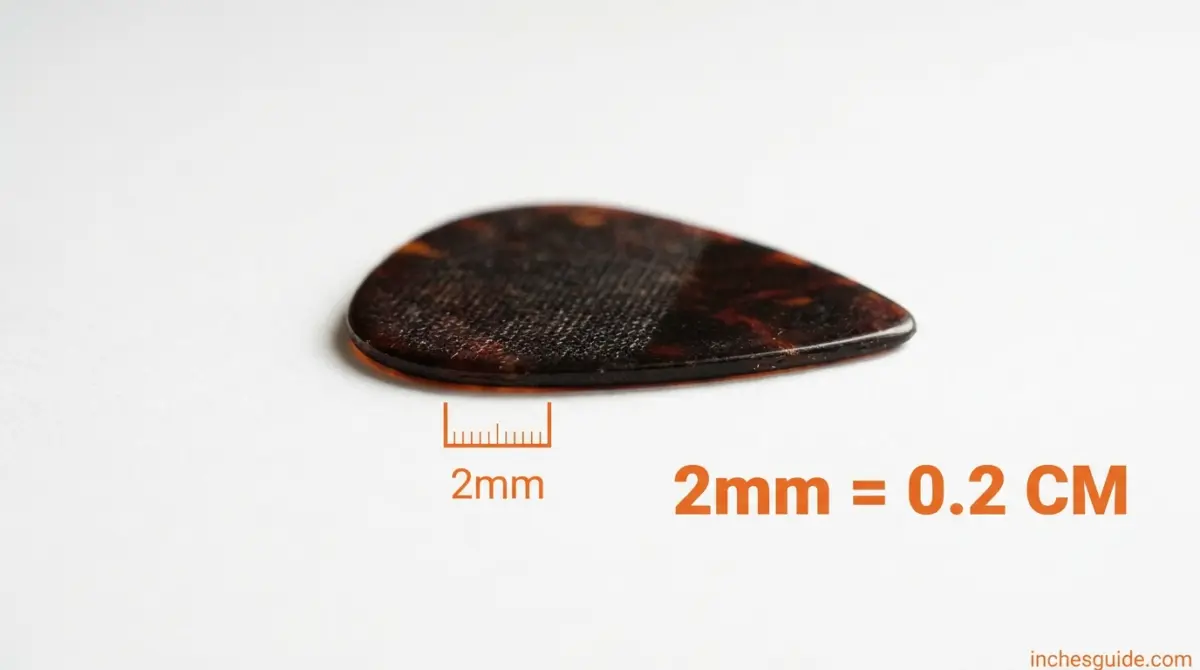
Picks are sold by thickness, and 2.0mm is squarely in extra heavy territory. Thin picks start around 0.5mm, so this one is four times stiffer.
A 2mm pick doesn’t bend at all. All the energy goes into the string instead of into the plastic, which is why jazz and metal players prefer them.
My own opinion after years of dropping picks into soundholes: thickness changes your tone far more than the material ever does.
8. A House Key Blade
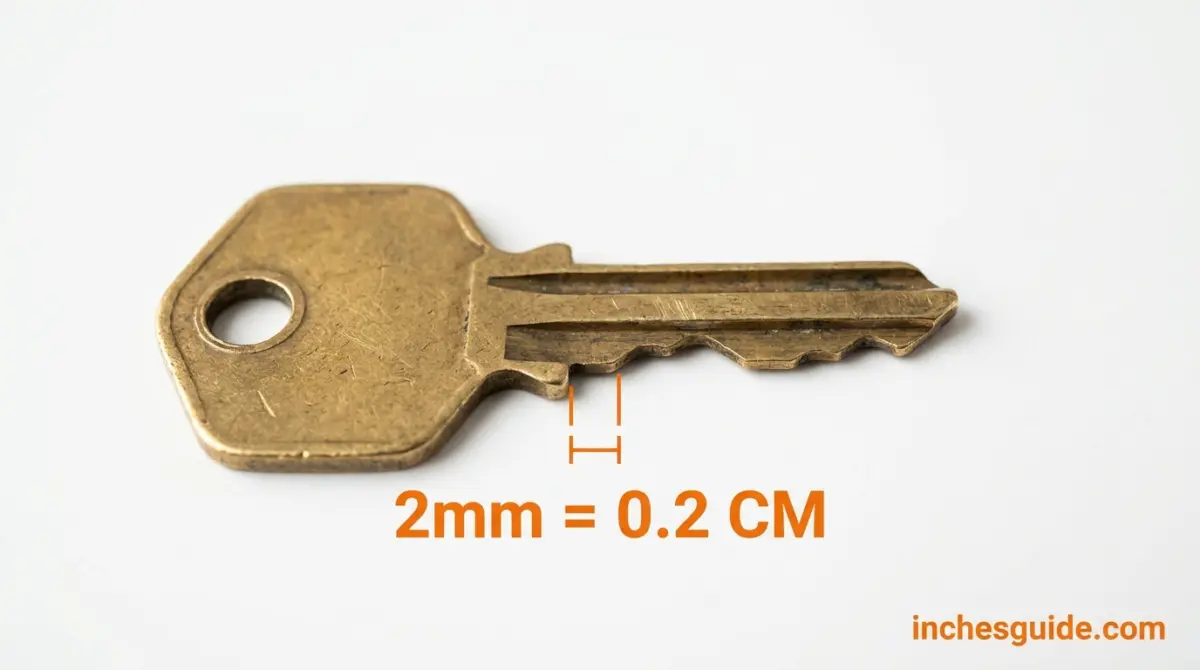
Most house key blanks are cut from brass stock right around 2mm, roughly 0.08 inches. Thin enough to slide into a keyway, thick enough that it won’t twist off in the lock.
Blade thickness is also part of what makes keys brand specific. If the stock is a fraction over, the key jams before it ever reaches the pins.
Grab your keyring and look at the blade edge on. You’re holding a 2mm thick piece of brass you’ve carried for years without noticing.
9. A 12 Gauge Earring Post
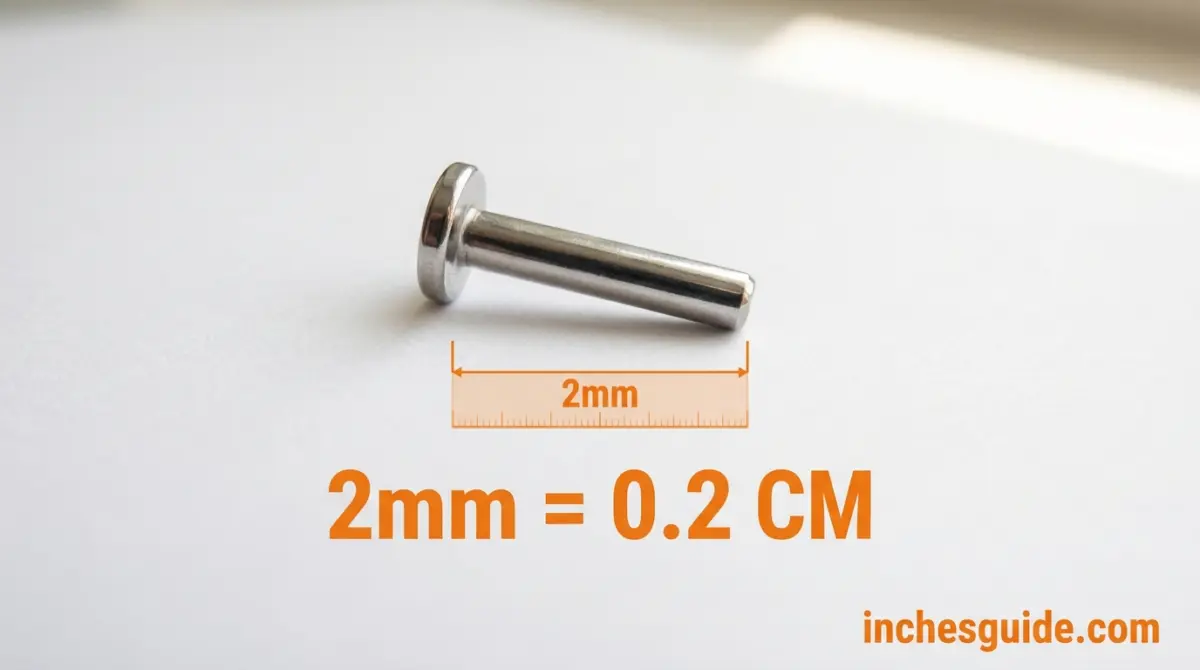
Body jewelry sizing runs backwards, so bigger numbers mean thinner posts. 12 gauge measures 2.05mm, and shops round it off and just call it 2mm.
For context, a fresh lobe piercing is usually 20 gauge, about 0.8mm. Reaching 12 gauge means stretching to more than double that.
Piercers work in gauge rather than millimetres out of habit, but the metric figure is the one that actually tells you what fits.
10. Picture Frame Glass
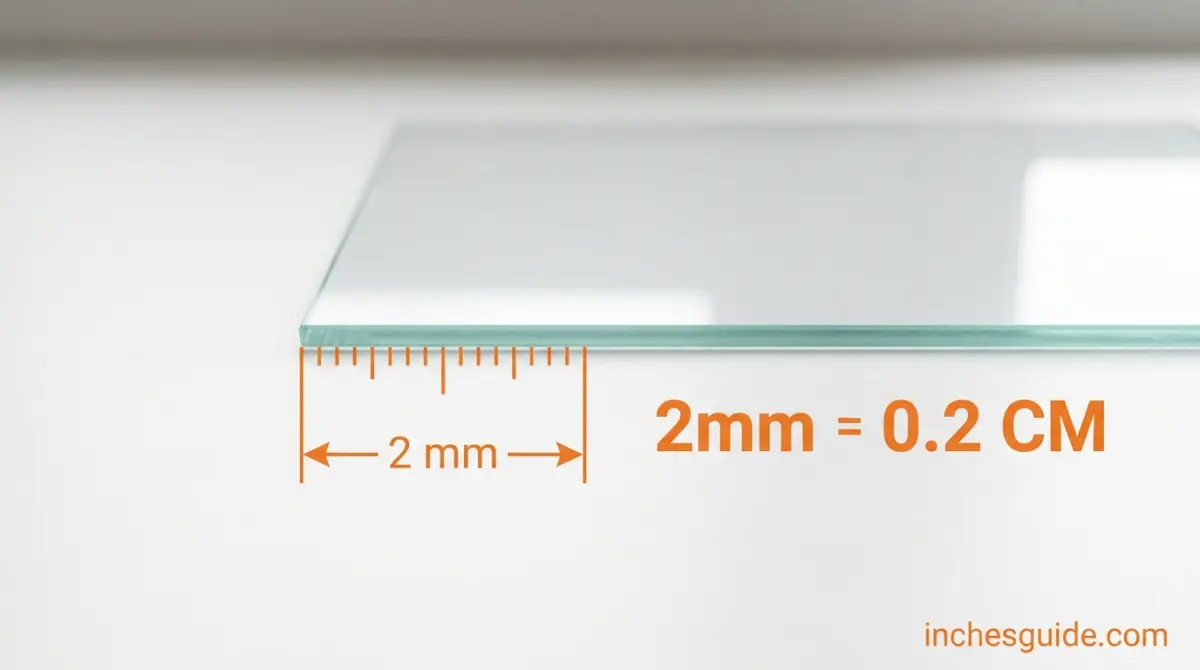
Standard picture framing glass is 2mm float glass. Window glass starts at 3mm, so framing glass is noticeably lighter in the hand.
Weight is the whole reason. A large frame with 3mm glass gets heavy enough to rip its hanger out of drywall.
It’s also why a dropped frame shatters so completely. At 2mm there’s almost nothing holding the sheet together once a crack starts.
11. A Coarse Sea Salt Crystal
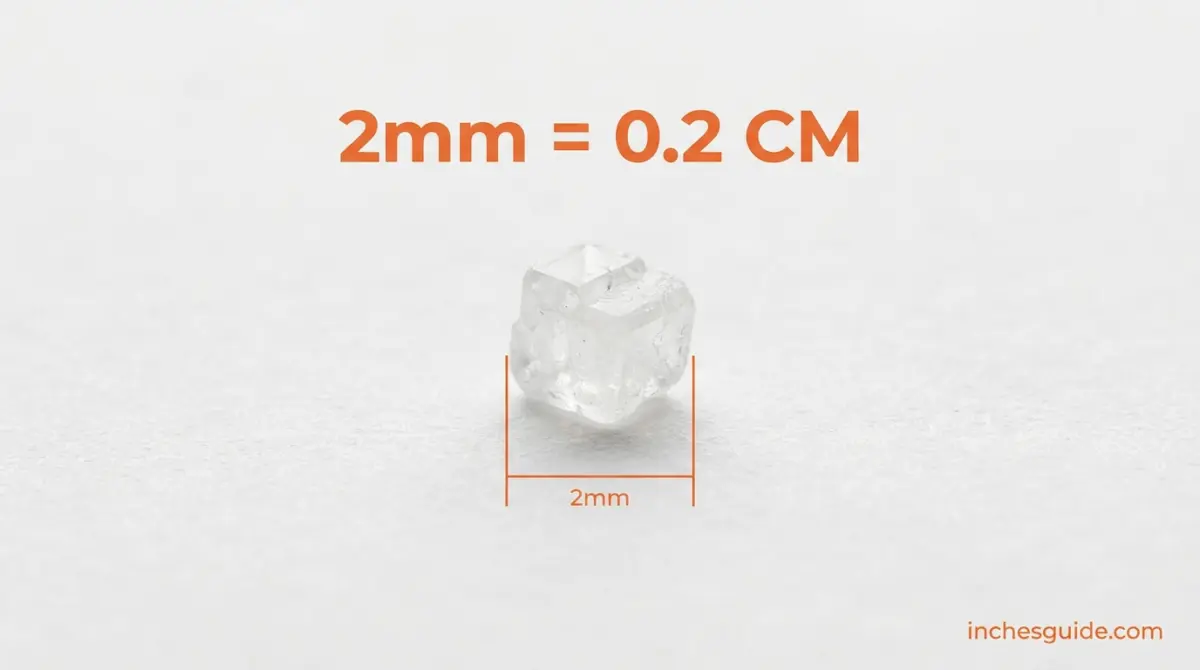
Pick a single crystal out of a coarse sea salt grinder and you’re usually holding something close to a 2mm cube.
Salt grows that way naturally. Sodium chloride crystallises into cubes as seawater evaporates, so the shape is chemistry rather than manufacturing.
Table salt is milled to a fraction of that size, which is why a spoon of coarse salt tastes less salty than the same spoon of fine.
12. A Dress Shirt Button
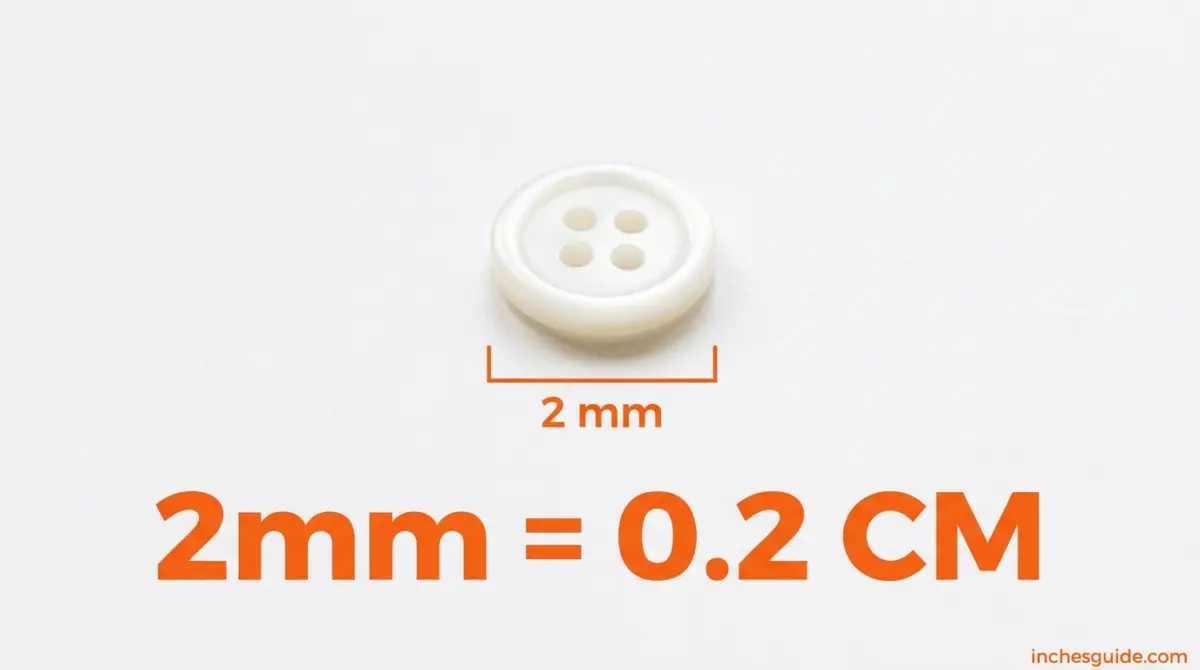
Most dress shirt buttons run between 1.5mm and 2mm thick. Cheap resin buttons sit at the thin end, good ones at the top.
The thickness has to survive a hot iron and a few hundred wash cycles without cracking or cupping.
Real mother of pearl buttons are cut close to 2mm too, and they’re the reason a good shirt costs what it does. Hold one up to light and you’ll see the shell layers.
The Gauge Answer, Since Everyone Asks
Gauge systems are the main source of confusion around this size, and there are three different ones in play.
For wire, 12 AWG measures 2.05mm, so 2mm wire and 12 gauge wire are effectively the same product. Price depends on whether it’s copper, steel or aluminium, not on the diameter.
For steel sheet, 2mm falls between 14 gauge (1.90mm) and 12 gauge (2.66mm). A 2mm sheet is closest to 14 gauge, which is common in brackets and light fabrication.
For body jewelry, as above, 2mm is 12 gauge. Same number, completely different system.
Reading 2mm Without Guessing
On a metric ruler, count two of the smallest ticks from any centimetre line. Each tick is 1mm, so two ticks is your mark.
On an inch ruler, look for 5/64. Most inch rulers only divide down to 1/16, in which case 2mm sits just past the first 1/16 mark.
With no ruler at all, use a bike spoke, a house key blade, or an SD card edge. All three are within a tenth of a millimetre.
For precision work, digital calipers read to 0.01mm and cost less than a pizza. If you’re checking parts, buy the calipers. Anything else at this size is estimating.
Where 2mm Turns Up in Strange Places
2mm of rain means two litres fell on every square metre of ground. It’s a light shower that darkens pavement and stops within the hour.
On brake pads, 2mm is past due. Most manufacturers say replace at 3mm, so 2mm means you’re driving on the last of the friction material.
For hair, 2mm is heavy stubble. It’s shorter than a number 1 clipper guard, which cuts at 3mm.
In model railways, 2mm scale means 2mm on the model equals one foot in reality, a ratio of about 1:152. The competitor claims that it means 1:500 is simply wrong.
And there really is a 2mm bullet. The 2mm pinfire cartridge feeds working miniature revolvers barely longer than a paperclip, and it’s among the smallest ammunition ever produced.
A 2mm kidney stone sits at the small end of the range. Stones under 4mm usually pass without intervention, though that’s a conversation for a doctor rather than a measurement blog.
If you want a bigger reference point to work from, 1 inch is 12.7 of these stacked up.
FAQs
How thick is 2mm in inches?
It’s 0.0787 inches, just under a tenth of an inch. The nearest ruler fraction is 5/64.
What is 2mm in cm and metres?
2mm equals 0.2 cm and 0.002 metres. Ten millimetres make a centimetre, so 2mm is one-fifth of one.
What size is 2mm compared to something I own?
An SD card is 2.1mm thick and a bicycle spoke is 2.0mm. Either one gives you the size instantly.
Is 2mm visible to the naked eye?
Yes, easily. You can see it clearly at arm’s length, though judging it accurately is harder than seeing it.
What gauge is 2mm?
12 gauge in wire and body jewelry. In steel sheet, 2mm is closest to 14 gauge.
Before You Close the Tab
Go grab your keys. That brass blade is 2mm, and you’ve had the answer in your pocket the whole time. Now you’ll spot it everywhere, from spoke to shirt button.