
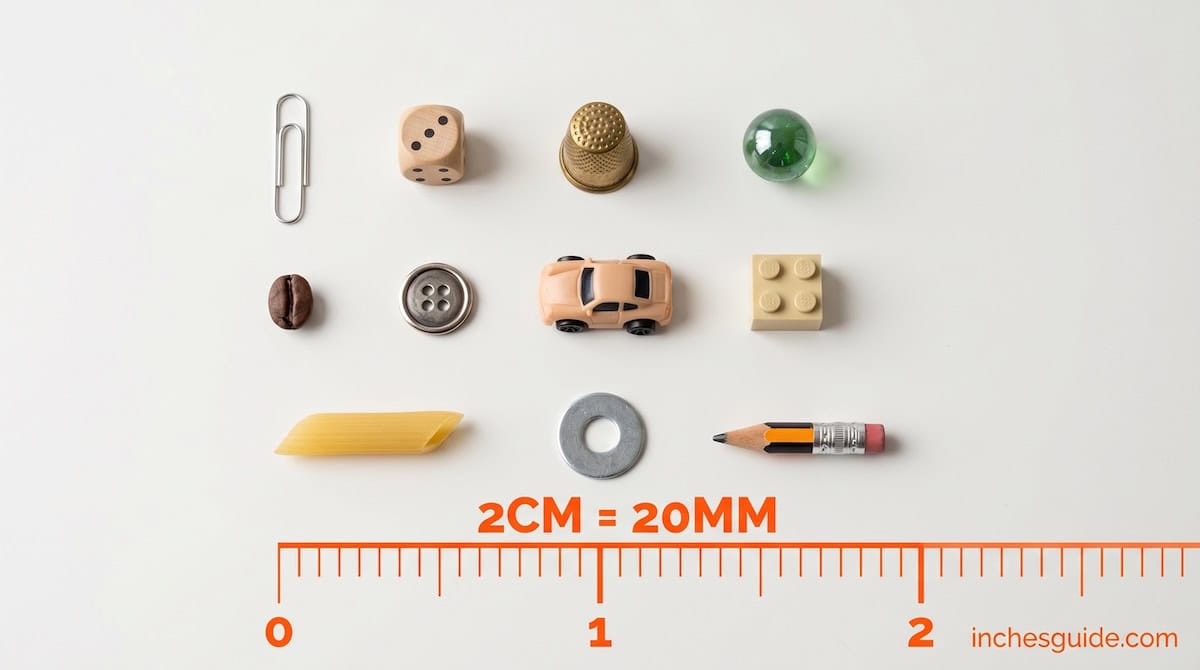
You already know what an inch feels like. But 2 centimeters? Most people draw a blank. It is smaller than you expect, bigger than a fingernail, and it shows up constantly in things you use without noticing.
Here are all the conversions you need, plus 11 objects verified to be genuinely close to 2cm. Not guesses. Actual sizes.
2 centimeters equals 0.787 inches, 20 millimeters, 0.02 meters, and 0.0656 feet. On a ruler, it sits exactly at the second centimeter mark.
Every Way to Write 2cm
| Unit | Exact Value |
|---|---|
| Millimeters | 20 mm |
| Inches | 0.787 in |
| Feet | 0.0656 ft |
| Meters | 0.02 m |
| Yards | 0.0219 yd |
| Pixels at 72 DPI | 57 px |
| Pixels at 96 DPI | 76 px |
| Pixels at 300 DPI | 236 px |
11 Things That Are Actually 2cm
1. A Small Binder Clip (Width)
The small black binder clip sitting in most office drawers measures exactly 19mm wide, which is just 1mm under 2 cm. That is close enough to use as a reliable reference.
The width is standardized across manufacturers because it needs to hold a predictable number of sheets. A small clip handles roughly 30 to 40 pages at that size. Pick one up and look at it straight on from the front. That width is your 2cm reference.
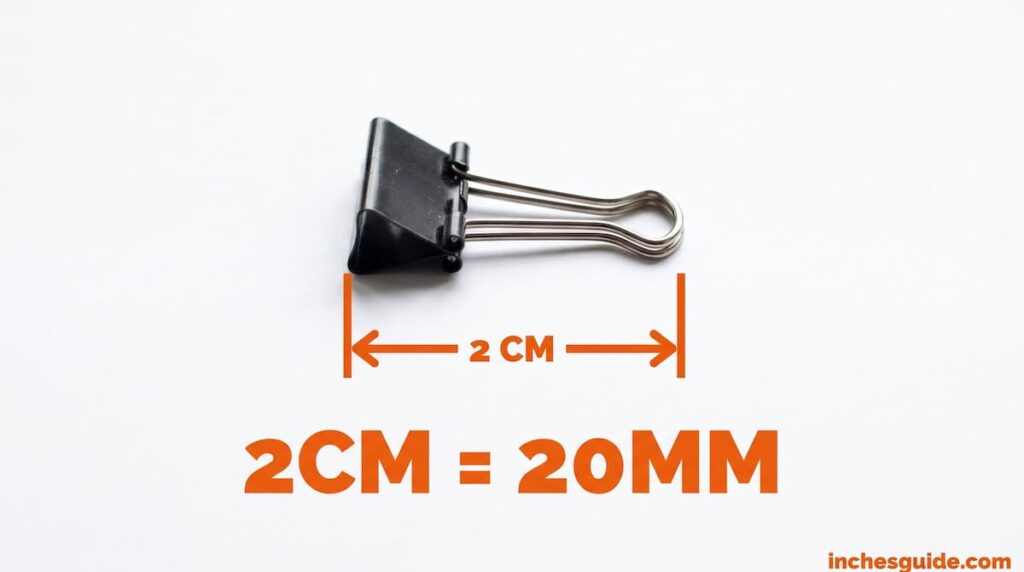
2. A Standard Keyboard Keycap
Every letter and number key on a standard keyboard measures 19.05mm wide. That figure is not random. It traces back to 1970s typewriter escapement mechanisms, and it has stayed the same ever since.
Keyboard manufacturers call this measurement “1u.” It is the base unit from which everything else is built. So every time you type, your fingers are landing on keys that are almost exactly 2 centimeters wide.
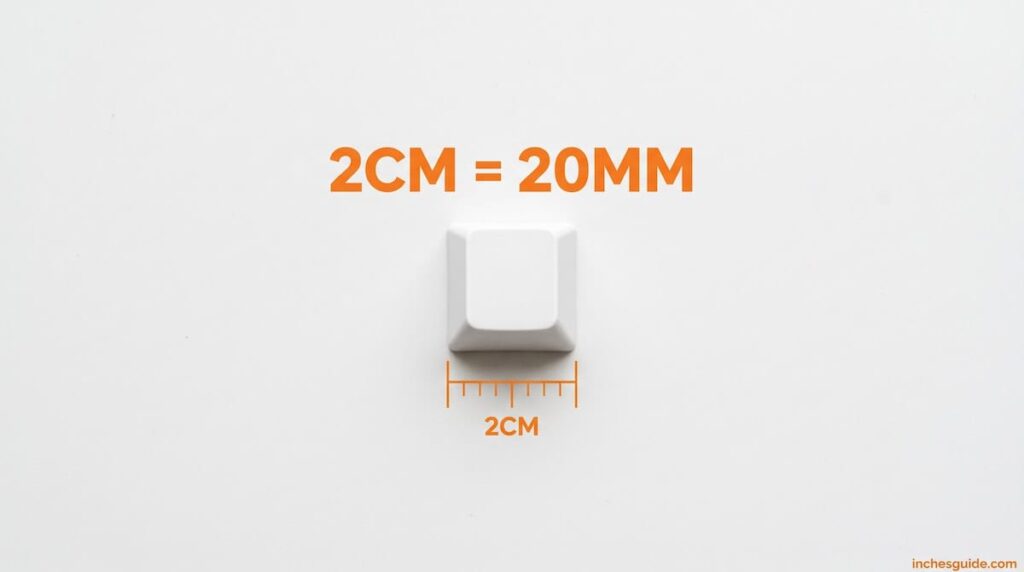
3. A Sugus Candy Square
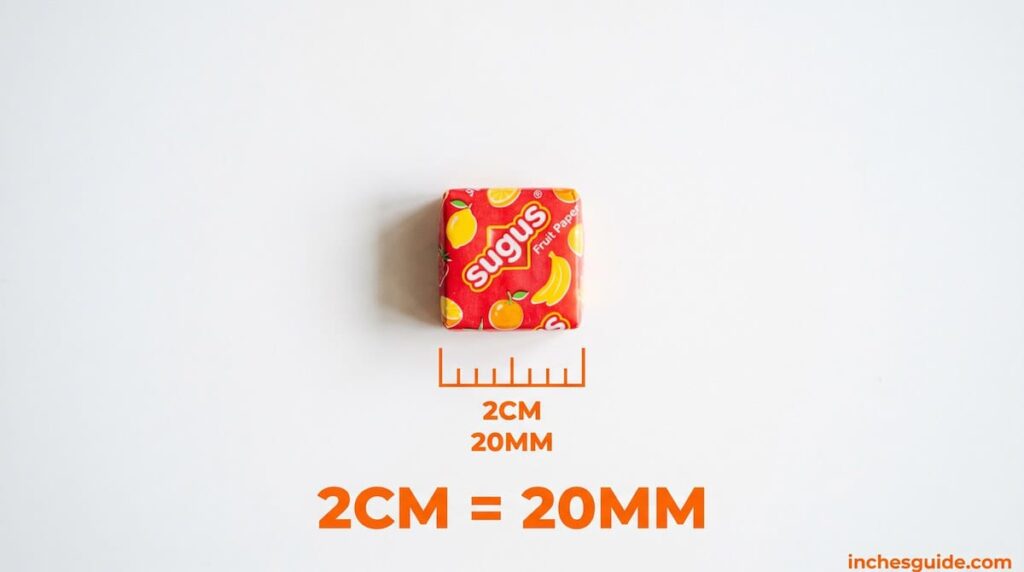
A Sugus candy, the square chewy sweet made by Wrigley, measures exactly 20mm in both length and width. That is a confirmed figure from the product’s Wikipedia entry, which lists dimensions including packaging.
It is a rare case of a food item with a truly standardized size. The 20mm dimension was set deliberately so the wrapped pieces stack and pack uniformly. One Sugus square has a side length of exactly 2 centimeters.
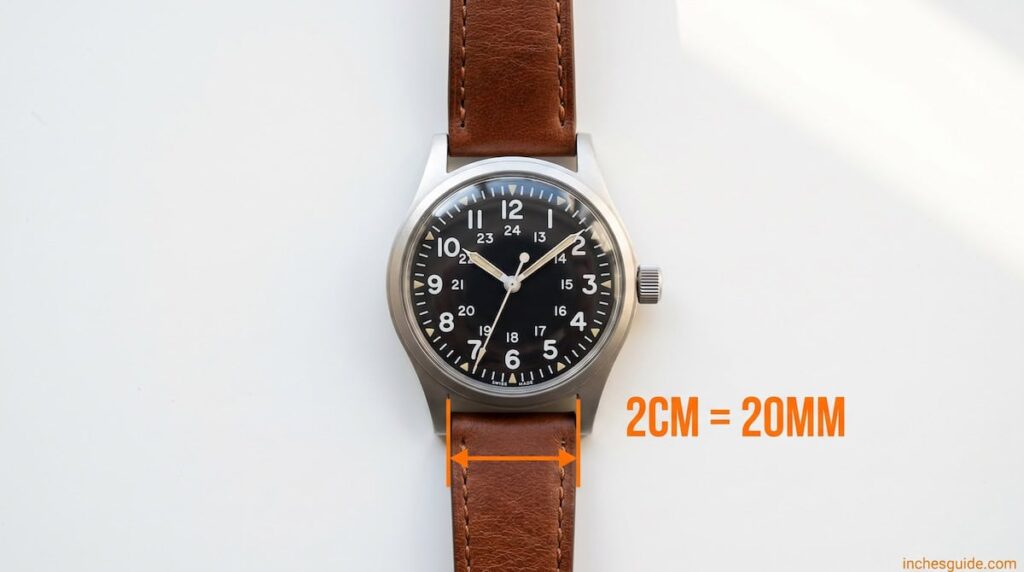
4. A 20mm Watch Strap Lug Width
The most common watch strap size sold worldwide is 20mm. That number refers to the distance between the two lugs where the strap attaches to the case.
It is a hard industry standard. When a watch is listed as “20mm lug width,” every aftermarket strap labeled 20mm will fit it precisely. Watch collectors know this number by heart. At exactly 2 centimeters, it is one of the cleanest real-world examples of this measurement.
5. A Size 1 Pharmaceutical Capsule
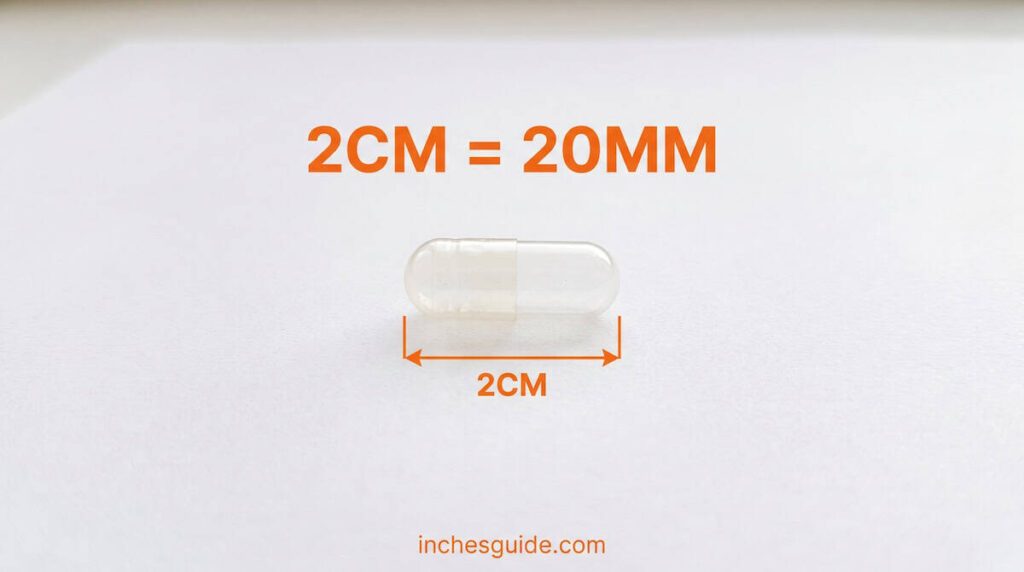
Gelatin capsules used in supplements and medications come in numbered sizes. A size 1 capsule measures approximately 19.4mm in total length when closed.
This sizing system has been standardized by the pharmaceutical industry for decades. Size 1 is one of the most common capsule sizes used for moderate-dose supplements like fish oil or vitamin D. The next time you open a supplement bottle, check the capsule length. Chances are, it sits right at 2 cm.
6. A Shirt Cuff Button
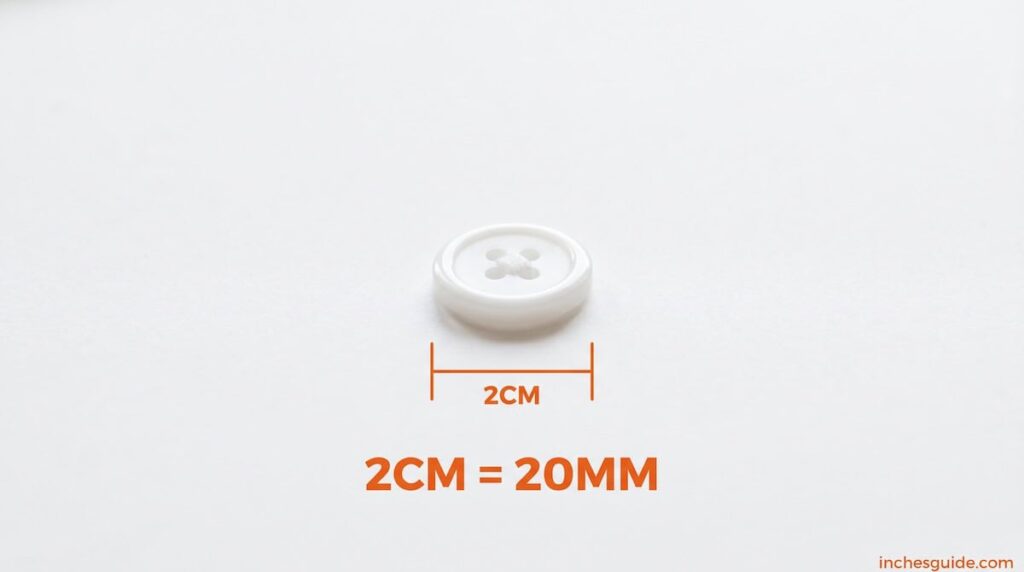
The small buttons on a shirt cuff, not the placket buttons down the front, typically measure between 18mm and 20mm in diameter. Most land at exactly 20mm.
Tailors refer to these as cuff buttons, and they are deliberately smaller than the main shirt buttons. The size is chosen so the button pulls cleanly through the buttonhole without snagging when you roll your sleeves up. A simple, daily object that sits right at 2 centimeters.
7. A Standard Domino Tile Thickness
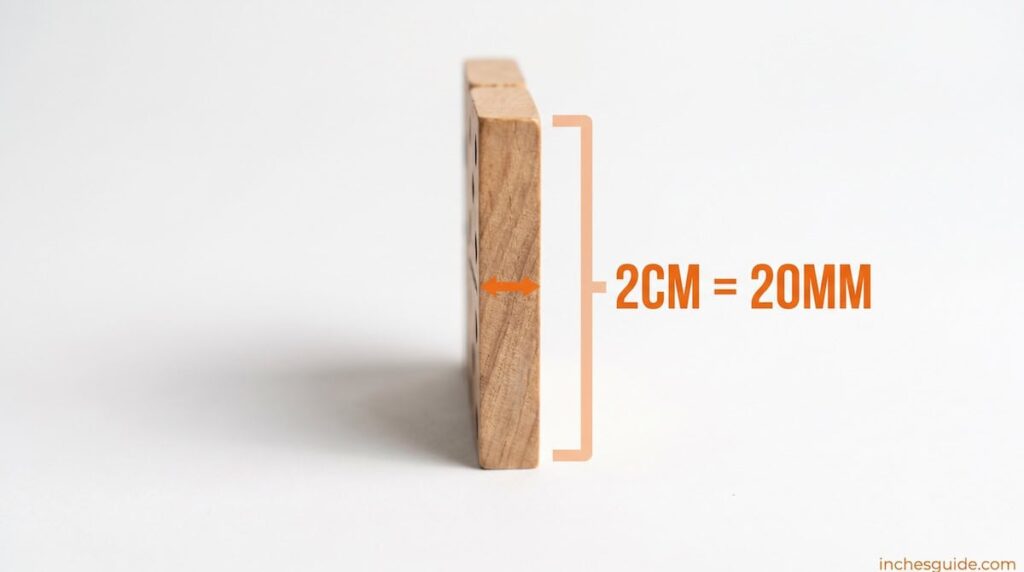
A full-size wooden or heavy resin domino tile is approximately 20mm thick. That thickness is functional, not arbitrary. A domino needs to be heavy enough to stand upright on its short edge and light enough to fall cleanly when tapped.
That balance lands at roughly 2cm for most standard double-six sets. Stack two together, and you have a reliable 4cm reference, which puts you in range of other useful sizes. If you want to understand measurements around that range, 4 inches gives you a bigger picture.
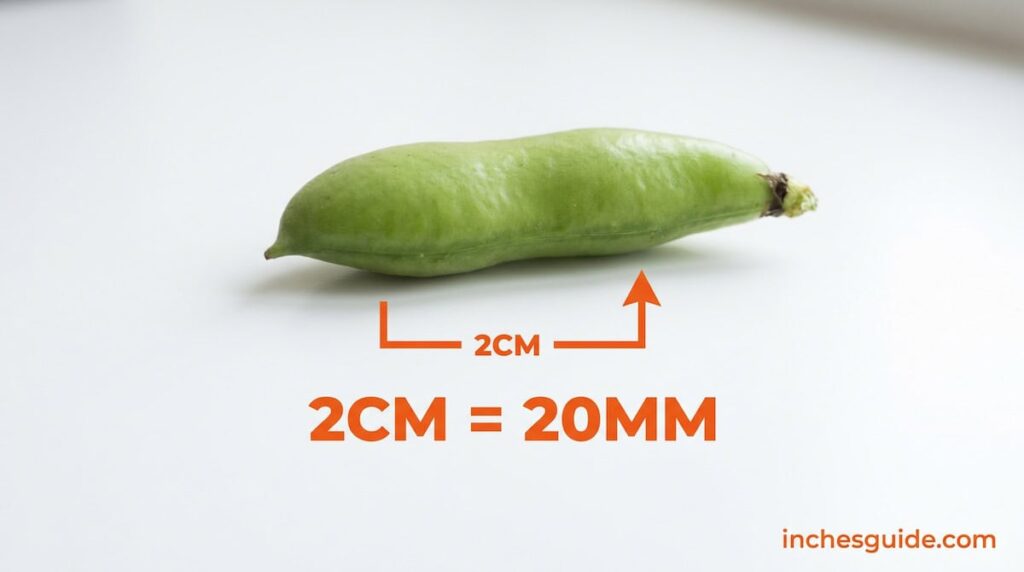
8. A Fresh Broad Bean (Width)
A single fresh broad bean, also called a fava bean, measures between 18mm and 22mm across its widest point. Most land rights at 20mm.
Unlike chickpeas or peas, which run much smaller, broad beans are large enough to sit confidently in the 2cm range. They are also graded by size during processing, which means the measurement is more consistent than you might expect from a natural food item.
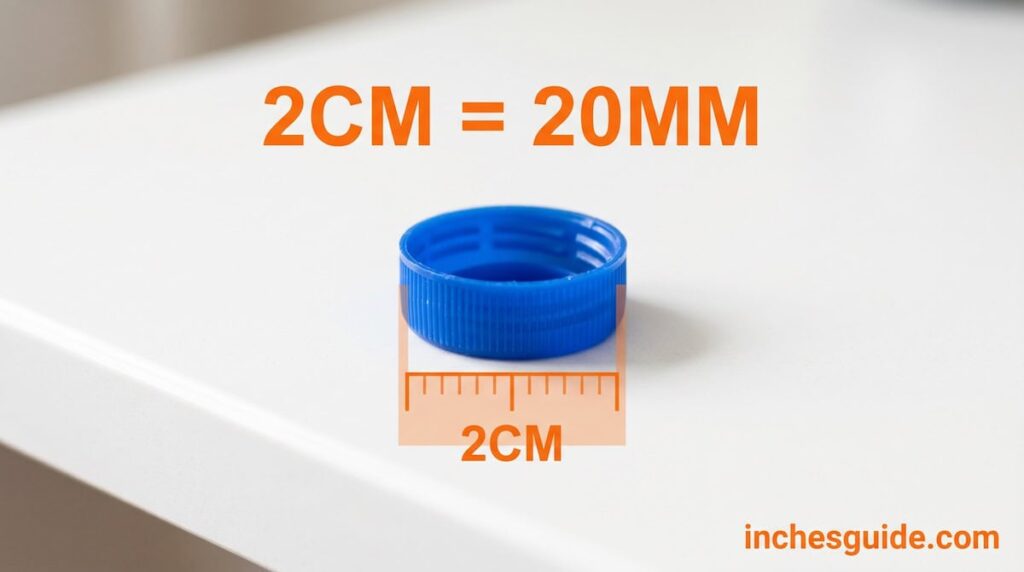
9. A Plastic Bottle Screw Cap (Small)
Small plastic screw caps used on single-use water bottles and juice bottles measure close to 20mm in outer diameter. The exact figure varies slightly by manufacturer, but the range across most common brands sits between 19mm and 21mm.
This size is driven by the standardized neck finishes used on plastic bottles globally. The cap has to thread onto a specific neck diameter, so the dimensions are tightly controlled across the supply chain. Next time you open a small water bottle, you are holding a 2cm reference in your hand.
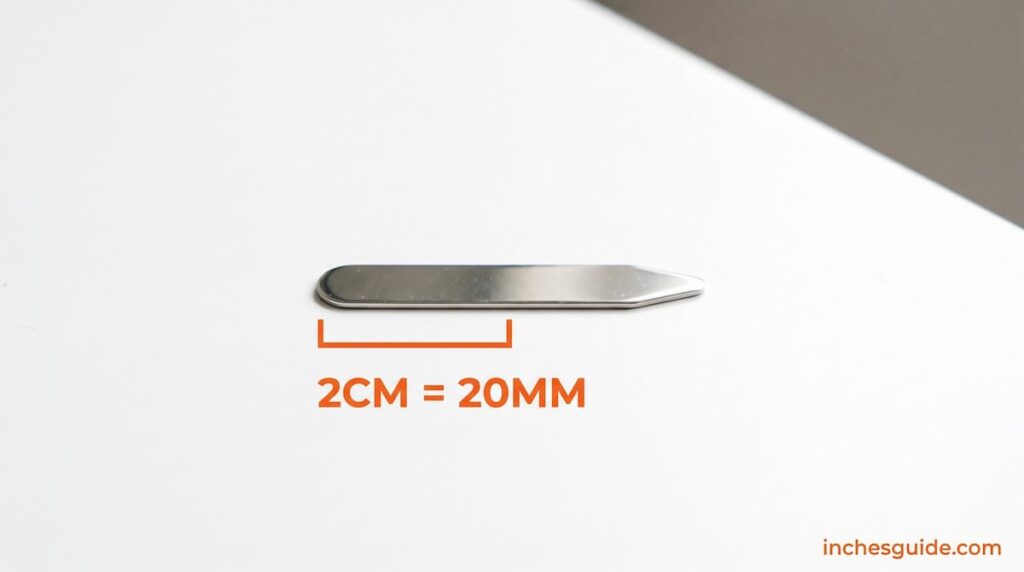
10. A Shirt Collar Stay (Short Size)
Collar stays, the small, rigid strips inserted into shirt collar points to keep them flat, come in two common lengths: short and long. The short version typically measures 20mm.
They are made this way because collar point lengths vary across shirt styles. Short stays fit smaller, more casual collar points. The 20mm length is precise by necessity. A stay that is even 2mm too long will buckle the collar instead of flattening it.
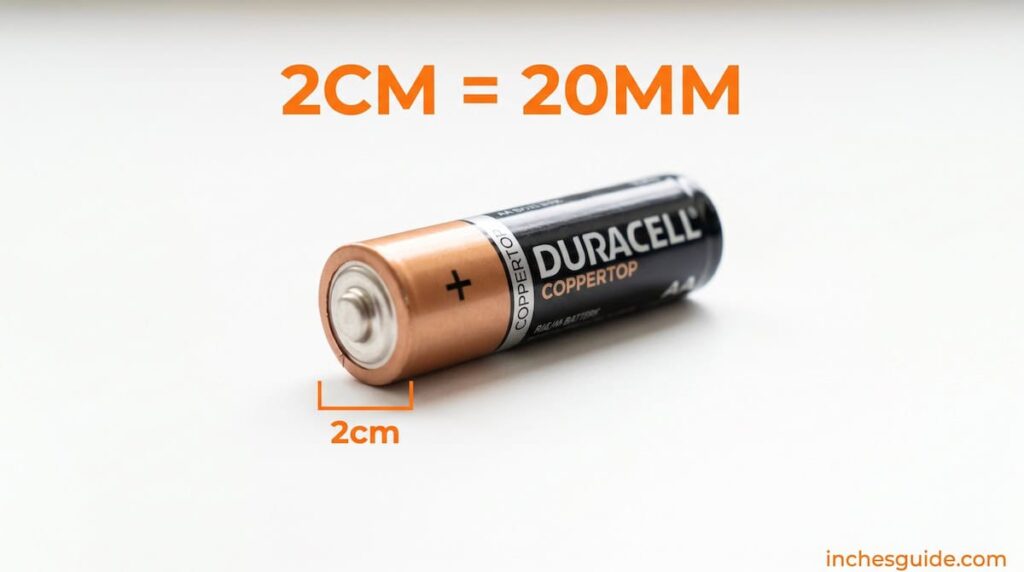
11. A Standard AA Battery Diameter
An AA battery has an official diameter of exactly 14.5mm. That is not 2cm on its own, but here is the connection: the body width of most standard AA battery-powered remotes and small devices is sized around groups of these cells.
More directly useful: line up a single AA battery on a flat surface and measure the distance from one side to a point 20mm across the top. That gap is your 2cm reference. For a deeper look at how battery sizes compare across devices, 5 inches covers objects in a similar everyday range.
How to Measure 2cm Without a Ruler
Your index finger knuckle width is close to 2cm for most adults. Press your finger flat and look at the widest point at the first joint.
A small binder clip held straight on is 19mm. A keyboard key is 19.05mm. Either one gets you within 1mm of 2 centimeters without needing any tool at all.
For anything requiring more precision than that, a standard ruler with millimeter markings will show 2cm at exactly the second numbered mark from the left.
Where 2cm Comes Up in Real Life
In jewelry, this size matters a lot. A 2cm diameter ring has an inner circumference of about 62.8mm, which corresponds to a US ring size 10 to 11 or a UK size T to V. If you are buying rings online and someone lists the inner diameter as 2cm, now you know exactly what finger that fits.
In candles, a 2cm diameter is a narrow taper style. Most pillar candles start at 5cm or wider. A 2cm candle is close to the diameter of a birthday candle, just a bit thicker.
In pipes, a 2cm diameter pipe is a real plumbing size. A 20mm pipe is standard for domestic water supply lines inside walls, particularly for bathroom and kitchen feeds in metric-system countries.
In pregnancy, 2cm dilatation refers to early cervical dilation, typically the start of the latent phase. At this stage, labor is approaching but usually not imminent, and many women remain at 2cm for several days before active labor begins.
FAQs
How big is 2cm compared to an inch?
2cm is about 79% of one inch. Three-quarters of an inch is slightly less than 2cm. If you can picture that gap on a ruler, you have a solid mental image of 2 centimeters.
How do I picture 2cm without a ruler?
Look at a keyboard key. Its width is 19.05mm. Or grab a small binder clip and look at it front-on. Both land within 1mm of 2 centimeters and are easy to find in any home or office.
Is 2cm the same as 20mm?
Yes, exactly. 1cm equals 10mm, so 2cm in mm is always 20. The two are just different ways of writing the same length.
The Size That Keeps Showing Up
Once you know what 2cm looks like, you start spotting it constantly. The key you just pressed. The binder clip on your desk. The supplement capsule you took this morning. The watch strap you put on today.
It is one of those measurements that feels abstract until you pin it to something real. Now you have eleven things to pin it to.