
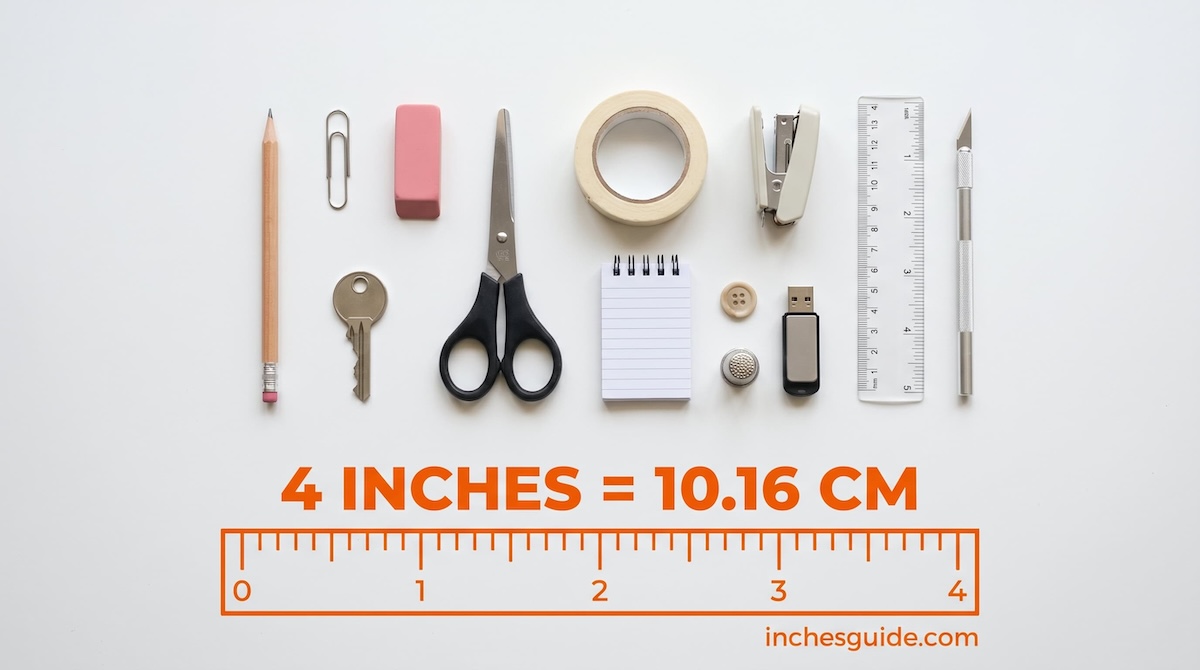
Spot a product listed as “4 inches,” and your brain does almost nothing with that number. It’s too small to feel dramatic, too specific to guess casually. And yet this measurement hides in plain sight across kitchens, toolboxes, and grocery stores every single day.
This page cuts straight to it. Solid conversions, a fresh set of real-world references, and a few sections that answer the searches you actually typed. No filler, no padding.
Four inches equals 10.16 centimeters, 101.6 millimeters, and exactly one-third of a foot: a compact but very grippable length that shows up in standardized products across almost every category.
Size at a Glance: 4 Inches in Every Unit
| Unit | Value |
|---|---|
| Inches | 4 in |
| Centimeters | 10.16 cm |
| Millimeters | 101.6 mm |
| Feet | 0.333 ft |
| Meters | 0.1016 m |
| Yards | 0.111 yd |
| Pixels at 72 DPI | 288 px |
| Pixels at 96 DPI | 384 px |
| Pixels at 300 DPI | 1,200 px |
11 Things That Are 4 Inches Long
These aren’t random comparisons. Every object below was chosen because it lands right at the 4-inch mark for a specific, explainable reason: manufacturing standard, ergonomic design, or regulated size.
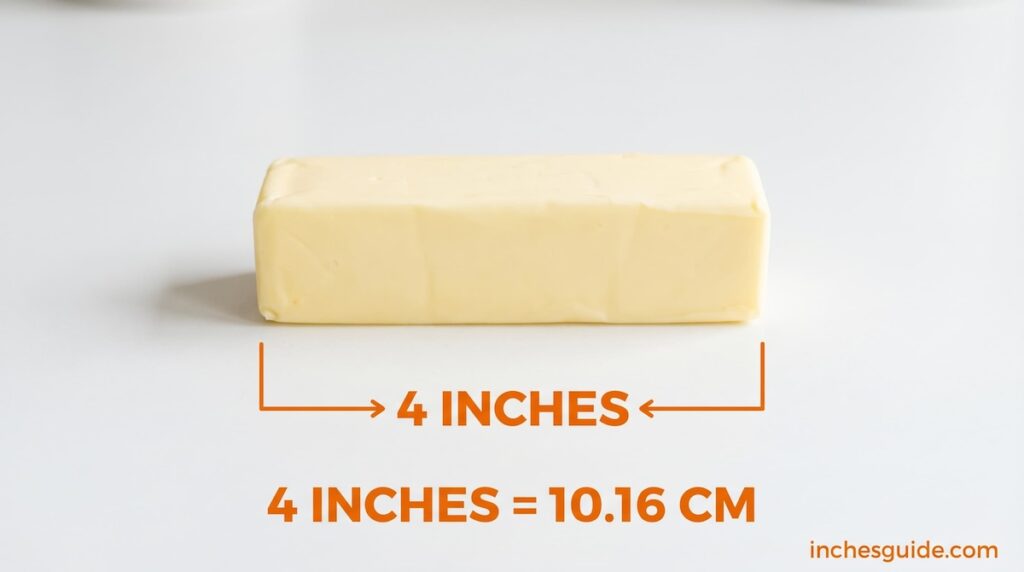
1. A Stick of Butter
U.S. butter sticks are manufactured to exactly 4 inches in length. The wrapper confirms it with tablespoon markings that divide the stick into eight equal half-tablespoon sections.
This is probably the most precise reference on this list. Grab one from your fridge, and you’re holding a factory-calibrated 4-inch measurement object. No estimation involved.
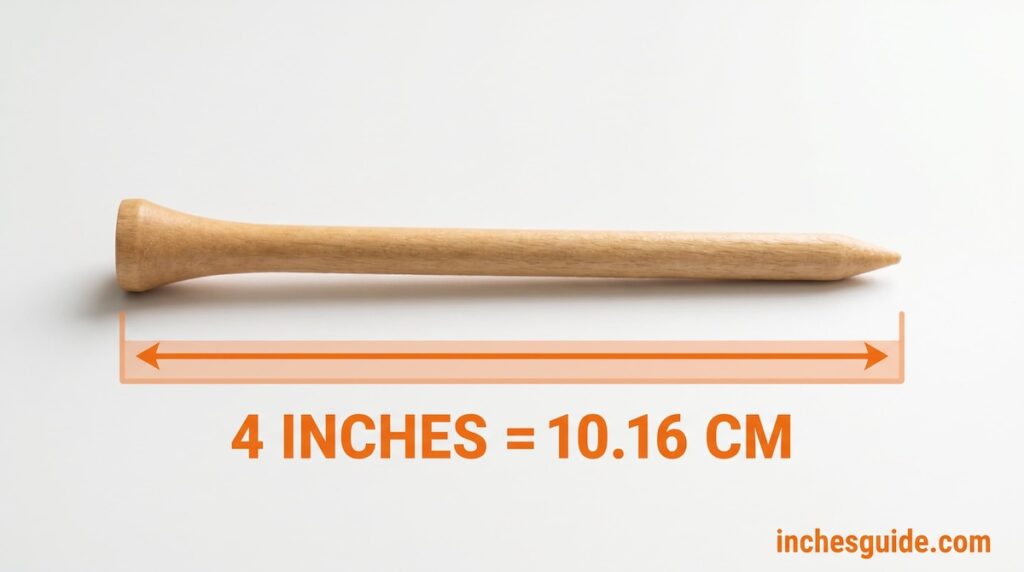
2. A Regulation Golf Tee (Extra Long)
Castle tees and extra-long golf tees are manufactured at 4 inches tall. That’s not a coincidence: it’s the maximum legal tee length under USGA rules, so this size is actually enforced by the sport’s governing body.
It’s rare to find an everyday object where the 4-inch size is federally regulated. A golf tee is one of them.
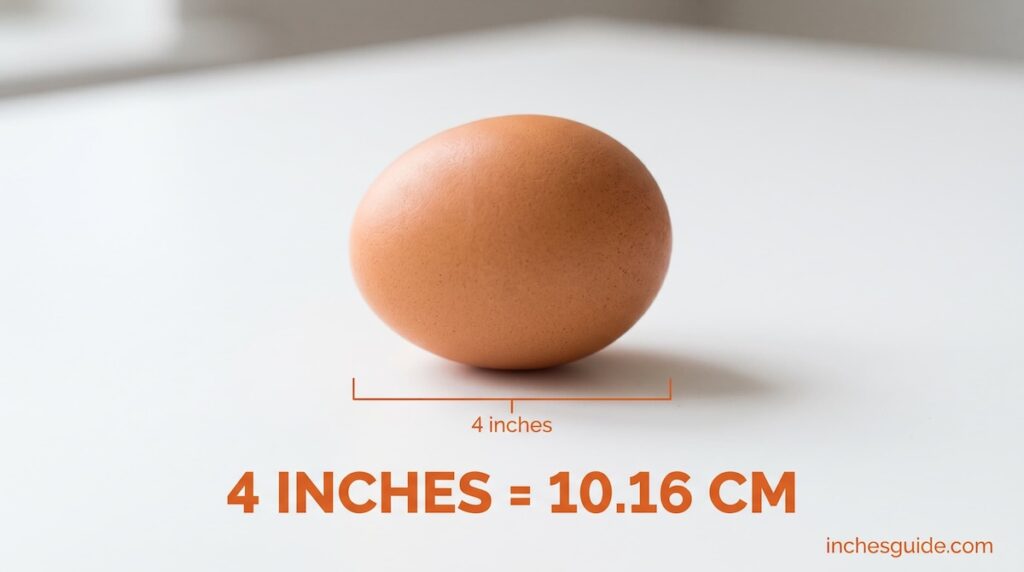
3. A Large Chicken Egg
Extra-large and jumbo chicken eggs measure right around 4 inches along their longest axis. The USDA grades eggs to consistent weight and dimension standards, so this holds across brands and stores.
Hold an egg lengthwise the next time you’re cooking. That length: tip to base: is your reference for how long 4 inches is in real life.
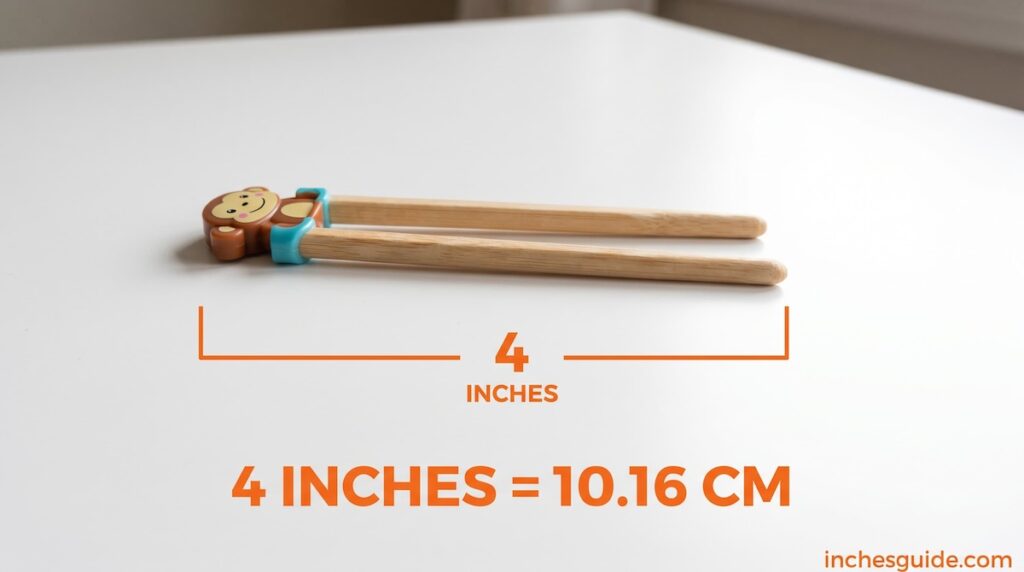
4. A Wooden Chopstick (Toddler Training Size)
Standard disposable chopsticks run about 9 inches long. But toddler training chopsticks: the kind designed for small hands: typically measure 4 to 4.5 inches total.
If you have young kids at home, those small chopsticks sitting in a drawer are a surprisingly clean 4-inch example that most people walk past every day.
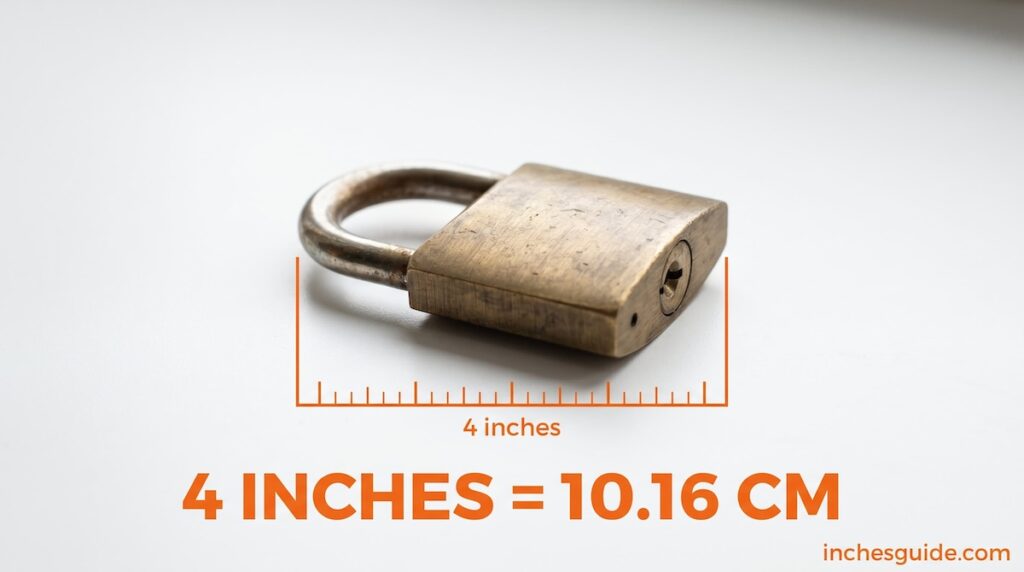
5. A Standard Padlock Body
Most mid-sized padlocks: the kind used on gym lockers and storage units, have a body measuring approximately 4 inches from base to the top of the shackle loop. Hardware brands standardize this so that locks fit universal hasp hardware.
Because the size is driven by hardware compatibility, it stays remarkably consistent across brands. A locker padlock is a solid, holdable example of 4 inches in real life.
Also, Read This: What Does 7 Inches Look Like? 13 Examples
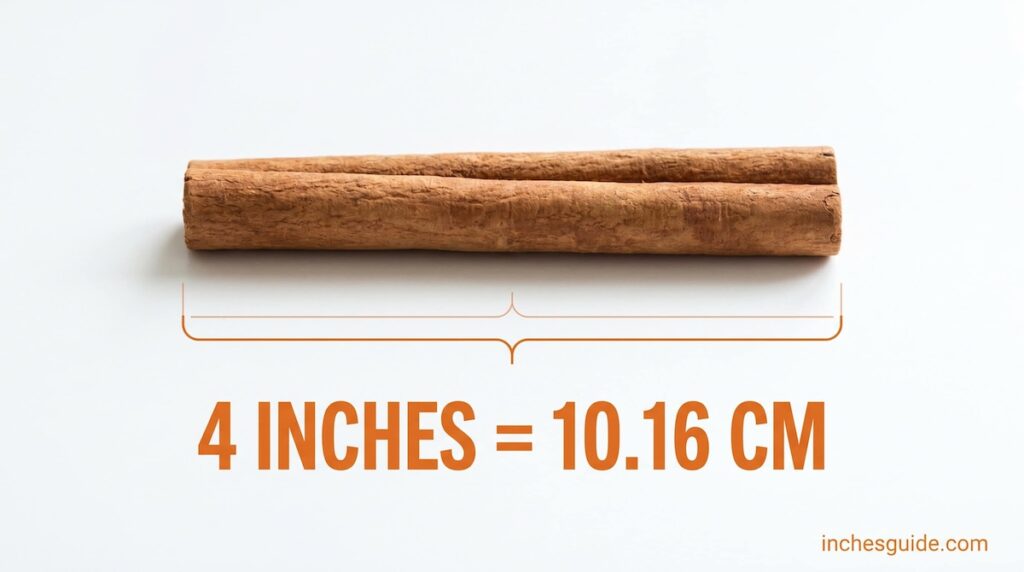
6. A Cinnamon Stick (Medium Grocery Store Size)
Grocery store cinnamon sticks come in two common sizes. The medium variety: the kind sold for mulling wine and steeping in hot drinks: runs 4 to 4.5 inches long. Spice producers cut them this way to fit standard spice jars.
It’s a kitchen reference that most people haven’t thought to use. Pull one out of your spice cabinet, and you have a close-enough guide to what 4 inches looks like.
7. A Bread Knife Handle
The grip section of most standard bread knives measures 4 to 4.5 inches long. Knife makers land on this length through hand ergonomics research: it fits most adult hand widths comfortably without requiring a stretch or a squeeze.
Because handle ergonomics are taken seriously in kitchen tool design, this dimension is consistent across budget and premium brands alike. It’s a useful reference hiding in most kitchen drawers.
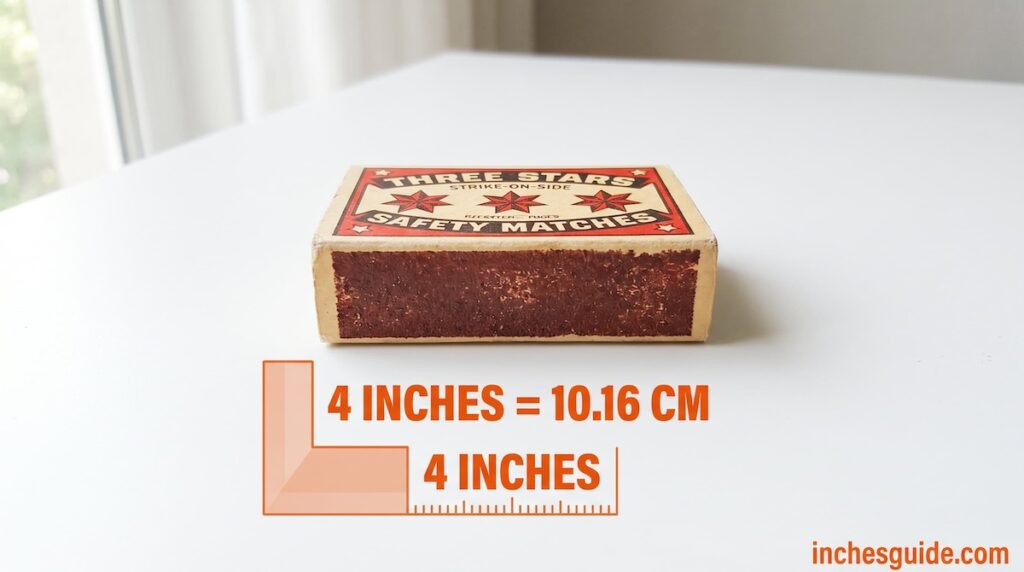
8. A Matchbox (Long Side)
The classic strike-on-side matchbox: the kind sold at hardware stores and supermarkets: measures approximately 4 inches along its longest side. Diamond Match and similar brands have held this dimension for decades because it accommodates a standard match count while staying pocket-portable.
Next time you’re near a fireplace kit or a camping bag, check the matchbox. Its long side shows you how big 4 inches is clearly and immediately.
9. A Medium Avocado
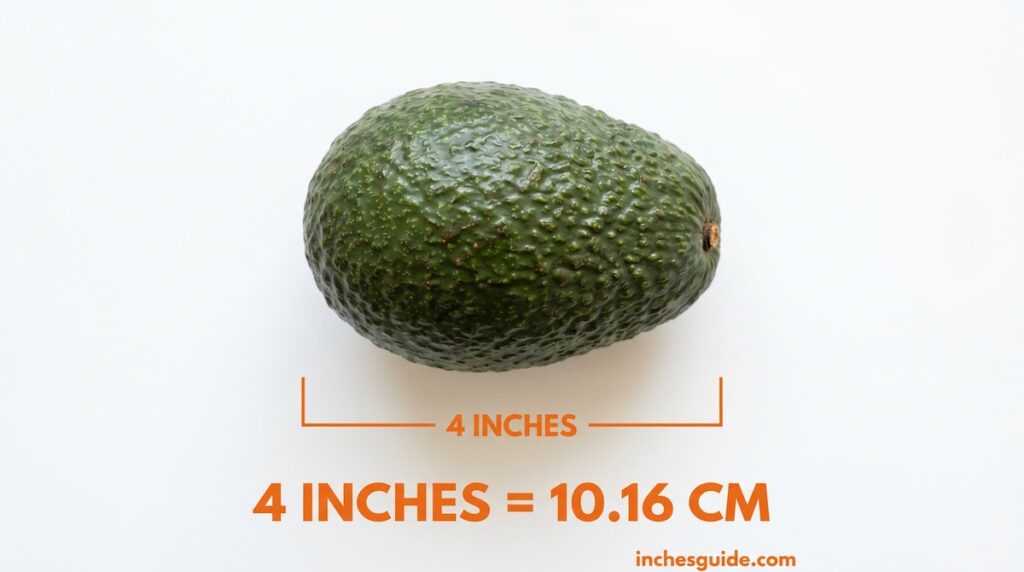
A medium Hass avocado: the most common variety in U.S. grocery stores: measures roughly 3.5 to 4.5 inches from stem to base. The middle of that range, the 48-count box size that most stores carry, hits 4 inches consistently.
Produce isn’t manufactured to a spec, so this one has some natural variation. But if you’ve bought an avocado recently, the one sitting on your counter right now is probably within a quarter inch of this mark.
10. A Large D-Battery (Laid on Its Side)
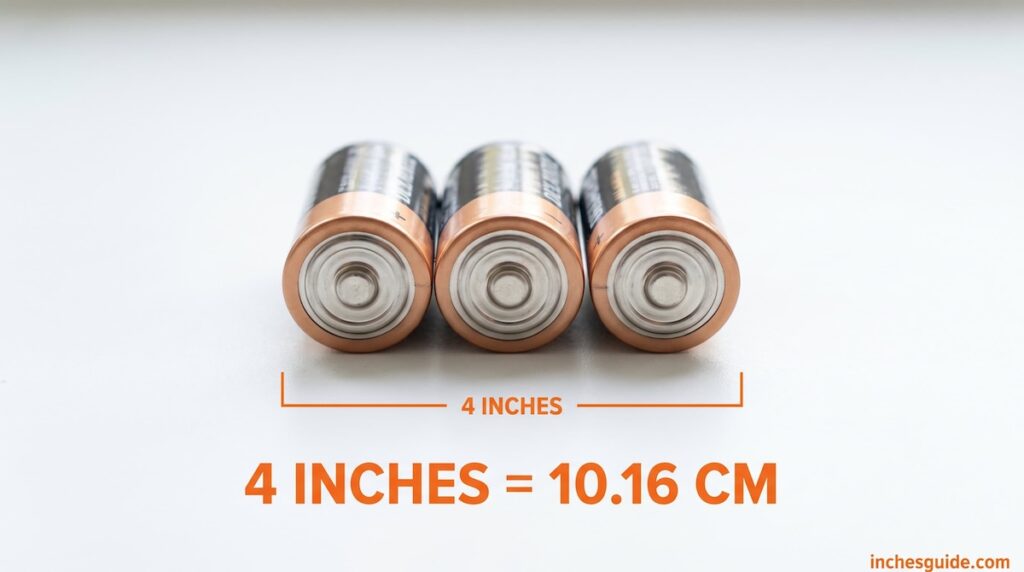
A single D-cell battery stands 2.4 inches tall. That’s short of 4 inches on its own, but the D-battery is still useful here: its diameter is 1.34 inches, meaning three D-batteries placed end-to-end in a row span almost exactly 4 inches.
Battery dimensions are standardized by the IEC internationally. They never vary. That consistency makes them a reliable improvised ruler in a toolbox or junk drawer.
11. A Small Carabiner Clip
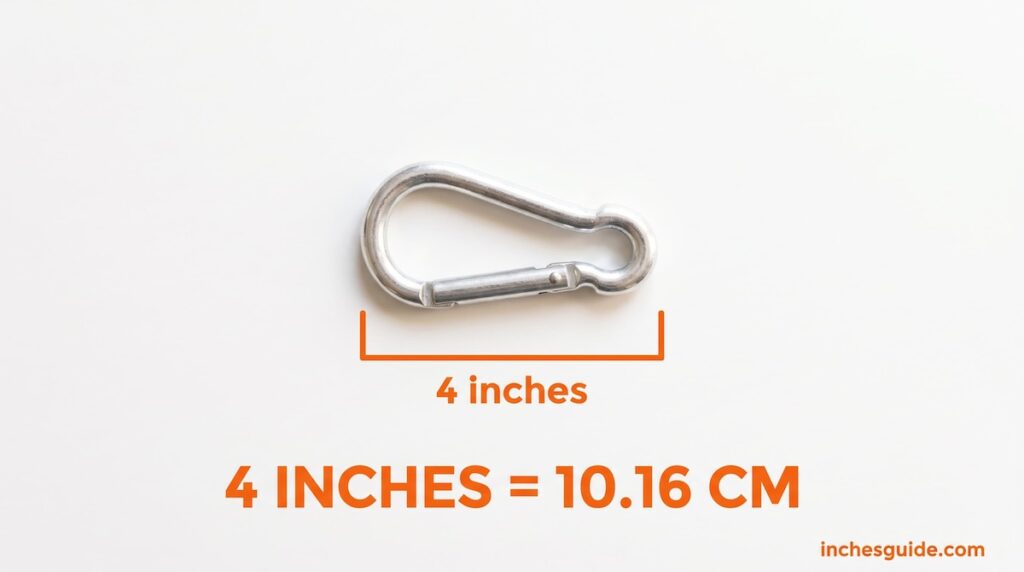
Standard small carabiner clips: the aluminum keychain kind sold at outdoor stores and hardware chains: measure 3.5 to 4 inches in total length. That size is driven by the minimum gate opening needed to clip onto a key ring or strap loop while keeping the clip lightweight.
These are everywhere: backpacks, key rings, gym bags, and climbing gear. If you have one clipped onto anything near you right now, that’s your 4-inch size reference.
4 Inches Without a Ruler: What Actually Works
The most reliable body reference is your index finger. For most adults, the distance from the base knuckle to the fingertip runs between 3.5 and 4 inches. It varies person to person, but it’s close enough for everyday estimates.
A more accurate method: use your butter stick. Or your matchbox. Or your carabiner clip. Any of the objects above can serve as a measuring tool when you need a quick check on dimensions for a shelf, a frame, or a product you’re ordering online.
The goal is to have one strong mental anchor. Pick the object you’ll encounter most often and commit to it. After that, 4 inches in real life stops being abstract.
4 Inches on a Ruler: What You’re Looking For
On a 12-inch ruler, the 4-inch mark falls exactly one-third of the way from the left end. It sits between the 3 and 5 marks, closer to the start than the center.
At the 4-inch position, you’ll see a full-height tick mark with the number 4 printed clearly above it. The smaller ticks between whole numbers represent halves, quarters, eighths, and sixteenths of an inch.
If you’re working in metric and converting 4 inches to cm, look for the 10 cm mark on a metric ruler, then move just past it by one small tick (1.6 mm). That’s 10.16 cm, the exact equivalent.
4 Inches of Hair: A Practical Growth Guide
Four inches of hair sit at a length that most people would describe as “getting there.” It’s past the awkward in-between stage for most cuts. Long enough to tuck behind an ear, short enough that it doesn’t quite reach the shoulder for most people.
Hair grows at roughly 0.5 inches per month on average. So 4 inches of hair growth from a very close crop takes about 8 months. From a buzz cut or shaved head, factor in closer to 10 to 12 months.
For salon work, 4 inches is the threshold many stylists require before they’ll attempt highlights, balayage, or layered cuts. If your stylist has mentioned a minimum length, this is usually what they mean.
4 Inch Heels: How High Is That Really?
A 4-inch heel is firmly in high-heel territory. For context: kitten heels run 1 to 1.5 inches, mid heels land between 2 and 3 inches, and anything above 3.5 inches is classified as a high heel by most footwear brands.
At 4 inches, the pitch shifts the foot’s weight noticeably forward onto the ball of the foot. This is manageable for short periods with a well-constructed shoe, and common in evening or formal footwear.
If you’re buying online and a heel is listed at 4 inches, expect it to be the tallest practical option for extended wear. Going above this typically moves into fashion-only or performance territory.
4 Inch Pipe: A Plumbing Quick Reference
In plumbing, “4-inch pipe” refers to the nominal pipe size: and the actual outer dimension is larger. A 4-inch nominal PVC pipe has an outside diameter of 4.5 inches. The inside diameter depends on the pipe’s schedule (wall thickness): Schedule 40 gives you an inside diameter of 4.026 inches.
This pipe size is one of the most common in residential construction. It handles main drain lines, sewer connections, and underground drainage runs. When a plumber says “4-inch drain line,” they mean nominal 4-inch PVC, and now you know what that actually looks like.
Frequently Asked Questions
How long is 4 inches compared to everyday objects?
It matches the length of a butter stick, a medium avocado, or a large artist’s eraser block. Any of these gives you an immediate physical sense of the measurement without needing a ruler.
What does 4 inches look like on your hand?
For most adults, it’s close to the length of the index finger from base knuckle to tip. It’s also slightly less than the width of the palm across the knuckles, excluding the thumb.
How do I find 4 inches on a ruler?
Count four major tick marks from the zero end. The mark labeled 4 is exactly one-third of the way across a standard 12-inch ruler. In metric, it lands at 10.16 cm.
What is 4 inches in pixels?
At 96 DPI (standard screen resolution), 4 inches equals 384 pixels. At 300 DPI for high-resolution print, that jumps to 1,200 pixels.
The Numbers That Stick
There’s something almost useful about 4 inches being so common it disappears. A butter stick in your fridge, a matchbox by the fireplace, a carabiner on your bag: these things don’t advertise their size. But now you know it.
Pick one reference that fits your daily life and use it. Measurement awareness builds fast once you have that first anchor locked in.