
Most people have seen “100g” on a recipe or nutrition label and just… estimated. A rough scoop from the bag. A guess. Fingers crossed it works out.
The number itself isn’t the problem. The problem is that 100 grams doesn’t mean much until you connect it to something you can actually hold. Once you do, the weight clicks into memory and stays there.
Below you’ll find every useful conversion, a full kitchen ingredient breakdown, and 12 everyday objects that weigh about 100 grams none of which appear in the usual reference lists.
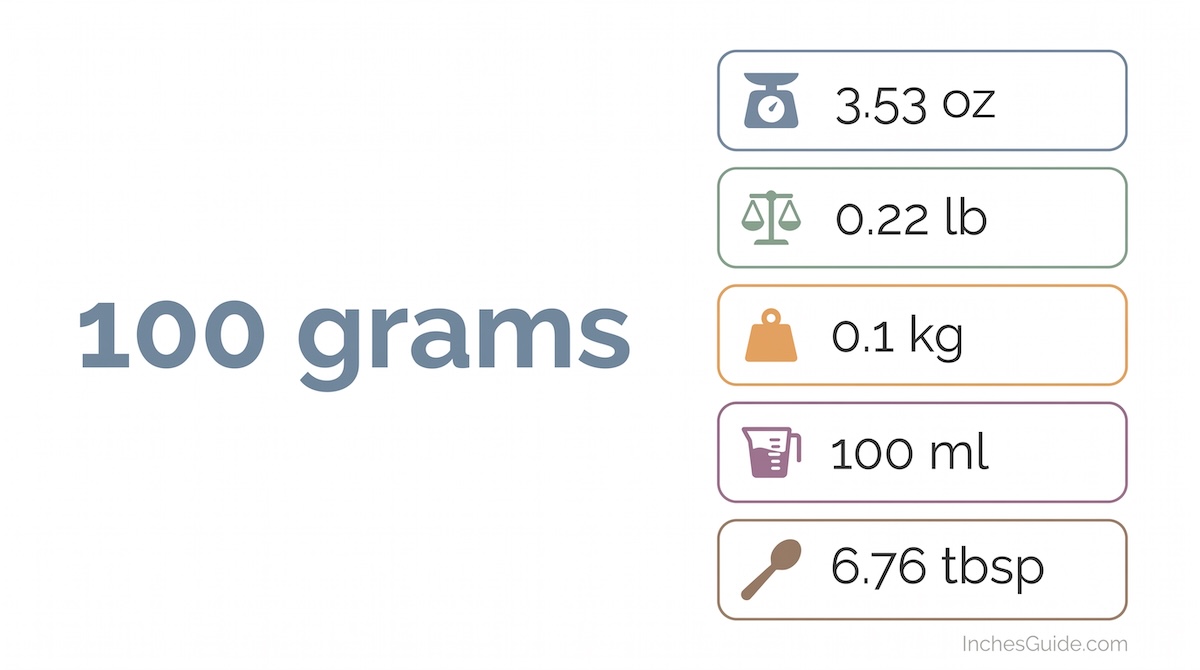
100 grams equals 3.53 ounces, 0.22 pounds, or 0.1 kilograms. In the kitchen, it’s roughly half a cup of sugar, three-quarters of a cup of flour, or about the weight of a small onion.
Everything 100 Grams Converts To
| Measurement | Equivalent |
|---|---|
| Kilograms (kg) | 0.1 kg |
| Milligrams (mg) | 100,000 mg |
| Ounces (oz) | 3.53 oz |
| Pounds (lb) | 0.22 lb |
| Milliliters (water only) | 100 ml |
| US tablespoons | ~6.76 tbsp |
| US teaspoons | ~20.3 tsp |
| US cups (water) | ~0.42 cups |
100 grams in ounces is by far the most searched version of this conversion. The number to remember is 3.53 oz, which puts it just under a quarter of a pound.
The milliliter figure only applies to water. Olive oil, honey, and other liquids have different densities, so 100 grams to cups shifts depending on the ingredient. That’s handled in the section below.
What 100 Grams Looks Like in the Kitchen
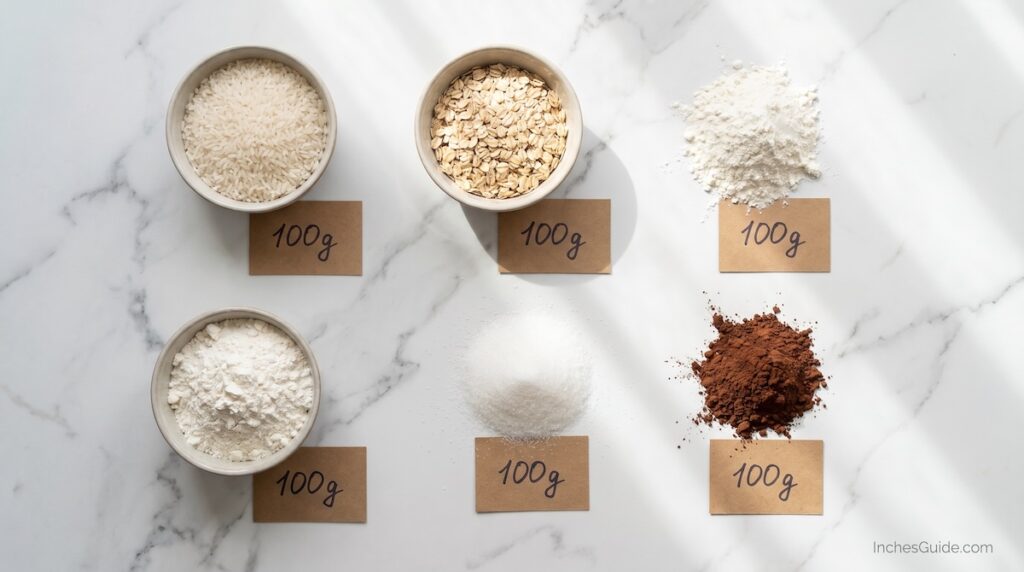
The same 100g weight takes up wildly different volumes depending on what you’re measuring. Density changes everything.
| Ingredient | 100g Looks Like |
|---|---|
| All-purpose flour | ~¾ cup |
| Granulated sugar | ~½ cup |
| Powdered sugar | ~¾ cup |
| Honey | ~4.5 tbsp |
| Butter | ~7 tbsp |
| Uncooked white rice | ~½ cup |
| Table salt | ~5.5 tbsp |
| Rolled oats | ~1 cup |
| Olive oil | ~7 tbsp |
| Cocoa powder | ~1 cup |
This is where most baking mistakes come from. A European recipe asks for 100g of flour, and a US cook grabs a measuring cup. But flour compresses depending on how it’s scooped, which is why 100 grams of food measurements in baking are more reliable than volume. Gram measurements are consistent. Cup measurements aren’t always.
12 Everyday Objects That Weigh About 100 Grams
These were picked specifically because they don’t appear on the usual lists. No apples, no soap bars, no tennis balls.
1. A Small Onion
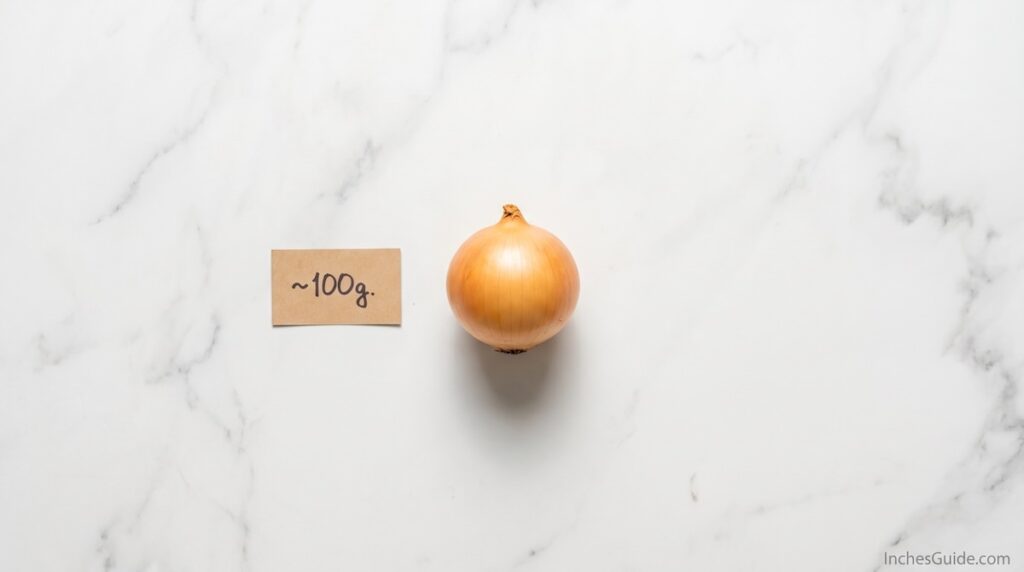
A small-to-medium onion — the kind you’d grab for a stir fry or quick pasta sauce — sits right at 85 to 100 grams. It’s dense, compact, and one of the most consistent natural weight references in any kitchen.
The papery outer skin weighs almost nothing, so the flesh accounts for nearly all of that total. Yellow and white varieties tend to sit at the higher end; red onions of the same visible size are often a few grams lighter.
So if you’ve lost your kitchen scale, grab a small onion. Hold it. That’s your baseline for how heavy is 100 grams in real life.
2. A Large Raw Carrot
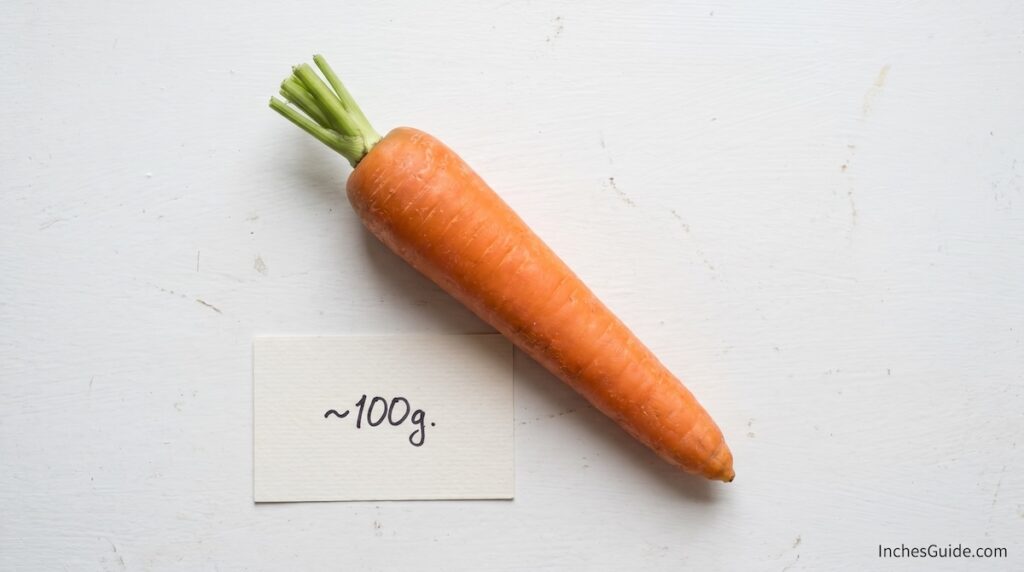
A large carrot from a standard grocery bag typically weighs 100 to 120 grams. Most land close to the 100-gram mark because commercial packaging targets consistent sizing.
Unlike many fruits and vegetables where density changes with ripeness, carrots are predictable. They’re solid all the way through. That’s also why a carrot feels heavier than you expect from its size.
And those carrots in a 1kg bag aren’t random — they’re trimmed to similar lengths deliberately. That kind of standardization is what makes a large carrot a reliable weight reference.
3. 100ml of Water in a Bottle
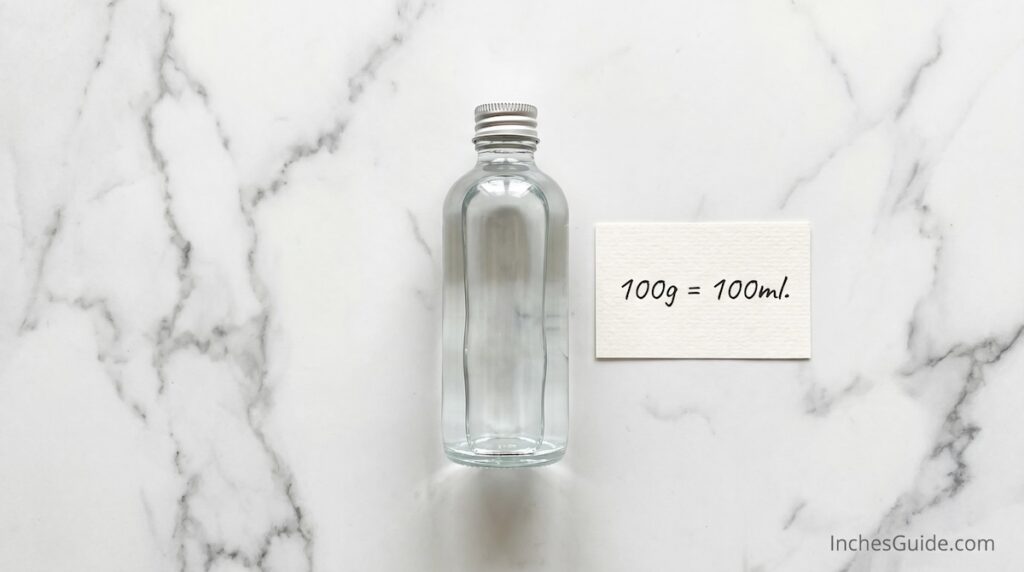
This one isn’t approximate. One hundred milliliters of water weighs exactly 100 grams, every time. That relationship is fundamental, not coincidental — the original definition of the gram was the weight of one cubic centimeter of water at 4°C.
Most TSA-compliant travel containers are 100ml because that’s the carry-on liquid limit in most countries. You’ve likely owned several without realizing they were also a precise weight standard.
If you’re calibrating a kitchen scale and don’t have calibration weights, fill a measuring cup to exactly 100ml of water and place it on the scale. It should read 100g. If it doesn’t, the scale needs adjustment.
4. A TV Remote Control
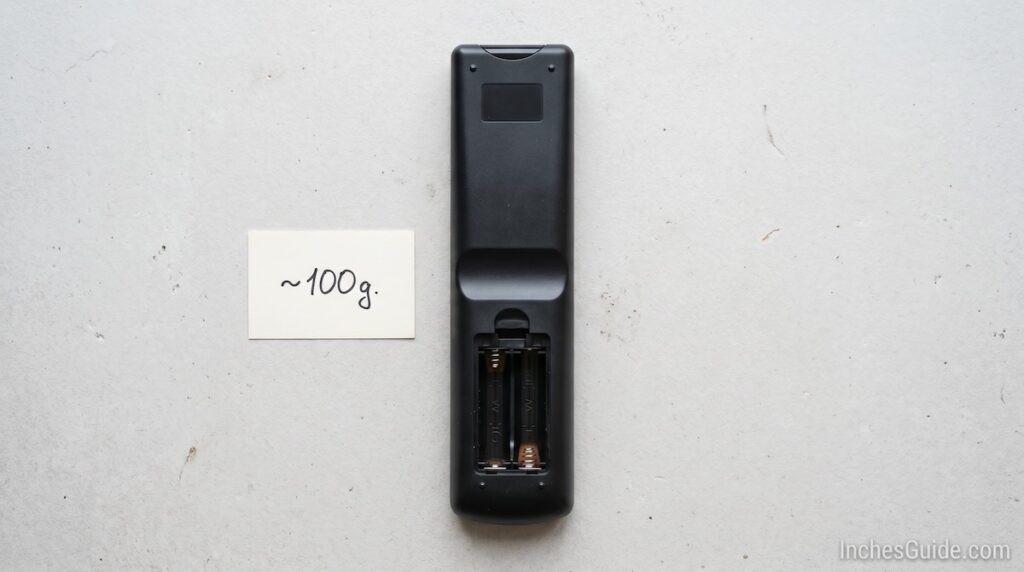
Most standard TV remotes weigh 90 to 130 grams without batteries. The mid-range remotes that ship with basic flat-screens average right around 100 grams.
Batteries matter here. Two AAA batteries add roughly 22 grams. So if your remote feels heavier than these numbers suggest, that’s the batteries accounting for the difference.
Remotes also make good references because their weight doesn’t change. No moisture loss, no ripening, no density shifts by season. A remote that weighs 100 grams today weighs 100 grams in five years.
5. A Pocket Notebook
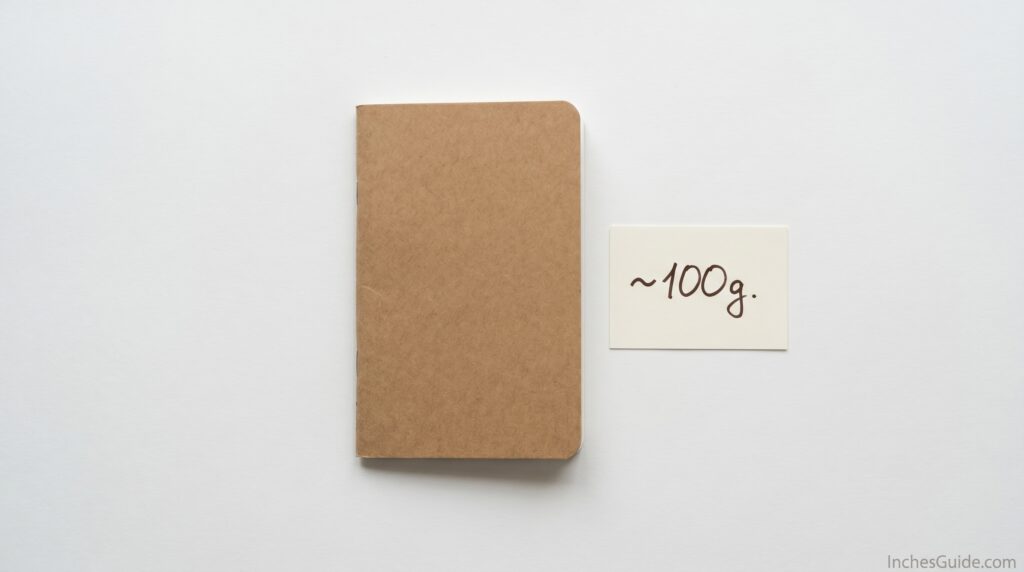
A small pocket notebook, the kind that fits in a jacket or back pocket, typically weighs 80 to 110 grams. The classic small Moleskine softcover sits at about 90 grams. A slightly thicker one with more pages hits 100 grams.
Paper is denser than most people assume. A single sheet of standard 80gsm A4 weighs 5 grams. A compact 100-page notebook hits the 100-gram mark almost precisely once you account for the cover and binding.
The notebook is a stable reference. It doesn’t change with humidity, season, or time. Drop it in a bag, take it out six months later — same weight.
6. Half a Cup of Uncooked White Rice
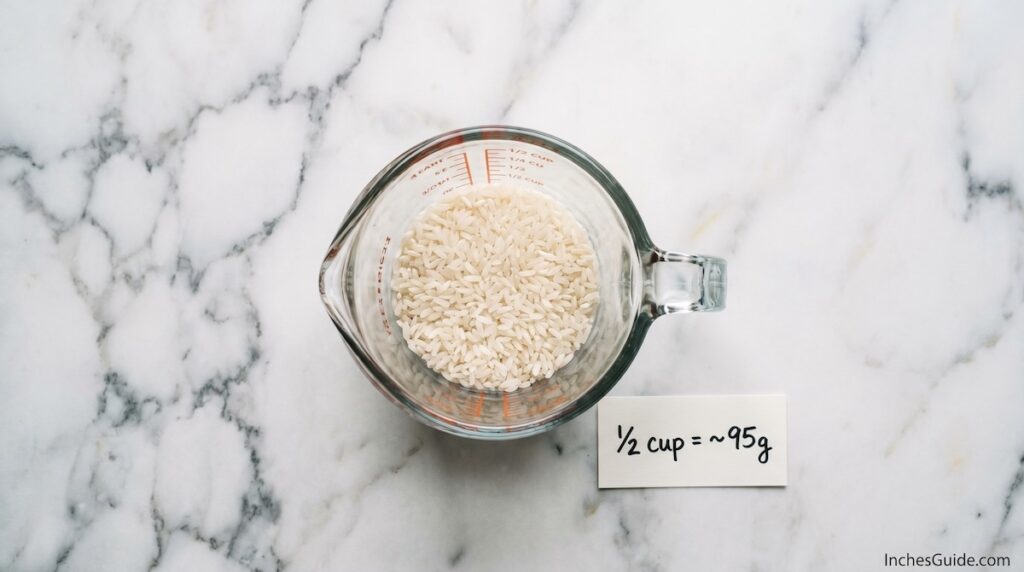
Dry white rice weighs about 185 grams per US cup. Half a cup lands at roughly 90 to 95 grams close enough to 100 grams for most everyday uses.
This one’s practical because rice is in most kitchens, and measuring half a cup takes seconds. It won’t work for precision baking, but for portioning dry ingredients or checking a rough estimate, it does the job.
One thing to know: this only works with dry rice. Cooked rice absorbs water and more than doubles in weight. The same half-cup measure after cooking hits around 185 to 200 grams instead.
7. 20 US Nickels
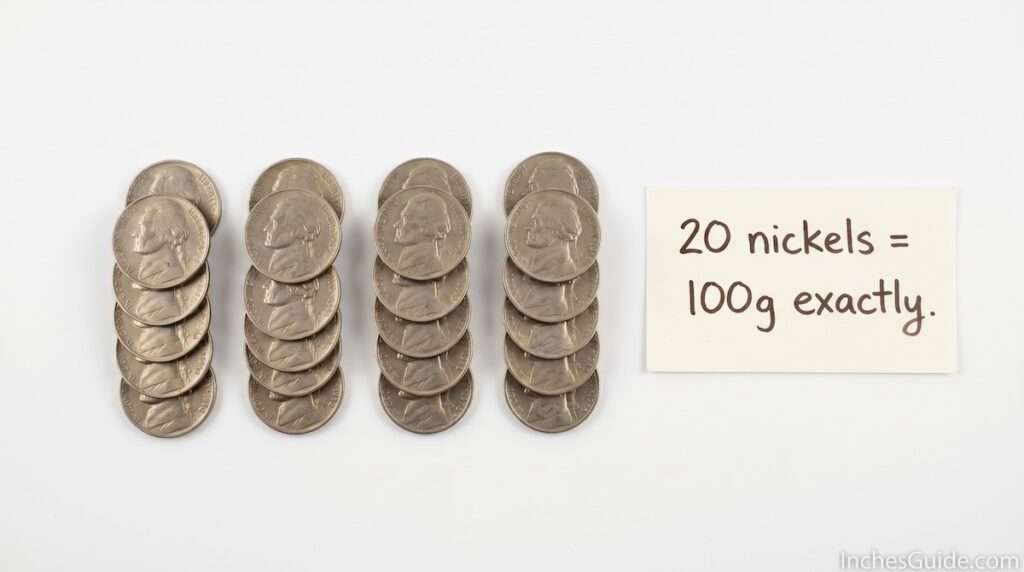
The US Mint has manufactured every nickel at exactly 5.000 grams since 1965. So 20 nickels equal exactly 100 grams, with no variation between coins.
This is the calibration trick used by jewelers, food processors, and postal workers who need to verify a scale without official calibration weights. Four stacks of five nickels gives you a precise 100-gram reference.
It’s the most accurate object on this list — not an approximation, an exact match. If your scale reads anything other than 100g with 20 nickels, the scale is off.
8. A Small Combination Padlock
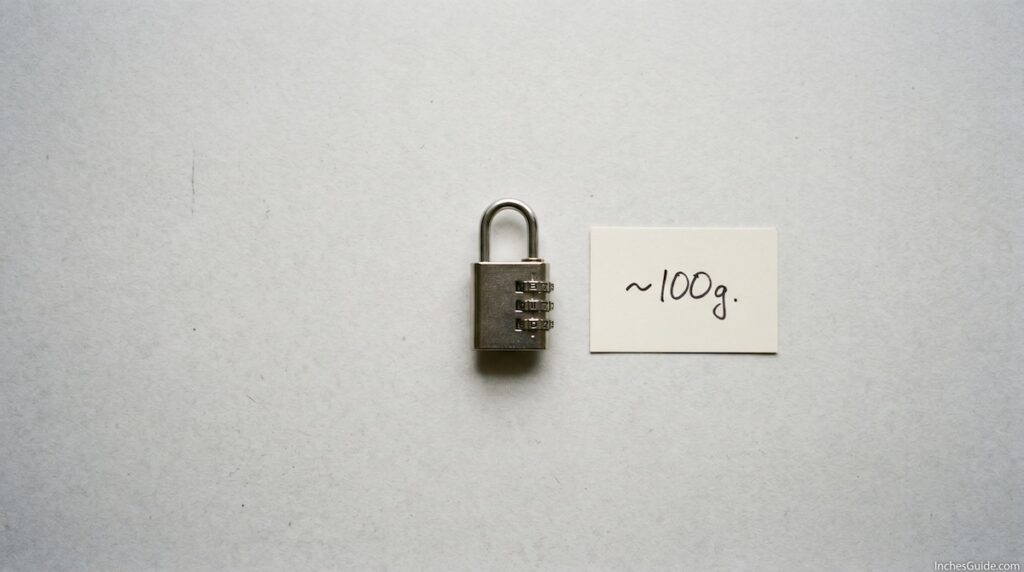
Small combination padlocks, the kind used on gym lockers or luggage, weigh 85 to 100 grams depending on material. Brass body versions hit the higher end; lighter alloy models sit closer to 85 grams.
The weight is intentional. Padlocks need mass to resist brute-force removal, so manufacturers don’t aim for minimal weight the way consumer electronics do. The 100-gram zone is a common target for entry-level security hardware.
Hold a small padlock in your palm and notice how the weight feels concentrated in the body rather than spread evenly. That compact density is a good physical reference for what 100 grams actually registers as in the hand.
9. A Large Plum
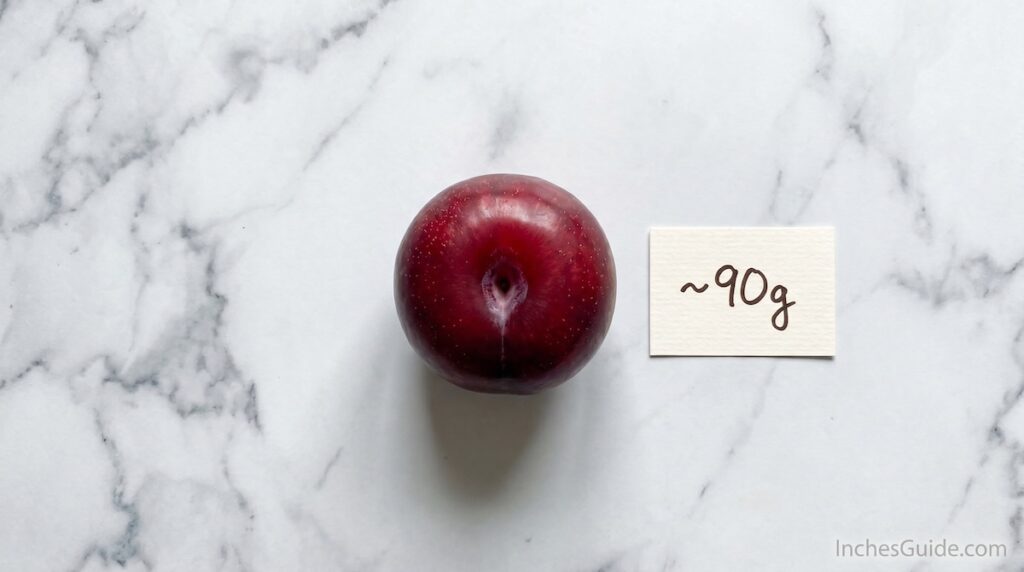
A large red or black plum typically weighs 85 to 95 grams depending on variety and ripeness. That puts it just below 100 grams, making it one of the closer natural references on this list.
The stone inside contributes about 6 to 8 grams of that total. Stone fruits are consistently denser than people expect because the pit is proportionally heavy relative to the fruit’s volume.
Plums don’t appear in most weight reference articles because everyone defaults to apples. But within a pack of plums, the size variation is smaller than in apples, which actually makes them a more consistent hand reference.
10. A Table Tennis Paddle
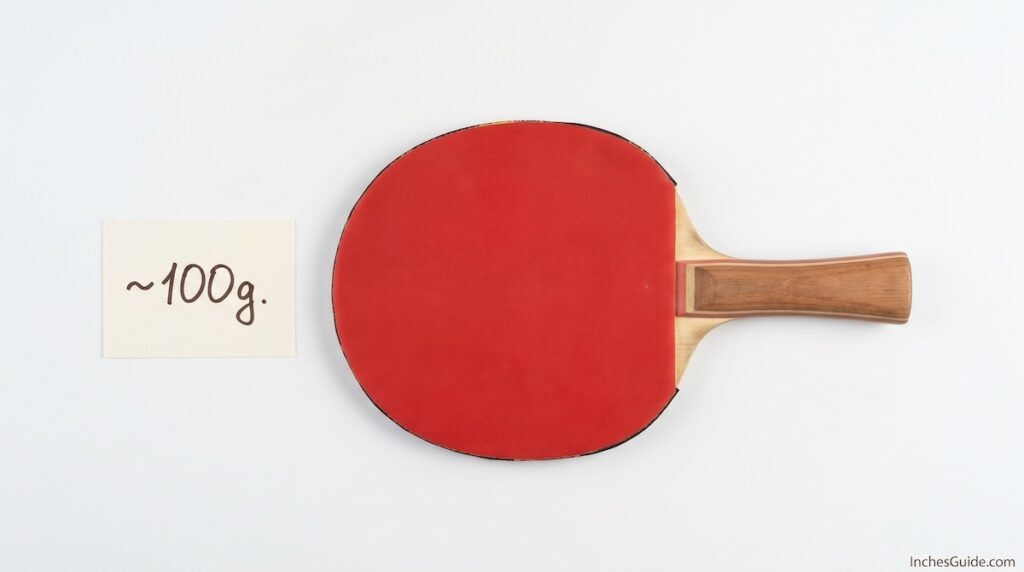
A regulation table tennis paddle for competitive play typically weighs 80 to 100 grams. Most recreational paddles fall between 90 and 110 grams. The 100-gram zone is considered the sweet spot by most intermediate players.
The blade alone, without the rubber sheets, weighs 70 to 85 grams. The rubber layers add the remaining weight. Paddle manufacturers are precise about this because weight affects both spin generation and reaction time.
Pick up a standard paddle and it’s a satisfying weight reference — light enough to hold without effort, substantial enough to feel clearly present. That combination is exactly what 100 grams is like.
11. A Medium Lemon
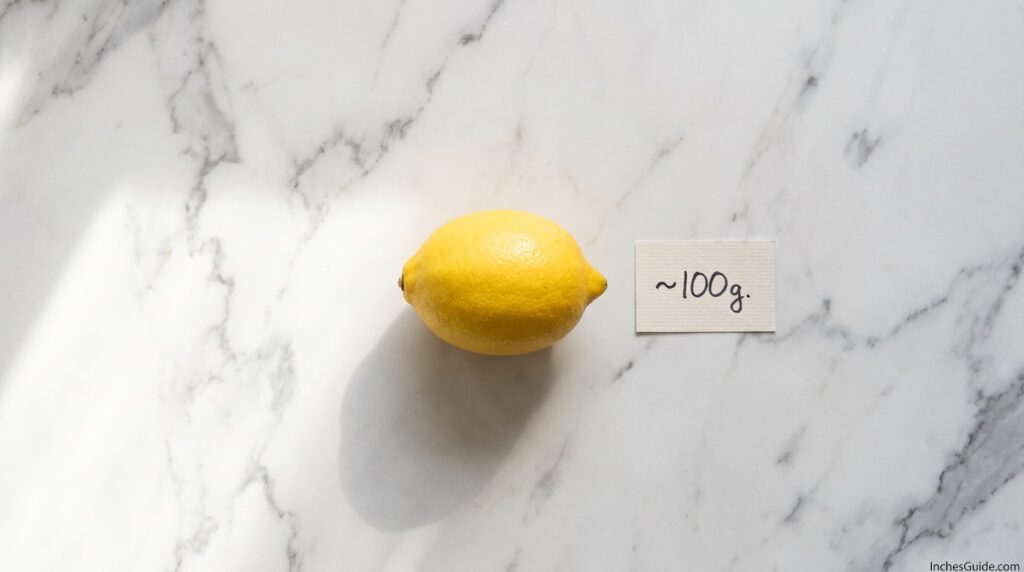
A medium lemon weighs 85 to 115 grams, with most averaging close to 100 grams. Unlike tropical fruits, a lemon’s density doesn’t shift dramatically with ripeness, which makes size a reliable weight predictor.
The thick skin accounts for about 30 to 35% of the total weight. That’s why a lemon feels heavier per size than something like a plum, where the skin is thin.
For kitchen estimates, a medium lemon is particularly handy because it holds consistent weight throughout the week. Bananas lose moisture as they ripen and get lighter. A lemon sitting on your counter for five days weighs almost exactly the same as when you bought it.
12. A Raw Boneless Chicken Thigh
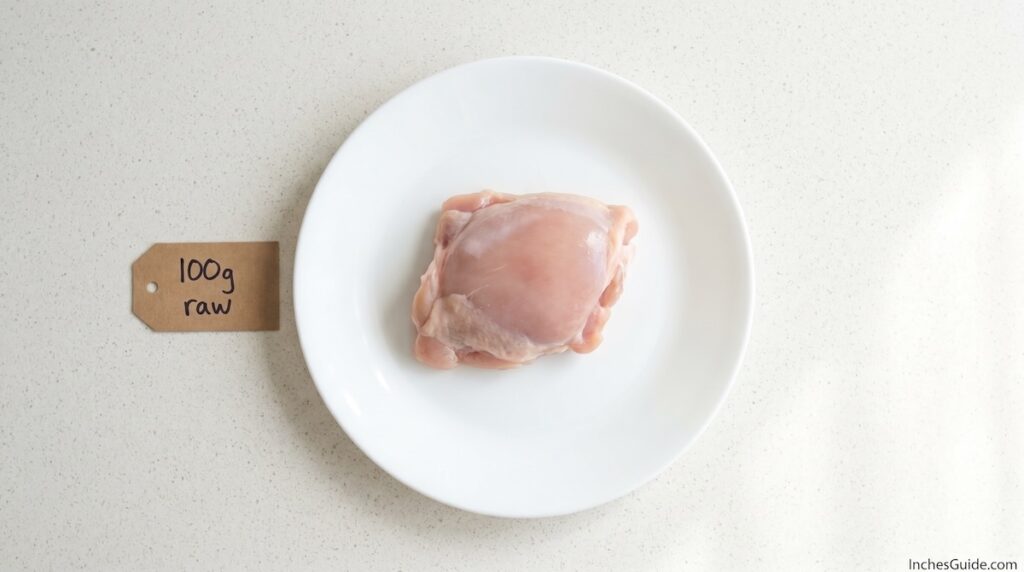
A single boneless, skinless chicken thigh typically weighs 100 to 130 grams raw. Most nutrition databases default to 100 grams as the standard serving size because an average-sized thigh lands right there.
This matters if you track protein. A 100-gram raw chicken thigh delivers roughly 19 to 21 grams of protein, 5 to 7 grams of fat, and about 150 calories. The numbers are consistent enough that 100g became the default reference weight across nutrition science.
After cooking, the same thigh loses roughly 25% of its weight to moisture. So 100 grams of food raw becomes about 75 grams cooked. That’s why raw and cooked weights are tracked separately in most food logging apps.
How to Estimate 100 Grams Without a Scale
The most reliable method is 20 US nickels. If you have them, stack 20 nickels. That’s exactly 100 grams, no guessing involved.
For water, pour exactly 100ml into any measuring cup or container marked in milliliters. One hundred milliliters of water weighs exactly 100 grams. That’s the simplest no-tool verification available.
For dry kitchen ingredients, half a cup of uncooked white rice gets you to roughly 95 grams. Close enough for most non-baking purposes.
And if you’re just looking for a quick hand reference, a small onion or medium lemon from your produce drawer sits right in the 85 to 100 gram range. Both are consistent, and both are usually within reach.
FAQs
How much is 100 grams in ounces?
100 grams equals 3.53 ounces. To convert any gram amount to ounces yourself, divide the gram number by 28.35.
Is 100 grams the same as half a cup?
It depends on the ingredient. Half a cup of granulated sugar weighs about 100 grams. But half a cup of flour weighs closer to 60 to 65 grams because flour is much less dense. Volume and weight are not the same thing.
How many tablespoons is 100 grams?
For water, about 6.76 tablespoons. For honey, closer to 4.5 tablespoons. Each ingredient has its own density, so the tablespoon count changes depending on what you’re measuring.
What does 100 grams of meat look like?
A single average boneless chicken thigh is roughly 100 grams raw and roughly the surface area of a deck of cards. For ground beef or steak, 100 grams is about 3.5 ounces and fits comfortably in a cupped palm.
One Last Reference
100 grams is one of those measurements that comes up constantly once you start noticing it. Nutrition labels, postal weight limits, supplement doses, baking conversions — it’s everywhere.
The best mental references to carry are the medium lemon and the small onion. Both live in most kitchens, both consistently hit the 100-gram mark, and neither requires a scale or a coin roll to use as a quick check.
After a few weeks of referencing these, the weight just starts to feel familiar. You’ll stop needing the list.