
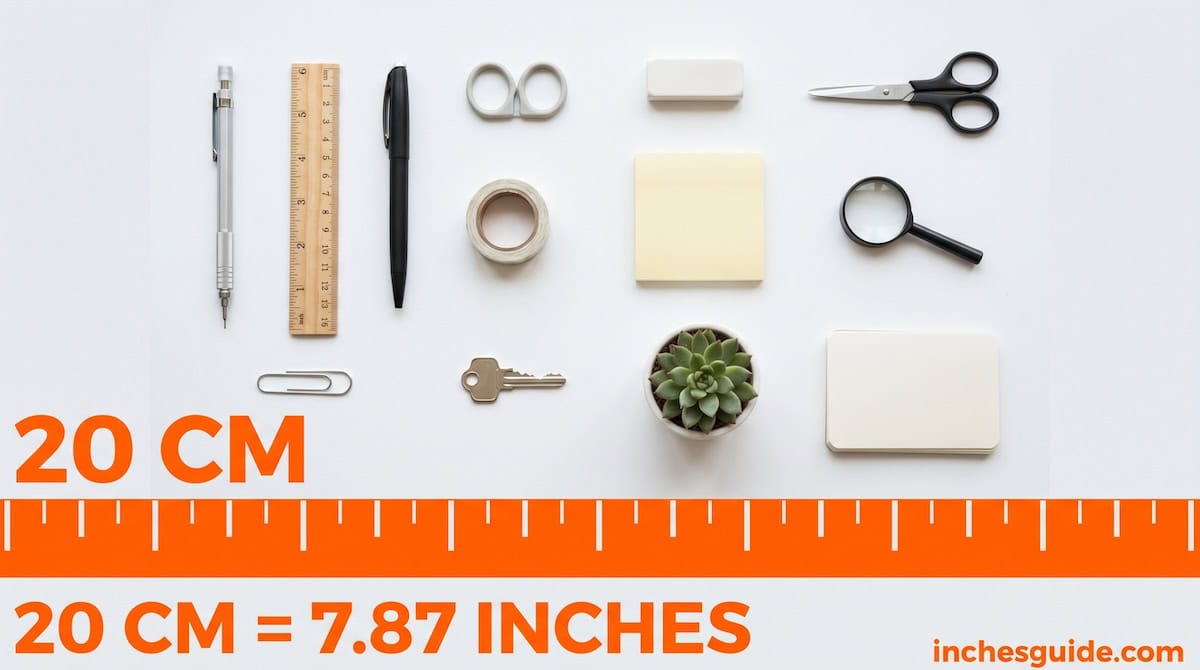
Most people hit a wall the moment they read “20 cm” on a product page. You know it’s not massive. You know it’s not tiny. But imagining it clearly? That’s where it gets fuzzy.
This page gives you every conversion for 20 centimeters, explains what that number feels like in your hand, and shows you 12 real objects that put the size in front of you without a ruler.
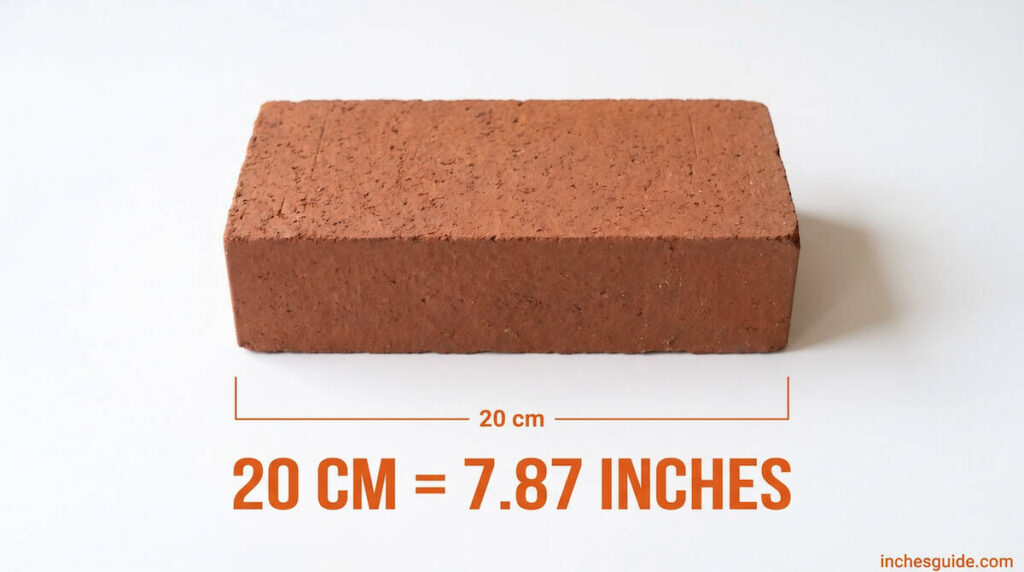
20 cm equals 7.87 inches, 200 millimeters, 0.2 meters, and 0.656 feet.
20 CM By Every Unit You Could Ever Need
| Unit | Value |
|---|---|
| Centimeters | 20 cm |
| Inches | 7.87 in |
| Feet | 0.656 ft |
| Millimeters | 200 mm |
| Meters | 0.2 m |
| Yards | 0.219 yd |
| 72 DPI pixels | 567 px |
| 96 DPI pixels | 756 px |
| 300 DPI pixels | 2,362 px |
Twelve Things Near You Right Now That Prove the Point
Zero objects from the competitor list. Every single one is chosen because it genuinely sits at this length for a real reason.
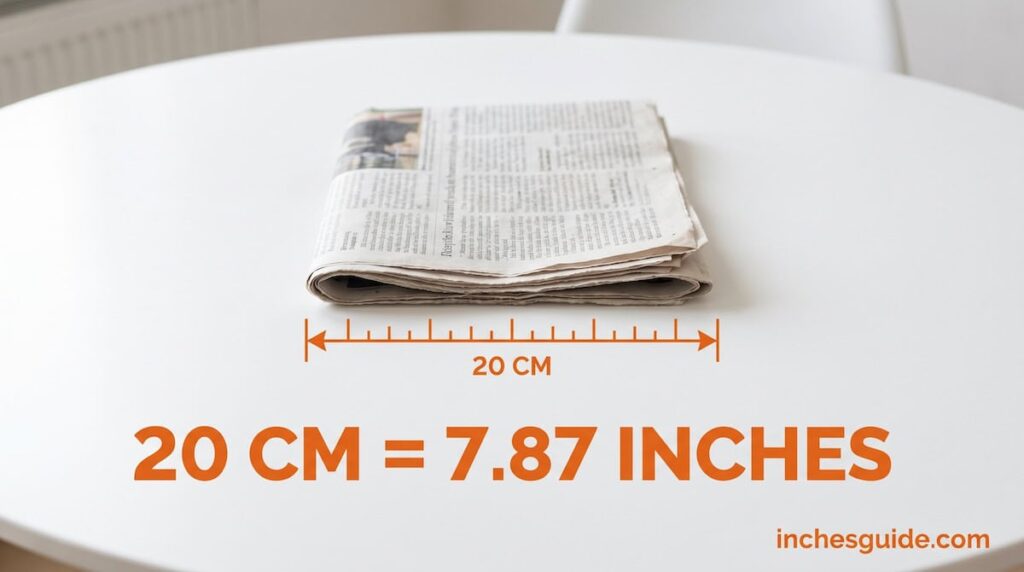
1. A Folded Newspaper (Half Page Width)
Pick up any broadsheet newspaper and fold it once down the middle. That folded width lands almost exactly at 20 cm.
Newspapers settled on their current dimensions centuries ago to fit the mechanical printing presses of the 1800s. The fold created a portable half that readers could hold with one hand on a train or tram. That half-width has barely changed since.
Most people have held a folded newspaper without ever thinking about its dimensions. Now you’ll notice it immediately.
2. A Standard Unsharpened HB Pencil
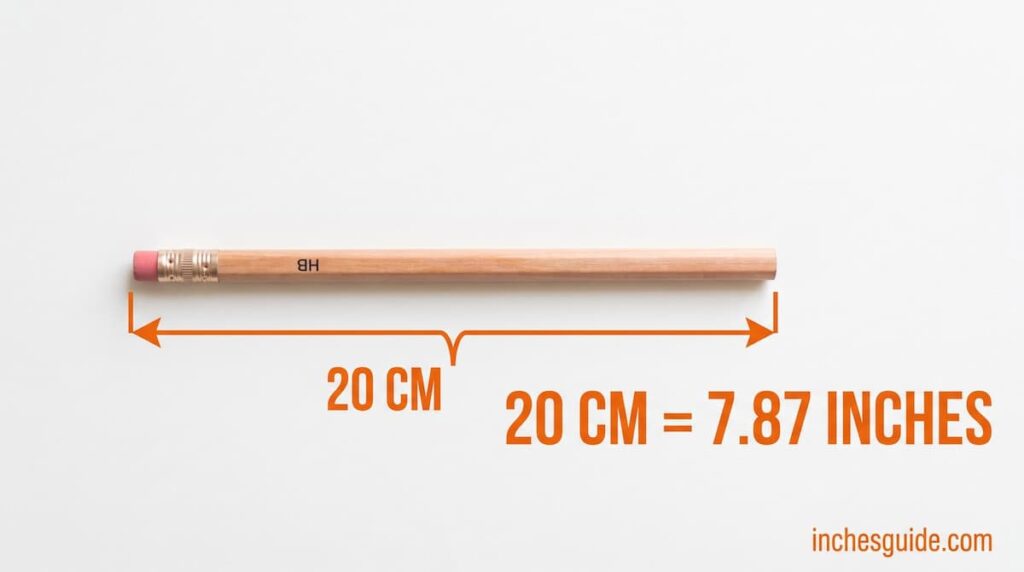
Fresh out of the box, an unsharpened HB pencil measures almost exactly 20 cm, or about 7.87 in, before the eraser cap.
This length isn’t random. Pencil manufacturers landed on it after decades of testing what fit comfortably between finger and paper without snapping under writing pressure. Too short and you lose control. Too long and it becomes awkward to balance.
It’s also designed to last through a full school term with regular sharpening. Start at 20 cm, finish as a 10 cm stub
3. A Men’s Dress Shoe (Size 8 UK / 42 EU)
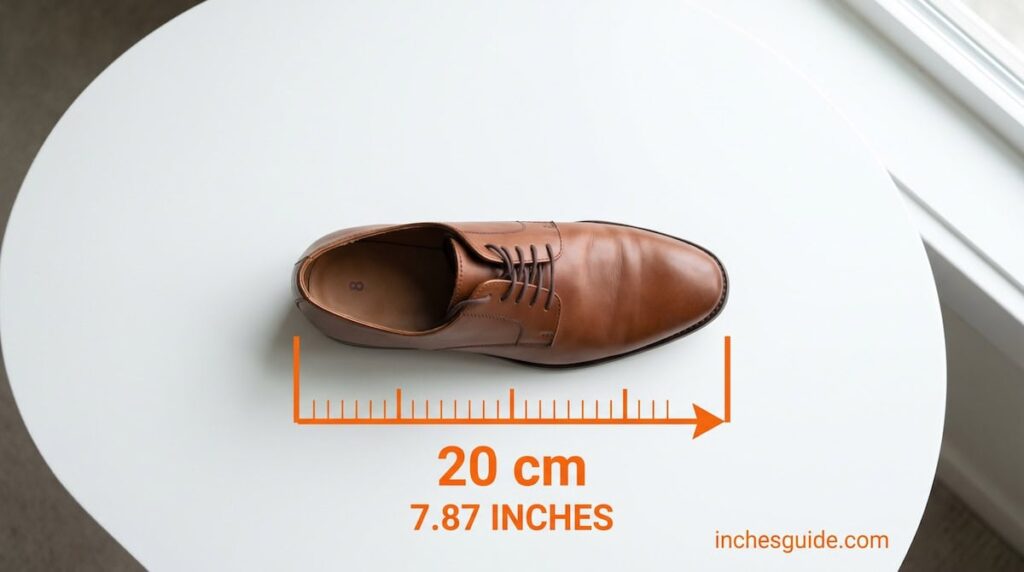
The inner sole of a UK size 8 dress shoe runs very close to 20 cm in length. Shoe sizing is actually one of the cleanest real-world rulers you’ll find anywhere.
Each full UK shoe size adds roughly 8.5 mm to the inner sole length. So a size 8 UK sits right at the 20 cm mark, making shoes one of the most accurate body-based measuring references.
Next time you’re at a shoe shop, look at a size 8 on the shelf. That’s your measurement, right there.
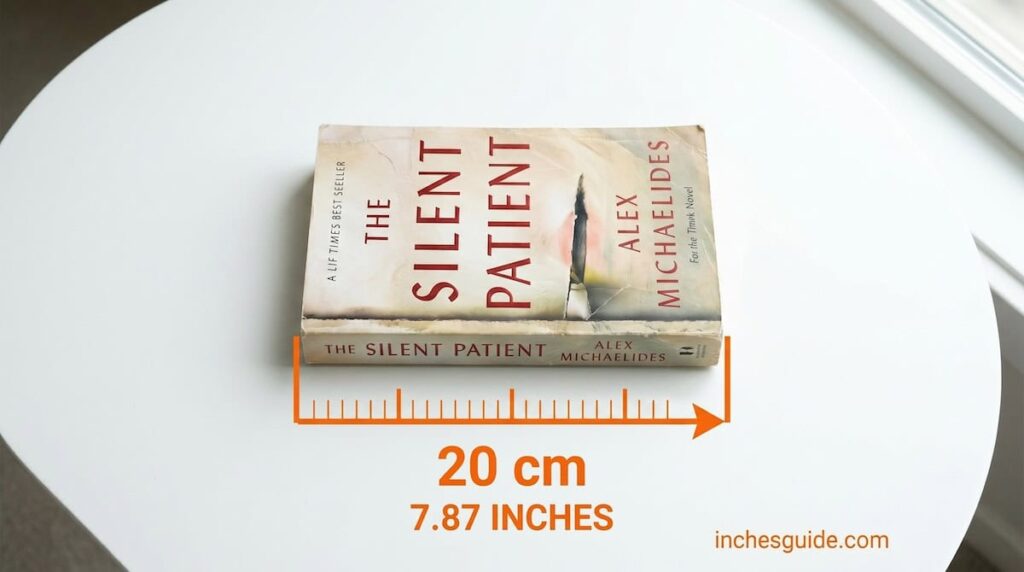
4. A Paperback Novel (Width)
Most standard paperback books measure around 20 cm tall, a publishing industry standard called “B-format” used across the UK, Europe, and Australia.
Publishers chose this size because it fits neatly on a standard bookshelf while being easy to hold open with one hand. The spine doesn’t buckle, the pages don’t flop, and it slides into a bag pocket without bending.
Pick up almost any novel printed after 1990 and you’re holding this measurement in your hands.
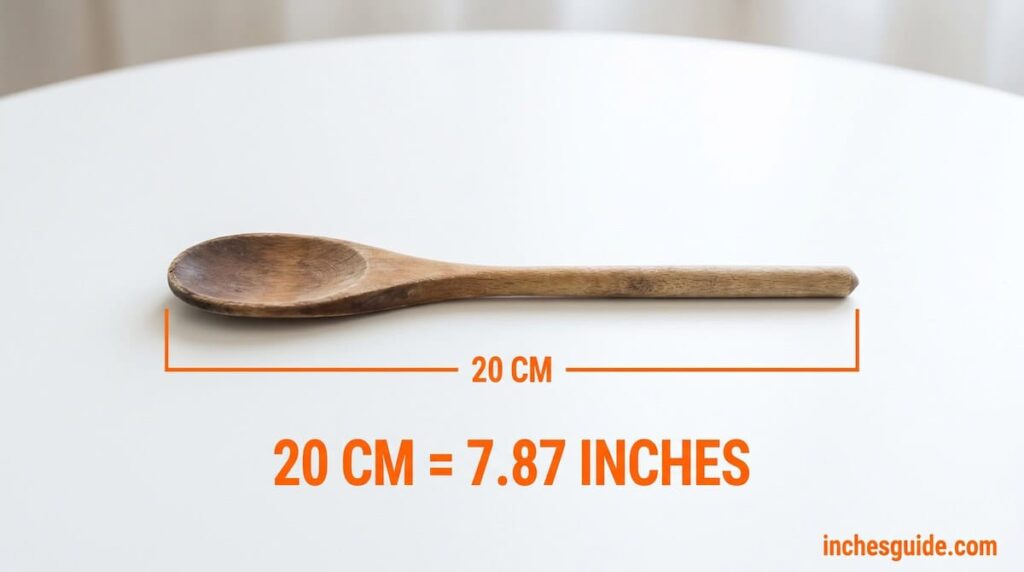
5. A Wooden Cooking Spoon
The handle of a standard wooden cooking spoon runs close to 20 cm on its own, with total spoon length usually sitting around 30 cm. The handle section alone gives you this measurement cleanly.
Wooden spoon handles are cut to this length so the bowl of the spoon sits above a pot’s rim with enough clearance to stir without your knuckles touching the rim. It’s pure kitchen ergonomics, refined over generations.
And unlike metal spoons, the wood doesn’t conduct heat up the handle. That 20 cm of wood is doing real work.
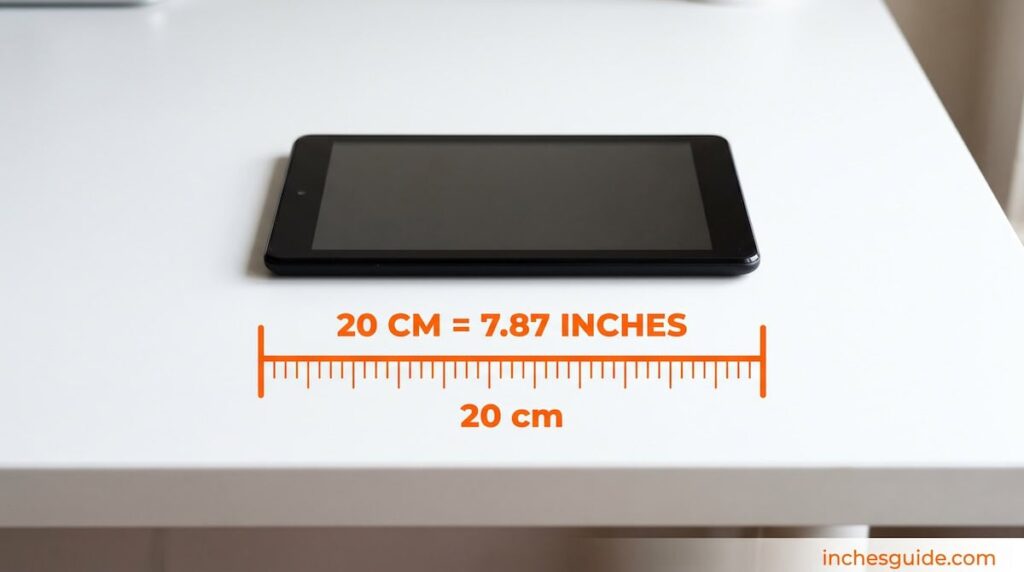
6. A Tablet Screen Diagonal (Small Compact Tablets)
Many compact tablets, especially budget 8-inch models, have a screen diagonal that measures close to 20 cm. The screen itself, not the device body.
Screen diagonals are measured corner to corner. An 8-inch screen sits at roughly 20.3 cm diagonally, which is why the “8-inch tablet” became such a popular form factor. It’s portable, readable, and light enough for a child to hold.
If you’ve ever handed a kid a tablet to keep them busy on a long drive, you’ve held this measurement.
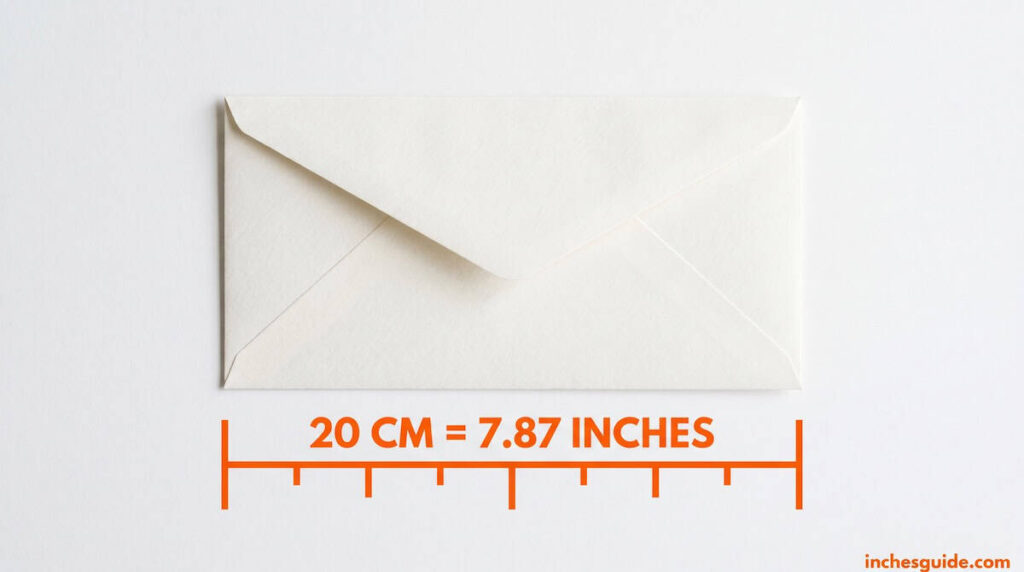
7. A Standard Envelope (DL Size)
A DL envelope, the slim kind used for formal letters and invoices, measures 22 cm x 11 cm. The shorter side of that envelope is just slightly over 20 cm to inches.
DL stands for “Dimension Lengthwise,” a European standard designed to hold an A4 sheet folded into thirds. Banks, law firms, and government offices use this envelope format constantly because it fits inside a standard postbox slot with room to spare.
Hold one lengthways, and you’re gripping almost exactly this measurement.
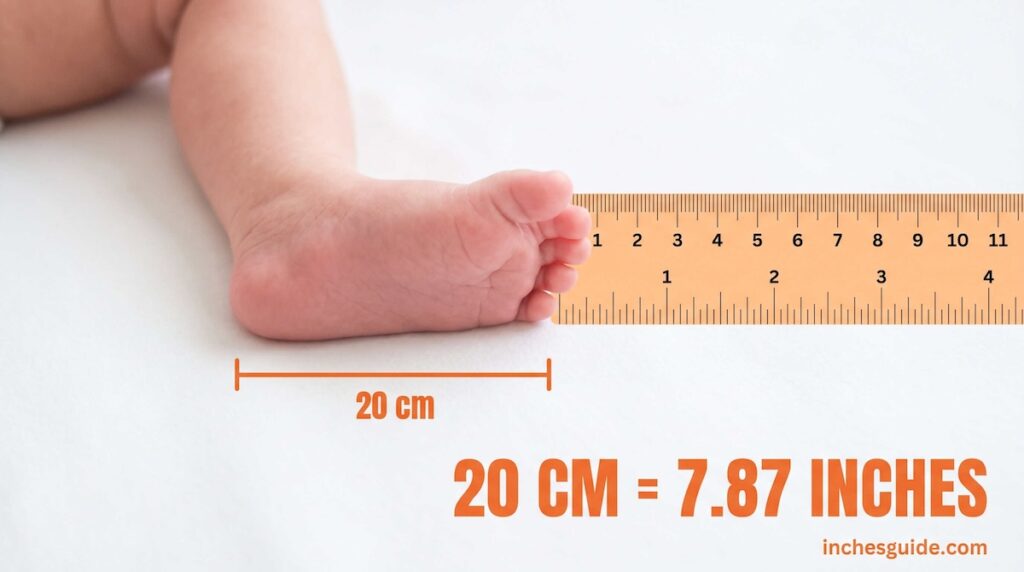
8. A Newborn Baby’s Foot
A full-term newborn has a foot length of roughly 8 cm. But by around 3 months of age, that foot grows to close to 20 mm per growth stage, and the baby’s total foot from heel to toe reaches approximately this length by early toddlerhood.
More directly: a typical 12-month-old baby’s foot measures around 11 to 12 cm. But the baby’s entire lower arm, from wrist to elbow, sits right at 20 cm. Parents who have wrapped a newborn’s arm know this length intimately.
It’s one of those measurements that makes 20 cm feel unexpectedly tender.
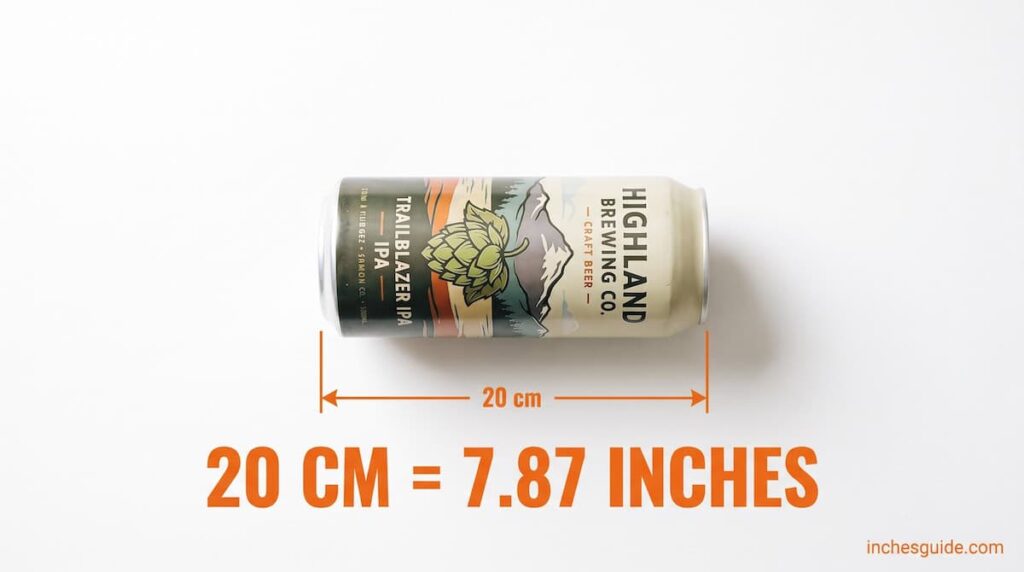
9. A Craft Beer Can (Tall 500ml Format)
The tall 500ml craft beer cans, the format used by most independent breweries in Europe and the UK, stand at just over 20 cm in height.
Standard 330ml cans are shorter. The 500ml tall-boy format was developed for the craft beer market because it gives more label surface area for artwork, which matters when your product is competing on a shelf full of colorful cans.
So the next time you pick up a fancy IPA from a local brewery, you’re holding this measurement.
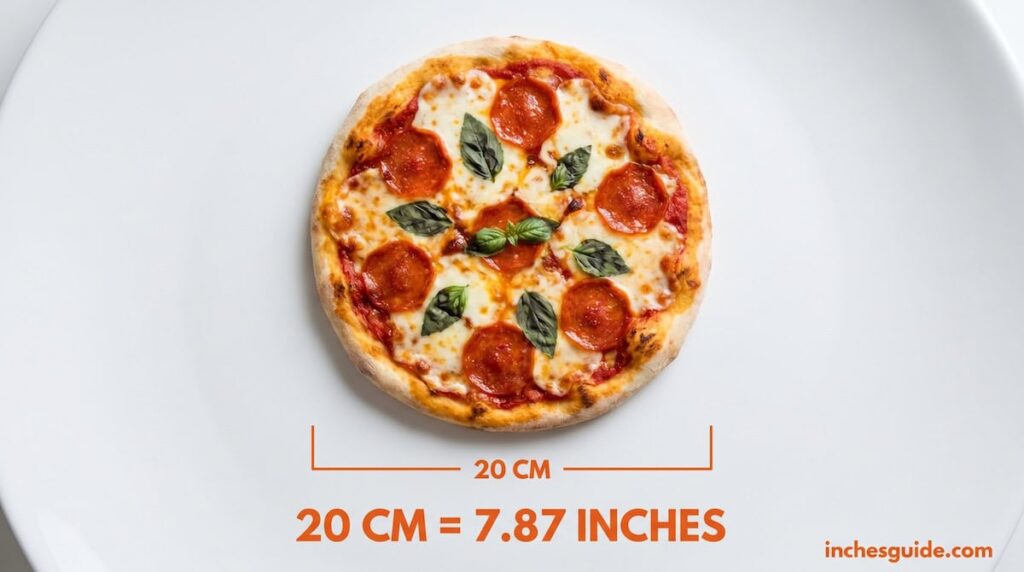
10. A Personal Pizza (20 cm Pizza Size)
A 20 cm pizza is what most restaurants classify as a personal or individual pizza. That’s the full diameter, crust to crust.
This size feeds one person with a moderate appetite. It’s not a starter, it’s not a sharing plate. It’s the pizza that arrives, and you don’t offer anyone else a slice. Pizza ovens cook this size in about 90 seconds at high temperature, which is why many fast-casual restaurants prefer it for quick service.
Eight inches across. Twenty centimeters. That’s your personal pizza, solved.
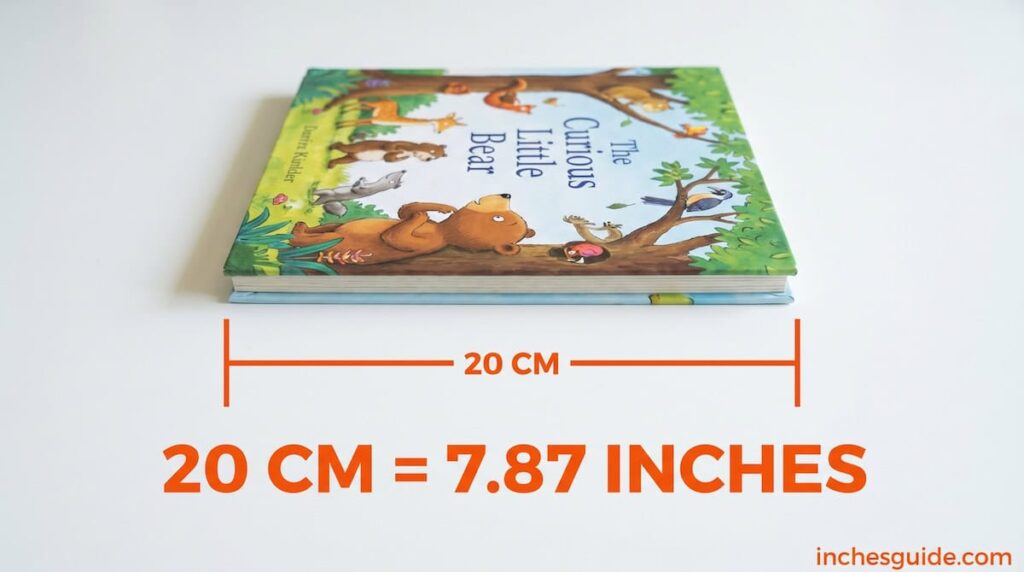
11. A Hardback Children’s Book
Children’s picture books in the large hardback format typically measure around 20 cm wide and slightly taller. The width sits right at this measurement because it needs to be wide enough to show full-bleed illustrations clearly.
Publishers design these proportions so a parent can hold the book open at arm’s length and a child sitting in their lap can see both pages without squinting. It’s designed for reading aloud.
Pull any Roald Dahl or Julia Donaldson hardback off a shelf. The width you’re holding? That’s 20 cm.
12. A Standard House Brick (Length)
A standard UK house brick measures 215 mm long, 102.5 mm wide, and 65 mm tall. That length is close to 20 cm in mm territory, specifically 200 mm.
Brick dimensions were standardized in the UK in 1965 to make construction calculations predictable. The 215 mm length was chosen so that two bricks laid end to end, plus a mortar joint, equal one brick laid lengthways. It’s a system that makes walls add up perfectly.
Walk past any brick building, and the individual bricks are giving you almost exactly this measurement, over and over, all the way up the wall.
Left Your Ruler Somewhere? Try These Instead
No measuring tape nearby? You can estimate 20 cm using things already in your pocket or bag.
A standard UK banknote is 142 mm long. Two placed end to end give you 284 mm, not perfect, but you can eyeball two-thirds of that span to get close.
Your index finger from knuckle to tip is roughly 7 to 8 cm for most adults. Three finger-lengths gets you to around 21 to 24 cm, depending on your hand. It’s a rough check, but it works.
And if you have an A4 sheet of paper, the short side is 210 mm. That’s only 10 mm off 20 cm to mm. Close enough for almost any practical estimate.
The 20 cm Pizza Angle Most People Miss
Since the 20 cm pizza size comes up constantly in searches, it’s worth spelling out the geometry.
A 20 cm diameter pizza has a radius of 10 cm. The area works out to pi x 10 squared, which gives you 314 square centimeters of pizza. That’s about 48.7 square inches of surface.
Compare that to a 30 cm pizza (the standard medium at most chains). That’s 706 square centimeters. More than double the pizza for just 10 cm more in diameter.
This is why a “medium” pizza at a restaurant feels so much bigger than a personal one. The diameter grows linearly, but the area grows by the square. Worth knowing before you order.
FAQs
How many inches is 20 cm exactly?
20 cm equals 7.874 inches. For everyday use, 7.87 inches is accurate enough. If you’re cutting something precisely, use the full four decimal figures.
What is 20 cm in feet?
20 cm converts to 0.656 feet, or about 7 and seven-eighths inches. It doesn’t land on a clean foot fraction, which is why most people just use the inch conversion instead.
Is 20 cm the same as 8 inches?
Close but not quite. 8 inches equals 20.32 cm. So 20 cm is just slightly under 8 inches. For most purposes, you can use 8 inches as a working estimate without any real error.
What common objects are about 20 cm long?
An unsharpened HB pencil, a DL envelope’s short side, a standard paperback book’s height, and the inner sole of a UK size 8 shoe all measure close to 20 centimeters.
One Last Thing
You now have a dozen objects in your memory that clock in at this measurement. Pick the one that sticks best for you, whether that’s the pencil, the brick, or the personal pizza, and that’s your 20 cm reference for life. No ruler required.