
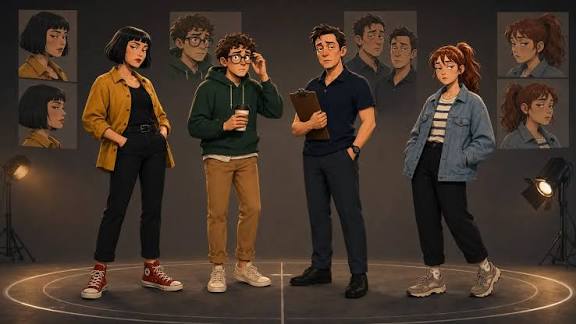
Many projects begin with a format preference. One manager loves the warmth of real people on screen; another pictures playful illustrations. Both instincts make sense, but the strongest choice comes from the message itself. Ask what you need to show, and the answer often points clearly to animation or live action.
When Your Subject Is Invisible
Some ideas have nothing to film. Data flowing through a network, a financial process, the way a medicine works inside the body or a plan for a building that doesn’t exist yet: none of these can be captured by a camera in a satisfying way.
Animation thrives here. It can zoom inside a machine, simplify a complex system into clear shapes or show change over decades in seconds. If your message relies on explaining something abstract, drawing it is often the most direct route to understanding.
When Trust Depends on Faces
Other messages rely on credibility. A testimonial, a recruitment piece or an apology from leadership needs real people because viewers want to see expressions, hear genuine voices and judge sincerity for themselves.
Live action carries that human proof. An illustrated character can be charming, yet it can’t stand in for a customer describing how your service changed their week.
Thinking About Lifespan
Animation can be easier to update. Swapping a line of text, changing a colour or adjusting a scene often happens in the edit rather than requiring a reshoot. That makes it useful for content tied to products or policies that change regularly.
Live footage dates in different ways. Hairstyles, fashion, technology on desks and even staff turnover can make a video feel old sooner than expected. Consider how long you need the piece to stay relevant.
Brand Personality Matters
Some brands suit a hand-drawn, friendly look. Others need the polish of cinematic footage. Think about how your audience already sees you. A playful animation from a serious legal firm might confuse viewers, while a stiff corporate shoot could feel wrong for a youthful lifestyle brand.
Mixing Both
You don’t always have to choose. Many effective videos combine filmed interviews with animated graphics, diagrams or titles. A presenter can explain an idea while illustrations appear beside them, giving viewers both the human connection and the visual clarity.
This hybrid approach works well for explainers, training and annual reports, where some content benefits from a face and some from a diagram.
Getting Expert Input
Before committing, talk through your message with people who work in both formats. Teams offering professional animation services can show you how an idea might look as motion graphics or character animation, while a film crew can suggest how the same story would play with real people. Comparing those perspectives often reveals which approach suits your goal.
Let the Message Decide
Start with what you need viewers to understand or feel, and work backwards. If the subject can’t be seen, draw it. If it depends on trust, film it. If it needs both, blend them. Your format will follow naturally once the purpose is clear, and the finished video will feel built for its job.