
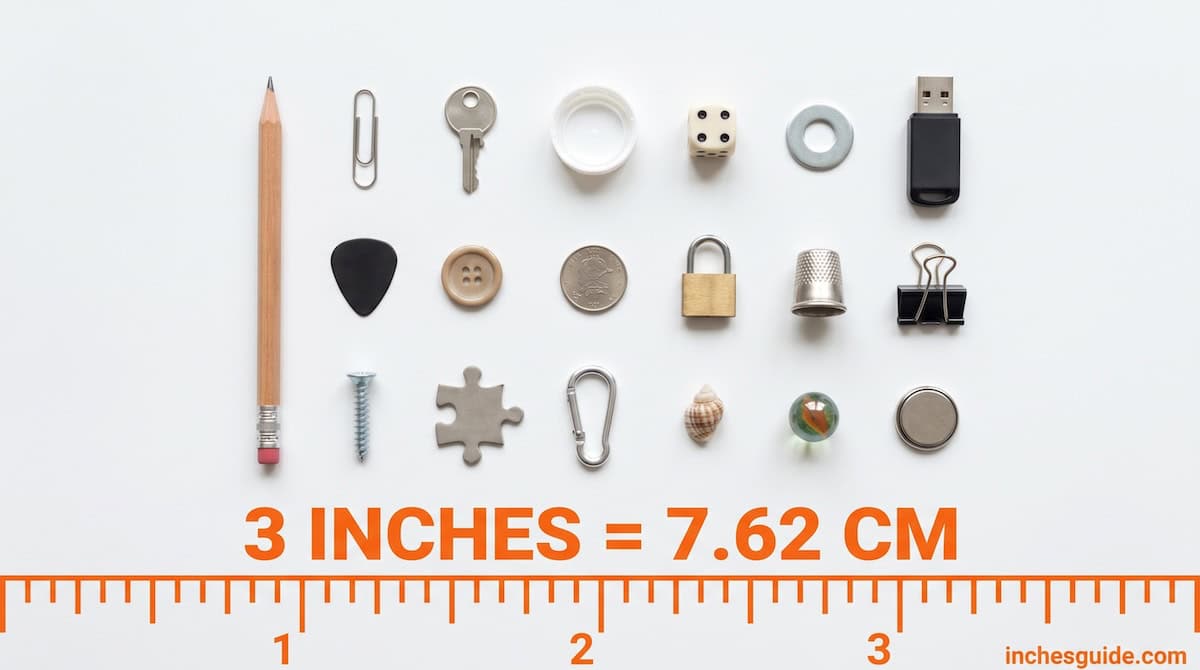
Most people know 3 inches is “small,” but that’s about as far as the mental picture goes. You stand there trying to figure out if something will fit, and suddenly a simple measurement feels oddly confusing. It happens more than you’d think.
This page gives you the full picture. You’ll find every conversion, a fast reference table, and 19 real objects that are genuinely 3 inches long, checked, verified, and explained so they actually stick in your memory.
3 inches equals 7.62 centimeters, 76.2 millimeters, and exactly one-quarter of a foot, a compact measurement that shows up in dozens of everyday objects most people handle without ever connecting them to a number.
Quick Conversion Table: 3 Inches in Every Unit
| Unit | 3 Inches Equals |
|---|---|
| Centimeters | 7.62 cm |
| Millimeters | 76.2 mm |
| Feet | 0.25 ft (¼ foot) |
| Yards | 0.0833 yd |
| Meters | 0.0762 m |
| Pixels (72 DPI) | 216 px |
| Pixels (96 DPI) | 288 px |
| Pixels (300 DPI) | 900 px |
One thing worth knowing: 3 inches is exactly one quarter of a foot. That relationship makes it surprisingly easy to estimate once it clicks. Four of these back to back, and you’ve got a standard ruler.
3 Inches on a Ruler: What It Actually Looks Like
On a standard 12-inch ruler, 3 inches lands right at the first major quarter mark. It’s short, noticeably shorter than a pen, shorter than most phones, shorter than your palm. But it’s also longer than you’d expect if you just hear the number said out loud.
That gap between “sounds small” and “looks bigger than expected” is exactly why people keep searching for real-world comparisons.
19 Everyday Things That Are 3 Inches Long
These aren’t approximations or rough guesses. Each one has been researched and verified. Some will surprise you. All of them are useful mental anchors.
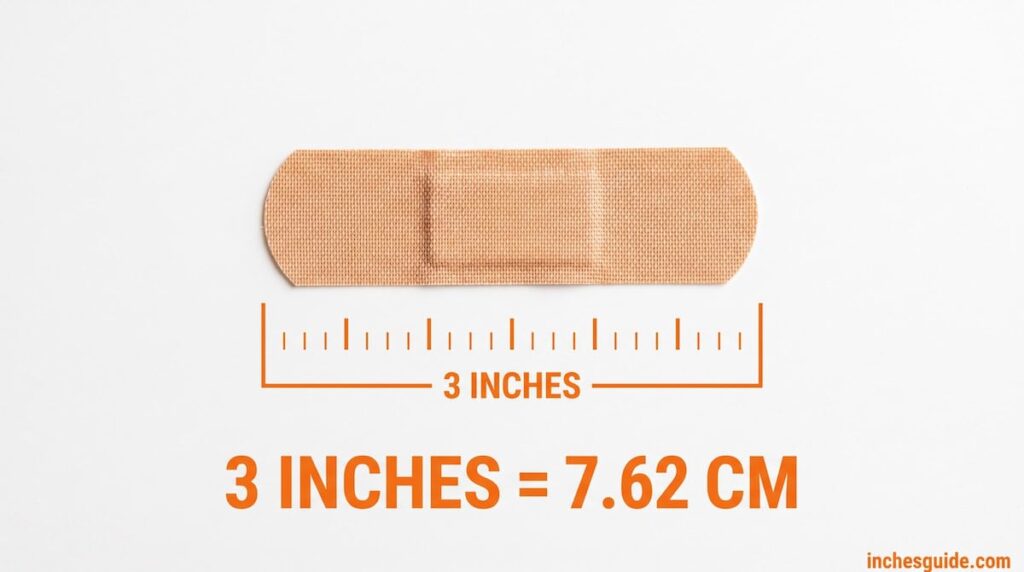
1. A Standard Band-Aid Strip
The classic adhesive bandage in every first aid kit measures exactly 3 inches long by 3/4 inch wide. Johnson and Johnson standardized this size because it covers the most common wound areas on fingers, knuckles, and palms without wasting material on either end.
Next time you tear one open, you’re holding a perfect 3-inch reference. The length was engineered to give enough adhesive border on both sides of the wound pad while still bending naturally around curved fingers.
It’s one of the cleanest references you’ll find. Consistent across every brand, every pharmacy, and every first aid kit.
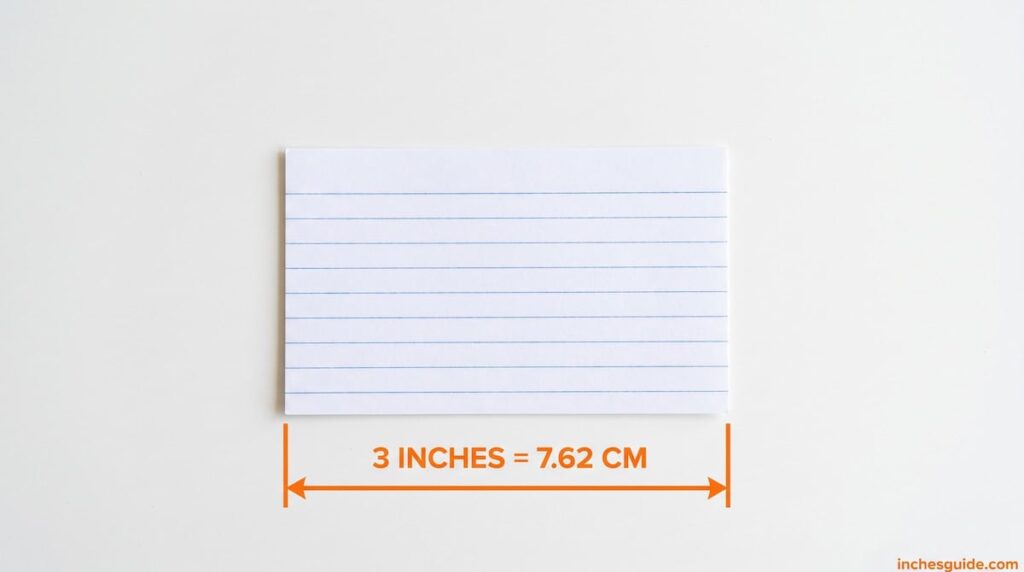
2. The Short Side of a 3×5 Index Card
The most popular index card size in North America measures 3 inches by 5 inches. The short side is exactly 3 inches, which is part of why the card feels so natural to hold in one hand.
Melvil Dewey helped popularize this size in the late 1800s. He chose it because it balanced writing space with compact portability. That decision has gone unchanged for over a century.
Lay one flat and use the short edge as a measuring guide. It’s stiff enough to hold its shape and precise enough to rely on anytime.
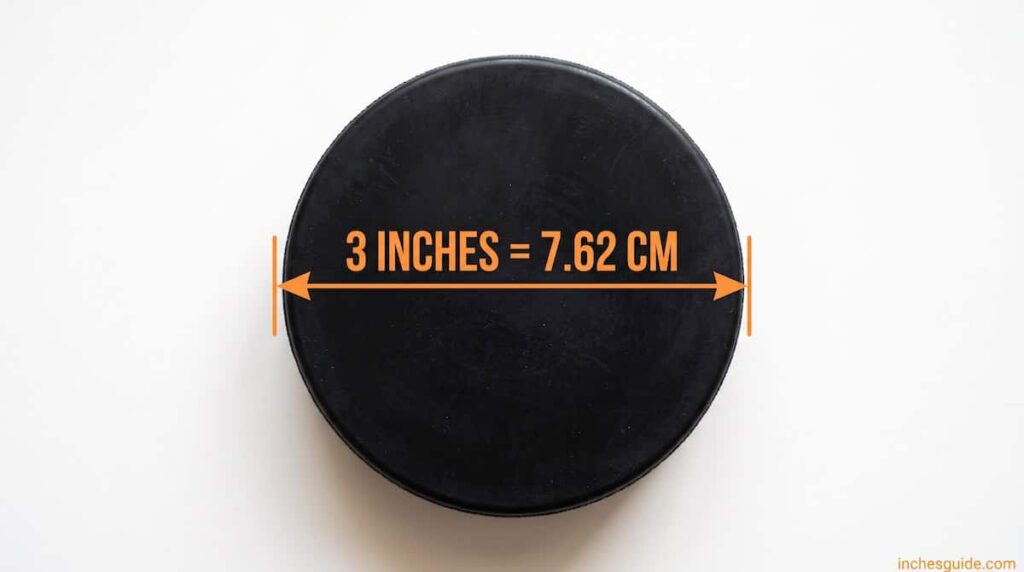
3. An Official NHL Hockey Puck
Every regulation NHL hockey puck measures exactly 3 inches in diameter. That’s written directly into the official rulebook with tight manufacturing tolerances. The puck also sits 1 inch thick and weighs between 5.5 and 6 ounces.
Also, Read This: How Long Is 5 Inches? 13 Everyday Examples
Pucks get frozen before each game to reduce bounce on the ice surface. The 3-inch diameter was standardized to balance broadcast visibility, stick-handling control, and aerodynamic consistency at high shot speeds.
Pick one up and you’re holding a perfectly round 3-inch disc. It’s one of the most precisely manufactured everyday sports objects out there.
4. A Standard 3×3 Post-it Note
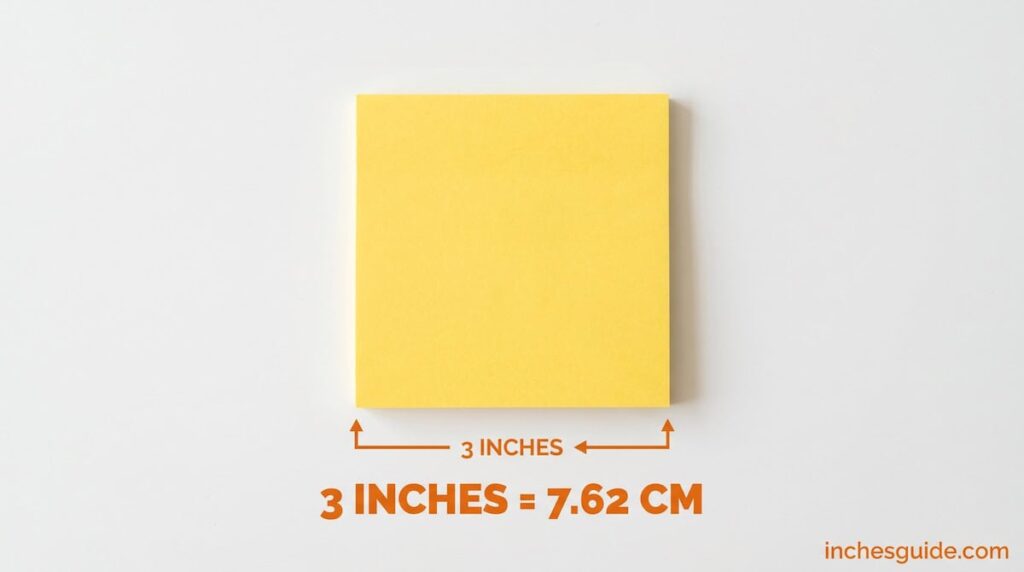
The original Post-it Note from 3M measures exactly 3 inches on every single side. Art Fry and Spencer Silver chose this dimension when they launched it nationally in 1980. Big enough for a short message, small enough to stick anywhere without blocking what’s underneath.
Pick up any standard yellow pad from any desk. Either edge you measure gives you exactly 3 inches. And unlike most objects, this stays consistent across every brand that makes sticky notes.
It’s honestly one of the most useful references out there because it’s flat, square, and sitting on most desks already.
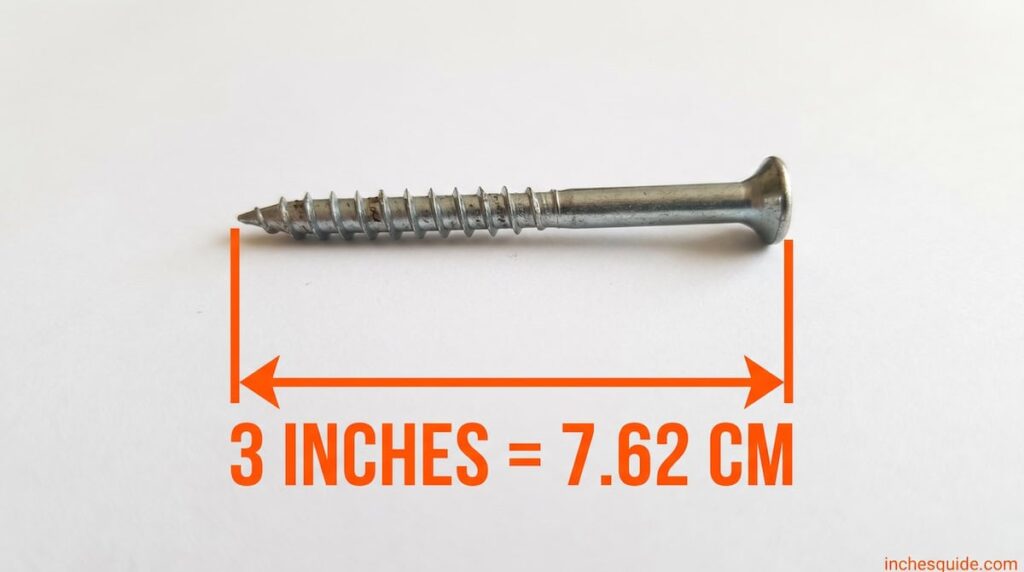
5. A Standard 3-Inch Wood Screw
Hardware stores label screws in whole-inch increments, and the 3-inch wood screw is one of the most purchased lengths in American construction. The measurement runs from the tip to the underside of the head, which is the full working length that goes into the wood.
A 3-inch screw passes through a standard 2×4 stud and bites solidly into the lumber behind it. Contractors buy these by the pound. If you’ve ever done any home project, one of these was almost certainly in your hand at some point.
The length is stamped right on the box. No guessing required.
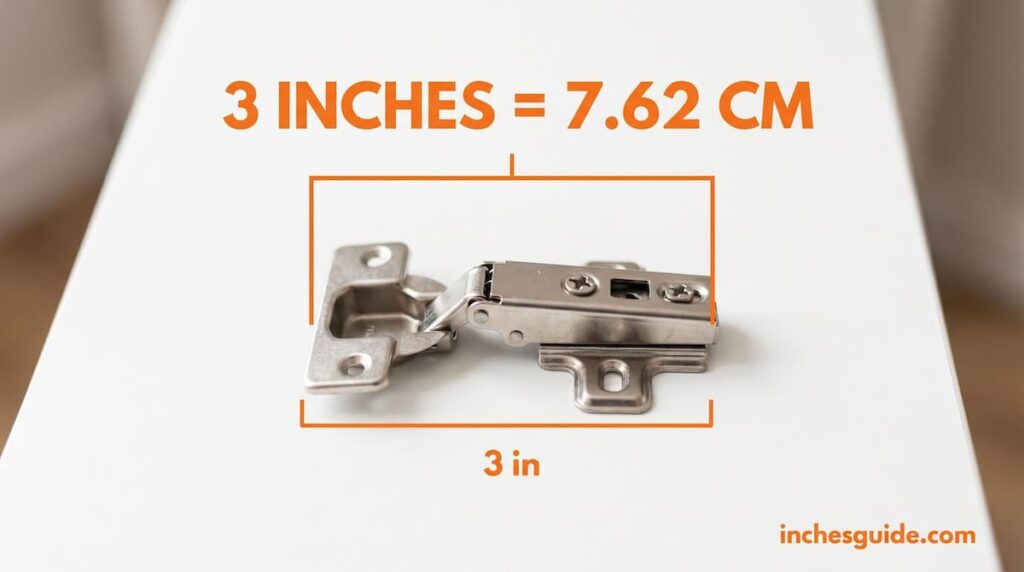
6. A Small Residential Cabinet Hinge
Small residential cabinet hinges, the ones on kitchen cabinet doors and bathroom vanity doors, are manufactured as a 3-inch by 3-inch square when fully open. Each leaf measures exactly 3 inches tall and 3 inches wide when laid flat on a surface.
This size is so standard in American cabinetry that most manufacturers design door thicknesses specifically around it. Open any kitchen cabinet and look at the hinge. That measurement is stamped directly on the leaf in most products.
It’s a 3-inch reference installed in virtually every American home. And it’s always right there on the door.
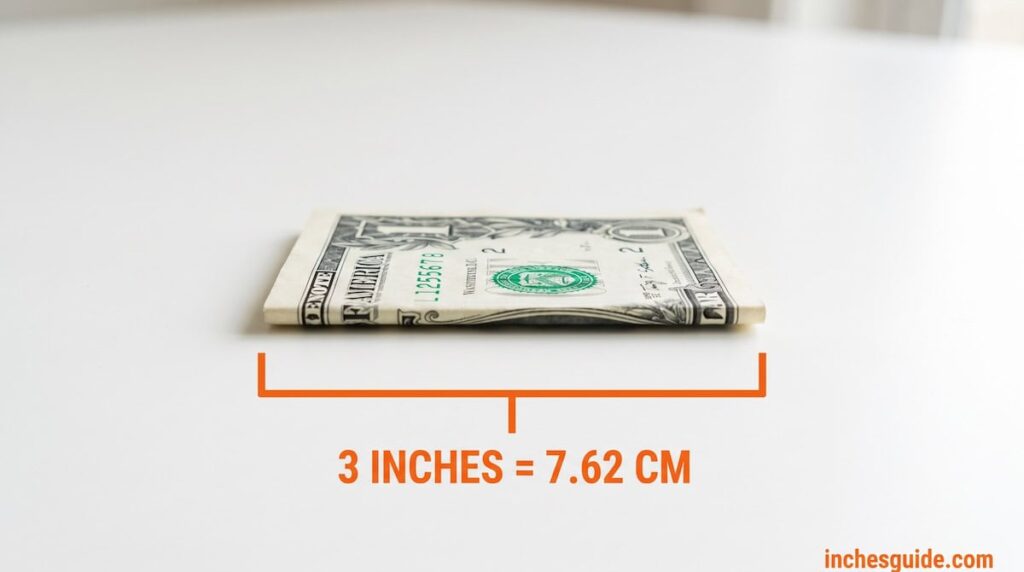
7. A Folded US Dollar Bill
A US dollar bill measures 6.14 inches long when flat. Fold it neatly in half lengthwise and you get approximately 3.07 inches, which is close enough to 3 inches for any practical estimate. The tiny extra is barely visible.
US currency dimensions haven’t changed since 1928. That makes the folded bill one of the most reliable and universally available quick references you’ll ever find. Most people are carrying one right now.
And the best part is it works anywhere, anytime, with zero extra tools needed.
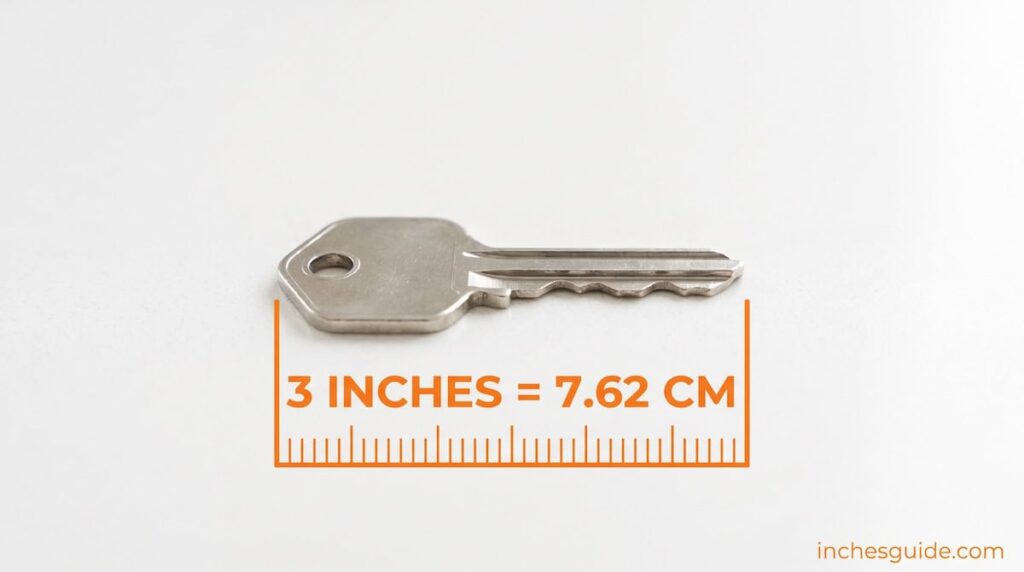
8. A Standard House Key
The average American house key measures between 2.9 and 3.1 inches from the bow, which is the round grip end, to the tip of the blade. Key blanks are cut to this length specifically to engage the full pin stack inside a standard residential lock cylinder.
Kwikset, Schlage, and Weiser all produce blanks that land right at the 3-inch mark. Locksmiths call this the blade length, and it’s consistent across virtually all residential keys sold in the country.
Pull your house key out right now. That’s what you’ve been carrying in your pocket every single day.
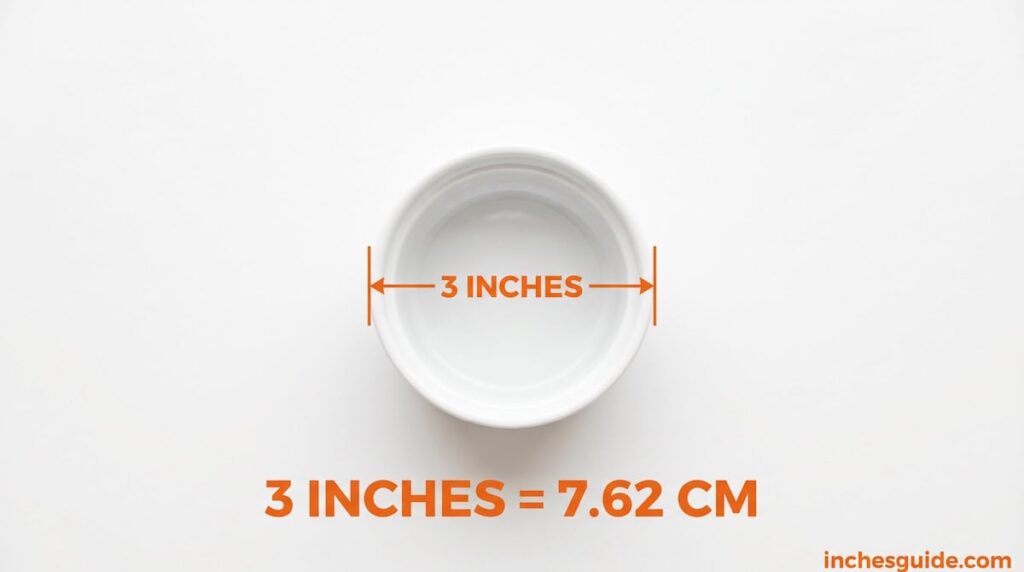
9. A Small Ramekin Diameter
Small ceramic ramekins, the kind used for creme brulee, dipping sauces, and individual desserts, are commonly manufactured at exactly 3 inches in diameter. This size is sold and labeled as a 3-inch ramekin across most kitchen supply brands.
Also, Read This: 2 Inches Explained: CM Conversion and Real Object Comparisons
The 3-inch diameter holds the right portion volume for a single-serve dessert while fitting standard baking trays efficiently. Professional kitchens use these constantly for portion control and presentation.
Check the base of any small ramekin in your kitchen cabinet. There’s a solid chance it’s sitting at exactly this size.
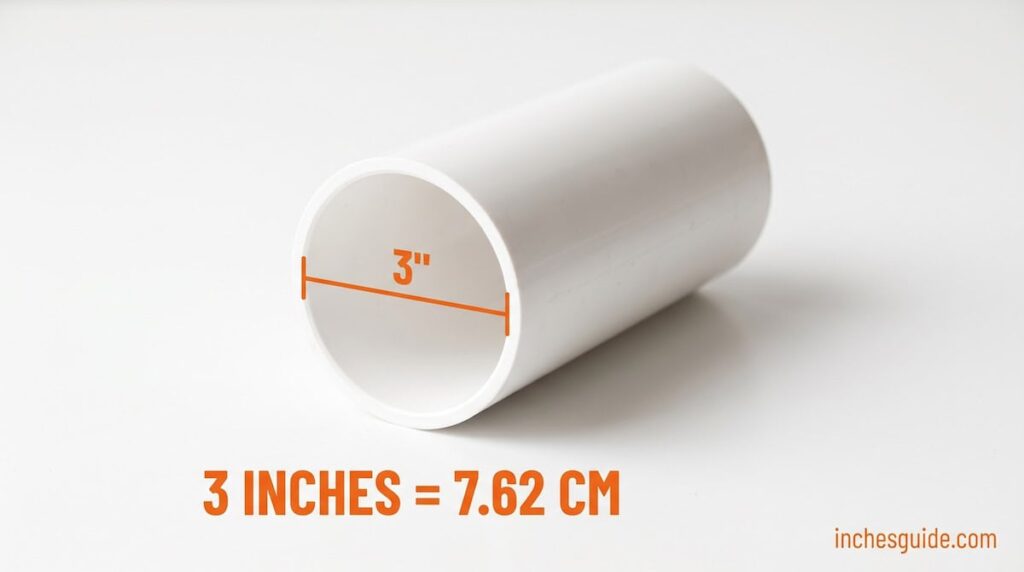
10. A Standard 3-Inch PVC Pipe
Standard PVC pipe used in residential plumbing and drain work is sold and labeled as “3-inch pipe.” The nominal diameter, which is the number on every label, every hardware store shelf, and every plumber’s invoice, is 3 inches.
The actual outer diameter runs slightly larger at about 3.5 inches, but the nominal measurement is what the entire industry uses. When a plumber says 3-inch pipe, that’s the reference everyone understands instantly.
If you’ve ever watched drain work being done in a house, the white or gray pipe running through walls and floors is almost always this labeled size.
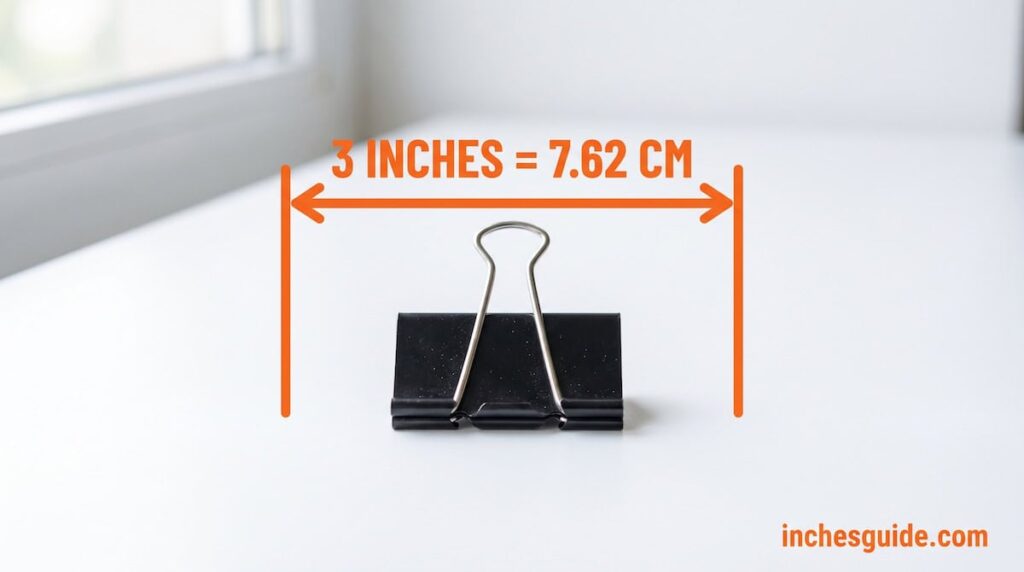
11. An Extra-Large Binder Clip
Extra-large binder clips, the heavy-duty ones used for thick document stacks, measure exactly 3 inches across their full width. This is the measurement from one side of the jaw to the other, and it’s printed right on most product packaging.
This size exists because it grips document bundles up to 250 sheets thick while still fitting comfortably in one hand. Office supply stores stock these specifically for contracts, legal documents, and thick presentation materials.
It’s one of those objects most people have handled without ever thinking about its exact width.
12. A Golf Pencil
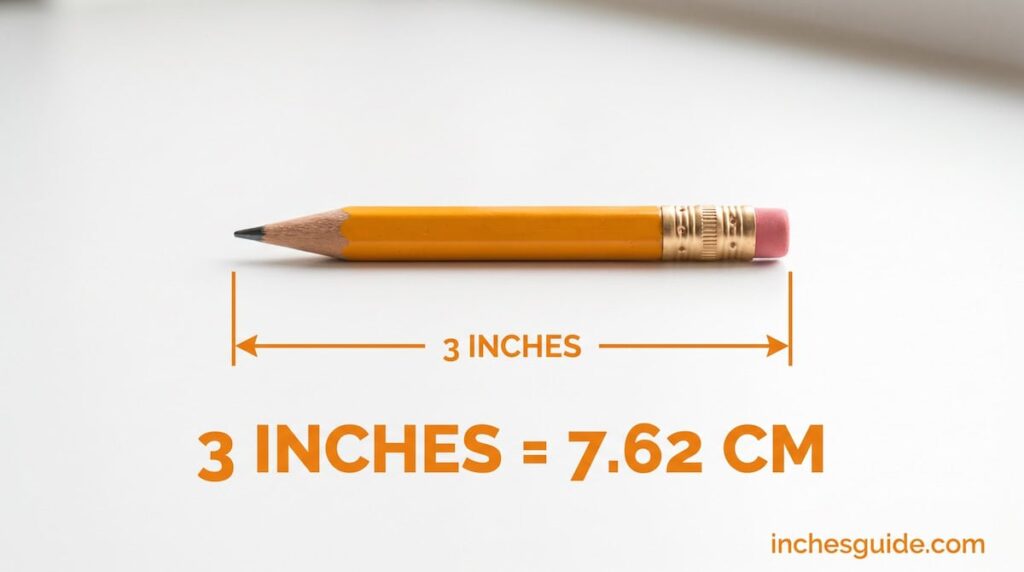
Golf pencils, also called library pencils, are the short pre-sharpened pencils found at golf courses, bowling alleys, and libraries everywhere. They measure between 3 and 3.5 inches long, with most versions sitting very close to 3 inches.
These pencils were designed specifically to be compact enough to tuck into a scorecard holder without falling out. The shortened length is a deliberate design choice, not a cost-cutting move.
A fresh golf pencil from the box gives you a very accurate visual of this measurement. They’re easy to find and cost almost nothing.
13. Three US Postage Stamps End to End
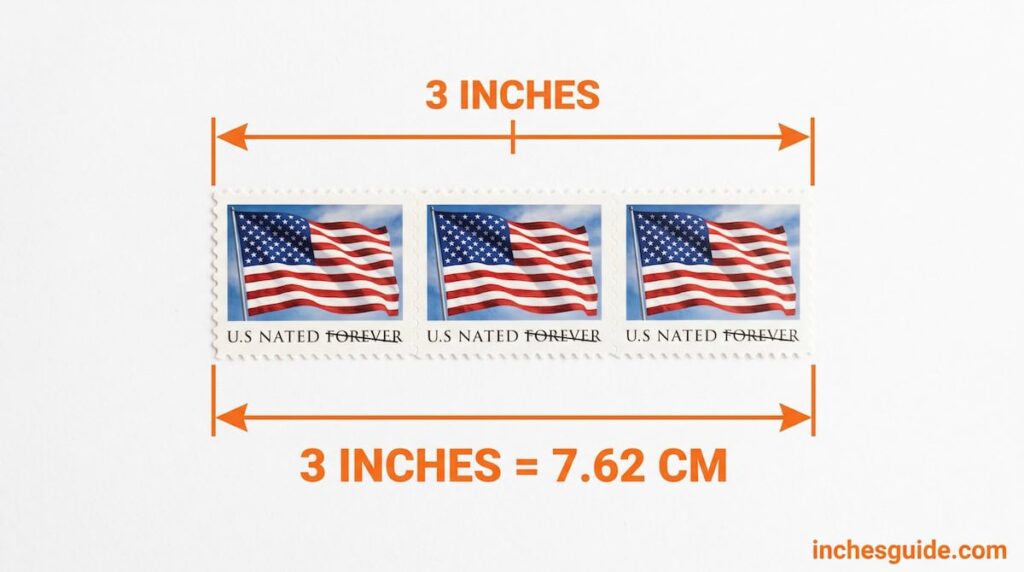
A standard US postage stamp measures 1 inch along its longer side. Line up three stamps end to end in a straight row and the total span hits exactly 3 inches. Clean, simple, and surprisingly precise.
The US Postal Service maintains tight dimensional standards across all regular stamps. That consistency makes the three-stamp row a reliable reference every single time you use it.
Most people have never thought about using stamps to measure anything. But once you know this, it’s hard to forget.
14. The Front Section of a Standard Tablespoon
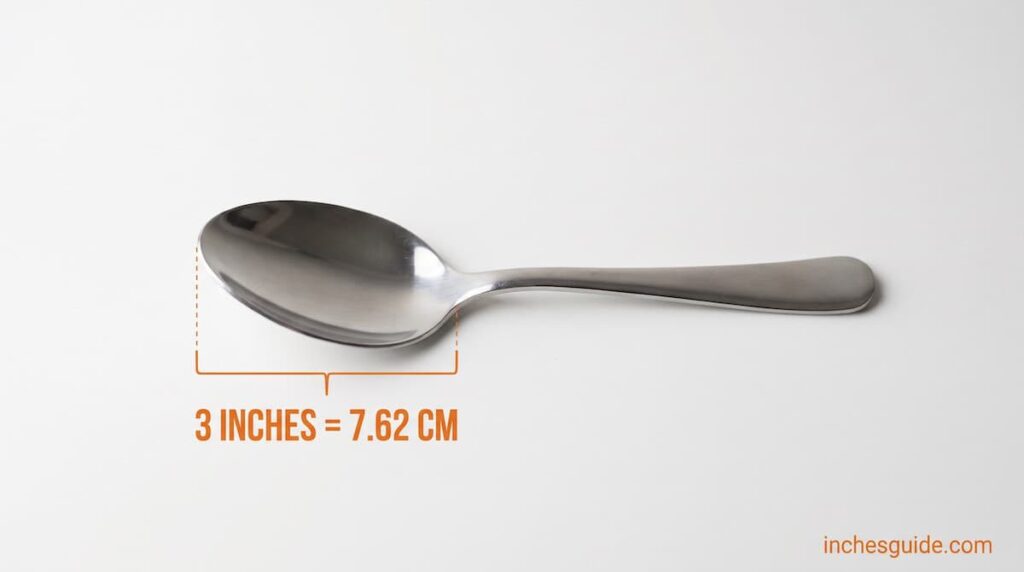
A standard flatware tablespoon, not a measuring spoon but an actual eating spoon, has a bowl combined with the neck section that clears approximately 3 inches from the bowl tip inward toward the handle.
The full spoon runs 7 to 8 inches total, but the front portion is what matters here. Look at the bowl end and measure inward to where the handle starts widening out. That span sits right at 3 inches.
It’s a visual anchor more than a precision tool. But once you see it, you won’t forget it.
15. Three US Quarters Side by Side
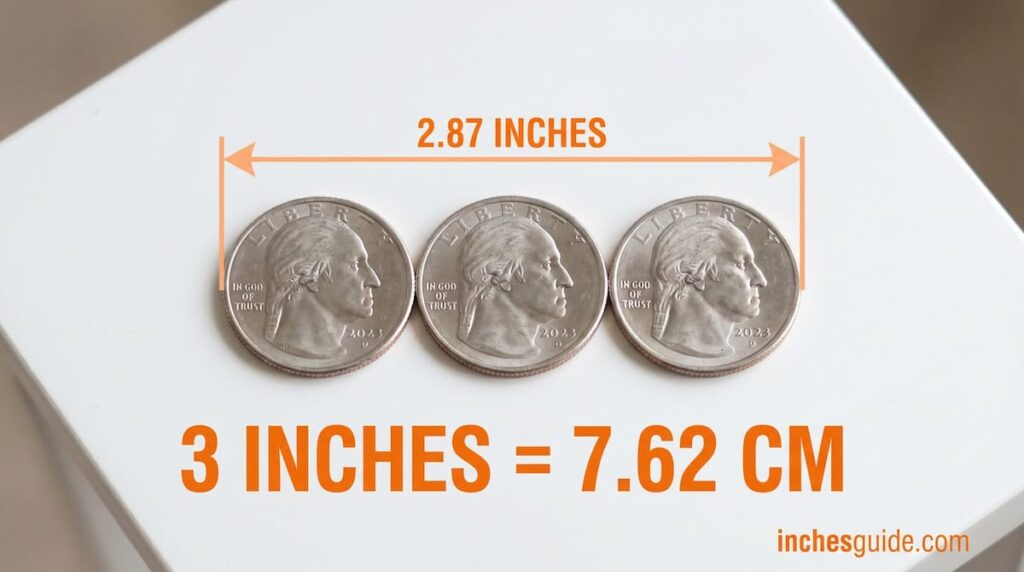
A single US quarter has a diameter of 0.955 inches. Line up three quarters side by side and the combined span reaches about 2.87 inches, which is just under 3 inches by roughly an eighth of an inch.
The US Mint manufactures quarters to extremely tight tolerances. That means this trick works the same way every single time, with every quarter, anywhere in the country.
Three quarters on your desk right now gives you a near-perfect visual of this measurement. Close enough for any everyday estimate.
16. A Standard Baseball Diameter
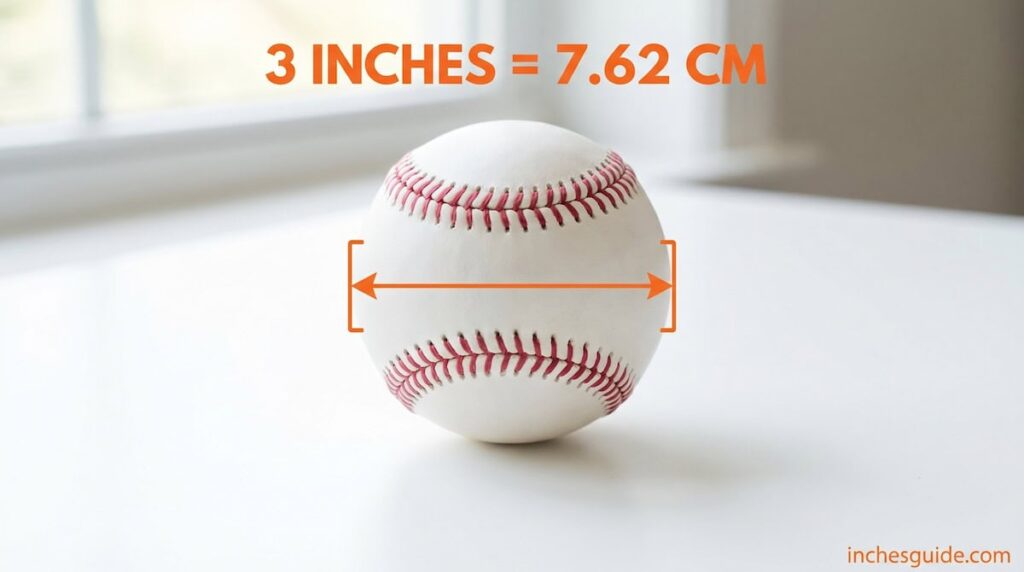
An official MLB baseball has a diameter between 2.86 and 2.94 inches, which puts it just under 3 inches across. The circumference runs between 9 and 9.25 inches. It’s as close to a 3-inch sphere as any common object you’ll find.
Baseball manufacturers must meet these exact dimensions for league play. The range was set because a larger ball becomes harder to grip for most hand sizes, while a smaller one changes pitch aerodynamics enough to affect game performance.
Hold a baseball and you’re essentially holding a 3-inch circle in your palm.
17. A Small Paper Drinking Cup Rim
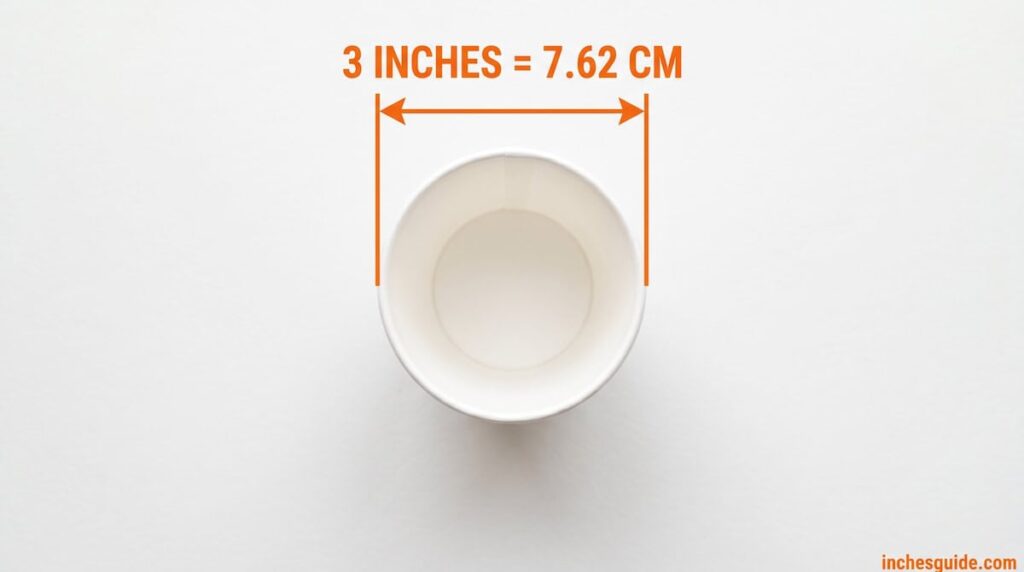
The standard small paper cup at water coolers and fast-food condiment stations, the 3-ounce cone-shaped or straight-sided cup, has a rim diameter of approximately 3 inches. This size is a manufacturing standard that lets cups nest efficiently inside dispensers.
These are sometimes called Dixie cups generically, though that’s a brand name. The 3-inch rim is consistent across virtually all manufacturers of this cup size worldwide.
Next time you grab a small cup at a water fountain, you’re picking up a 3-inch circle without even thinking about it.
18. A Large Dial Wristwatch Case
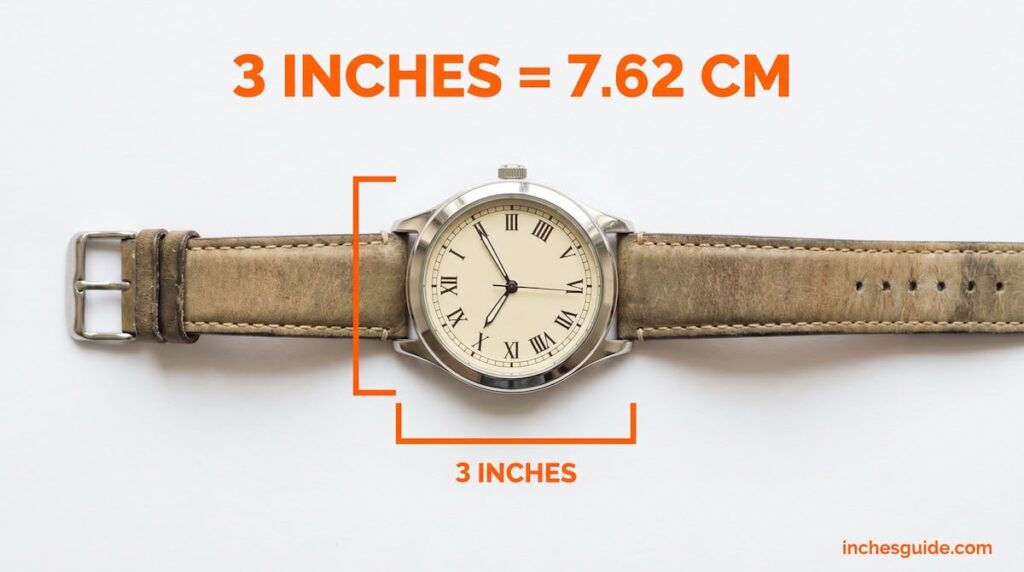
Oversized and vintage-style wristwatch cases, the kind described as statement dials, are commonly manufactured at exactly 3 inches in diameter, or 76mm. Several contemporary watch brands specifically target this size for their larger men’s dress watches.
The standard 40mm midsize watch that dominates the market today measures only about 1.57 inches across. But the 76mm oversized version that collectors prefer sits right at the 3-inch mark.
If you’ve ever held a watch that felt almost too big for your wrist, it was probably sitting right at this size.
19. A Standard 3-Inch Binder Ring
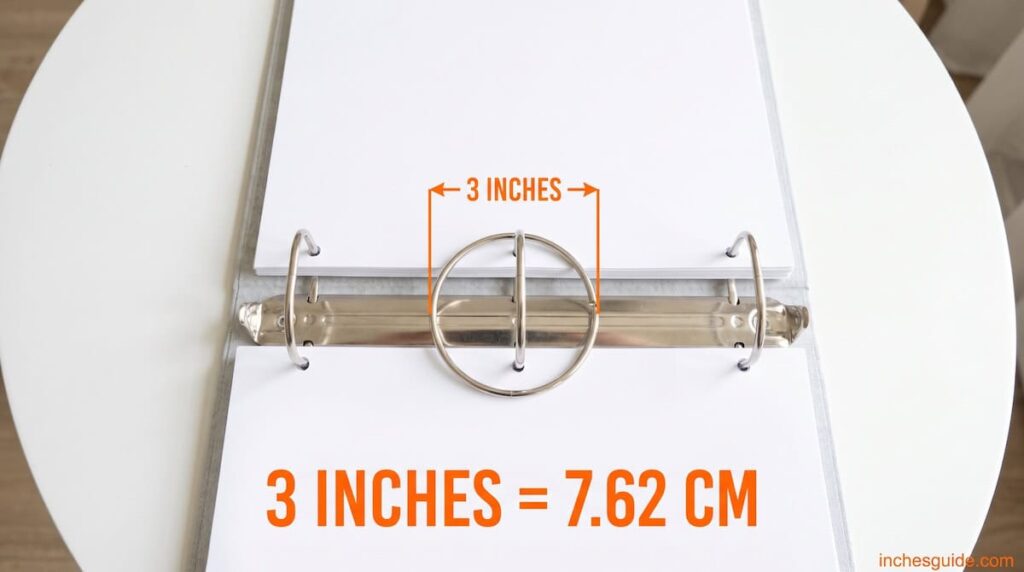
The ring inside a standard 3-inch binder, the large ones used for thick reference materials, manuals, and course packets, measures exactly 3 inches in diameter. This is the measurement that gives the binder its name and determines how many sheets it holds.
A 3-inch ring binder holds approximately 600 sheets of standard paper, which makes it one of the largest common binder sizes sold in office supply stores. The ring diameter is standardized across virtually all manufacturers.
Pick up a 3-inch binder at any office supply store and the ring itself is your reference. It’s labeled right on the spine.
How to Measure 3 Inches Without a Ruler
Method 1: Three fingers together. Press your index, middle, and ring fingers flat side by side. For most adults, the combined width lands right at 3 inches. This body-based method works in any room, any situation.
Method 2: Index card edge The short edge of any standard 3×5 index card is exactly 3 inches. Keep one in your desk or bag, and you always have a measuring edge available.
Method 3: Folded dollar bill. Fold any US dollar bill in half. The resulting width is approximately 3.07 inches, close enough for any practical estimate.
Method 4: Three stacked quarters. Line up three quarters side by side. The span is 2.87 inches, just a hair short of 3 inches. It’s not exact, but it gets you very close.
3 Inches vs. Common Measurement Comparisons
- 3 inches vs. 1 inch: Three times longer. One inch is roughly the width of a US quarter.
- 3 inches vs. 6 inches: Exactly half of 6 inches. If you know what 6 inches looks like, cut it in half mentally.
- 3 inches vs. 12 inches (1 foot): Three inches is 25% of a foot, one-quarter mark on any ruler.
- 3 inches vs. 10 inches: Noticeably shorter. Ten inches is closer to the length of most tablets; 3 inches is more like a small phone screen width.
- 3 inches in cm: 7.62 centimeters. For comparison, a standard playing card is 8.9 cm tall.
- 3 inches diameter to circumference: If something has a 3-inch diameter, like a hockey puck, its circumference is approximately 9.42 inches.
Where Does 3 Inches Show Up in Real Life?
- Home improvement: Cabinet hinges, 3-inch screws, PVC pipe labeling, tile spacers for larger tile layouts.
- First aid: Standard Band-Aid strips, wound dressings, and compression gauze.
- Office supplies: Index cards, Post-it notes, binder clip spans.
- Sports equipment: Hockey pucks, baseballs (essentially), and regulation game components.
- Kitchen: Measuring spoon handles, small condiment cup rims, spice jar heights.
- Hardware: Screws, hinges, pipe fittings, 3 inches is one of the most commonly manufactured dimensions in American construction.
FAQs About 3 Inches
How long is 3 inches compared to a finger?
Three inches is roughly the length of two finger segments from the tip of your middle finger to the second knuckle joint. It’s also close to the width of three adult fingers held flat side by side.
How many cm is 3 inches exactly?
Exactly 7.62 centimeters. The conversion is 1 inch = 2.54 cm, so 3 × 2.54 = 7.62 cm.
Is 3 inches big or small?
It depends on context. For a phone screen, it’s small. For a screw, it’s long. For a hockey puck, it’s the exact right size. In everyday life, 3 inches is a short-to-medium small measurement, compact but clearly visible.
What does 3 inches look like on a ruler?
It lands at the first quarter mark on a standard 12-inch ruler, right between the 2-inch and 4-inch marks, closer to the left end of the ruler.
How many millimeters is 3 inches in mm?
3 inches equals 76.2 millimeters exactly.
The Number Worth Knowing
Three inches is one of those measurements that’s deceptively common. It’s the diameter of the puck your favorite hockey team shoots every game, the length of every Band-Aid in your first aid kit, and the short side of the index card sitting in most desk drawers.
Once you start seeing it, you’ll notice it constantly. The folded dollar bill, the house key, and the Post-it note on your monitor are all telling the same story in the same length.